
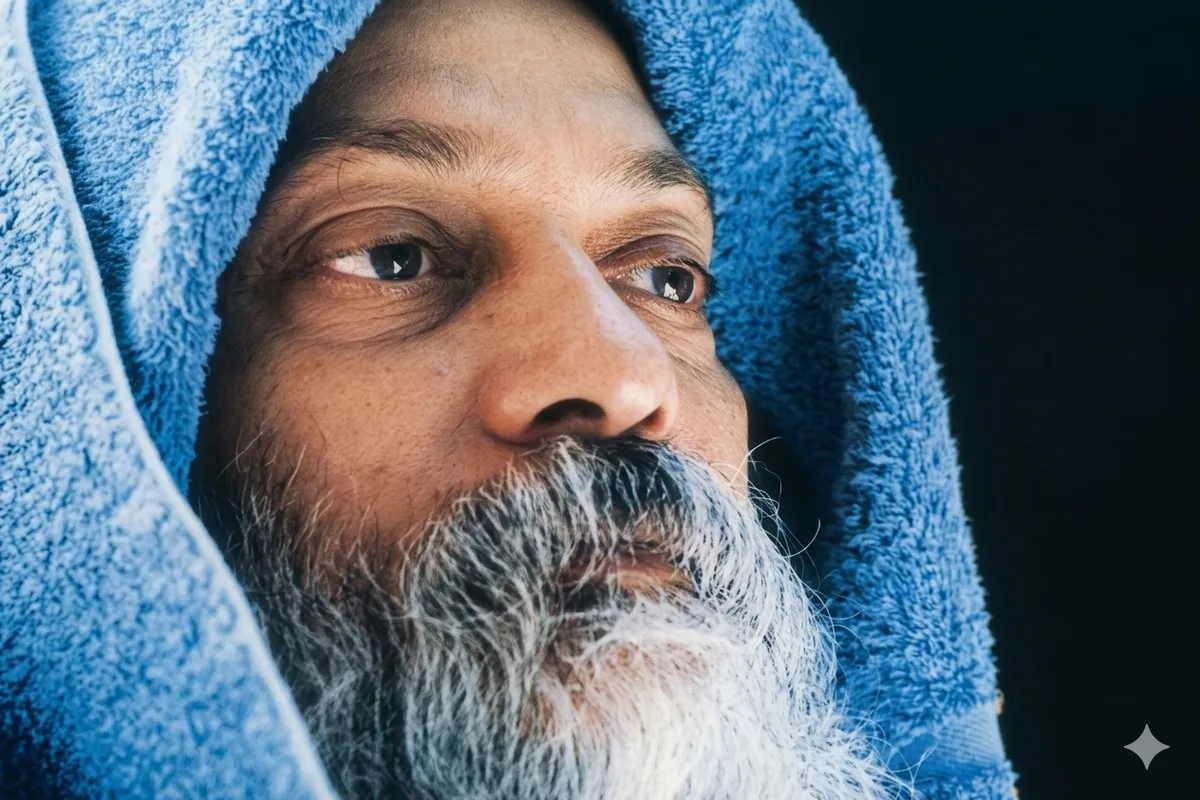
We’re old-minded people using powerful gadgets like kids with a sword; the tools aren’t bad, our thinking needs to grow up.
From the Discourses
Passages where Osho speaks to this question — each links to the complete discourse.
Beloved Osho, who is the modern man? Have science and technology corrupted the modern man?
The modern man has not yet come into existence. The people in the world are all very old and very ancient. It is rare to come across a contemporary. Somebody belongs to a religion founded ten thousand years ago, somebody belongs to a religion two thousand years old -- these people are not contemporary. They are living in modern times, but they are not modern. And this has created a tremendous problem: technology, scientific progress needs the modern man to use it, and the modern man is not available. Technology is available, science is available, but the people who can use it creatively are non-existent. The result is disastrous, because to these people who are not contemporaries, science has given technological instruments, machines, which are dangerous. It is like putting a sword in the hands of a child: he is going to hurt somebody, or himself; he is not a…
How would patanjali work with the incredible neurosis of the modern mind?
Just like me! What I am doing here? fighting with your neurosis. The ego is the source of all neurosis, because the ego is the center of all falsity, of all perversions. The whole problem is with the ego. If you live with the ego, sooner or later you will become neurotic. You will have to become, because ego is the basic neurosis. Ego says, "I am the center of the world," which is false, mad. Only if there is a God, he can say "I". We are only parts, we cannot say "I". The very assertion "I", is neurotic. Drop the I and all neurosis disappears. In between you and the mad people in the madhouses there is not vast difference -- only a difference of degrees, not of any quality, quantity. You may be ninety-eight degrees, and they have gone beyond hundred. You can go any time; the…
Osho, what is the definition of God?
Words are very small. If you say God is light, then what of darkness? The scriptures have said that God is light. Suppose we accept this as a definition—then what about darkness? Where will darkness go? Darkness is too; in fact it is far more than light. Light sometimes is and sometimes is not; darkness is always, eternal. Where will you place darkness? If you say God is light, darkness is left out. If you say God is darkness, then light is left out. If you say God is both darkness and light, a contradiction arises: they cannot be together. Try to have both darkness and light in the same room. If you bring in light, darkness disappears; if you preserve darkness, you cannot have light. Then how can both be together? That becomes an impossibility. So you cannot say “both” either. Then the fourth device is to say: it…
पहला प्रश्न: ओशो, परमात्मा की परिभाषा क्या है?
शब्द तो बड़े छोटे-छोटे हैं। अगर कहो परमात्मा प्रकाश है, तो फिर अंधेरे का क्या होगा? ऐसा कहा है शास्त्रों में कि परमात्मा प्रकाश है। चलो मान लें इसे परिभाषा, फिर अंधेरे का क्या होगा? फिर अंधेरा कहां जायेगा? अंधेरा भी है, प्रकाश से कहीं ज्यादा है। प्रकाश तो कभी होता है कभी नहीं भी होता; अंधेरा सदा है, शाश्वत है। अंधेरे को कहां रखोगे? अगर कहा परमात्मा प्रकाश है, तो अंधेरा बाहर पड़ गया। अगर कहा परमात्मा अंधेरा है, तो प्रकाश बाहर पड़ गया। अगर कहो परमात्मा अंधेरा प्रकाश दोनों है, तो विरोधाभास होता है। दोनों एक साथ हो नहीं सकता। एक ही कमरे में अंधेरा और प्रकाश करके दिखाओ। प्रकाश करोगे, अंधेरा खो जायेगा; अंधेरा बचाओगे, प्रकाश न कर सकोगे। तो दोनों साथ कैसे होंगे? तब एक असंभव बात हो गई। तो यह भी नहीं कह सकते कि दोनों है।
Osho, on the one hand you are in favor of modern technology and believe that the flower of religion will bloom only in countries that are industrially advanced. On the other hand, you also describe the paradoxes of Western industrial civilizations. “Either the machine will survive or man”—this is your own statement. Moreover, among the great ones, saints, and devotees of the past whose words you interpret, none of them believed that religion is not for the poor. How are all these to be reconciled?
Rajkishore! I am in favor of technology. But that does not mean there are no deadly possibilities tied to it. I warn about those dangers too. A wise person can turn poison into nectar, and a fool can turn even nectar into poison. Science has placed a tremendous power in human hands—technology, the world of machines. With it this whole earth can become a paradise. The age-old dream of a heaven somewhere high in the skies can descend upon the earth—upon our earth. Science has released a vast energy. But there are hazards. I caution about those as well. The greatest danger is that the mechanical may dominate the human, that man becomes a mere slave to the machine. Human mastery must remain. If man is the master and the machine the servant, it is auspicious. If the machine becomes the master and man the servant, it is disastrous. So…
दूसरा प्रश्न: ओशो, एक ओर तो आप आधुनिक यंत्र-विधि के पक्ष में हैं और मानते हैं कि धर्म का फूल औद्योगिक दृष्टि से उन्नत देशों में ही खिलेगा। दूसरी तरफ आप पश्चिम की औद्योगिक सभ्यताओं की विडंबनाओं का भी बखान करते हैं। ‘या तो यंत्र बचेगा या मनुष्य’--यह आपका ही वाक्य है। इसके अलावा आप अतीत के जिन महापुरुषों, संतों और भक्तों की वाणी की व्याख्या करते हैं, उनमें से कोई नहीं मानता था कि धर्म गरीबों के लिए नहीं है। इन सबकी पारस्परिक संगति कैसे बिठाई जाए?
… उन घातक संभावनाओं से भी मैं सचेष्ट करता हूं। बुद्धिमान व्यक्ति तो जहर से भी अमृत बना लेता है और बुद्धू अमृत से भी जहर। विज्ञान ने बहुत बड़ी शक्ति मनुष्य के हाथ में दी है--टेक्नालॉजी की, यंत्र-विधि की। इससे यह सारी पृथ्वी स्वर्ग बन सकती है। सदियों-सदियों का सपना, जो हम देखते थे कहीं दूर आकाश में स्वर्ग है, वह पृथ्वी पर उतर सकता है। इस पृथ्वी पर, हमारी पृथ्वी पर उतर सकता है! विज्ञान ने एक विराट ऊर्जा का विस्फोट कर दिया है। लेकिन उसके खतरे हैं। उन खतरों से भी मैं सावधान करता हूं। सबसे बड़ा खतरा यह है कि कहीं यांत्रिकता मनुष्य के ऊपर हावी न हो जाए! कहीं ऐसा न हो कि मनुष्य सिर्फ मशीन का एक गुलाम होकर रह जाए। मनुष्य की मालकियत तो रहनी ही चाहिए। मनुष्य मालिक हो, यंत्र सेवक हो, तो शुभ है। यंत्र मालिक हो, मनुष्य सेवक हो जाए, तो अशुभ है।
Osho, modern science has taken humankind away from nature and developed many dimensions of life. Please tell us: given the complexity of the scientific way of living, how can a balance be established today with the Taoist era’s effortless, natural way of life?
There is no question of establishing a balance. It is not a matter of balancing Lao Tzu and modern science. If Lao Tzu’s vision truly comes into view, an entirely new science will be born—utterly new. A science founded on Lao Tzu’s vision would be born, because the whole perspective on life would be different. The science that has evolved on Aristotle’s foundations is very incomplete, ignorant. It has tried to understand such a tiny fragment of life and has left the whole. One should say it is childish. It has made no attempt to see the totality. But until now it could not have. Now it will have to. After the discovery of atomic weapons and the development of atomic energy, science has been compelled to reconsider all its basic premises. Why? Because if science keeps moving as it has till now—if it says, “We will go on this…