
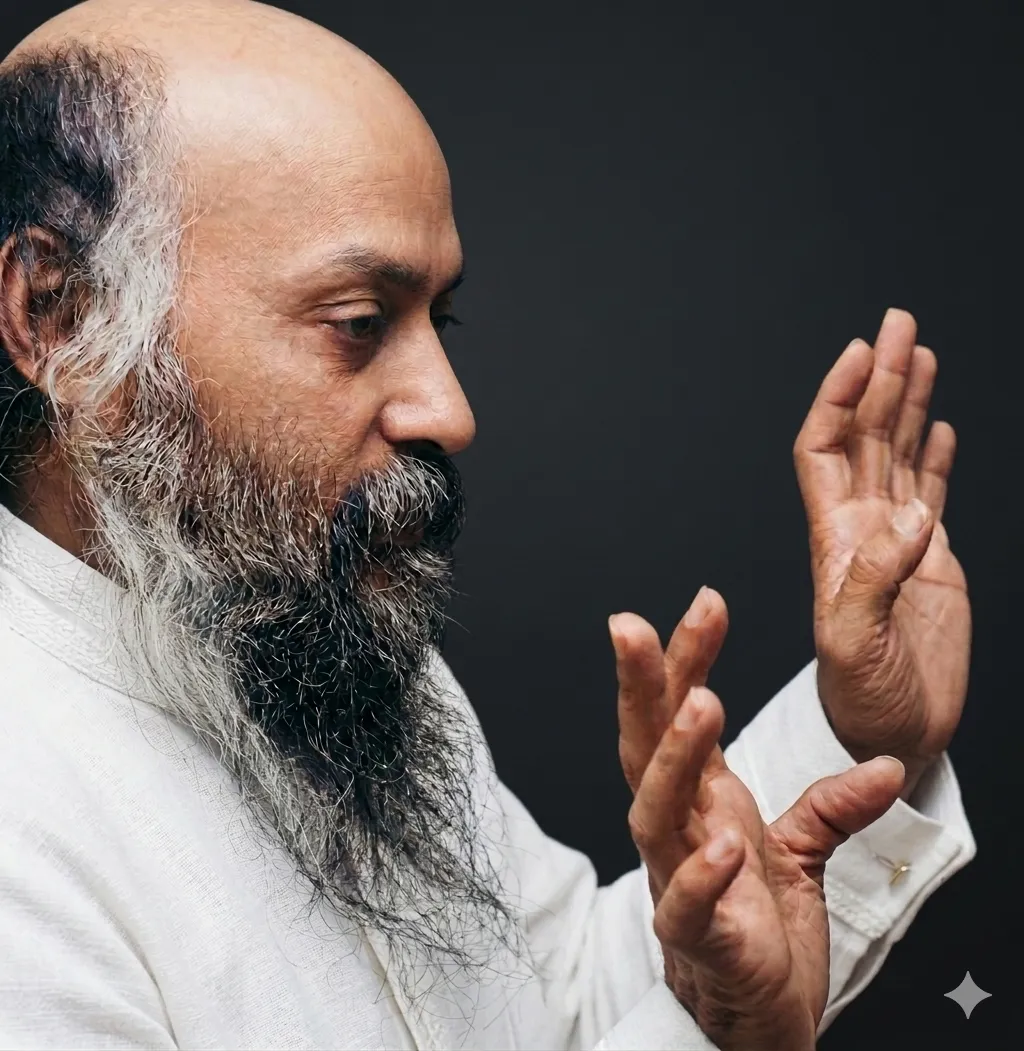
When a true urge arises, go through it with full awareness; it will end on its own and leave you free.
From the Discourses
Passages where Osho speaks to this question — each links to the complete discourse.
When one acts spontaneously does one follow the path or does one fulfil latent desire?
There is no contradiction. The desire is the path. You have to go through it, you have to go into it, you have to go into it utterly, totally. Only by going into it, to the very bottom of it, do you start rising above it. Desire is the way to become desireless. So such a contradiction does not exist for me. You ask: WHEN ONE ACTS SPONTANEOUSLY DOES ONE FOLLOW THE PATH OR DOES ONE FULFIL LATENT DESIRE? To me there is no difference. Desire is the path. In following the desire you are following the path. That's the revolution I bring to you, that's the radical standpoint I want you to understand. In following your desire you are not going astray, you are going God-wards. The desire is given by God, you have not created it. You have found it, it is a given thing, it is a…
Osho, why does every desire come carrying its opposite? Is its dividedness inevitable? And is no whole and undivided desire possible? What is desire?
One day, by mistake, he wandered into the camp of a Muslim chieftain. He was going along in ecstasy, dancing; the camp happened to be in the way—that was all. The women, frightened, screamed. A naked man, dancing in ecstasy, had walked in—they thought he was mad. Seeing a naked sadhu intrude, the chieftain, too, grew angry. He drew his sword and struck. One of Sadashiva’s hands was cut off and fell to the ground. But Sadashiva’s joy suffered no interruption. The hand fell, blood began to flow, yet the dance continued. Just as he had been dancing, he turned and kept dancing as he walked away. The chieftain was astonished, and also pained—he had never seen such ecstasy. And that a hand could be cut off and he would not even notice—such ecstasy! The man was in some other realm. Looking into his eyes, it was as if he…
दूसरा प्रश्न: ओशो, प्रत्येक कामना अपना प्रतिपक्ष लिए क्यों आती है? उसका विभाजित रहना क्या अनिवार्य है? और क्या कोई अखंड और अविभाजित कामना संभव नहीं है? यह कामना क्या है?
यह उन्हीं की घटना है! उन्होंने जीवन भर मौन रहने की साधना स्वीकार कर ली थी, मौन थे और नग्न।नग्न रहते और चुप, बड़ी झंझटें आती थीं। एक तो मौन, बोलते नहीं, और नग्न घूमते! समाधि उनकी निरंतर लगी रहती थी। मस्त ही रहते थे अपनी मस्ती में। एक दिन भूल से एक मुसलमान सरदार के शिविर में चले गए। मस्ती में जा रहे थे नाचते, शिविर बीच में पड़ गया होगा तो पड़ गया, कोई शिविर के लिए गए नहीं थे। स्त्रियों ने डरकर चीख लगा दी। कोई नंगा मस्ती में नाचता हुआ चला आ रहा है, वे समझे कोई पागल है। नग्न साधु को घुसा देखकर सरदार भी क्रोध में आ गया। और उसने तलवार उठा ली और हमला कर दिया। सदाशिव का एक हाथ कटकर नीचे गिर गया। लेकिन सदाशिव के आनंद में कोई बाधा न पड़ी। हाथ कटकर गिर गया, लहू बहने लगा, लेकिन नाच जारी रहा। जैसे नाचते आए थे वैसे ही नाचते चलने, वापस लौटने लगे। सरदार हैरान हुआ, दुखी भी हुआ--यह मस्ती, ऐसी मस्ती कभी देखी न थी। और हाथ कट जाए और पता न चले, ऐसी मस्ती! किसी और लोक में था यह आदमी। …
Beloved Osho, I feel and realize the futility of desiring. There seems to be no ambition in me. But yet there is a thirst, a yearning, and an inner sense of unfulfillment. Please explain whether this too is a part of desiring.
Yes, this too is a part of desiring -- the negative part. Everything has two parts, the positive and the negative. The positive part of desiring is to desire something, to be ambitious. To be aware of the object of desire is a positive desire. The negative desire is: one is not aware of the object of desire, but one is aware only of the thirst of desire -- of the yearning. These are the two parts. The subjective feeling of unfulfillment is the negative part of ambition and being obsessed with an object of desire is the positive part of ambition. Both are ambition. And if you intellectually understand that desire is futile, the negative part will remain with you -- if you INTELLECTUALLY understand that desire is futile and this is not an existential experience. You have been hearing things, you have been listening and you have been…
Osho, on the one hand you say desire is by nature insatiable; it remains forever unfulfilled. And on the other hand you also say that if any relish for the world remains, it should be enjoyed fully. Please have the compassion to remove this contradiction.
Contradictions appear because you do not see. They seem like contradictions because your eyes are not yet open. You grope in the dark; therefore contradictions appear. Otherwise, there is no contradiction. Understand. Certainly desire is insatiable; this is the dictum of the Buddha, of all the awakened ones. Desire is insatiable means it cannot be filled—do whatever you may. If you have ten rupees, you want twenty. If you have ten thousand, you want twenty thousand; a million, you want two. The gap between ten and twenty remains the same. Desire is insatiable means the ratio of your discontent remains constant. It makes no difference how much you acquire; desire will move just that much ahead. Desire is like the horizon: it appears to meet the earth ten or twelve miles away. You run and think you will reach in an hour or two. Run for lifetimes—you will never arrive.…
तीसरा प्रश्न: ओशो, एक ओर आप कहते हैं कि वासना स्वभाव से दुष्पूर है। वह सदा अतृप्त की अतृप्त बनी रहती है। और दूसरी ओर आप यह भी कहते हैं कि यदि संसार में रस बाकी रह गया हो तो उसे पूरा भोग लेना भी अपेक्षित है। इस विरोधाभास को दूर करने की अनुकंपा करें।
… ऐसा समस्त बुद्धों का वचन है। वासना दुष्पूर है, इसका अर्थ होता, वासना को भरा नहीं जा सकता। तुम लाख उपाय करो। दस रुपये हैं तो बीस रुपये चाहिए। दस हजार हैं तो बीस हजार चाहिए। और दस लाख हैं तो बीस लाख चाहिए। जो अंतर है दस और बीस का; कायम रहता है। वासना दुष्पूर है, इसका अर्थ हुआ कि तुम्हारी अतृप्ति का जो अनुपात है, सदा कायम रहता है। उसमें कोई फर्क नहीं पड़ता। तुम कितना कमा लोगे इससे कोई फर्क नहीं पड़ता। तुम्हारी वासना उतनी ही आगे बढ़ जायेगी। वासना क्षितिज की भांति है। दिखाई पड़ता है यह दस मील, बारह मील दूर मिलता हुआ पृथ्वी से। भागो, लगता है घड़ी में, दो घड़ी में पहुंच जायेंगे। भागते रहो जन्मों-जन्मों तक, कभी न पहुंचोगे। …
Pragya has asked: “You and all the saints say the same...”
I don’t know about all the saints, because among your so‑called saints most are not saints at all. Out of a hundred of your saints, perhaps one is a saint; the other ninety‑nine are as sick as you are—and often far more chronically sick. But you understand the language of those ninety‑nine, because they speak the language of your disease. The one who is a real saint—you don’t understand his language. I am choosing to speak about those few, those one‑in‑a‑hundred saints, so I can sift for you who the real saints are. There are too many non‑saints; they’re not worth counting. I keep speaking on saints. They are not many. Your “all saints” are not saints—and certainly Pragya’s “all saints” cannot be. For her, those she calls saints will be the sick and deranged—because her mind, her way of thinking, her chain of logic is repression: anti‑body, anti‑world. “You…
पूछा है प्रज्ञा ने: ‘आप और सभी संत यही कहते हैं...।’
और सभी संतों का मुझे पता नहीं, क्योंकि तुम्हारे सभी संतों में बहुत तो संत हैं ही नहीं। तुम्हारे सौ संतों में एकाध संत होता है, निन्यानबे तो तुम जैसे ही रुग्ण और तुमसे भी ज्यादा महारुग्ण होते हैं। मगर उन निन्यानबे की भाषा तुम्हें समझ में आती है, क्योंकि वे तुम्हारे ही रोग की भाषा बोलते हैं। और वह जो एक है, उसकी भाषा तुम्हें समझ में नहीं आती। उन्हीं थोड़े से एक-एक संतों को चुन कर मैं बोल रहा हूं उनके ऊपर, ताकि तुम्हें छांट कर बता दूं कि कितने संत हैं। असंत तो बहुत हैं, इसलिए उनकी संख्या गिनना भी ठीक नहीं। संतों पर बोलता जा रहा हूं। संत बहुत ज्यादा नहीं हैं। तुम्हारे सभी संत संत नहीं हैं, और प्रज्ञा के सभी संत तो हो ही नहीं सकते। …