
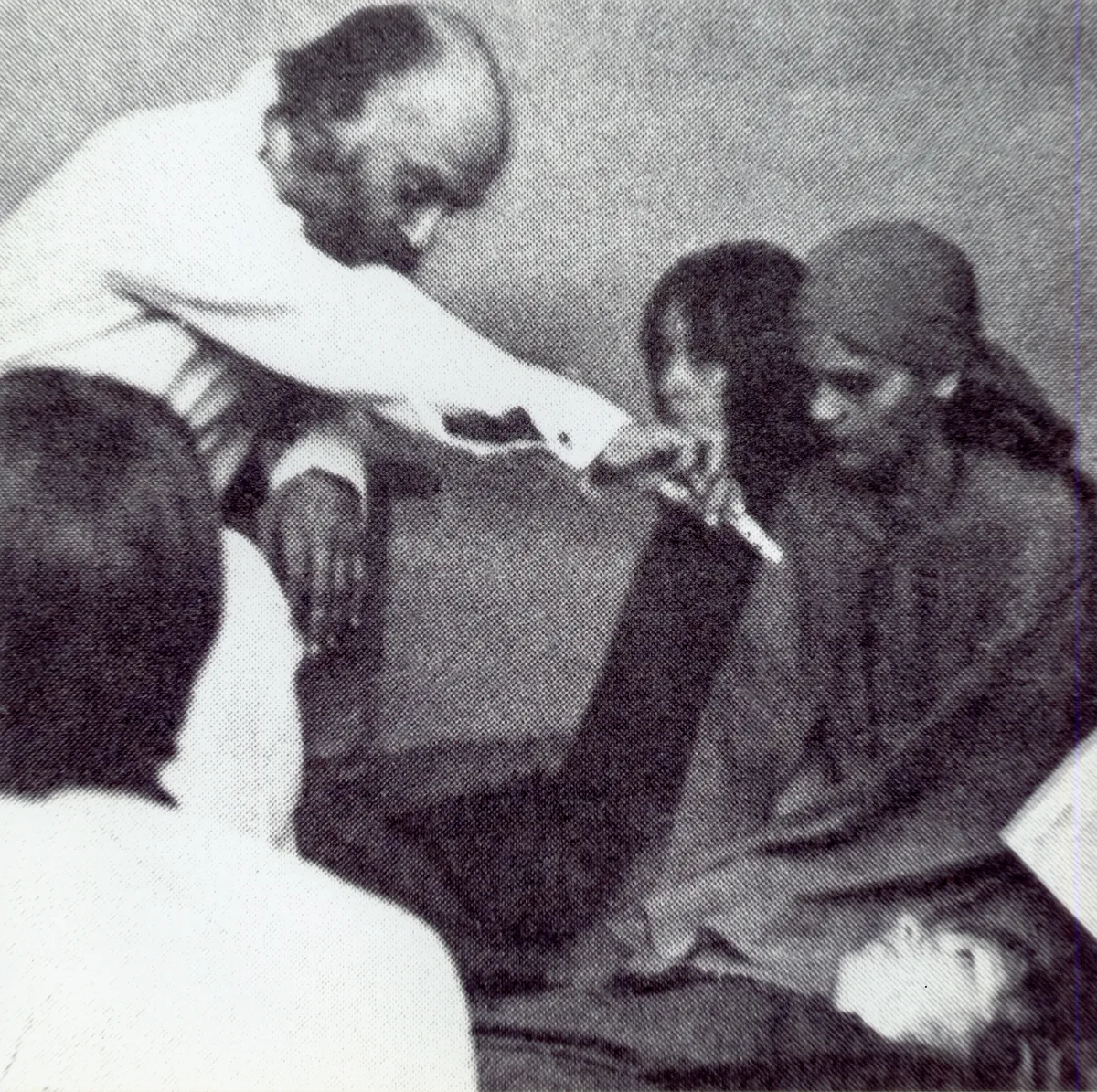
According to Osho, before enlightenment he was simply “stupid”—as unconscious and ordinary as anyone else. There were no special states or exalted experiences; only the dullness of mind and ego. Enlightenment is not a continuation of that; it's a discontinuous shift from unconsciousness to aware simplicity.
Before enlightenment, I was just like everyone—confused and silly—until awareness switched on.
From the Discourses
Passages where Osho speaks to this question — each links to the complete discourse.
Beloved Osho, what is enlightenment? Have the experience and the idea of enlightenment evolved with time?
So nirvana is just like darkness. The light is put off and your reality is all there, with all its beauty, benediction, blessing. But there is no word in English to translate nirvana. Jainas use the word moksha. Moksha means absolute freedom, ultimate freedom, freedom from all fetters. And the biggest fetter is the ego. Other fetters are just parts of the ego: greed, lust, ambition, anger. All that is thought to be sin in other religions, in Jainism is thought only to be a fetter. But the root, the main root of the whole tree of your slavery, is the ego. So cut the main root and all other roots will die of their own accord. Don't bother to cut small roots, branches, leaves, because they will come again. Cut the main root and the whole tree will die. And when all your fetters fall, what remains? The unfettered…
Question: BELOVED OSHO, HOW DO YOU EXPERIENCE YOUR ENLIGHTENMENT? But in this whole changing, riverlike being... who are you? Only the stupid will speak out; the wise will remain silent. One who knows not will say, "I am this; I am a man, I am a woman, I am young, I am Hindu, I am a Christian..." Only the stupid will speak out. The wise will become absolutely silent. He is also answering -- his silence is the answer. Buddha calls this silence "right remembrance"... sammasati. You are saying, "I go on remembering all kinds of things you have said, and my own insights..." Agyeya, I had no idea that you also have insights! But... okay. Remembering all kinds of things that I have said, and what you have imagined as your intuitions... just try to find a single intuition that is yours, and you will be surprised.
Osho, what was the first thing that you did after you became enlightened?
For two years I had lived with that family, and they had known that I would get up at three o'clock in the morning, then I would go for a long four- or five-mile walk or run, and then I would take a bath in the river. Everything was absolutely routine. Even if I had a fever or I was ill, there was no difference: I would simply go on the same way. They had known me to sit in meditation for hours. Up to that day I had not eaten many things. I would not drink tea, coffee, I had a strict discipline about what to eat, what not to eat. And exactly at nine o'clock I would go to bed. Even if somebody was sitting there, I would simply say "Goodbye" and I would go to my bed. The family with whom I used to live, they would…
What is enlightenment?
He had read all the Buddhist scriptures -- there are thousands of them. It is said about this Chikanzenji that he had all these scriptures in his room and he was constantly reading day and night. And his memory was so perfect he could recite whole scriptures -- but still nothing happened. Then one day he burned his whole library. Seeing those scriptures in the fire he laughed. He left the monastery, he left his guru, and he went to live in a ruined temple. He forgot all about meditation, he forgot all about yoga, he forgot all about practising this and that, he forgot all about virtue, SHEELA, he forgot all about discipline and he never went inside the temple to worship the Buddha. But he was living in that ruined temple when it happened. He was mowing down the weeds around the temple -- not a very religious…
Beloved Osho, I can't conceive of you ever being unenlightened. Did you really become enlightened only thirty-two years ago?
Seven years, by and by, passed -- they must have looked to that man almost like seven centuries. And he was so happy when he went to the abbot and said, "Master, I have a complaint to make. In the room you have allotted me, there is no mattress. And for seven years I have been prohibited from speaking." The abbot said, "Okay, a mattress will be provided immediately. You go back." A mattress was provided. But the cell in which the monk was living was very small, and the door was very small, and the mattress was big. So while they were bringing the mattress in, the door fell out and the window's glass was broken. Somehow they forced that big mattress into the small room. For seven years the poor man again suffered -- from rain, wind, snow, because there was no door and the window was broken.…