
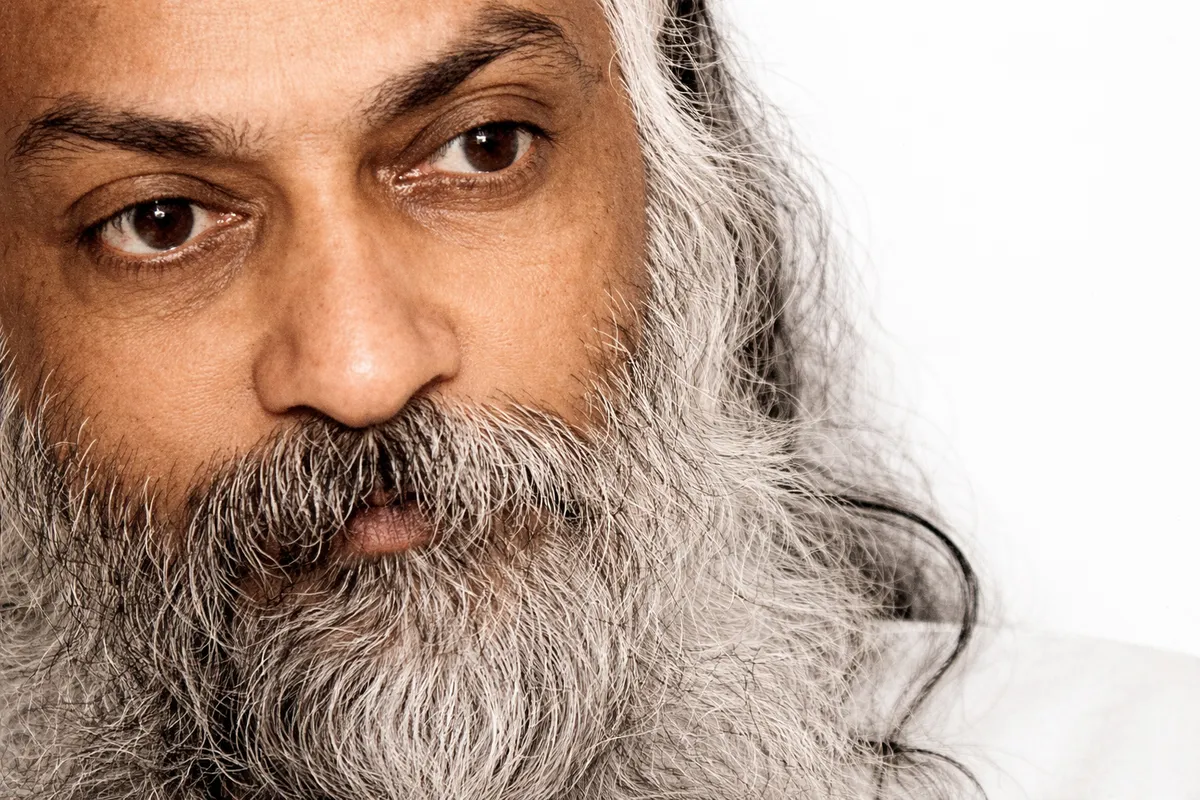
If what you want clashes with someone else, don't fake peace; be honest about your feelings, let the clash happen, and calmly accept whatever comes.
From the Discourses
Passages where Osho speaks to this question — each links to the complete discourse.
It is all jolly fine for everyone to do their thing but what should be an attitude when our 'things' conflict? I am always giving in for the sake of harmony and to do one's thing under constant threat takes the joy out of it. But harmony is not in itself my thing.
FIRST, IF CONFLICT IS YOUR THING then let it be so. Then don't try to impose any false harmony on top of it because false harmony will never be true, it will never be satisfying. It is ugly. A true conflict is beautiful -- more beautiful, far more beautiful than an imposed harmony, because deep down the conflict continues. You are deceiving nobody, you only think you are deceiving. The reality cannot be deceived and you have to suffer the consequences. If conflict is your thing then let it be so. That is the message of Tao. It has nothing to do with harmony, it has to do with let-go. If conflict is your thing and you allow it, then that is harmony for you -- because you will be in harmony with your nature. It is difficult because you immediately make ideals. You think Tao is harmony. It is,…
Where does educating the subconsciousness conflict or harmonise with tao, as it implies discipline with self-effort from an external expression?
Once upon a time, the Duke of Lu went forward to meet a sea bird that had made its appearance in the confines of that country, and escorted it to his ancestral hall. This is a Taoist parable. There, an ox, a sheep and a pig were slaughtered, and a feast was spread before the sea bird, while the band was playing the celebrated music composed under the supervision of the Emperor Shuen. The bird, however, merely looked on, sad and doleful, refusing to relish a morsel of meat or drink a single cup. Thus it died of hunger after three days. The duke fed the bird as he would feed himself, and he failed to see that it should have been treated as a bird and not as a king. The music is meaningless to the bird, and the ox and the sheep and the pig are not his…
Osho, are we free to indulge in desire and to refrain from it?
Naturally Jesus cried out, looking toward the sky—“O Lord, what is this you have shown me? Have you forsaken me? Have you abandoned me? Will I not receive your grace?” Here Jesus’ humanity was manifest. But instantly the point also became clear to Jesus, that a complaint had entered. My prayer has been broken. Where there is complaint, prayer dies. Prayer does not know complaint; prayer has no acquaintance with grievance. Prayer is supreme consent. If life, then life; if death, then death. If a throne, then a throne; if a cross, then a cross. Prayer does not even know how to say, “Lord, what is this you are showing me?” Jesus saw the point. He was a man of deep wisdom; his eyes were clear. A streak of smoke had been drawn, a small cloud had come, and for a moment the sun was hidden. But the cloud passed…
पहला प्रश्न: ओशो, क्या हम वासना करने और नहीं करने के लिए स्वतंत्र हैं?
स्वाभाविक जीसस चिल्ला उठे आकाश की तरफ देख कर--हे प्रभु, यह तू मुझे क्या दिखा रहा है? क्या तूने मुझे त्याग दिया? क्या तूने मुझे बिसार दिया? मुझे तेरा प्रसाद नहीं मिलेगा? यहां जीसस की मनुष्यता प्रकट हुई। लेकिन तत्क्षण जीसस को समझ में भी आ गई बात कि इसमें शिकायत हो गई है। प्रार्थना मेरी खंडित हो गई है। जहां शिकायत है वहां प्रार्थना की मृत्यु। प्रार्थना शिकायत जानती ही नहीं। प्रार्थना को शिकवा से पहचान ही नहीं है। प्रार्थना तो परम राजीपन है। जीवन हो तो जीवन और मृत्यु हो तो मृत्यु। और सिंहासन हो तो, और सूली हो तो। यह बात प्रार्थना जानती ही नहीं कि प्रभु, यह तू मुझे क्या दिखा रहा है? जीसस को दिख गई बात। गहन प्रज्ञा-पुरुष थे। आंखें उनकी साफ थीं। एक धुएं की लकीर खिंची थी, एक छोटी सी बदली आ गई थी और सूरज क्षण भर छिप गया था। लेकिन बदली गुजर गई और सूरज फिर प्रकाशित हो उठा। और जीसस मुस्कुराए और उन्होंने आकाश की तरफ आंखें उठा कर कहा: ‘नहीं-नहीं, मेरी मत सुनना। जो तेरी मर्जी हो, पूरी हो। …
Do they simply have to be endured? They do have to be endured. So his freedom is not license. There is a deep check upon it. He is free in that he can act contrary to nature. But whatever consequences arise from acting contrary—painful ones—he will have to endure them.
This kind of man is not what we ordinarily call a “seeker.” The seeker we speak of is usually a reaction to the householder. If the householder runs a shop, the seeker does not; if the householder earns wealth, the seeker renounces it; if the householder marries, the seeker does not. But his rules are derived from the householder—he is only a reaction. Lao Tzu says, “I am no one’s reaction. It does not matter what others do. I neither follow anyone to do as he does, nor go against anyone to do the opposite. I let happen what arises from within.” Allowing nature to happen means not imitating anyone, not copying anyone, not building one’s personality in opposition to anyone. Whatever can happen from within, whatever wants to happen—we allow it. No obstruction, no condemnation, no opposition, no struggle, no conflict. Let what happens, happen. This means dropping notions…
प्रश्न: झेलने ही पड़ते हैं? वे झेलने ही पड़ते हैं। तो उसकी स्वतंत्रता स्वच्छंदता नहीं है। उस पर एक गहरी रुकावट है। स्वतंत्र है वह कि वह प्रकृति से प्रतिकूल काम करे। लेकिन प्रतिकूल काम करने से जो भी परिणाम होंगे दुखद, वे उसे झेलने ही पड़ेंगे।
यह जो आदमी है, यह साधारणतः जिनको हम साधक कहते हैं, वैसा आदमी नहीं है। हम जिसे साधक कहते हैं वह आमतौर से, हम जिसे साधारण आदमी कहते हैं, उससे विपरीत होता है। अगर यह आदमी दुकान करता है तो वह आदमी दुकान नहीं करता। अगर यह आदमी धन कमाता है तो वह आदमी धन छोड़ देता है। अगर यह आदमी विवाह करता है तो वह आदमी विवाह नहीं करता। लेकिन उसके करने का जितना भी नियम है वह इसी गृहस्थ से मिलता है। वह सिर्फ इसका रिएक्शन होता है। लाओत्से कहता है कि हम किसी के रिएक्शन नहीं हैं, हम किसी की प्रतिक्रिया नहीं हैं। कौन क्या करता है, इससे प्रयोजन नहीं है। न हम किसी के पीछे जाते कि वैसा करें जैसा वह करता है, न हम किसी के प्रतिकूल जाते हैं कि वैसा करें जैसा वह नहीं करता है। हम तो वही होने देते हैं जो हमारे भीतर से होता है। स्वभाव को होने देने का मतलब यह है कि हम किसी का अनुकरण न करें, किसी की नकल न करें, किसी के विरोध में आयोजन न करें अपने व्यक्तित्व का। जो हो सकता है भीतर से, जो होना चाहता है, वह हम होने दें। …
Chuang tzu with his bamboo pole was fishing in the pu river.
THE PRINCE OF CHU SENT TWO VICE CHANCELLORS WITH A FORMAL DOCUMENT: WE HEREBY APPOINT YOU PRIME MINISTER. CHUANG TZU HELD HIS BAMBOO POLE. STILL WATCHING PU RIVER, HE SAID: 'I AM TOLD THERE IS A SACRED TORTOISE OFFERED AND CANONISED THREE THOUSAND YEARS AGO, VENERATED BY THE PRINCE, WRAPPED IN SILK, IN A PRECIOUS SHRINE ON AN ALTAR IN THE TEMPLE. WHAT DO YOU THINK? IS IT BETTER TO GIVE UP ONE'S LIFE AND LEAVE A SACRED SHELL AS AN OBJECT OF CULT IN A CLOUD OF INCENSE FOR THREE THOUSAND YEARS, OR BETTER TO LIVE AS A PLAIN TURTLE DRAGGING ITS TAIL IN THE MUD? 'FOR THE TURTLE' SAID THE VICE CHANCELLOR, 'BETTER TO LIVE AND DRAG ITS TAIL IN THE MUD! 'GO HOME! SAID CHUANG TZU. 'LEAVE ME HERE TO DRAG MY TAIL IN THE MUD. ... China was more tolerant. Chuang Tzu was not punished because China