
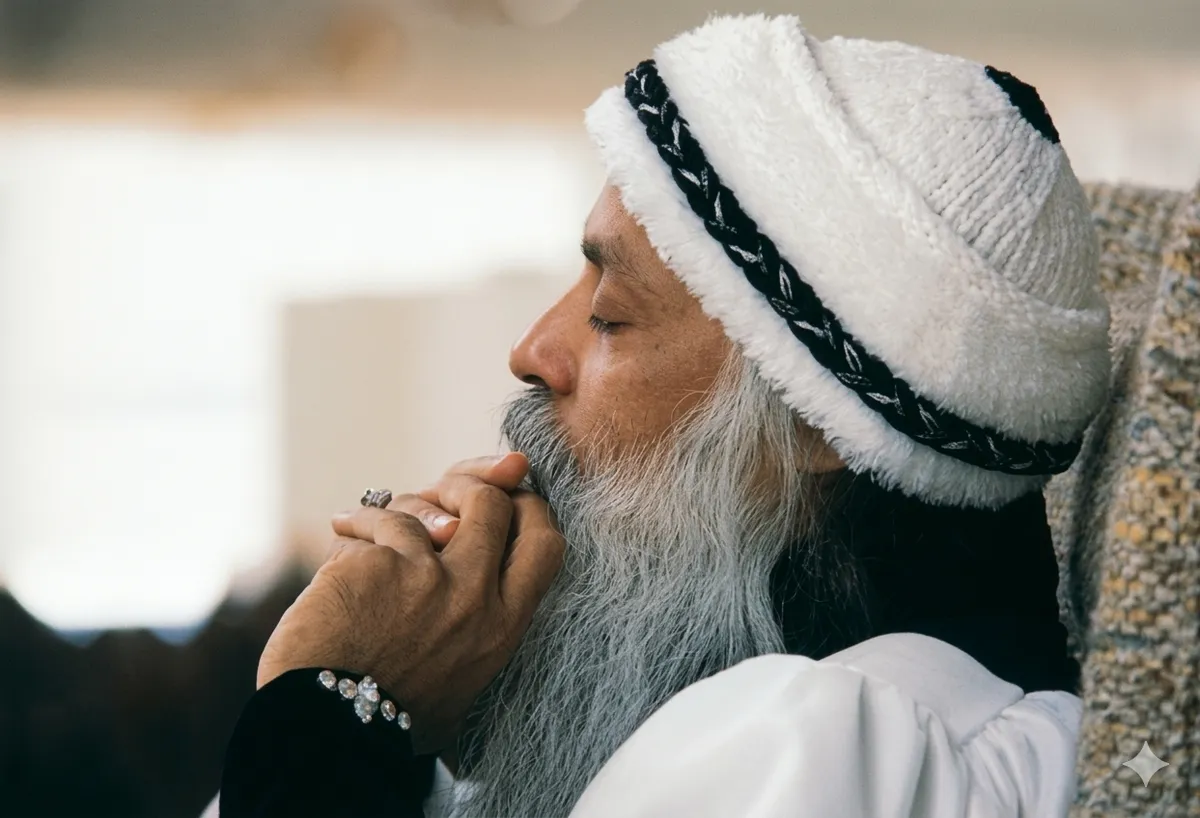
Be together without becoming a church: keep your own freedom, stay yourself, and stay alert.
From the Discourses
Passages where Osho speaks to this question — each links to the complete discourse.
Osho, sannyas was born in this land; it was granted the dignity of Gaurishankar (Everest). But today its honor has become merely superficial. Inside, the individual and society alike are afraid of it. Why have sannyas and the sannyasin lost their meaning? Please explain.
In my sannyas there is no prohibition—no “leave this, run from that.” Awakening is enough. Cowards run. Those who awaken remain where they are and are free there. My sannyas does not want to give you knowledge; it wants to give you meditation. Meditation means emptiness; it means: I do not know. Life is such an ultimate mystery that nothing definitive can be known about it. And I want to give sannyas a new posture—creativity. I will call him a sannyasin who sings a new song; who strikes a new music from the veena; who dances a new dance; who makes this world a little more beautiful, brings a little more blessedness to the earth. Then sannyas can regain its dignity. And I would have the sannyasin not imitate. Listen, understand, contemplate—but live from your own individuality. Therefore I give my sannyasins no codes of conduct—only processes to awaken the…
पहला प्रश्न: ओशो, संन्यास का जन्म इस देश में हुआ, उसे गौरीशंकर जैसी गरिमा मिली। पर आज उसका सम्मान बस ऊपरी रह गया है। भीतर से व्यक्ति और समाज, सभी उससे भयभीत हैं। संन्यास और संन्यासी की अर्थवत्ता क्यों कर खो गई, कृपा करके समझाएं।
मेरे संन्यास में न तो निषेध है कि कुछ छोड़ कर जाओ, कि कहीं छोड़ कर भागो। बोध काफी है। भागते कायर हैं। जिनको बोध हो जाता है, वे जहां हैं वहीं रहते हैं और वहीं रहते मुक्त हो जाते हैं। मेरा संन्यास पांडित्य नहीं देना चाहता, ज्ञान नहीं देना चाहता, ध्यान देना चाहता है। ध्यान का अर्थ है: शून्यता। ध्यान का अर्थ है: मुझे कुछ भी पता नहीं। जीवन ऐसा परम रहस्य है कि कुछ इसके संबंध में पता हो भी नहीं सकता। और, मैं संन्यास को एक नई भावभंगिमा देना चाहता हूं--सृजनात्मकता की। मैं उसे संन्यासी कहूंगा जिसने एक नया गीत गाया। मैं उसे संन्यासी कहूंगा और सम्मान दूंगा जिसने वीणा पर एक नया संगीत छेड़ा। मैं उसे संन्यासी कहूंगा और सम्मान दूंगा जिसने एक नया नृत्य नाचा, जिसने इस जगत को थोड़ा सुंदर बनाया, जिसने इस पृथ्वी पर थोड़ा सौभाग्य लाया।
A friend has asked: Osho, you said about a wayward son that one should let him pass through his experiences, and he will learn on his own. But even after experiencing, he still prefers the same thing—someone is asking about his wayward son—no matter how much suffering he has to endure, even if death itself should come, still he does the same. After stumbling again and again, he repeats it. What can be done? How to reform him?
You will not be able to reform him. If life cannot reform him, if even death cannot reform him, what will you be able to do? If what you say is true—that again and again, even after suffering, he does the same thing; even if death comes, he will still do the same thing, and he does not change—then take your hands off. You will not be able to reform him. You cannot be stronger than death. And one who does not learn from suffering—what will he learn from you? Do not call him a wayward son. You have found yourself a Jadabharata. Because those whom suffering does not reform, whom even death does not reform—these are great, arrived masters; they are in the ultimate state. Do not even try to reform such a one. And why are you so eager to reform another? It is enough to reform yourself.…
एक मित्र ने पूछा है कि ओशो, आपने कुपुत्र के बारे में बताया कि उसको अनुभवों में से गुजरने देना चाहिए, तो वह खुद सीख जाएगा। लेकिन अनुभव लेने के बाद भी वह वही पसंद करता है--कोई अपने कुपुत्र के संबंध में पूछ रहे हैं--चाहे कितना ही दुख झेलना पड़े, चाहे मौत भी क्यों न आ जाए, फिर भी वह वही करता है। बार-बार ठोकर खाकर भी वही दोहराता है। उसका क्या उपाय किया जाए? उसको सुधारने का क्या तरीका है?
आप न सुधार पाएंगे। जिसको जिंदगी नहीं सुधार पा रही, मौत नहीं सुधार पा रही, उसको आप क्या सुधार पाएंगे? अगर आपकी बात सच है कि बार-बार दुख पाकर भी वह वही करता है, मौत भी आ जाए तो भी वही करता है, और सुधरता नहीं, तो आप हाथ अलग कर लें। आपसे नहीं सुधर पाएगा। आप मौत से ज्यादा मजबूत नहीं हो सकते। और जो दुख से नहीं सीख पा रहा है, वह आपसे क्या सीख पाएगा? कुपुत्र मत कहिए उसको। आपको कोई जड़भरत मिल गया है। क्योंकि जिसको दुख नहीं सुधारते, मौत नहीं सुधारती, वे तो बड़े पहुंचे हुए महात्मा हैं, वे तो परम अवस्था में हैं। उनको आप सुधारने की कोशिश ही मत करिए।
September 28, 1970 was a memorable day. At Manali in the Himalayas, Osho initiated His first group of sannyasins. This event was followed by this special evening discourse, on the significance of Neo Sannyas. To me, sannyas does not mean renunciation; it means a journey to joy bliss. To me, sannyas is not any kind of negation; it is a positive attainment. But up to now, the world over, sannyas has been seen in a very negative sense, in the sense of giving up, of renouncing. I, for one, see sannyas as something positive and affirmative, something to be achieved, to be treasured. It is true that when someone carrying base stones as his treasure comes upon a set of precious stones, he immediately drops the baser ones from his hands. He drops the baser stones only to make room for the newfound precious stones. It is not renunciation.
Osho, for the past two or three days many listeners, seeing the new sannyas and the new sannyasins around you, wish to hear about them from your own mouth. Please say something on this.
Such are man’s limits. To think that the whole of humanity is one is beyond the ordinary man’s limits. To think that all temples and all mosques belong to the same God is difficult. For the limits of the ordinary, it will be hard. But sannyas is a declaration of being extraordinary. So the second point: sannyas is an entry into religion—not into Hinduism, not into Islam, not into Christianity, not into Jainism, but into religion. What does this mean? Against Hinduism? No. Against Islam? No. Against Jainism? No. For that in Jainism which is religion, and against that which is merely Jain. For that in Hinduism which is religion, and against that which is merely Hindu. For that in Islam which is religion, and against that which is merely Islamic. Against the limited, and for the unlimited. Against the formed, and for the formless. A sannyasin belongs to no…
प्रश्न: ओशो, दो-तीन दिनों से अनेकानेक श्रोतागण आपके आस-पास दिखाई पड़ने वाले नव संन्यास और नव संन्यासियों के संबंध में कुछ बातें आपके स्वयं के मुख से ही सुनना चाहते हैं। कृपया इस संबंध में कुछ कहें।
सारी मनुष्यता एक है, यह साधारण आदमी की सीमा के बाहर है सोचना। सब मंदिर, सब मस्जिद उसी परमात्मा के हैं, यह सोचना मुश्किल है। साधारण की सीमा के लिए कठिन होगा। लेकिन संन्यासी असाधारण होने की घोषणा है। तो दूसरी बात, संन्यास धर्म में प्रवेश है--हिंदू धर्म में नहीं, मुसलमान धर्म में नहीं, ईसाई धर्म में नहीं, जैन धर्म में नहीं--धर्म में। इसका क्या मतलब हुआ? हिंदू धर्म के खिलाफ? नहीं। इस्लाम धर्म के खिलाफ? नहीं। जैन धर्म के खिलाफ? नहीं। वह जो जैन धर्म में धर्म है, उसके पक्ष में; और वह जो जैन है, उसके खिलाफ। और वह जो हिंदू धर्म में धर्म है, उसके पक्ष में; और वह जो हिंदू है, उसके खिलाफ। और वह जो इस्लाम धर्म में धर्म है, उसके पक्ष में; और वह जो इस्लाम है, उसके खिलाफ। सीमाओं के खिलाफ, और असीम के पक्ष में। आकार के खिलाफ, और निराकार के पक्ष में।
Osho, until now there have been two kinds of seekers. Those who went on the inner journey minimized their relationship with the outer world. Those who set out on conquests in the outer world had no awareness of the inner. You have given us a new dimension of living—that we must complete our journey in both directions. But the sprouts of silence and peace that arise from meditation and satsang get crushed in the external hustle and bustle. And the morbidity and politics we become habituated to in the struggles outside turn into chains on the inner journey. Master, please bless us with the compa
Psychology says: become like Narcissus and you become deranged, ill. And your prevalent approach to the inner journey has been Narcissus-like—close yourself in; you are everything; nothing exists outside you. Close all doors and windows—let no sun, no breeze enter, no moonlight, no starlight; let no sound be heard outside—close the ears, shut the eyes! There are stories of saints gouging out their eyes lest they be attracted by forms, piercing their ears lest music affect them. These are symptoms of derangement. The natural result was that very few people became interested in such a religion—only those slightly unbalanced found a rationale for their imbalance, because madness began to look spiritual. This may surprise you, but remember: in Western countries, where religion’s influence has waned, more people become insane. This gives Indian egotists an opening: “See, although we are poor, lacking science, technology, money, food, jobs, clothes, roofs; diseases, famines,…
ओशो, आज तक दो प्रकार के खोजी हुए हैं। जो अंतर्यात्रा पर गए, उन्होंने बाह्य जगत से अपने संबंध न्यूनतम कर लिए। जो बाहर की विजय-यात्राओं पर निकले उन्हें अंतर्जगत का कोई बोध ही नहीं रहा। आपने हमें जीने का नया आयाम दिया है--दोनों दिशाओं में हमें अपनी यात्रा पूरी करनी है। ध्यान और सत्संग से जो मौन और शांति के अंकुर निकलते हैं, बाहर की भागा-भागी में वे कुचल जाते हैं। फिर बाहर के संघर्षों में जिस रुग्णता और राजनीति का हमें अभ्यास हो जाता है, अंतर्यात्रा में वे ही कड़ियां बन जाती हैं। प्रभु, दिशा-बोध देने की अनुकंपा करें।
मनोविज्ञान कहता है: नार्सीसस जैसा जो हो जाएगा, वह विक्षिप्त हो गया, रुग्ण हो गया। और तुम्हारा जो अंतर्यात्रा का अब तक का ढंग रहा, रवैया रहा, वह नार्सीसस का है--बस अपने में बंद हो जाओ। तुम्हीं सब कुछ हो, तुम्हारे बाहर कुछ भी नहीं है। सब द्वार-दरवाजे बंद कर लो, न आए सूरज, न आएं हवाएं, न आए चांद, न झांकें तारे, बाहर की कोई आवाज भी न सुनाई पड़े--कान बंद कर लो, आंख बंद कर लो! कहानियां हैं कि संतों ने अपनी आंखें फोड़ लीं कि कहीं रूप से आकर्षित न हो जाएं, कि अपने कान फोड़ लिए कि कहीं संगीत प्रभावित न कर दे। ये तो विक्षिप्तता के लक्षण हुए और इसका एक स्वाभाविक परिणाम यह हुआ कि बहुत थोड़े-से लोग ही इस तरह के धर्म में उत्सुक हुए। जो विक्षिप्त थे वे ही उत्सुक हुए। उनको अपनी विक्षिप्तता के लिए एक तर्क मिल गया, क्योंकि विक्षिप्तता आध्यात्मिक मालूम होने लगी। यह बात तुम्हें हैरान करेगी, लेकिन स्मरण दिलाने योग्य है कि पश्र्चिम के देशों में, जहां धर्म का प्रभाव कम हो गया है, अधिक लोग पागल होते हैं। …