
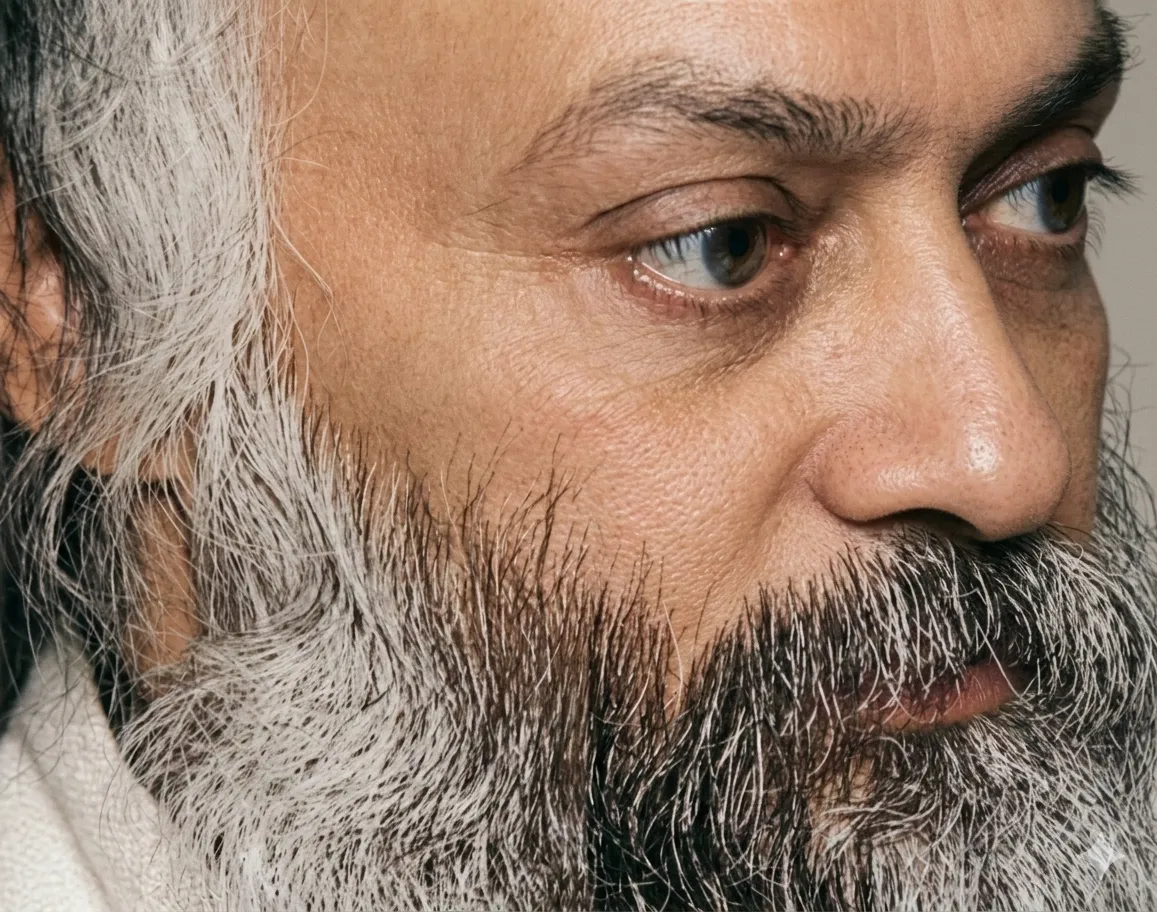
Lust is just God’s energy in you—notice it calmly without getting lost in it or trying to crush it, and it passes.
From the Discourses
Passages where Osho speaks to this question — each links to the complete discourse.
Osho, by your grace I can see the sky; I also have experiences of light, and I can become one with the inner flow. But when lust seizes me, I want to be as immersed in that as in meditation. Please tell me, what is this state of mine?
First thing: be a witness to lust as well. Do not become its controller. Do not try to bring it under control by force; remain a witness to it too. Just as you are a witness to everything else, be a witness to lust as well. It is difficult, because for centuries you have been taught that lust is sin. That notion of sin has settled in the mind. In this world there is no sin at all—only the Divine. Drop that notion. In this world the One alone is, pervading all forms—that One is the Divine. In the smallest of the small, the same; in the vastest of the vast, the same! In the low, the same; in the high, the same! In lust, the same; and in samadhi, the same. Here there is nothing that is “sin.” This does not mean I am saying you should remain stuck…
चौथा प्रश्न: ओशो, आपकी अनुकंपा से आकाश देख पाता हूं; प्रकाश के अनुभव भी होते हैं, और भीतर के बहाव के साथ भी एक हो पाता हूं। लेकिन जब कामवासना पकड़ती है, तब उसमें भी उतना ही डूबना चाहता हूं, जितना ध्यान में। कृपया बतायें, यह मेरी कैसी स्थिति है?
इस जगत में पाप है ही नहीं--बस परमात्मा है। यह धारणा छोड़ो। इस जगत में एक ही है रूप समाया सब में--वह परमात्मा है। क्षुद्र से क्षुद्र में वही, विराट से विराट में वही! निम्न में वही, श्रेष्ठ में वही! कामवासना में भी वही है, और समाधि में भी वही है। यहां पाप कुछ है ही नहीं।
In this same context, someone has asked: Osho, what is your view regarding lust?
Lust is energy, and whoever fights with the energy of lust will be destroyed. Lust is to be transformed, not fought with. Sex, when transformed, becomes brahmacharya. Sex is not the opposite of brahmacharya. Brahmacharya is the transformed state of sex itself. In this world no energies are destroyed—only transformation happens. In this world nothing is destroyed; only transformation happens. Energies are never annihilated. The very energy of hatred, when transformed, becomes love. The very energy of cruelty, when transformed, becomes kindness and compassion. What you are calling lust—those very urges, when transformed, become forces that move life toward truth. After all, you must have seen: just now, on my way here, I passed a place where flowers were blooming. You must have seen a garbage heap where filth lies piled up. From that filth a stench arises, a bad odor spreads; anyone passing by holds his nose. But if…
इसी संदर्भ में एक और प्रश्न पूछा है कि ओशो, वासना के संबंध में मेरा क्या खयाल है?
वासना शक्ति है, और वासना-शक्ति से जो लड़ेगा वह नष्ट हो जाएगा। वासना को परिवर्तित करना होता है, उससे लड़ना नहीं होता है। सेक्स ही परिवर्तित होकर ब्रह्मचर्य हो जाता है। सेक्स ब्रह्मचर्य का विरोध नहीं है। ब्रह्मचर्य सेक्स की ही परावर्तित ट्रांसफार्म स्थिति है। जगत में कोई शक्तियां नष्ट नहीं होती हैं। सिर्फ परिवर्तन होता है। जगत में कुछ भी नष्ट नहीं होता है, सिर्फ परिवर्तन होता है। शक्तियों का तो कोई विनाश कभी नहीं होता। घृणा की ही शक्ति परिवर्तित होकर प्रेम बन जाती है। क्रूरता की ही शक्ति परिवर्तित होकर दया और करुणा बन जाती है। जिनको आप वासना कह रहे हैं, वे ही वासनाएंं परिवर्तित होकर जीवन में सत्य के लिए गति देने वाली शक्तियां हो जाती हैं। आखिर आपने देखा होगा, अभी मैं रास्ते में आया तो बीच में एक जगह फूल लगे हुए थे। आपने देखा होगा घूरे पर गंदगी पड़ी रहती है। उस गंदगी से बास निकलती है, बदबू फैलती है। कोई पास से निकले तो नाक बंद कर लेता है। …
Brahmacharya is not the renunciation of lust; it is the release of the love hidden within lust. Don’t murder lust; that’s like crushing the seed—then sit and wait: no fragrance will come. The seed too would not have yielded fragrance while it remained intact. It must break—in the soil—so that the seed perishes but the fragrance concealed within is set free. Then a long journey: seed to tree, tree to flower, flower to fragrance. But if you take a stone and smash the seed, as many so-called sadhus and renunciates do—killing lust out of fear of violence—you’ll wait forever for the scent of brahmacharya. You will find their lives hanging in mid-air, like Trishanku—neither of this world nor the other. The plight of such ascetics is worse than yours. At least you have the seed; you may be stuck at the seed, but the possibility remains to sow it.
A friend has asked, Osho, in bhakti-yoga you have given love a fundamental place. I don’t know whether we ordinary people are familiar with love or only with lust! What is the difference between the two? And can lust become love?
It is worth asking, and worth understanding. Because we take lust to be love. And lust is not love; it can become love. In lust there is the possibility of love. But lust itself is not love; it is only a seed. If rightly used, it can sprout—but a seed is not a tree. So the one who becomes satisfied with lust, or concludes, “This is the end,” will never even come to know what love is. Lust can become love. Lust means attraction between two bodies—between bodies. Love means attraction between two minds. And devotion means attraction between two souls. They are all attractions, but on three planes. When one body is drawn to another body, that is kama, sex. When one mind is drawn to another mind, that is prem, love. And when one soul is drawn to another soul, that is bhakti, devotion. We live on the…
एक मित्र ने पूछा है, ओशो, भक्ति-योग में आपने प्रेम को आधारभूत स्थान दिया है। पता नहीं हम सामान्य लोग प्रेम से परिचित हैं या केवल कामवासना से! दोनों में क्या फर्क है? और क्या कामवासना प्रेम बन सकती है?
पूछने जैसा है और समझने जैसा है। क्योंकि हम कामवासना को ही प्रेम समझ लेते हैं। और कामवासना प्रेम नहीं है, प्रेम बन सकती है। कामवासना में संभावना है प्रेम की। लेकिन कामवासना प्रेम नहीं है। केवल बीज है। अगर ठीक-ठीक उपयोग किया जाए, तो अंकुरित हो सकता है। लेकिन बीज वृक्ष नहीं है। इसलिए जो कामवासना से तृप्त हो जाए या समझ ले कि बस, अंत आ गया, उसके जीवन में प्रेम का पता ही नहीं होता। कामवासना प्रेम बन सकती है। कामवासना का अर्थ है, दो शरीर के बीच आकर्षण; शरीर के बीच। प्रेम का अर्थ है, दो मनों के बीच आकर्षण। और भक्ति का अर्थ है, दो आत्माओं के बीच आकर्षण। वे सब आकर्षण हैं। लेकिन तीन तलों पर। जब एक शरीर दूसरे शरीर से आकृष्ट होता है, तो काम, सेक्स। …
A friend has asked: Osho, yesterday you said that to know anger completely, one must experience it in its totality. Then how is one to know lust completely? Because the experienced say that lust is never satisfied; the more you indulge it, the more it grows. So how can one go beyond lust?
Surely there is an inherent purpose. And it is this: even these saints could not have been born without lust. They too went beyond only by passing through the experience. They too entered it and found it to be futile. That realization of futility is precious—and it comes only when it happens in your own experience. So do not be in a hurry. Do not rely on borrowed experience. That does not mean you tell the experienced, “You are wrong.” You should simply say, “We do not yet know. We wish to enter and know for ourselves what this lust is. We will know it fully. If it turns out to be wrong, that very knowing will bring liberation. And if it turns out to be right, then there is no need for liberation.” One thing is certain: whoever has known rightly has become free. And another thing is also…
एक मित्र ने पूछा है कि ओशो, कल आपने कहा कि क्रोध को पूरा जानने के लिए क्रोध का पूरा अनुभव जरूरी है। तो कामवासना को पूरा कैसे जाना जाए? क्योंकि अनुभवियों ने कहा है कि कामवासना की तृप्ति कभी भी नहीं हो पाती; जितनी भोगेंगे, उतनी ही बढ़ती जाएगी। तो कामवासना को कैसे पार किया जाए?
… और वह निहित प्रयोजन यह है कि ये महात्मा भी पैदा नहीं हो सकते थे, अगर कामवासना न होती। ये महात्मा भी उसी अनुभव से गुजरकर पार गए हैं। इन्होंने भी उसमें पड़कर जाना है कि व्यर्थ है। वह व्यर्थता का बोध बड़ा कीमती है। वह होगा ही तब, जब आपको अनुभव में आ जाए। तो जल्दी मत करना। उधार अनुभव का भरोसा मत करना। इसका यह मतलब नहीं है कि आप अनुभवियों को कहो कि तुम गलत हो। आपको इतना ही कहना चाहिए कि हमें अभी पता नहीं है। और हम उतरना चाहते हैं, और हम जानना चाहते हैं कि क्या है यह कामवासना। और हम इसे पूरा जान लेंगे। तो अगर यह गलत होगी, तो वह जानना मुक्ति ले आएगा। …