
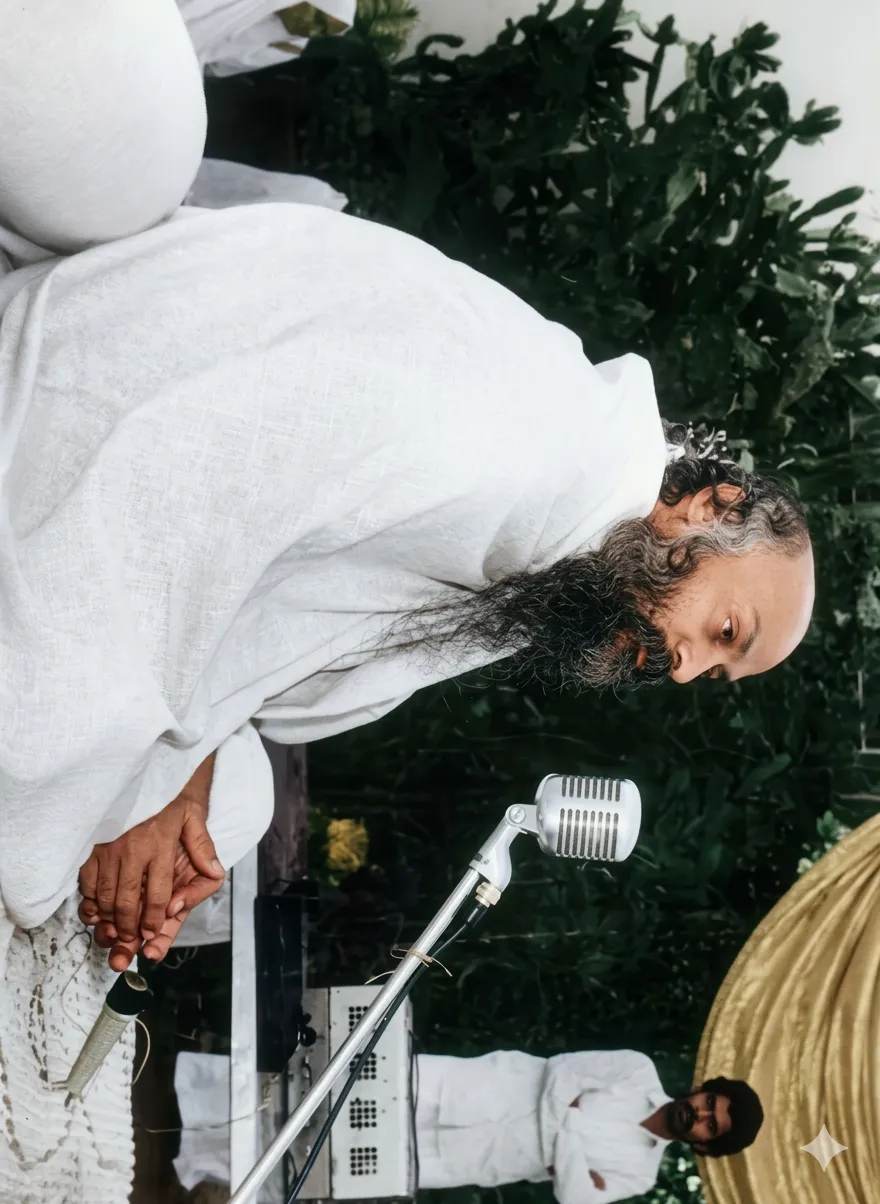
When it’s very hot, don’t fight it—stay aware, relax, and learn small ways to work with it, like Osho’s joke about learning to live underwater.
From the Discourses
Passages where Osho speaks to this question — each links to the complete discourse.
Osho, to abide in oneself beyond the knower, knowledge, and the known—can one live in that state for an entire lifetime? Just as a lake is sometimes calm, sometimes playful, and sometimes stormy, does the self-realized one remain unaffected by worldly circumstances in the same way? Osho, dispel my ignorance!
Spring means harmony between season and mood. Meditation means harmony between you and the whole. You become harmonious. Whatever is, is perfectly okay—accepted. Nowhere any refusal, nowhere any opposition. Whatever is happening is auspicious. That is trust; that is meditation. Such meditation naturally takes you into an altogether new experience. Storms will rise; they will not stop because you meditate. Diseases will not stop coming to the body because you meditate. They will come. A thorn will sometimes pierce the foot. Raman had cancer; so did Ramakrishna—great storms came! Ramakrishna got cancer of the throat; he could neither eat nor drink. Vivekananda said to him, “What is not in your power! Why don’t you pray to the Lord at least to allow food and water to pass? We suffer watching you writhe.” Ramakrishna said, “Ah, it never even occurred to me to pray. How could it occur—to one whose prayer…
दूसरा प्रश्न: ओशो, ज्ञाता, ज्ञान और ज्ञेय से परे स्वयं में जो स्थित होना है, क्या उस अवस्था में आजीवन जीया जा सकता है? जिस तरह झील कभी शांत, कभी चंचल और कभी तूफानी अवस्था में होती है, क्या उसी तरह आत्मज्ञानी सांसारिक परिस्थितियों से प्रभावित नहीं होता है? ओशो अज्ञान हरें!
वसंत यानी मौसम और मिजाज के बीच समरसता। ध्यान यानी तुम्हारे और समस्त के बीच समरसता। समरस हो गए। ठीक है जो है, बिलकुल ठीक है, स्वीकार है। कहीं कोई अस्वीकार नहीं, कहीं कोई विरोध नहीं। जो रहा है, शुभ हो रहा है। यही आस्तिकता है, यही ध्यान है। ऐसा ध्यान स्वभावतः एक नई ही अनुभूति में तुम्हें ले जाएगा। तूफान उठेंगे, तूफान रुक नहीं जाएंगे तुम्हारे ध्यान करने से। ध्यान करने से शरीर में बीमारियां आनी बंद नहीं हो जाएंगी। बीमारियां आएंगी, शरीर में कभी कांटा भी चुभेगा। रमण को कैंसर हो गया, रामकृष्ण को भी...तो बड़े तूफान आए! रामकृष्ण को कैंसर हो गया गले का, तो भोजन न कर सकते थे, पानी न पी सकते थे। तो विवेकानंद ने उन्हें कहा कि आपके हाथ में क्या नहीं! आप क्यों नहीं प्रभु से प्रार्थना करते कि इतना तो कम से कम कर, कि कम से कम भोजन और पानी तो जाने दे! हम पीड़ित होते हैं आपको तड़पते देख कर।
Osho, to cross the ocean of becoming and dissolve into the Supreme Self, which should one rely on—insensate devotion, foolish devotion, or blind devotion?
So drop this worry—whether insensate devotion, foolish devotion, blind devotion, or deranged devotion. Drop it; devotion is enough. And in devotion all these labels will take care of themselves. Become a devotee once, and “blind” you will automatically be—meaning: the whole world will call you blind. You will not become blind; rather, you will gain eyes. You will begin to see what ordinary eyes cannot see. The invisible will become visible; the imperceptible will come within perception. That which no one has ever touched will be felt as touch. But the world will call you blind. The world will not be able to accept it—because the world is blind, and the blind call you blind. H. G. Wells has a story: somewhere in Mexico there is a valley where children go blind within three months of birth. The story is based on fact. The climate, the food—something there ruins the…
दूसरा प्रश्न: ओशो, भवसागर से पार उतरकर परम आत्मा में लीन होने के लिए जड़भक्ति, मूढ़भक्ति एवं अंधभक्ति में से किसका सहारा लिया जाये?
तो तुम यह फिक्र छोड़ो कि जड़भक्ति कि मूढ़भक्ति कि अंधभक्ति कि विक्षिप्त भक्ति, यह छोड़ो तुम फिक्र; भक्ति काफी है। और उस भक्ति में ये सब चीजें अपने आप आ जायेंगी। तुम एक दफा भक्त तो हो जाओ, अंधे अपने आप हो जाओगे। सारी दुनिया तुमको अंधा कहेगी, तुम नहीं अंधे हो जाओगे। तुम्हें तो आंखें मिल जायेंगी। तुम्हें तो वह दिखाई पड़ने लगेगा जो साधारण आंखों से दिखाई ही नहीं पड़ता। अदृश्य तुम्हारे लिए दृश्य बनने लगेगा। अगोचर गोचर हो जायेगा। जिसे कभी किसी ने नहीं छुआ उसका स्पर्श अनुभव होने लगेगा। लेकिन दुनिया तुम्हें अंधा कहेगी। दुनिया न मान सकेगी। क्योंकि दुनिया अंधी है। और दुनिया तुम्हें अंधा कहेगी।
A certain wall surrounds everybody, a subtle, very invisible wall, so you are not even aware that the wall is there. It is a very transparent wall. You can see through it and it hangs around you. So you can move and you can think that you are free but you are not free. You are not imprisoned in a prison made of stones and bricks, you are imprisoned in a prison made of thoughts, concepts, theologies, philosophies. It is a very invisible thing and one has to get rid of it. When the whole sky is yours with all its stars, then the whole existence is yours. That's exactly the teaching of all the masters -- Jesus, Buddha, Zarathustra. There is no difference, there cannot be. If truth is one, how can the teachings of those who have awakened to truth be different?
A friend has asked, Osho, I am very restless, and so much energy gets used up in this restlessness. How can I make use of it, and what is its cause?
But the anger remains there; it will not change by your turning away. It will change by your standing your ground and seeing it. If you turn your back, anger will make deeper wounds within and lay down roots. Fix both your eyes on anger. This is the moment to consciously see anger. When lust seizes the mind, do not run. Do not panic. Do not chant Ram-Ram. Look lust straight in the face. A direct encounter with the passions is necessary. But man has been taught to run. He has been told, wherever something bad appears—run away. But where will you run? The bad is within you; it will go with you. There is no way to run away from yourself. If evil were outside somewhere, we could run. It stands within—we will have to change it. We will have to use this manure. And using it is not…
एक मित्र ने पूछा है, ओशो, मैं बहुत बेचैन हूं और मेरे पास इतनी बेचैनी है कि सारी शक्ति इस बेचैनी में ही समाप्त हो जाती है। तो मैं इस बेचैनी का क्या उपयोग कर सकता हूं और इस बेचैनी का कारण क्या है?
लेकिन क्रोध वहां पड़ा है, वह बदलेगा नहीं। आपके हटने से नहीं बदलेगा; आपके जम जाने से और देखने से बदलेगा। आप पीठ कर लेंगे, तो क्रोध और घाव बना देगा भीतर, और जड़ें जमा लेगा। आप अपनी दोनों आंखें क्रोध पर गड़ा दें। और यह क्षण है कि आप होशपूर्वक क्रोध को देख लें। कामवासना मन को पकड़े, तो भागें मत। घबड़ाएं मत। राम-राम मत जपें। कामवासना को सीधा देखें। सीधा साक्षात्कार जरूरी है वासनाओं का। लेकिन आदमी को भागना सिखाया गया है। उसको कहा गया है, जहां भी कुछ बुरा दिखाई पड़े, भाग खड़े होओ। लेकिन भागोगे कहां? बुरा तुम्हारे भीतर है, वह तुम्हारे साथ चला जाएगा। अपने से भागने का कोई भी रास्ता नहीं है। अगर बुराई कहीं बाहर होती, तो हम भाग भी जाते। वह हमारे भीतर खड़ी है, उसको बदलना पड़ेगा। इस खाद का उपयोग करना पड़ेगा। और इसका उपयोग करना बहुत कठिन नहीं है।
A friend has asked, Osho: Because of the small and great sorrows of life, the mind sometimes becomes agitated, despondent, and restless. So how can one, while living in the world, keep the mind always calm, joyful, and enthusiastic?
The vision of destiny says: do not do anything. You cannot do anything; simply consent. Try this experiment. Restlessness has come many times, and you have tried to become calm—and you have not managed it so far. Try the second experiment. When restlessness comes, accept: “I am restless. I am such a person that restlessness will come to me. I must have done such actions that restlessness is coming to me. In my destiny I am a vessel fit for restlessness.” Accept this. Do not struggle even a hair’s breadth against this restlessness. What will happen? The moment you accept, restlessness begins to vanish. Because the feeling of acceptance becomes its death. The sorrow we consent to—where does that sorrow remain? We are such that we cannot even consent to happiness; consenting to sorrow is far more difficult. But the very thing to which we consent… Just a few days…