
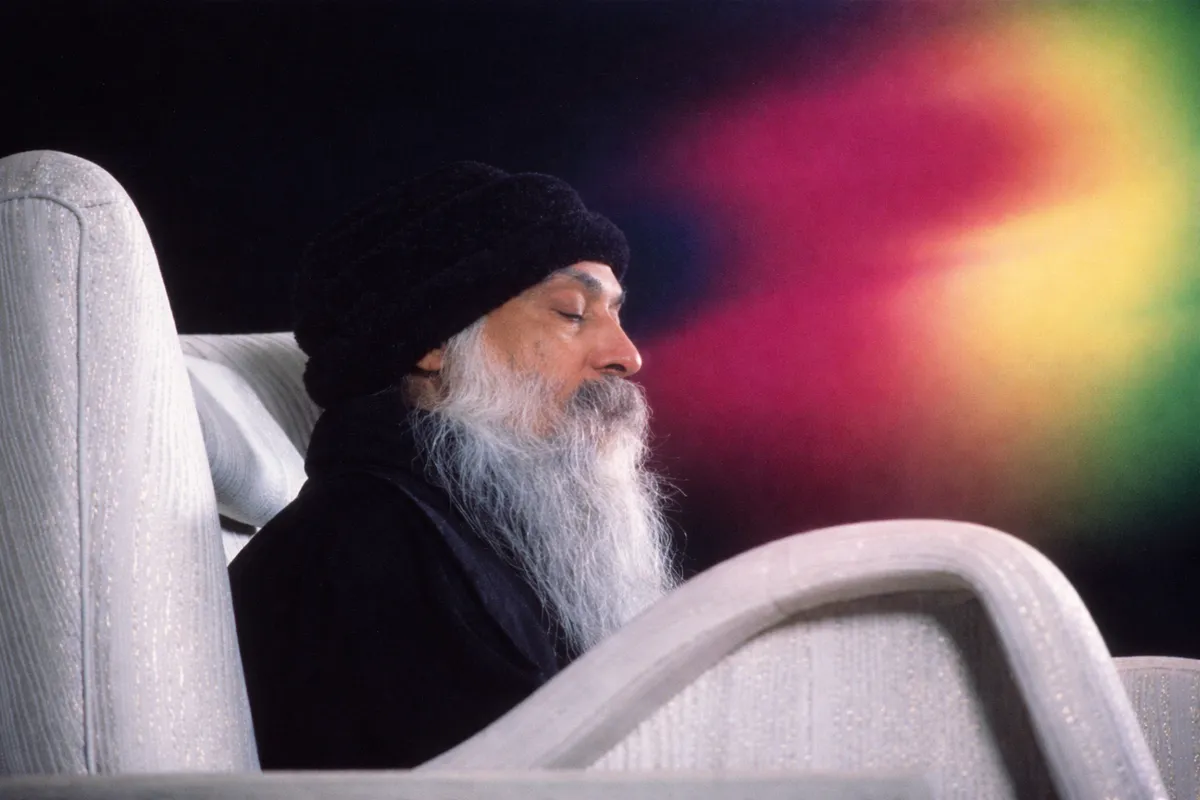
A sangha is friends who meet to meditate and pray, and their calm helps each other go deeper—like one sitar making another sing.
From the Discourses
Passages where Osho speaks to this question — each links to the complete discourse.
Osho, a question has arisen about institutions and the sangha. Souls like Mahavira attained themselves by seeking themselves, not by following anyone else. This seems entirely true; and yet, by creating the fourfold sangha of monks, nuns, laymen, and laywomen, did Mahavira not in fact create an organization? Did this formation of a sangha not become, in a direct sense, imitation? What might Mahavira have meant by having people follow after him? And isn’t a body of sannyasins and an organization forming around you exactly like Mahavira’s? Please clarify briefly.
Everything deteriorates in human hands. There is only one remedy: if only we could say to those who loved Moses, Please, do not worship the flute—learn to play it. If those around Moses learned to play—even if they could not play as Moses did—if they at least learned to play, one thing would be certain: no one would plate the flute with gold or stud it with jewels. Because then they could say: the worship of the flute is not of the flute, but of the music that arises from it. And that music arises only when the flute is hollow. Fill it with gold and no music will arise. Do not worship Mahavira and Buddha; rather, what happened in their lives—the heights that manifested, the summits they touched—if we too set out, even for smaller hills, perhaps there will be no distortion. But we get busy worshiping. Worship itself…
ओशो, संस्था और संघ के संदर्भ में एक प्रश्न आया है। महावीर जैसी आत्माएं दूसरे किसी का अनुगमन न करके स्वयं को खोजते-खोजते ही स्वयं को उपलब्ध हुईं। यह बात बिलकुल सही मालूम पड़ती है, फिर भी महावीर ने साधु-साध्वी, श्रावक-श्राविका के चतुर्विध संघ की रचना करके क्या एक संगठन की रचना नहीं की? क्या यह संघ-रचना सीधे रूप में अनुकरण नहीं बन गई? महावीर का उनके पीछे क्या मतलब रहा होगा? क्या आपके पास भी ठीक महावीर जैसे ही संन्यासी और संगठन का निर्माण नहीं हो रहा है? कृपया संक्षेप में स्पष्ट करें।
आदमी के हाथ में सब पड़ कर बिगड़ जाता है। लेकिन इसका कोई उपाय नहीं है। इसका सिर्फ एक ही उपाय है कि काश, मूसा के आस-पास प्रेम करने वाले लोगों को हम कहें कि तुम कृपा कर बांसुरी की पूजा मत करो, बांसुरी बजाना सीखो। अगर मूसा के आस-पास के लोग बांसुरी बजाना सीखें--हो सकता है मूसा जैसी न बजा पाएं, लेकिन बांसुरी बजाना भी सीख लें--तो एक बात तो कम से कम पक्की है कि बांसुरी पर सोना नहीं चढ़ेगा, हीरे-जवाहरात नहीं जड़े जाएंगे। क्योंकि तब वे इतना कह सकेंगे कि बांसुरी की पूजा बांसुरी की नहीं है, उससे पैदा होने वाले संगीत की पूजा है। और वह संगीत तभी पैदा होता है जब बांसुरी पोली हो। उसमें सोना भर दिया, तो फिर संगीत पैदा नहीं होता है।
Osho, you usually criticize the crowd. But in support of Buddha’s sangha you cited Gurdjieff and gave great importance to group power. Please explain the difference between the power of a sangha, a group, and a crowd.
Sangha means: those utterly asleep in the thick night do not come near a Buddha; those who are already awake have no need to come—one who has awakened, who has become a Buddha unto himself, why should he come? For what? And the one fast asleep—how will he come? He will pass by a Buddha and feel no thrill. He will pass through the Buddha’s breeze and not even feel its touch. He is deeply asleep. Between these two are the people who are neither awakened enough to be Buddhas nor so asleep that they have no longing to become Buddhas. From those filled with drowsiness yet aflame with the urge to be lit, from those unlit lamps with the longing to burn—a sangha is formed. But the fundamental basis of a sangha is the awakened one at the center. The second word is organization. The day the Buddha departs,…
A few small questions: Osho, Buddha said the journey to truth is solitary. Then why did he create the vast Sangha?
So that many people could set out together, each alone, on the journey. The Sangha was not created to go together. No one can enter samadhi together. One has to go alone. The journey always ends in aloneness. But in the beginning, if there is company, great reassurance, great courage arises. When you meditate alone, trust doesn’t come that anything will happen. You have lost trust in yourself. Meditate with ten thousand people: you may not trust yourself, but you begin to trust the crowd of nine thousand nine hundred and ninety-nine. Each of them is in the same condition. They too don’t trust themselves. And why would they? The total earning of a whole life is rubbish. No real experience has come. Their very faith is lost that “I can still find peace.” Impossible! Even if joy happens to them, they will think, “This is some fantasy, or someone…
थोड़े से छोटे-छोटे प्रश्न: ओशो, बुद्ध ने कहा कि अकेले ही है सत्य की यात्रा। फिर विराटतम संघ क्यों बनाया?
… साथ जाने के लिए संघ नहीं बनाया। साथ तो कोई जा ही नहीं सकता समाधि में। अकेले-अकेले ही जाना होता है। यात्रा का अंत तो सदा अकेले पर होता है। लेकिन प्रारंभ में अगर साथ हो, तो बड़ा ढाढ़स, बड़ा साहस मिल जाता है। तुम अकेले ध्यान करो, तो भरोसा नहीं आता कि कुछ होगा। तुम्हें अपने पर भरोसा खो गया है। तुम दस हजार आदमियों के साथ ध्यान करो, तुम्हें अपने पर तो भरोसा नहीं है, यह नौ हजार नौ सौ निन्यानबे लोगों की भीड़ पर तुम्हें भरोसा आ जाता है। इनमें से भी प्रत्येक की यही हालत है। इनको अपने पर भरोसा नहीं है। हो भी क्या अपने पर भरोसा! जिंदगी भर की कुल कमाई कूड़ा-करकट है। कुछ अनुभव तो आया नहीं। इनकी आस्था ही खो गयी है कि हमें, और शांति मिल सकती है। असंभव! …
If some one wishes that the ancient tradition -- ideas about Sannyas should be adhered to, then the flower of religion will soon fade away in this world. It is necessary to give birth to a new ideology about Sannyas if we wish to protect the flower of religion in this world. SANGH AND SANGATHAN Now a question arises: If nonstealing means nonfollowing, why have all prophets, religious leaders etc. created organisations for their followers? For example why did Mahavira create four-fold organization of sadhu-sadhvi and shravak-shravaki? In reply I shall say that meanings of words undergo a great change in course of years. Some words which had a particular meaning 2,500 years ago, do not have the same meaning today. And great errors are made due to this. A big change has taken place between what Mahavira called a sangh and what we understand by it today.
Osho, even in the presence of a Buddha, is it still essential that the seeker find his own solution?
That is why Buddhas have created families. The Buddha created the sangha. He formulated three refuges. The first was: “Buddham sharanam gacchami”—I go to the refuge of the Buddha. But as long as the Buddha is alive this is easy. When the Buddha is no longer in the body, an ordinary person finds it difficult—how to take refuge in one who is not visibly present? He is invisible; even his feet are not visible—how to take refuge? So the Buddha made a second formula: “Dhammam sharanam gacchami”—if there is no Buddha, take refuge in the Dhamma. But Dhamma is a very subtle, ethereal thing. Dhamma means the law by which the universe moves. Yet it is not seen. So the Buddha made a third formula: “Sangham sharanam gacchami”—take refuge in the Sangha; the community of monks, the family. The Buddha is the subtlest. Buddhahood means: one who, awakened, has realized…
चौथा प्रश्न: ओशो, क्या बुद्धपुरुष के होते हुए भी साधक को अपना समाधान स्वयं ही खोजना अनिवार्य है?
इसलिए परिवार बनाए हैं बुद्धों ने। बुद्ध ने संघ बनाया। बुद्ध ने संघ के तीन सूत्र बनाए। पहला सूत्र था: ‘बुद्धं शरणं गच्छामि।’ कि मैं बुद्ध की शरण जाता हूं। लेकिन बुद्ध जब तक जीवित हैं, तब तक यह आसान होगा। बुद्ध के जीवित न होने पर साधारण आदमी को मुश्किल हो जाएगा कि जो बुद्ध नहीं हैं उनकी शरण कैसे जाऊं? कहीं दिखाई नहीं पड़ते, अदृश्य हैं, चरण भी दिखाई नहीं पड़ते, शरण कैसे जाऊं? तो बुद्ध ने दूसरा सूत्र बनाया: ‘धम्मं शरणं गच्छामि।’ अगर बुद्ध न हों तो धर्म की शरण जाना। लेकिन धर्म भी बड़ी वायवीय बात है, हवाई बात है। धर्म यानी नियम, जिससे जगत चल रहा है। लेकिन वह दिखाई नहीं पड़ता।