
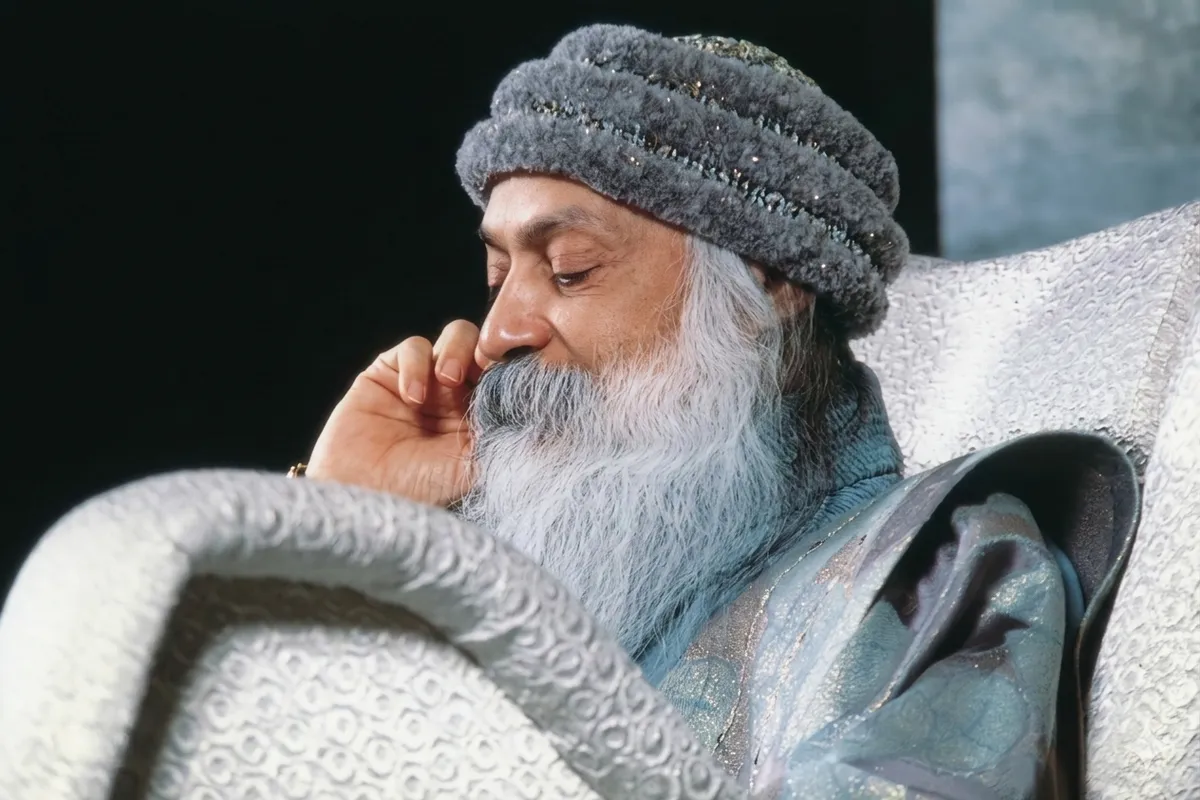
Osho says letting women join a meditation-only path turned it toward prayer and devotion, so the original version didn’t last as long.
From the Discourses
Passages where Osho speaks to this question — each links to the complete discourse.
Osho, because women were admitted into the sangha, the religion of Lord Buddha lasted only five hundred years in India instead of five thousand. You, however, are allowing women free entry into your sangha; would you kindly tell us how long-lived your religion will be?
Worrying about the future is part of ignorance. Let tomorrow take care of what tomorrow will be. There is a story that Buddha worried about this, but how true that story is is hard to say. I have also told you many times that Buddha said, “Now my religion will last only five hundred years; women have been admitted.” This can have only one meaning; it certainly cannot mean that Buddha was concerned about the future. Whether a religion lasts five hundred years, five thousand, or fifty thousand—what use is that to Buddha? So the purpose must have been something else. That purpose is simply this: the life-discipline of Buddha was fundamentally developed for men. Mahavira’s life-discipline too was fundamentally developed for men. Both paths are of resolve, not surrender; of austerity, not of the Lord’s grace. In both their paths there is no place for God; there is no…
आखिरी प्रश्न: ओशो, स्त्रियों को संघ में प्रवेश देने के कारण, भगवान बुद्ध का धर्म भारत में पांच हजार की जगह पांच सौ वर्ष ही चला। आप तो अपने संघ में स्त्रियों को मुक्तभाव से प्रवेश दे रहे हैं; क्या बताने की कृपा करेंगे कि आपका धर्म कितना दीर्घजीवी होगा?
भविष्य की चिंता अज्ञान का ही हिस्सा है। कल क्या होगा, इसकी फिकर कल करेगा। बुद्ध ने इसकी फिकर की होगी, ऐसी कहानी तो है, लेकिन कहानी कहां तक सच है, कहना मुश्किल है। मैंने भी बहुत बार तुमसे कही है कि बुद्ध ने कहा कि अब मेरा धर्म पांच सौ वर्ष ही चलेगा, स्त्रियां सम्मिलित कर ली गई हैं। इसका एक ही अर्थ हो सकता है, इसका यह अर्थ तो हो ही नहीं सकता कि बुद्ध भविष्य की चिंता करते हैं। धर्म पांच सौ वर्ष चले कि पांच हजार वर्ष चले कि पचास हजार वर्ष चले, इससे बुद्ध को क्या प्रयोजन है?
Osho, the Buddha wanted to avoid giving sannyas to women. Shankara too was not in favor of giving sannyas to women. What incompatibility is there between the life of sannyas and women? Is there no harmony between them, or only a little? Do women need sannyas less than men?
Man and woman have essentially different paths. The man’s path is meditation; the woman’s path is love. The man’s path is knowledge; the woman’s path is devotion. Their inner climates are very different, even opposite. To man, love seems a bondage; to woman, love seems a liberation. So even when a man loves, he does it while running, fearful that he may get bound. And when a woman loves, she wants to be bound wholly, because in bondage she has known freedom. Therefore the man’s language is: How to get free? How to be liberated from the world? And the woman’s search is: How to drown totally so that nothing remains behind? So sannyas is fundamentally masculine. That is why even Buddha hesitated. Women were moved—women are moved easily, for their hearts are more sensitive—and they began to ask: Give us sannyas too. Buddha was afraid. Mahavira even told them…
आखिरी प्रश्न: ओशो, बुद्ध ने स्त्रियों को संन्यास देने से टालना चाहा। शंकर भी स्त्रियों को संन्यास देने के पक्ष में नहीं थे। संन्यास जीवन की स्त्रियों से ऐसी क्या विपरीतता है? क्या स्त्रियों से उसका कोई तालमेल नहीं है, या कम है? क्या उन्हें संन्यास लेने की जरूरत पुरुषों की अपेक्षा कम है?
पुरुष और स्त्री का मार्ग मूलतः अलग-अलग है। पुरुष का मार्ग ध्यान का है; स्त्री का मार्ग प्रेम का। पुरुष का मार्ग ज्ञान का है; स्त्री का मार्ग भक्ति का। उन दोनों की जीवन-चित्तदशा बड़ी भिन्न है, बड़ी विपरीत है। पुरुष को प्रेम लगता है बंधन; स्त्री को प्रेम लगता है मुक्ति। इसलिए पुरुष प्रेम भी करता है तो भी भागा-भागा, डरा-डरा कि कहीं बंध न जाएं। और स्त्री जब प्रेम करती है तो पूरा का पूरा बंध जाना चाहती है, क्योंकि बंधन में ही उसने मुक्ति जानी है। तो पुरुष की भाषा जो है वह है--कैसे छुटकारा हो? कैसे संसार से मुक्ति मिले? और स्त्री की जो खोज है वह है--कैसे वह डूब जाए पूरी-पूरी, कुछ भी पीछे न बचे? तो संन्यास मूलतः पुरुषगत है। इसलिए बुद्ध भी झिझके। स्त्रियां प्रभाव में आ गयीं--स्त्रियां जल्दी प्रभाव में आती हैं, क्योंकि उनके पास ज्यादा संवेदनशील हृदय है--वे मांगने लगीं कि हमें भी संन्यास दो। बुद्ध डरे। …
Why was the buddha so reluctant to allow women into his sangha? Why did he feel, what did he feel about women?
They said, "Either he is going to become a chakravartin, a world conqueror, a world emperor, who will rule all the six continents, or he is going to become a renunciate, a sannyasin, who will renounce the world and live like a beggar. These are the two possibilities. Both are open, and we cannot say decisively which is going to happen." Then the father was very much afraid. He had been hoping for so long, and now, in his old age, the son was born -- it would have been better if he had not been born. In old age now, all his hopes were on him -- he was going to carry out all his incomplete ambitions -- and if he were to renounce the world that would be a great shock to him, he might die of the shock. He could not conceive or accept the possibility. Very…
It was continuously reported to me by women sannyasins, "What has happened to your sannyasins? They find excuses to escape." I said, "Nothing has happened. I have allowed you both total freedom, and freedom brings understanding. They have seen that in sexual relationship they are the losers, they are the fools. Next day, they have the hang-over. Naturally, everybody wants to protect himself, and everybody has the right to protect himself." But Buddha was afraid, because he would not allow a man even to see women. He would not allow a man to touch a woman, he will not allow a man to talk with a woman. Now if this is the situation, then naturally women have to be kept out of the sangha, of the initiated commune. But finally he reluctantly agreed, he had to agree.
Today at the lecture you extolled the virtues of hasidism. But if they are so praiseworthy, so full of feeling of brotherhood, etc., why do they exclude women from their religious practices, and particularly their ecstatic religious dancing?
Pratima has asked the question. It is very relevant, and has to be understood. The first thing to remember, to always remember, is never to judge the past by present standards. That is not compassionate. For example, when Hasidism was arising, to allow women into a religiously ecstatic dance would have been impossible. Not that Hasidic mystics were not aware, not that they would not have liked to allow it -- they would have loved it -- but it was impossible. Even Buddha was afraid to initiate women into his order. What was the fear? Was he an orthodox person? No, you cannot find a more revolutionary mind, but he insisted for many years on not allowing women into his order. No, the reason is to be found somewhere else. A religion has to exist in the society. If the society is too much against a certain thing, even the…