
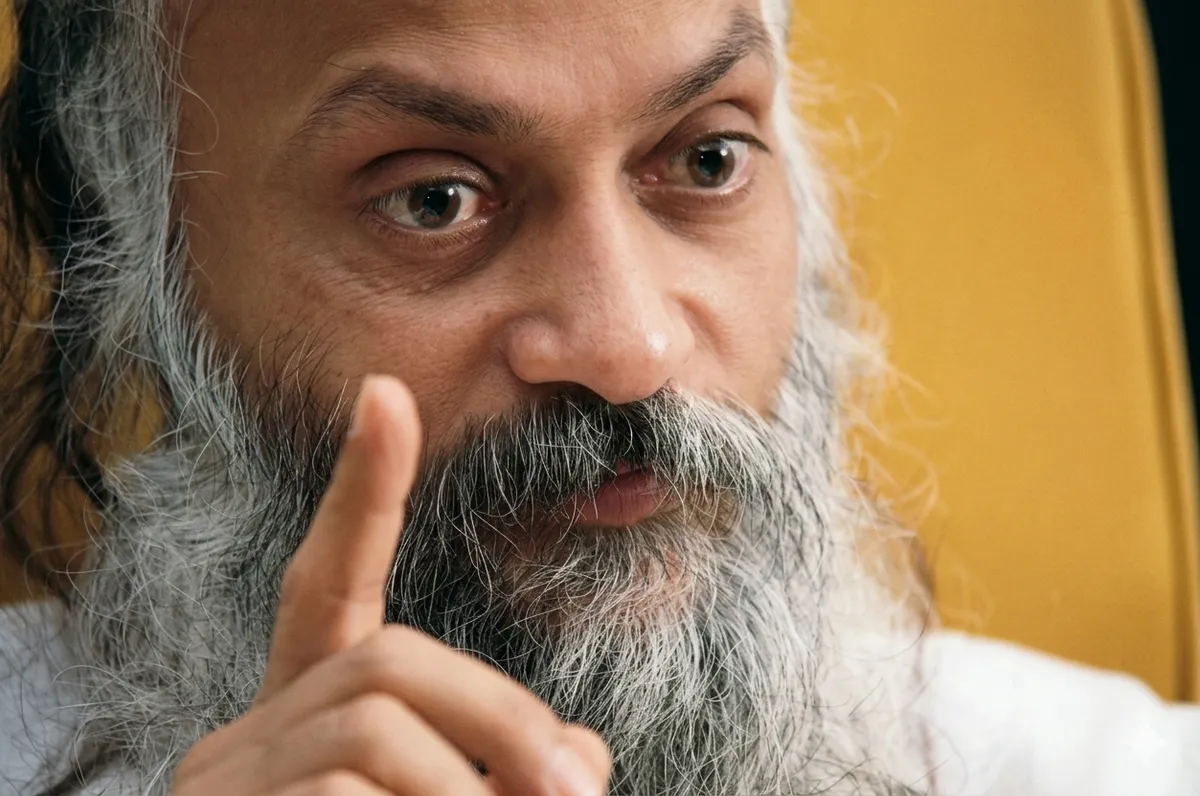
Some people open up only when the right person arrives at the right time; Rama for Ahalya, Krishna for Kubja—love’s touch wakes what was asleep.
From the Discourses
Passages where Osho speaks to this question — each links to the complete discourse.
Osho, in the incarnation of Rama, just as Ahalya’s stone‑like personhood waited for Rama and, from stone, Ahalya was restored, the Bhagavata also mentions that in Krishna’s incarnation Lord Krishna had union with Kubja. That may have been his biological need, but does it carry a spiritual meaning as well? What is it? Please clarify.
Not everything in life happens all the time; there are moments one must wait for; there is time whose coming must be watched for; there are occasions for which one has to pause. It is necessary to see this in many, many dimensions. A woman lying there like a stone... No, I would say she must have become stone; becoming stone is the poet’s imagination. But a woman who will blossom only through Rama—and only by Rama’s touch—will remain stone until Rama meets her. It is not that someone was literally lying there like a rock. That is the poet’s device, a way of speaking, his metaphor. But a woman who can bloom and become alive and conscious only through Rama’s touch—anyone else’s touch will leave her inert. The heart of the story is just this: each person has their own waiting. Each has their own awaiting. And until the…
ओशो, रामावतार में जैसे अहिल्या का शिला-व्यक्तित्व राम का इंतजार करता था और शिला में से अहिल्या हुई, इसी तरह भागवत में उल्लेख है कि कृष्णावतार में भगवान कृष्णचंद्र का समागम कुब्जा के साथ हुआ। तो वह उसकी बायोलॉजिकल नीड तो होगी, लेकिन क्या उसका कोई स्प्रिचुअल अर्थ घटाते हैं? वह क्या है, उसे जरा स्पष्ट करें।
जीवन में सभी कुछ सभी समय घटित नहीं होता है; क्षण हैं, जिनके लिए प्रतीक्षा करनी होती है; समय है, जिसकी राह देखनी होती है; अवसर हैं, जिनके लिए रुकना पड़ता है। बहुत-बहुत आयामों में इस बात को देखना जरूरी है। पत्थर की तरह पड़ी हुई कोई स्त्री...नहीं मैं कहता हूं कि पत्थर ही हो गई होगी, पत्थर हो जाना कवि की कल्पना है...लेकिन, कोई स्त्री जो राम से ही खिल पाएगी और राम के स्पर्श से ही खिल पाएगी, जब तक राम न मिलें तब तक पत्थर ही रहती है। ऐसा नहीं है कि कोई शिला की तरह पड़ी थी। वह तो कवि की व्यवस्था है, सोचने के ढंग हैं, और कवि के मेटाफर हैं। लेकिन जो स्त्री राम के स्पर्श से ही खिल सकती है और जीवंत हो सकती है और चेतना पा सकती है, कोई किसी और का स्पर्श उसे जड़ ही छोड़ जाएगा। कहानी का मर्म इतना ही है कि हरेक की अपनी प्रतीक्षा है। हरेक की अपनी अवेटिंग है। और क्षण आए बिना वह घटित नहीं होती है। जो पत्थर की तरह पड़ी थी, पत्थर ही हो गई थी...
Questioner; legend has it that ahilya, a woman turned into stone, had waited long enough for the coming of rama to resurrect her, and that another ordinary woman, kubja, persuaded krishna to make love to her. Do these stories have some spiritual significance?
Everything in existence happens in its own time, a time for which one has to wait with tremendous patience. Everything has its season; nothing happens out of season. Time and occasion have great importance in life. And it is necessary to go into it from different angles. I don't believe that Ahilya had actually turned into stone; this is just a poetic way of saying that she lived a stony life, a dull and dreary life until she met Rama whose love transformed her life. It is possible a woman will come to her flowering only through a particular man like Rama, and that she will patiently wait for such a man to come into her life. It is a poetic metaphor to say that Ahilya had turned into stone. It means to say that with the right opportunity, with real love, even stone comes alive. It also says that…
Osho, I could never quite believe that people actually danced with Krishna. Seeing your ashram has made me trust that such a thing could indeed have happened. I was never really a believer in God; but seeing you, God came to mind.
Yesterday I glanced at a book by Morarji Desai—he has written a book on the Gita. How can Morarji Desai understand Krishna? What book on the Gita can he possibly write! I have seen many books on the Gita. In this country, anyone who can write at all writes on the Gita. There are so many third-rate commentaries—but Morarji Desai has surpassed them all! It doesn’t even qualify as third-rate; it is pure trash. To associate the name of the Gita with it is an insult. What recognition of Krishna can Morarji Desai have? And if he could recognize Krishna, then all the dead would be able to. Krishna is a living dharma—dharma in its totality, in all its colors! With Krishna, dharma is not morality; with Krishna, dharma is existence—the whole of existence. It is total acceptance. That is my vision too—total acceptance. We are indeed creating a small…
पांचवां प्रश्न: ओशो, विश्वास तो नहीं होता था कि कृष्ण के साथ लोग नाचे होंगे। आपके आश्रम को देखकर भरोसा आया है कि ऐसा भी कभी हुआ होगा। हम खुदा के कभी कायल ही न थे, तुम्हें देखा तो खुदा याद आया।
… गीता पर क्या खाक किताब लिखेंगे! मैंने गीता पर बहुत किताबें देखी हैं। इस देश में जिसको भी लिखना आता है वही गीता पर किताब लिख देता है। तृतीय श्रेणी की इतनी टीकायें गीता पर हैं, मगर मोरारजी देसाई ने उन सबको मात कर दिया! वह तृतीय श्रेणी में भी नहीं आती। एकदम कचरा है। गीता का नाम उसके साथ जोड़ना अपमानजनक है। कृष्ण की पहचान मोरार जी देसाई को क्या हो सकती है? और अगर मोरारजी देसाई को कृष्ण की पहचान हो जाए, तो फिर सभी मुर्दों को हो जाएगी। कृष्ण एक जीवंत धर्म हैं। धर्म--अपनी समग्रता में, अपने सब रंगों में! कृष्ण के साथ धर्म कोई नैतिकता नहीं है। कृष्ण के साथ धर्म अस्तित्व है, संपूर्ण अस्तित्व है। समग्र स्वीकार है। वही मेरी दृष्टि भी है--समग्र स्वीकार की।
Osho, you have said that God accepts only those who reach him whole and undivided. But Kubja, whose limbs were all deformed, is also Krishna’s beloved gopi. By what virtue did she succeed in attaining Krishna?
His laughter brought a hush over the court, for no one had imagined he would laugh. Janaka asked, “It is clear why we laugh. Why are you laughing?” He said, “I laugh because at home I heard my mother say a great assembly of pundits, of Brahmins, of knowers of Brahman is gathered here. But here I see only cobblers. Those who see only skin are cobblers. None here sees the soul. It is true my body is bent in eight places. But there is not even a single knower of Brahman among them. Why waste time with these fools! If even one were a knower of Brahman, he would see me—not my body.” Janaka fell at Ashtavakra’s feet. And it was true. Do the wise gather in assemblies for debate? Do they come to argue, to win competitions? What remains for the wise to win? What prize is left…
चौथा प्रश्न: ओशो, आपने बताया कि परमात्मा उनको ही स्वीकार करता है, जो अखंड उसके पास पहुंचते हैं। लेकिन कुब्जा, जिसके सब अंग विकृत हैं, वह भी कृष्ण की प्रिय गोपी है। वह किस गुण के कारण कृष्ण को पाने में सफल हुई?
उसके हंसने से सन्नाटा छा गया दरबार में। क्योंकि किसी ने यह न सोचा था कि वह हंसेगा। जनक ने पूछा, हम क्यों हंसते हैं, वह तो साफ है। तुम क्यों हंस रहे हो? उसने कहा, मैं इसलिए हंसता हूं कि मैंने घर में सुना, मां ने कहा कि पंडितों की बड़ी सभा है, ब्राह्मणों की, ब्रह्मज्ञानियों की। यहां सब चमार इकट्ठे हैं। क्योंकि जिनको चमड़ी दिखाई पड़ती है, वे चमार हैं। इनमें से आत्मा किसी को दिखाई नहीं पड़ती। मेरा शरीर आठ जगह से झुका है, यह सच है। लेकिन इनमें एक भी ब्रह्मज्ञानी नहीं है। इन मूढ़ों के साथ क्यों समय खराब कर रहे हो! अगर इनमें एक भी ब्रह्मज्ञानी होता, तो वह मुझे देखता, मेरे शरीर को नहीं।
Osho, Kalyavan believes that Krishna is running away, but in fact Krishna makes Kalyavan run and leads him to the cave where Muchukunda is asleep. Muchukunda awakens and, the Puranic storytellers say, Kalyavan is burned by his gaze. What does that signify?
If we ever apply these symbols to the inquiry into life’s truths, astonishing experiences become available, astonishing insights become available. But we have sat with all this as mere stories. And having taken them as stories, we go on repeating them as if they were historical events. Yet far more than being historical events, these are parts of the vast play occurring in the human psyche, of the possibilities that have transpired in the human psyche, the potentials hidden in the human psyche. But in this way we have never tried to look at them very carefully. This has created much difficulty. And that is why personalities like Krishna gradually begin to seem untrue to us—because so much is gathered in them that it becomes hard to decide how it could be possible! There is a great need for a psychological commentary on figures like Krishna, so that their whole…
ओशो, कालयवन मानता है कि कृष्ण भागते हैं, मगर कालयवन को कृष्ण भगाते हैं और ले जाते हैं उस गुफा में जहां मुचकुंद सोया हुआ है। मुचकुंद जागता है और उसकी दृष्टि से, पुराणकार कहते हैं, कालयवन जल जाता है। वह क्या तात्पर्य रखता है?
इन प्रतीकों को अगर हम कभी भी जीवन-सत्यों की तरफ शोध में लगाएं, तो बड़ी आश्र्चर्यजनक अनुभूतियां उपलब्ध होती हैं और बड़ी आश्र्चर्यजनक अंतर्दृष्टियां उपलब्ध होती हैं। लेकिन हम इन सबको कथाएं मान कर बैठ गए हैं। और इन सबको कथाएं मान कर हम कहे चले जाते हैं। हम सब इनको ऐतिहासिक घटनाएं मान कर दोहराए चले जाते हैं। लेकिन ऐतिहासिक घटनाओं से ज्यादा कहीं मनुष्य के चित्त पर घटी हुई संभावनाओं, मनुष्य के चित्त में छिपी हुई पोटेंशियलिटीज, मनुष्य के चित्त में होने वाली विराट लीला के ये हिस्से हैं। लेकिन इस भांति कभी हमने उन पर बहुत गौर से देखने की कोशिश नहीं की है। इससे बहुत अड़चन हुई है। और इसलिए कृष्ण जैसे व्यक्तित्व हमें धीरे-धीरे झूठे मालूम पड़ने लगते हैं। …