
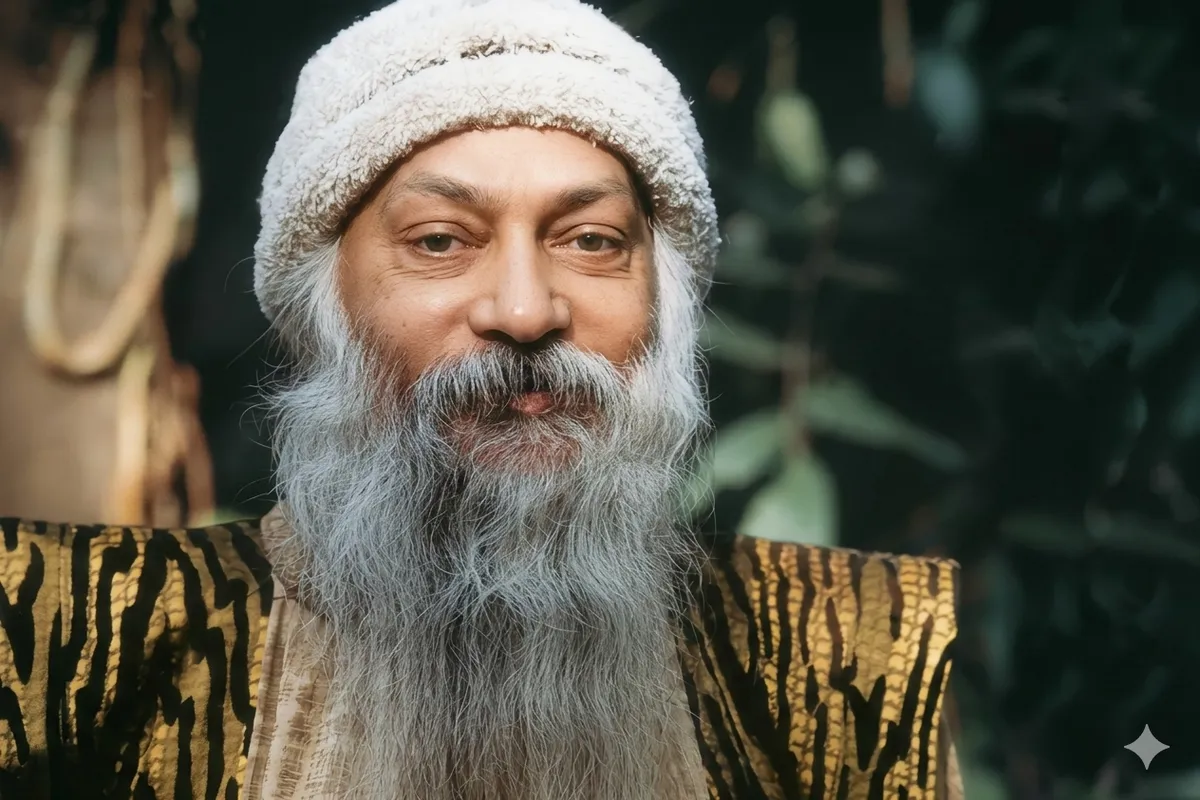
Don’t blindly worship people called ‘saints’; look for real kindness, humility, and truth, and question the fakes.
From the Discourses
Passages where Osho speaks to this question — each links to the complete discourse.
Osho, just seeing sadhus and saints makes me bristle, even angry. I see nothing in them but hypocrisy. But with you—God knows what you’ve done—reverence wells up! What is the secret of your influence?
Buddha asked, “What are you doing?” They said, “This is not killing; not violence. The souls of these animals will go to heaven.” Buddha joked, “Then why not kill your parents? Send them to heaven. The door is open—why send animals? Send your parents, your wife, your children. Send everyone—and then go yourself! But don’t send these animals. They don’t want to go—they’re writhing, they want to run. They are pleading for mercy. They cannot speak—look into their eyes, they are beseeching. They are bleating: ‘Let us go.’ They don’t want heaven—and you are sending them. The yajman who is funding this sacrifice wants heaven—send him!” Clever folks have always been around. Tricks kept running; we kept bearing them. Sin and merit are difficult to determine. On one side are people along the Amazon who eat humans—and it is no sin to them. On the other side are the Quakers…
दूसरा प्रश्न: ओशो, साधु-संतों को देख कर ही मुझे चिढ़ होती है और क्रोध भी आता है। मैं तो उनमें सिवाय पाखंड के और कुछ भी नहीं देखता हूं। पर आपने न मालूम क्या कर दिया है कि श्रद्धा उमड़ती है! आपके प्रभाव का रहस्य क्या है?
तो बुद्ध ने कहा कि यह तुम क्या कर रहे हो? तो उन्होंने कहा कि यह कोई हत्या नहीं है, हिंसा नहीं है। ये जो पशु-पक्षी काटे जाएंगे, इन सबकी आत्माएं स्वर्ग चली जाएंगी। तो बुद्ध ने बड़ा मजाक किया है! और बुद्ध ने कहा: तो फिर अपने माता-पिता को क्यों नहीं काटते? स्वर्ग ही भेज दो। यह अवसर मिला, स्वर्ग भेजने का द्वार खुला और तुम इन पशु-पक्षियों को भेज रहे हो? माता-पिता को भेज दो! पत्नी-बच्चों को भेज दो! फिर सबको भेज कर खुद भी चले जाना! मगर इन पशु-पक्षियों को तो न भेजो। ये तो जाना भी नहीं चाहते। ये तो तड़प रहे हैं। ये तो भागना चाहते हैं। ये तो कहते हैं कि क्षमा करो! बोल नहीं सकते। जरा इनकी आंखें तो देखो, गिड़गिड़ा रही हैं। मिमिया रहे हैं; ये कह रहे हैं कि हमें जाने दो। ये तो स्वर्ग जाना नहीं चाहते, इनको तुम भेज रहे हो। और जो जाना चाहते हैं...। जिस यजमान ने यह करवाया है यज्ञ, वह स्वर्ग जाना चाहता है, उसी को भेज दो। खूब चालबाज लोग दुनिया में थे। चालबाजियां चलती रहीं। चालबाजियां हम सहते रहे। …
Osho, what is the relationship between meditation and patience?
If you sit to meditate to remove mental restlessness, you will keep looking back again and again: “Has it gone yet?” And the irony is that when you begin to meditate, restlessness will increase. Because what has been repressed will start surfacing; catharsis will begin. The rubbish you have kept hidden within and never allowed to express—meditation will break open those doors too. It will clean the house. Dust piled up for years, for births, will rise again; there will be gusts and storms. For a while even the little peace you had will be lost. Then you will panic: “I came for peace, and even what I had is gone.” Without patience, you could even become unhinged, because meditation brings such a great storm. The disease is not from a day or two; it’s from lifetimes. Meditation will break through all the layers to reach your innermost core. In…
दूसरा प्रश्न: ओशो, ध्यान और धैर्य में क्या संबंध है?
अगर मन की अशांति को मिटाने के लिए तुम ध्यान करने बैठे हो, तो तुम बार-बार लौटकर देखोगे, अब तक मिटी नहीं! और मजा तो यह है कि जब ध्यान शुरू करोगे, तो अशांति बढ़ेगी। क्योंकि जो दबी पड़ी है, वह भी प्रकट होगी। जो सदा-सदा से दबाई है, उसका भी रेचन शुरू होगा, कैथार्सिस होगी। जो कूड़ा-करकट भीतर छिपाकर बैठे रहे हो, प्रकट नहीं किया है, ध्यान उन द्वारों को भी तोड़ेगा। घर की सफाई करेगा। वर्षों की जमी धूल, जन्मों की जमी धूल उठेगी फिर से, अंधड़-तूफान होंगे। कुछ देर तो थोड़ी-बहुत जो शांति तुम्हारे पास थी, वह भी खो जाएगी। …
Osho, not only is there no tradition around revelers like Baba Malukdas; even companions are scarcely ever heard of! Why has there always been fear and objection to drinking with drunkards? Please speak.
When someone like Maluk appears in the world, he says: drop fear; come, let us talk of love. Drop fear—come, let us be intoxicated. Drop fear—come, let us hum the Beloved’s songs—in ecstasy, in love. Beyond God-love there is nothing else. Come, place your hand in God’s hand, embrace the Beloved; dance with God, play the rās. When a saint says something like this, you get frightened. Because the nets of fear woven over lifetimes—your chains, your habits, your notions, your conditioning—suddenly halt and stiffen: this is dangerous talk. You know that if you drop fear, your whole morality goes; your whole conduct goes. It is all false—that is why you fear its going. Maluk brings a new kind of conduct into the world—a conduct that rests on love; a conduct that rests on joy. You cannot do wrong because you are so blissful—how could you do wrong! You cannot…
पहला प्रश्न: ओशो, मलूक बाबा जैसे पियक्कड़ों की परंपरा तो क्या, संगी-साथी भी कम सुनाई पड़ते हैं! पियक्कड़ों के साथ पीने में सदा से क्या भय और एतराज रहा है? कृपा करके कहें।
जब मलूक जैसे व्यक्ति जगत में आते हैं, तो वे कहते हैं: छोड़ो भय; आओ, प्रेम की बात करें। छोड़ो भय--आओ, मस्त हों। छोड़ो भय--आओ, प्रभु के गीत गुनगुनाएं--आनंद में, प्रेम में। प्रभु-प्रेम के अतिरिक्त और कुछ भी नहीं है। आओ, प्रभु के हाथ में हाथ डालें, प्रभु को आलिंगन में लें; नाचें प्रभु के साथ, रास रचाएं। जब ऐसी कोई बात कभी कोई संत कहता है, तुम घबड़ा जाते हो। क्योंकि तुम्हारे भय के जन्मों-जन्मों के जाल, तुम्हारी जंजीरें, तुम्हारी आदतें, तुम्हारी धारणाएं, तुम्हारे संस्कार--सब एकदम घबड़ा कर, ठिठक कर खड़े हो जाते हैं कि यह तो बात खतरनाक है। तुम जानते हो कि तुमने भय छोड़ा, तो तुम्हारी सब नीति गई; तुम्हारा सब आचरण गया। सब झूठा है, इसलिए जाने का डर है। मलूक एक नये तरह का आचरण जगत में लाते हैं--एक आचरण जो प्रेम पर निर्भर है; एक आचरण जो आनंद पर निर्भर है। तुम बुरा इसलिए नहीं कर सकते, क्योंकि तुम इतने आनंदित हो कि बुरा कैसे कर सकोगे! तुम बुरा नहीं कर सकते, क्योंकि तुम इतने प्रेम से प्लावित हो कि बुरा कैसे कर सकोगे!
Kailash has asked a question: Sannyas? A question mark attached—and then the buts and howevers.
Sannyas—then what place is there for “but” and “however”? “But” and “however” are a man’s tricks. Either yes or no—where do buts fit in? Either you feel something is right and you do it, or you don’t feel it is right and you don’t do it. But man is dishonest. He wants to persuade himself: “The thing does seem right to me; I am so intelligent—how could it not seem right? Only, the circumstances aren’t suitable yet for me to take sannyas.” So he tacks on a but. Understand: whenever someone adds a “but,” politics has entered. “But–however” is the language of politics. The language of religion is straight and clear—yes or no. People are afraid of the company of a saint; they are frightened. They find many excuses. But they don’t want to look at the real thing. The real thing is one fear: “If I go there, I…
For example, the Christian saint can drink wine, and there is no problem. In fact, wine was first made by Christian saints and monks in the monasteries. In a few monasteries they still go on making wine. Now, no Hindu could think of it -- a saint drinking wine? That's his idea of a sinner! The Christian saint can eat meat and there is no problem in it; his tradition allows k. But the Jaina tradition does not allow it at all. What to say about eating meat? -- you cannot even eat at night... not even vegetarian food! You cannot even drink water unless it has been purified in every way, because there may be a few germs and they may be killed!