
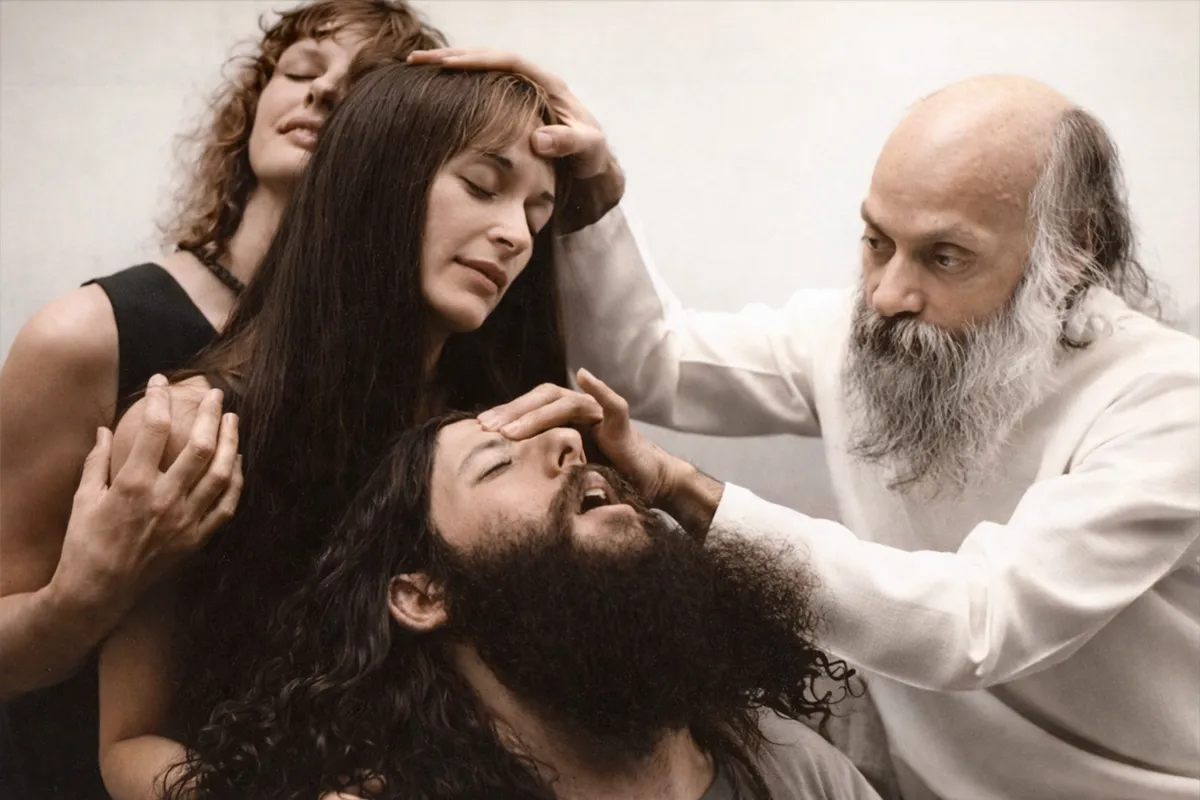
Neminath was a major Jain saint (the 22nd Tirthankara) known for total renunciation, respected even by Krishna, showing Jainism’s old and unique path.
From the Discourses
Passages where Osho speaks to this question — each links to the complete discourse.
Osho, according to Jain history, the twenty-second Tirthankara, Neminath, was Krishna’s cousin. After intense austerities he became known among Hindus as the austere sage Ghora Angirasa. And in the lineage of spiritual wisdom, in the esoteric domain, he was Krishna’s link. What is your view on this? Does such a connection exist? Because you yourself have said that Krishna’s “being” depended on inner causes. What were those inner causes—in the context of esoteric knowledge?
Neminath is Krishna’s cousin. And this is from a time when Hindu and Jain had not yet become two separate streams. Hindu and Jain split clearly and became distinct streams after Mahavira. Neminath is Krishna’s cousin and the Jains’ twenty-second Tirthankara. But there is no esoteric connection of any kind between Neminath and Krishna—no connection of any hidden teaching. There is a reason: Neminath belongs to a very different kind of one-dimensional tradition. In the Jain tradition of twenty-four Tirthankaras—perhaps the most extensive experimentation on this earth in the dimension of renunciation—nowhere else on earth has there been such a long lineage and such a great chain of extraordinary individuals. The first Jain Tirthankara is contemporaneous with the Rig Veda, or a little earlier. Because in the Rig Veda there are such respectful words for the first Tirthankara that contemporaries rarely show such courtesy to one another. The words are…
ओशो, जैन-इतिहास के आधार पर जैनों के बाईसवें तीर्थंकर नेमिनाथ कृष्ण के चचेरे भाई थे। घोर तपश्र्चर्या के बाद वे ही हिंदुओं के घोर अंगिरस ऋषि के नाम से प्रचलित हुए। और अध्यात्म ज्ञान की परंपरा में गुह्यज्ञान के क्षेत्र में वे श्रीकृष्ण के लिंक रहे। आपकी इस संबंध में क्या दृष्टि है? क्या ऐसा संबंध होता है? क्योंकि आपने ही कहा कि कृष्ण का होना आंतरिक कारणों पर अवलंबित था। वे आंतरिक कारण क्या थे--इसोटेरिक ज्ञान के संदर्भ में?
नेमिनाथ कृष्ण के चचेरे भाई हैं। और यह उन दिनों की कथा है, जब हिंदू और जैन दो धाराएं नहीं बने थे। हिंदू और जैन महावीर के बाद स्पष्ट रूप से टूटे और अलग धाराएं बने। नेमिनाथ कृष्ण के चचेरे भाई हैं और जैनों के बाईसवें तीर्थंकर हैं। लेकिन नेमिनाथ और कृष्ण के बीच किसी तरह का कोई इसोटेरिक संबंध नहीं है। किसी तरह का कोई गुह्यज्ञान का संबंध नहीं है। उसका कारण है। क्योंकि नेमिनाथ एक बहुत ही विभिन्न प्रकार की वन डायमेंशनल परंपरा के हकदार हैं। नेमिनाथ, जैनों की जो चौबीस तीर्थंकरों की परंपरा है, जिसने संभवतः त्याग की डायमेंशन में इस पृथ्वी पर सर्वाधिक प्रयोग किया है। इस पृथ्वी पर इतनी लंबी परंपरा और इतने अदभुत व्यक्तियों की इतनी बड़ी कड़ी कहीं भी नहीं हुई है। जैनों के पहले तीर्थंकर ऋग्वेद के समकालीन, या थोड़े से पूर्वकालीन हैं। क्योंकि ऋग्वेद में पहले तीर्थंकर के प्रति इतने सम्मानवाची शब्द हैं, जो कि समकालीन लोग समकालीन के प्रति इतनी शिष्टता कभी नहीं दिखलाते। …
Questioner: according to the history of jainism, the twenty-second jaina tirthankara, neminath, was krishna's cousin. After going through a spell of severe ascetic discipline neminath became renowned as a hindu seer by the name of ghor angiras, and he is said to have served as a link between krishna and esoteric knowledge. What do you say about it? Is such a relationship between neminath and krishna possible? You said that krishna's coming into being depended on very inner reasons. What are those inner reasons in the context of esoteric knowledge?
Scriptures say that Neminath is the twenty-second Jaina tirthankara and he is Krishna's cousin, Scriptures also mention Krishna's meetings with Neminath. Whenever Neminath happens to visit his town Krishna goes to pay his respects to him. It is significant that when Neminath comes, Krishna pays him a visit; Neminath never goes to visit Krishna. A renunciate is not expected to pay his respects to a non-renunciate; it is very difficult. A renunciate becomes harsh, he tears himself away from all relationships and attachments. So while Neminath remains Krishna's cousin from Krishna's side, Krishna is no one to Neminath. He never goes to Krishna to ask, "How are you?" He has renounced the world. In the dimension of vairagya or non-attachment, one has to drop all associations and their ensuing attachments and become absolutely alone. No one is his friend and no one is his enemy. So the question of Krishna…
Osho, before Mahavira there were twenty-three Tirthankaras. Then Mahavira’s family members must have been followers of someone—Mahavira himself was not a follower of anyone—so were they followers of Parshvanath or of someone else? How did it happen that Mahavira, who forged his own path and was not anyone’s disciple, ended up with a path that coincided with Parshvanath’s path, or with that tradition? Because that path already existed! And the name “Jain” for the sect is associated with Mahavira; before him, what were those people called?
There are two or three things to understand here. First, only with Mahavira did a stream of thought become a sect. Before Mahavira there was indeed a current of thought, but it had no separate existence from the Aryan tradition. It was a current that arose within the Aryan tradition. Its name was Shramana. It was not called “Jain” yet. And there was a reason for calling it “Shramana,” as I have said earlier. I have told you that the Brahmin current does not put faith in attaining the ultimate through effort, through sadhana, through tapas. The ultimate is to be attained in an attitude of extreme humility, in prayer, in utter meekness—where we are completely helpless, where we can do nothing; the doer is That alone. In this perfect poverty—what Jesus called “poverty of the spirit”—one who is so humble and indigent in spirit that he says, “What can…
प्रश्न: ओशो, महावीर के पहले जो तेईस तीर्थंकर रहे तो महावीर के फेमिली वाले या तो किसी के अनुयायी रहे होंगे--महावीर तो किसी के अनुयायी थे नहीं--तो वे पार्श्वनाथ के अनुयायी थे या किसी के थे, तो यह कैसे हुआ कि महावीर ने जो अपना पथ स्वतः निर्माण किया, जो किसी के अनुयायी नहीं रहे, उनका पथ पार्श्वनाथ के पथ से या उस परंपरा के पथ से मेल खा गया? क्योंकि उनका पथ तो पहले से ही था! और जैन नाम जो है संप्रदाय का, वह महावीर के साथ ही साथ जुड़ा है, उसके पहले वे जो लोग थे, वे क्या कहलाते थे?
इसमें दो-तीन बातें समझने जैसी हैं। पहली बात तो यह कि महावीर के साथ ही पहली बार विचार की एक धारा संप्रदाय बनी। महावीर के पहले विचार की एक धारा थी। उस विचार की धारा का आर्य परंपरा से कोई पृथक अस्तित्व न था। वह आर्य परंपरा के भीतर पैदा हुई एक धारा थी। उसका नाम श्रमण था। जैन वह नहीं कहला रही थी तब तक। और श्रमण कहलाने का कारण था। वह कारण यह था, जैसा मैंने पीछे कहा आपको। मैंने पीछे आपको कहा कि ब्राह्मण-धारा इस बात पर श्रद्धा नहीं रखती है कि श्रम के माध्यम से, साधना के माध्यम से, तप के माध्यम से परमात्मा को पाया जा सकता है। …
Osho, how could the iconoclast Mahavira accept himself as the twenty-fourth Tirthankara of the most ancient Jina tradition? Please explain!
Within this revolutionary tradition, Mahavira is the most glorious, the most brilliant. Therefore his words are worth understanding and contemplating. He must have been uniquely revolutionary; for the Jainas have two sects—Digambara and Shvetambara. The Digambaras hold that not a single word of Mahavira remains, no scripture remains. That too is part of the revolution. They say, no scripture is Mahavira’s word. The words we have are from the Shvetambara compilations. The Digambaras have no compilations. It is astonishing that the Digambaras did not preserve! But that too belongs to their deep revolt: if you preserve words, today or tomorrow they become scripture; preserve them, and soon they become Veda. Hence the Digambaras did not preserve Mahavira’s words. It is an extraordinary rebellion against scripture. They revere Mahavira, but preserved no texts—only what was passed personally from master to disciple; they did not write it down. Therefore, for the Digambaras,…
पहला प्रश्न: ओशो, परंपरा-भंजक महावीर ने स्वयं को प्राचीनतम जिन-परंपरा का चौबीसवां तीर्थंकर क्योंकर स्वीकार किया होगा? कृपया समझाएं!
महावीर इस क्रांतिकारी परंपरा में सबसे ज्यादा महिमावान, सबसे बड़े मेधावी व्यक्ति हुए। इसलिए उनके शब्द समझने जैसे हैं, विचार करने जैसे हैं, क्रांतिकारी तो अनूठे रहे होंगे; क्योंकि जैनों के दो संप्रदाय हैं--दिगंबर और श्वेतांबर। दिगंबर तो मानते हैं, महावीर का कोई भी वचन बचा नहीं, कोई शास्त्र बचा नहीं। यह भी क्रांति का हिस्सा है। वे कहते हैं, कोई शास्त्र महावीर का वचन नहीं। ये जो वचन हैं, यह श्वेतांबरों के संग्रह से लिये गये हैं। दिगंबरों के पास कोई संग्रह नहीं है। यह बड़े आश्चर्य की बात है कि दिगंबरों ने बचाया क्यों नहीं! यह भी उसी गहरी क्रांति का हिस्सा है। क्योंकि अगर बचाओ शब्दों को, तो आज नहीं कल वे शास्त्र बन जाएंगे। बचाओ तो शास्त्र आज नहीं कल वेद बन जाएंगे। इसलिए दिगंबरों ने तो महावीर के वचन बचाए ही नहीं। …
There is a beloved Jain story: Neminath arrived—Krishna’s cousin, and a Tirthankara of the Jains. Neminath stayed across the Yamuna. Krishna said to Rukmini, “Go, prepare delicious food and attend on Neminath.” She said, “But the river is in flood; it is not possible to cross on foot. The flood is such that even the boatmen will not risk it. What shall we do? How can we cross?” Krishna said something wonderful: “Tell the river, ‘If Neminath has fasted from birth, O river, give way.’” Rukmini could scarcely believe it. But if Krishna says it—well, try and see. A modern wife would say, “Go to blazes! Whom are you trying to fool?” But it is an old story; Rukmini could not speak thus. If he says it, there must be some sense in it. Without trying, nothing can be said. I cooked the food and set out.