
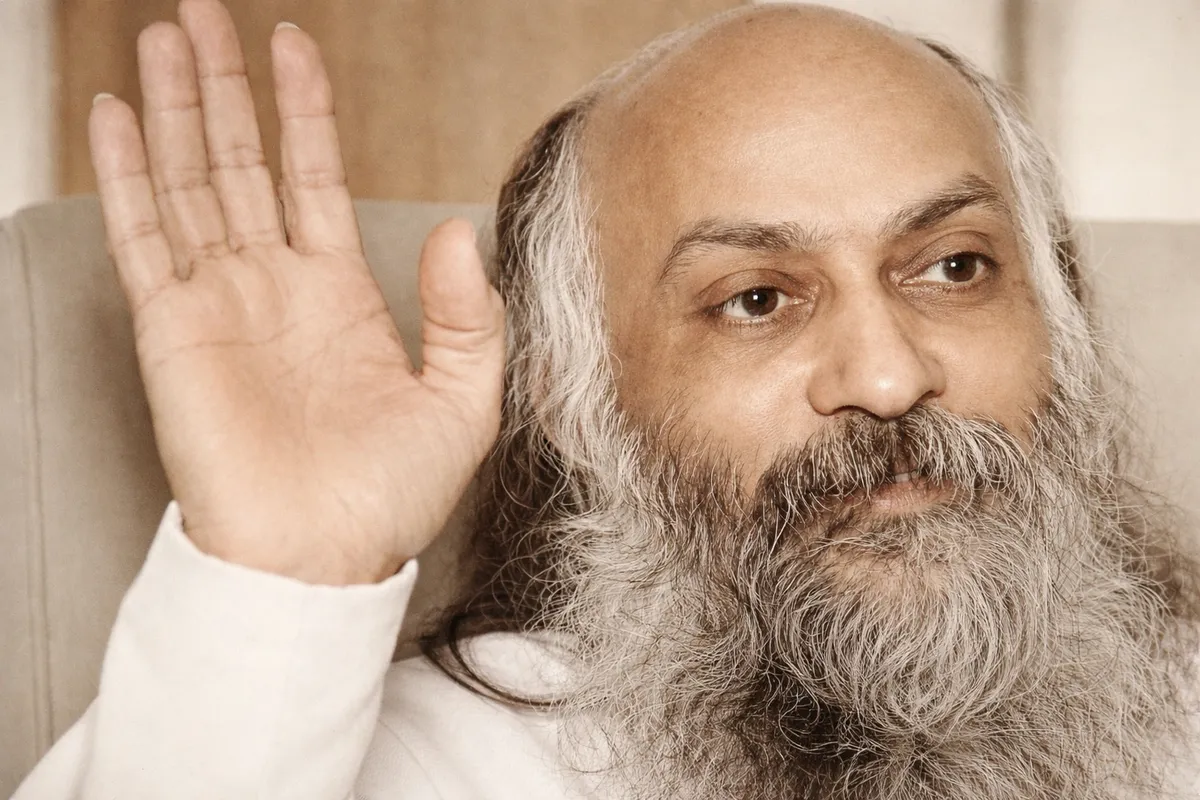
When you feel rich inside, outer things stop mattering, so you drop them naturally instead of forcing yourself to give them up.
From the Discourses
Passages where Osho speaks to this question — each links to the complete discourse.
Osho, in the third discourse on non-possession (aparigraha) you said that Mahavira, by entering the life of sannyas, became an emperor, while his elder brother, though living amid affluence, remained impoverished and enslaved. Attaining inner wealth yet staying beyond material wealth—that is, becoming free of possession—does this not amount to a one-sided, unilateral life? Why can they not accept both inner and outer prosperity together?
Mahavira left everything, not because it was wealth; he left precisely because it was not wealth. Mahavira left everything, not because there was something worth abandoning; he left because there was nothing worth holding. But what do we see? We see that he left palaces; we see that he left diamonds and jewels; we see that he left riches. That is what we notice. As far as Mahavira is concerned, he left nothing but pebbles and stones. We see diamonds and jewels; Mahavira saw pebbles in those diamonds and jewels. And in such diamonds and jewels there is nothing other than pebbles and stones anyway! Yes, those who wrote Mahavira’s story recorded how many diamonds, how many rubies, how many emeralds, how many pearls he left. If someone were to ask Mahavira, he would say, “How foolish you are! You’ve even given different names to pebbles?” Had Mahavira left only…
ओशो, आपने अपरिग्रह के तीसरे प्रवचन में कहा है कि महावीर संन्यास के जीवन में आकर बादशाह हो गए, लेकिन उनके बड़े भाई संपन्नता के बीच रह कर भी विपन्न और गुलाम ही रहे। महावीर का आत्मिक समृद्धि उपलब्ध करना, लेकिन भौतिक समृद्धि से परे रहना अर्थात परिग्रह से मुक्त हो जाना, क्या एकांगी व एकपक्षीय जीवन नहीं है? वे अंतर और बाह्य दोनों समृद्धियों को एक साथ क्यों नहीं स्वीकार कर पाते?
… महावीर सब छोड़ कर चले गए, इसलिए नहीं कि वहां कुछ छोड़ने योग्य था; बल्कि इसीलिए कि वहां कुछ भी पकड़ने योग्य न था। लेकिन हमें दिखाई पड़ता है, उन्होंने महल छोड़ा; हमें दिखाई पड़ता है, हीरे-जवाहरात छोड़े; हमें दिखाई पड़ता है, धन-दौलत छोड़ी! यह हमें दिखाई पड़ता है। महावीर ने तो कंकड़-पत्थरों के अतिरिक्त कुछ भी नहीं छोड़ा है। हीरे-जवाहरात हमें दिखाई पड़ते हैं। महावीर को हीरे-जवाहरात में कंकड़-पत्थर दिखाई पड़ गए हैं। ऐसे हीरे-जवाहरात में कंकड़-पत्थरों के अतिरिक्त कुछ है भी नहीं! हां, जिन्होंने महावीर की कथा लिखी है, उन्होंने लिखा है कि इतने हीरे, इतने जवाहरात, इतने माणिक, इतने मोती छोड़े। अगर कोई महावीर से पूछे, तो वे कहेंगे, बड़े पागल हो, कंकड़-पत्थरों के भी अलग-अलग नाम रख लिए हैं? हां, अगर महावीर ने कंकड़-पत्थर छोड़े होते, तो हम भी न कहते कि कंकड़-पत्थर छोड़ रहे हैं! हम सबने छोड़े हैं।
When he got up in the morning, the king invited him to take a dip in the river behind the palace. Both went to bathe. When they were bathing, they heard loud noises. The palace was on fire. The flames were going high up in the sky. The king asked the sanyasi, 'Do you see this'? The sanyasi came out immediately and shouted, 'What do you talk? What is there to see? My clothes are there on the bank, they may catch fire. Let me run.' But when he was running towards the bank, it struck him that the palace of the king is on fire and yet he was still standing in the water, and I am running to save my loin cloth kept on the bank. The fire has not yet reached the palace.
The old religions have taught people to go beyond possessions; I teach you to go beyond possessiveness -- and there is a vast difference between the two. Going beyond possessions is a masochistic thing. Then you are unnecessarily torturing yourself. Mahavira lived naked, he carried the idea of non-possessions to the ultimate extreme, so he did not even have clothes. He had to live naked -- that is the logical consequence of the idea of not possessing anything, not even the begging bowl which was allowed in India for the monks, for all kinds of mystics. But Mahavira would not have anything to do even with a begging bowl. He would eat with his hands, he would beg with his hands. But this is in a way masochistic. When it was cold he must have been shivering and when it was hot and when it was raining....
Ibrahim rose from the throne, touched the fakir’s feet, and said, You stay; now I will go. Where are you going? asked the fakir. He said, I was staying here under the delusion that this is my house. If it is an inn, the matter is finished. I was not attached to these walls; I was attached to the idea that it is mine. If it is an inn—then please, you stay; I am leaving. The emperor left. Did this emperor 'renounce'? No. He saw there was no house—only an inn. The matter ended. Who renounces an inn? In an inn you lodge—and depart. Mahavira was born carrying such a seeing. And such seeing can be attained even in this very life. For such seeing, what is needed is not the renunciation of wealth, but the realization of wealth’s truth. Renouncing wealth may be just as ignorant as accumulating it.
इब्राहिम उठा सिंहासन से, उस फकीर के पैर छुए और कहा कि तुम ठहरो, लेकिन अब मैं जाता हूं। उसने कहा, लेकिन कहां जाते हो? उसने कहा कि मैं तो इसी भ्रम में ठहरा हुआ था कि यह मकान है। अगर सराय हो गया तो बात खत्म हो गई। जो मैं ठहरा था तो इन दीवालों की वजह से थोड़े ही ठहरा था। ठहरा था इस वजह से कि मेरा है, मकान है, निवास है। लेकिन अब तुम कहते हो सराय है; तो ठीक है, तुम ठहरो, मैं जाता हूं। वह सम्राट छोड़ कर चला गया। इस सम्राट ने त्याग किया? नहीं, मकान नहीं था, सराय थी--यह दिखाई पड़ गया, बात खत्म हो गई। सराय का कोई त्याग करता है? सराय का कोई त्याग नहीं करता। सराय में ठहरता है और विदा होता है। ऐसा बोध महावीर जन्म के साथ लेकर पैदा हुए हैं। ऐसा बोध हम चाहें तो इस जन्म में भी उपलब्ध हो सकता है। और ऐसे बोध के लिए जो जरूरी है, वह संपत्ति का त्याग नहीं, संपत्ति के सत्य का अनुभव है। संपत्ति का त्याग हो सकता है उतना ही अज्ञानपूर्ण हो, जितना संपत्ति का संग्रह था। …
Buddha was about to leave a town. The king wondered whether to go to receive him or not. A beggar is entering the town — should a king go to receive a beggar? He asked his ministers: Is it proper that I go? Should a king go outside the town to receive a beggar? An old minister said: Forgive me — if you had eyes, you would see that the one who comes is an emperor, and you are the beggar. The king said: What are you saying? How am I a beggar? The old minister replied: He whose desires are endless has endless beggardom within. He in whom no desire remains — he has become the master. He who asks for nothing — only he is emperor. He who asks — asking itself makes him a beggar. Another memory: the Muslim fakir Farid.
बुद्ध एक गांव से निकलने को थे। उस गांव के राजा ने सोचा, मैं उन्हें लेने जाऊं या न जाऊं? एक भिखमंगा गांव में आ रहा है, तो राजा लेने जाए या न जाए? उसने अपने मंत्रियों को पूछा कि क्या मेरा जाना उचित है? क्या एक राजा गांव के बाहर एक भिखारी को लेने जाए? उनमें एक वृद्ध मंत्री ने कहा कि क्षमा करें, अगर आपके पास आंखें होतीं, तो जो आ रहा है उसे आप बादशाह और अपने को भिखमंगा समझते। उस राजा ने कहा: यह क्या कहते हो? मैं कैसे भिखमंगा हूं? उस बूढ़े अमात्य ने कहा: जिसकी मांगें अनंत हैं, उसके भीतर अनंत भिखमंगापन है। और जिसकी कोई मांग शेष न रही, वह मालिक हो गया। जो कुछ भी नहीं मांगता, वही केवल सम्राट है। और जो कुछ भी मांगता है, मांग ही उसे भिखमंगा बनाती है।