
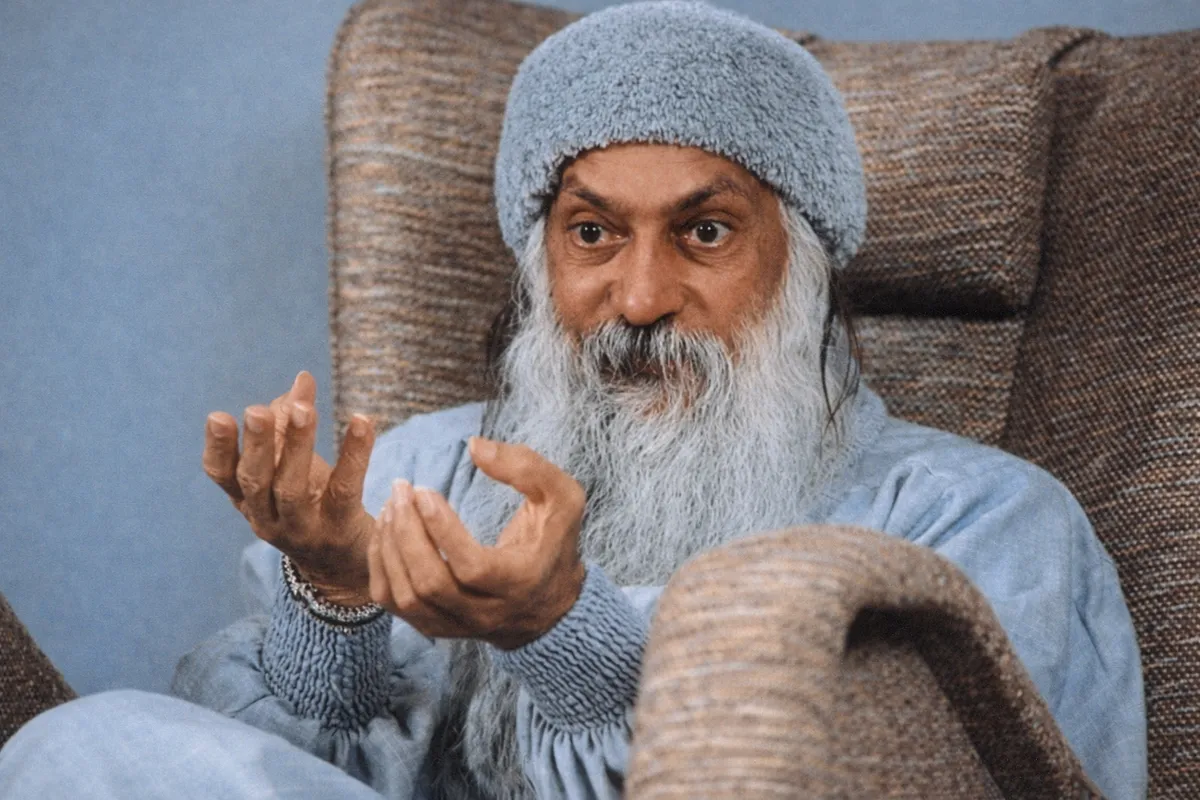
Being a little naughty teaches you to choose your attitude and turn scoldings into play.
From the Discourses
Passages where Osho speaks to this question — each links to the complete discourse.
Question: OSHO, WHY WERE YOU SO MISCHIEVOUS IN YOUR CHILDHOOD? ... So in Varanasi there are thousands of bulls, and to feed those bulls is a religious thing. A man may be dying, starving, but you will not bother about him: the bull has to be fed. If a bull comes to a vegetable shop and starts eating your vegetables, you cannot prevent him. No, he has the license from Shiva, he has simply to be allowed. When he goes, he goes. You cannot disturb him. He can eat sweets in a sweet shop, he can eat vegetables, fruits, whatsoever he wants; and he is completely free. The only free being in India is the bull, particularly in Varanasi. And nobody can beat the bull, nobody can do any harm to him. In Varanasi it was such a trouble.
Question: OSHO, WERE YOU NOT PUNISHED FOR YOUR MISCHIEVOUS ACTS IN CHILDHOOD? ... I told him, "But I did not bother about the prostitutes or the monks or the drugs. You know me: if I am interested in drugs, then in this very city.... Just by the side of my house there was a shop where all drugs were available: "and the man is so friendly to me that he will not take any money if I want any drug. So there is no problem. Prostitutes are available in the town; if I am interested in seeing their dances I can go there. Who can prevent me? Monks come continually in the city. But I was interested in the magicians. And my interest in magic is related to my interest in miracles.
Beloved Osho, many times sitting in your presence I am overwhelmed by a very childlike feeling. It seems so familiar, yet from a long time ago. In these moments there feels no gap of you and me. I am like a child playing in your beautiful garden. Beloved Osho, is this significant or am I already moving into my second childhood at the ripe old age of thirty-five? P.s. You can scare me any time.
"Don't be so hard on him," says Mrs. Jones, "all children of his age do that!" "Maybe they do," says Mrs. Meyer, "but not from the diving board." Childhood has its beauties, because it does not know the etiquette, the manners, and all kinds of crap. It is so simple and so innocent and so spontaneous. A man walked into a bar and was amazed to see a dog sitting at a table with three men playing poker. The man went over and asked, "Can that dog really read his cards?" "Sure he can," said one of the men. "But he's not much of a player. Whenever he draws a good hand he wags his tail!" That is absolutely innocent... the poor dog cannot contain his joy. Two cockroaches were munching delicacies on top of a garbage pile when one of them began telling of some new tenants in the…
Osho, it seems you must have been very troublesome in your childhood. So much troublemaking—good grief!
When I graduated and stood first in my M.A., my teachers, professors, the head of my department, the vice-chancellor—they were all very proud. Then came convocation. Naturally, I was placed first. I didn’t miss the occasion. I stood and said, “Before you give me your blessings, I want to ask a few things—because I’m taking leave; this is my last day in this university. Why have you draped me in this black gown? And all you deans and the chancellor and the vice-chancellor and the honored guests who have been invited and are to receive D.Litt.—why are all of you wearing black gowns? Black is the color of mourning. Are you declaring that we are dead?” They were startled. For a moment, a hush fell across the hall—a disturbance, they thought: he has done something again. But I wasn’t creating a disturbance; I was only asking: black is always worn…
चौथा प्रश्न: ओशो, लगता है आप बचपन में बहुत उपद्रवी रहे होंगे। इतने उपद्रव, तौबा!
जब मैं स्नातक हुआ और एम. ए. में प्रथम श्रेणी में प्रथम आया, तो मेरे अध्यापक, मेरे प्रोफेसर, मेरे विभागाध्यक्ष, मेरे वाइस चांसलर सब बड़े गौरवान्वित थे। फिर जब दीक्षांत समारोह हुआ तो स्वभावतः मैं प्रथम खड़ा किया गया था। वह मौका मैंने नहीं छोड़ा। मैंने खड़े होकर कहा कि मैं कुछ बातें पूछना चाहता हूं--इसके पहले कि आप आशीर्वाद दें, क्योंकि अब मैं विदा हो रहा हूं, यह आखिरी दिन है मेरा इस विश्वविद्यालय में--यह काला चोगा मुझे क्यों पहनाया गया है? और ये आप सब डीन और चांसलर और वाइस चांसलर और मेहमान जो बुला गए हैं और जिनको डी. लिट्. दी जाने वाली है, ये सब काले चोगे क्यों पहने हुए हैं? क्योंकि यह काला रंग तो मातम का रंग है। क्या आप समझ रहे हैं हम लोग मर गए?