
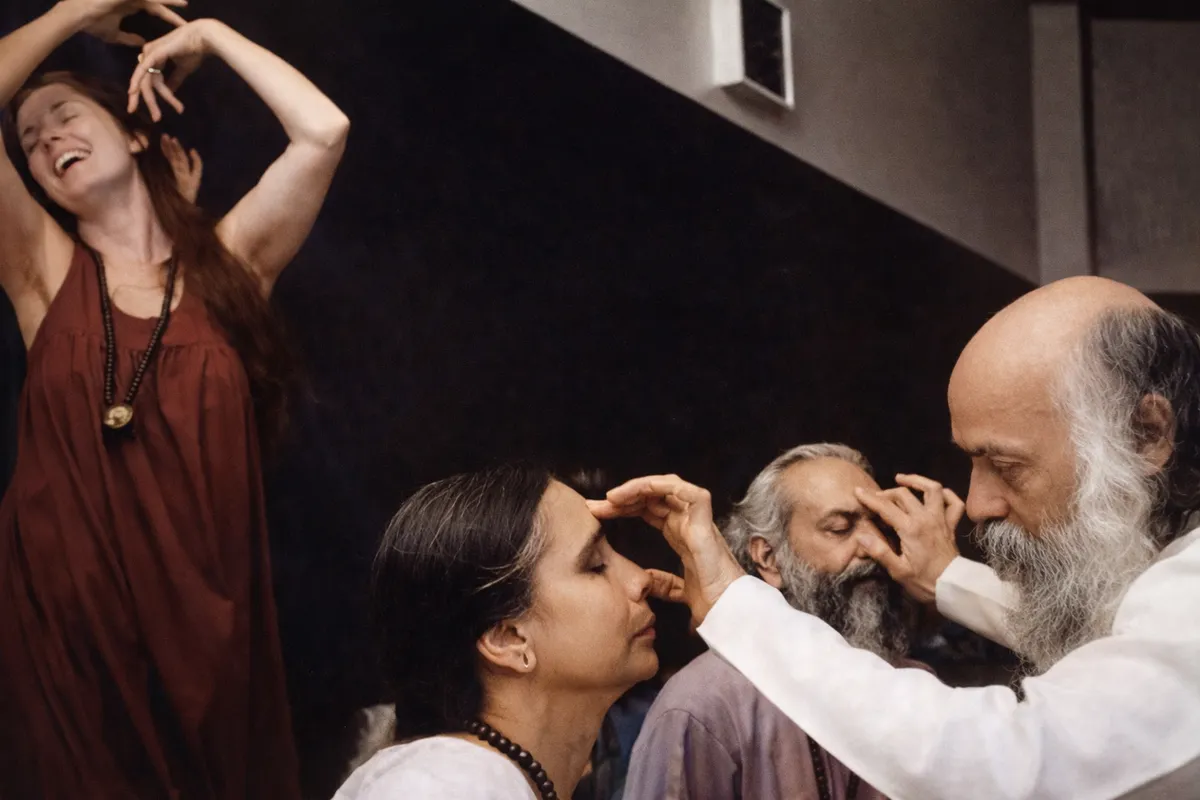
According to Osho, a long beard has no spiritual significance; it belongs to the body, not to the being. Referring to the Zen koan 'Why doesn't Bodhidharma have a beard?', he says the insight is that the real Bodhidharma is beyond form. What you see is your projection; look again and recognize the witness within.
A beard is just hair; the real you isn’t the body, so don’t give appearances special meaning.
From the Discourses
Passages where Osho speaks to this question — each links to the complete discourse.
What is the significance of your long beard?
I have none. Look again! You may not know -- in Zen there is a koan. The koan is: Why didn't Bodhidharma have a beard? Now, Bodhidharma has a big beard -- the founder of Zen. In fact his bears is so big that you can only see his eyes... all beard. And "Why does Bodhidharma have no beard?" -- this is given to the disciples to meditate on... and they have to close their eyes and meditate. Now, it is very difficult: Bodhidharma has a big beard, and the question is why he has none... and the disciple meditates and meditates, and it is very puzzling. And Bodhidharma comes again and again, and laughs... and his beard is there! And the disciple comes to the master and says, "It is difficult -- he has!" The master says, "You go and look again." After months of meditation, one day the…
Why do you have a beard?
Ashoka, who told you? Somebody must be creating rumors. I don't have a beard; you have to look at me again. In fact, the right question would have been: Why DON'T you have a beard? That has been one of the koans in Zen. Bodhidharma had a great beard, and Zen people, Zen Masters, give their disciples this koan to meditate on: Why does Bodhidharma have no beard? Now they beat their heads, because Bodhidharma's picture is given also, with the same koan to meditate on, and the picture is there with that great beard. He had a really great beard, his whole face was covered. That's why he was known in China as a 'barbarian Buddha'. The Chinese don't have big beards, they have tiny goat-like beards. Bodhidharma was very strange there. The Chinese have only a few hairs really. You can count them on your fingers... not much…
Beloved Osho, when wakuan saw a picture of the bearded bodhidharma, he complained: why hasn't that fellow got a beard? Beloved Osho, why don't you have a beard?
It is true. When you meet a Zen master on the road...and you always meet a master on the road because the master is always moving. You never meet him anywhere else. Remember, you always meet a master on the road, because he is always moving. He is a river, never static, never standing. If you cannot move with him, you will miss him. He is always on his feet. You always meet him on the road. What can you talk to him about? And you cannot be silent either, because to be silent is almost impossible for you. You cannot talk, because the master belongs to a different world. You cannot be silent, because the world you belong to is never silent. Your mind goes on chattering. Your mind is a constant chatterbox. Consistent, inconsistent -- thoughts go on and on and on, and there is no end to…
Beloved Osho, last night, I noticed your beard. It is really a magnificent thing; it reminds me of a lion's mane. Does a beard like yours come with enlightenment? Or do you have to be born with it?
When you look in, those mirrors go on reflecting each other. So instead of three, you see a line of hundreds, as far as you can see. The first mirror reflects the second mirror, then that mirror reflects the other mirror, and this goes on and on. So as far as you can see and strangely, you can see exactly twenty-four tirthankaras -- a great artistic device ... But if the temple is very poor, then you will find only one statue of Mahavira. But one thing is -- it is striking too that Jainas have not been able to explain it -- all the statues look similar, exactly similar. The only difference is a small symbol underneath their legs -- a line represents Mahavira. Even the priests cannot say which is Mahavira. First he has to look. You may not understand how he manages to tell that this is…
Question: Fifth question: Osho, why is it that all saints let their hair and beards grow? If they didn’t grow their hair and beards, would they not be called saints? Amarnath Singh has asked: Now I don’t know whether they’ll be called saints or not. And what do saints care whether they’re called saints or not? But people will suffer a big loss. How will you scare the children? There’s only one way to frighten kids: “Babaji is coming!” Just think—what will you say to scare the children if saints don’t grow their hair and beards? If they wander about in pants, coat, and tie, how will you scare the children? There’ll be nothing left to frighten them with. At least saints are useful for this much: “Look, if you misbehave, we’ll hand you over to Babaji.” He said, “We’d call her mad.