
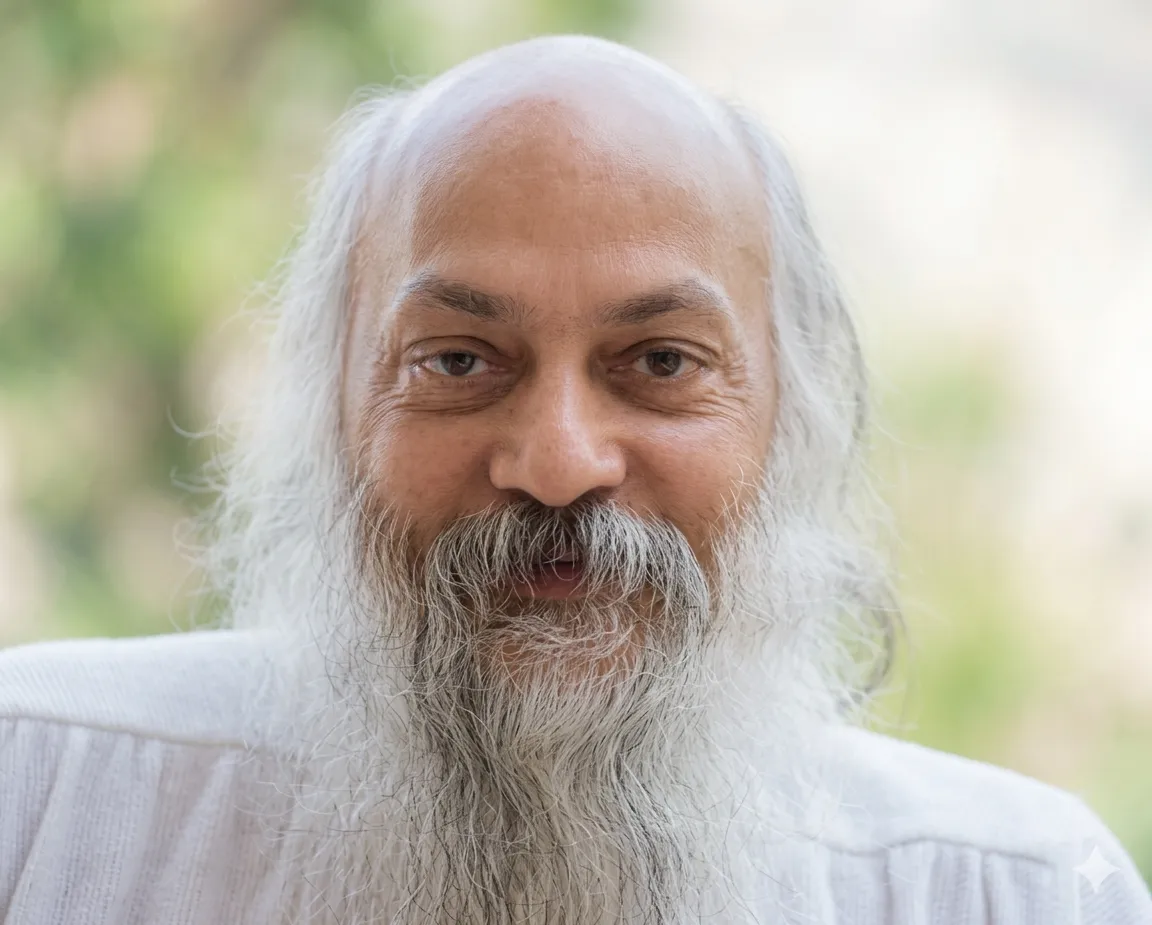
Meditation works best when you stop trying to get answers and simply sit, watch, and enjoy quietly.
From the Discourses
Passages where Osho speaks to this question — each links to the complete discourse.
Beloved master, could you please say something about curiosity? I often have experienced it as something which makes me feel alive and excited. But when I tried to meditate, it turned out to be a disturbance. And now, when I sit in your presence, getting more and more silent, I don't want to know anything anymore.
Anand Preeti, curiosity is childish. It certainly keeps you excited, but it has never made anyone wise, in tune with himself and the universe. Curiosity is a kind of itching in the head. You scratch, it feels good, but don't scratch too much; scratch in different places. But itching is not going to make your intelligence more pure, more clear, more far-reaching. That's why in meditation it becomes a disturbance. It is your old habit, so you go on being curious about everything, what it is. But in meditation you have to remain centered within yourself: no curiosity, no thinking, no question. And I am happy that you managed and that you can say, "Now when I sit in your presence, getting more and more silent, I don't want to know anything anymore." To not want to know anything anymore is to be at the stage of a sage. He…
I am a very curious person. That's why I have come to you. Osho, what do you say about curiosity?
Curiosity is good, curiosity is beautiful, but don't stop at it. It is a good beginning, but not the end, because curiosity always remains lukewarm. It is an intellectual gymnastics. It is good to be curious because that is how one starts the journey of inquiry into existence; but if one simply remains curious, then there will be no intensity in it. One can move from one curiosity to another -- one will become a driftwood -- from one wave to another wave, never getting anchored anywhere. Curiosity is good as a beginning, but then one has to become more passionate. One has to make life a quest, not only a curiosity. And what do I mean when I say one has to make one's life a quest? Curiosity creates questions, but your life never becomes a quest. Questions are many, a quest is one. When some question becomes so…
Question: BELOVED OSHO, WHY AM I NOT CURIOUS ABOUT ANYTHING ANYMORE? Devageet, twelve hundred years ago there was a mystery school exactly like this. The mystery school belonged to one of the greatest Sufis, Mevlana Jalaluddin Rumi. The Turkish word mevlana means Beloved Master; it has never been used for anyone else. In front of his mystery school was written in bold letters: "This place is not for those who are only curious." Curiosity has no spiritual meaning. Curiosity is something like itching in your mind: if you itch it goes; if you don't itch it goes also. Curiosity has no passion in it; it is very superficial. Just by the way, an inquiry, a question arises in you -- but it is not your quest, you are not to dedicate your life in searching for the answer to it.
Osho, what is the first experience of samadhi like?
You will know only when it happens. It cannot be said; at most a few hints can be given. It is as if, in the dark, a lamp is suddenly lit. Or as if a dying patient, right at the edge of death, suddenly finds a medicine that works; life’s wave, life’s thrill spreads again—so it is. As if a corpse becomes alive—such is the first experience of samadhi. It is the taste of nectar. The experience of the ultimate music. But it will be only when it happens; and only then will you understand. You will not understand by my saying it. It is as with love. How can anyone explain it? To someone who has never loved, never known love, no matter how many explanations you offer—he will hear it all and still ask, “I haven’t understood; please explain a little more.” It is like explaining light to…
तीसरा प्रश्न: ओशो, समाधि का पहला अनुभव कैसा होता है?
होगा तो ही जानोगे। कहा जा सके, ऐसा नहीं है। कुछ-कुछ इशारे किये जा सकते हैं। जैसे अंधेरे में अचानक दीया जल जाये, ऐसा होता है। या जैसे बीमार मरता हो और अचानक कोई दवा लग जाये...मरते-मरते कोई दवा लग जाये; और जीवन की लहर, जीवन की पुलक फिर फैल जाये--ऐसा होता है। जैसे कोई मुर्दा जिंदा हो जाये--ऐसा होता है समाधि का पहला अनुभव। अमृत का अनुभव है। परम संगीत का अनुभव है। पर होगा तो ही होगा। और होगा तो ही तुम समझ पाओगे; मेरे कहने से समझ में न आ सकेगा। प्रेम में जैसा होता है। अब कोई किसी को कैसे समझाये? …
Osho, what is meditation?
The monk said, "You are even more stupid than the first man. My cow? A Buddhist monk possesses nothing. And why should I look for somebody else's cow? I don't possess any cow." The man looked really embarrassed, what to do? The third man thought, "Now, the only possibility is what I have said." He said, "I can see that you are meditating." The monk said, "Nonsense! Meditation is not some activity. One does not meditate, one is meditation. To tell you the truth so that all you fellows don't get confused, I am simply doing nothing. Standing here, doing nothing -- is it objectionable?" They said, "No, it is not objectionable, it just does not make sense to us -- standing here, doing nothing." "But," he said, "this is what meditation is: Sitting and doing nothing -- not with your body, not with your mind. Once you start doing…