
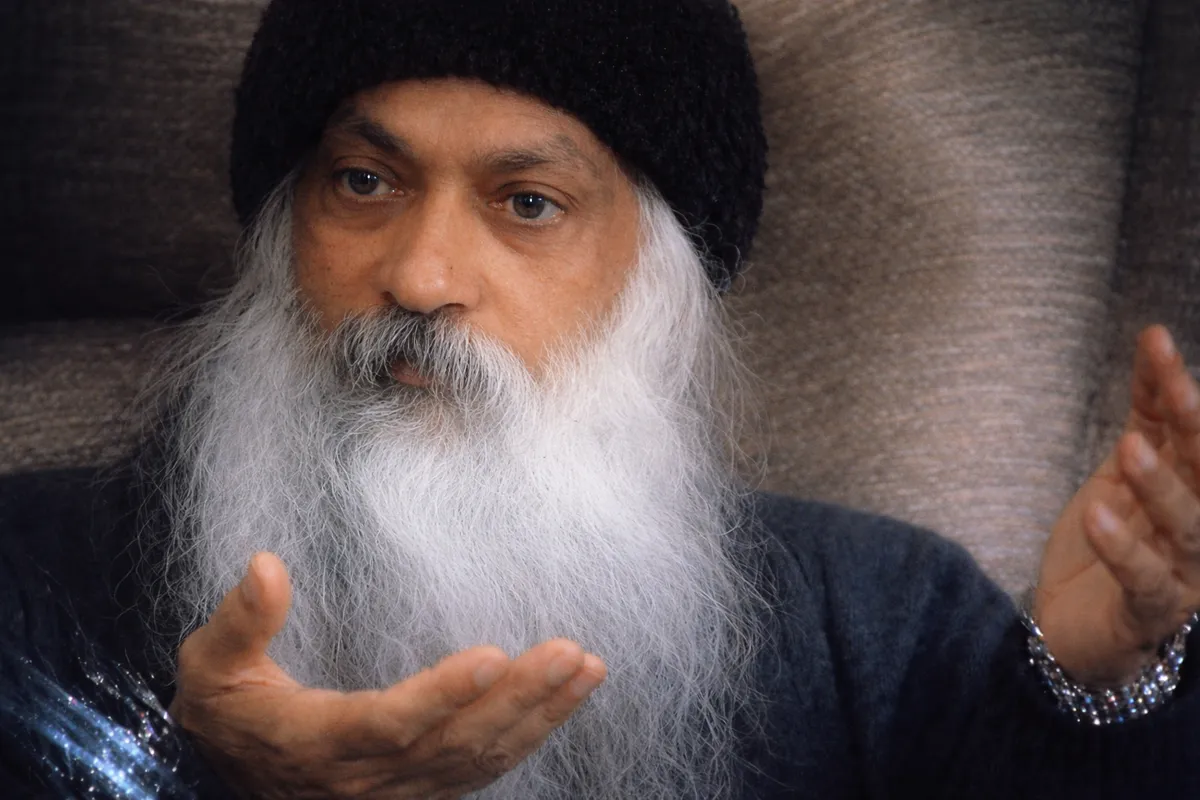
Like walking to a destination: staying calmly balanced is the walking (samayik), and when that steadiness is complete you’ve arrived at freedom from grabbing or rejecting anything (vitaragata).
From the Discourses
Passages where Osho speaks to this question — each links to the complete discourse.
Osho, you said that samayik is the state of the Self. But what you are calling samayik or the state of the Self—is that not vitaragata itself? And once a person has come into the state of the Self, that is, into the state of consciousness, will he not lose that self-state when he returns to day-to-day life and activity?
And they have asked: if for a single moment, for a thousandth part of a moment—call it time—knowledge has been attained, vision has happened, will it remain steady in day-to-day living? Where does day-to-day conduct come from, really? It comes from us. What we are at depth—that is where our conduct arises from. If the spring is full of poison at its source, then the waves that spill over, the droplets that appear, will carry poison. And if the source fills with nectar, then in those very drops and waves there will be nectar. Conduct flows out of us; as we are, so it becomes. If we are unconscious, our conduct is unconscious; whatever we do carries that stupor. If we are in ignorance, our conduct is filled with ignorance. And if we have come into knowing, our conduct becomes filled with knowing. Suppose this room is full of darkness,…
प्रश्न: ओशो, आपने कहा कि सामायिक आत्म-स्थिति है। लेकिन जिसे आप सामायिक या आत्म-स्थिति कह रहे हैं, क्या वह वीतरागता ही नहीं? और जब व्यक्ति आत्म-स्थिति में यानी चेतना-स्थिति में हो गया है, तो फिर वह जीवन-व्यवहार में आकर क्या आत्म-स्थिति को नहीं खो देगा?
और उन्होंने पूछा कि एक क्षण को, क्षण के हजारवें हिस्से को--जिसे समय कहें--उसमें अगर ज्ञान उपलब्ध हो गया है, दर्शन हुआ है, तो क्या जीवन-व्यवहार में वह थिर रहेगा? असल में जीवन-व्यवहार आता कहां से है? जीवन-व्यवहार आता है हमसे। तो जो हम हैं गहरे में, जीवन-व्यवहार वहीं से आता है। अगर झरना पायज़न से भरा है, मूल-स्रोत अगर जहर से भरा है, तो जो लहरें छलकती हैं और जो बिंदु दिखते हैं और बूंदें उचटती हैं, उनमें जहर होता है। और मूल-स्रोत अमृत से भर गया, तो फिर उन्हीं बूंदों में, उन्हीं लहरों में अमृत हो जाता है। जीवन-व्यवहार हमसे निकलता है, हम जैसे हैं, वैसा ही हो जाता है। हम मूर्च्छित हैं तो जीवन-व्यवहार मूर्च्छित होता है। जो हम करते हैं उसमें मूर्च्छा होती है। हम अज्ञान में हैं तो जीवन-व्यवहार अज्ञान से भरा होता है। और हम अगर ज्ञान में पहुंच गए तो जीवन-व्यवहार ज्ञान से भर जाता है।
Hence no experience is your nature. All experiences are scenes for you. Lightning flashing in the sky—or the inner lightnings of deep meditation—equal. Flowers outside—or the thousand-petalled lotus blooming at Sahasrara inside—one and the same. I am not saying, do not attain Sahasrara. I am saying: compared to outer flowers, the inner flower is far more precious—leave the outer for the hope of the inner. The day the inner blooms, the last thing can also be said: drop this too. There is yet one more—beyond even this—and that you are: the one who is always beyond; whose nature is beyondness—that you are. So Mahavira calls even dhyana and Samayik 'pravritti.' Nivritti is when even dhyana is renounced. Which means—the worldly is pravritta, and the sannyasin too is pravritta.
इसलिए कोई भी अनुभव तुम्हारा स्वभाव नहीं। सब अनुभव तुम्हारे लिए दृश्य हैं। आकाश में चमकती बिजली देखो, या आंख बंद करके ध्यान की गहराइयों में कौंधते हुए प्रकाश देखो, बराबर है। बाहर खिले फूल देखो, कि भीतर ध्यान की अंतिम गहराइयों में सहस्रार का खिलता कमल देखो, एक ही बात है। लेकिन, मैं यह नहीं कह रहा हूं कि उस सहस्रार को पाना मत। मैं कह रहा हूं, बाहर के फूल से तो भीतर का फूल बड़ा कीमती है। चलो बाहर का फूल इसी आशा में छोड़ो कि भीतर का फूल खिले। जिस दिन भीतर का फूल खिलेगा, उस दिन तुमसे आखिरी बात भी कही जा सकेगी कि अब इसे भी छोड़ो। अभी और भी एक है छिपा--उसके भी पार--वही तुम हो। जो सदा पार है, जिसका स्वभाव ही पार होना है, वही तुम हो।
Osho, someone has asked: what is the difference between raga, viraga, and vitaraga?
If you understand what I have just said, then raga means attachment to something; viraga means opposition to that attachment. One person hoards wealth—this is raga. And another kicks wealth away and runs from it—this is viraga. But the gaze of both is fixed on wealth. The one who gathers it broods over money; the one who leaves it also broods over money. One enjoys collecting and says, “I have so much”—his vanity is fulfilled by the “so much.” The other fulfills his vanity by saying, “I have given up so much.” You will be surprised: those who have wealth keep accounts of how much they have; and those who have renounced keep accounts of how much they have renounced. Lists of monks and renunciates come out enumerating how many fasts they have done—how many kinds of fasts; they keep accounts of everything. Renunciation has its ledger, indulgence has its…
ओशो, किसी ने पूछा है कि राग और विराग और वीतराग में क्या भेद है?
जो मैंने अभी बात कही, उसे अगर समझेंगे, तो राग का अर्थ है, किसी चीज में आसक्ति; विराग का अर्थ है, उस आसक्ति का विरोध। एक व्यक्ति धन इकट्ठा करता है, यह राग है। और एक आदमी धन को लात मार कर भाग जाता है, यह विराग है। लेकिन दोनों की दृष्टि धन पर लगी है। जो इकट्ठा कर रहा है, वह भी धन का चिंतन करता है। जो छोड़ कर जा रहा है, वह भी धन का चिंतन करता है। एक उसे इकट्ठा करके मजा ले रहा है कि मेरे पास इतना है। इतना है, इससे उसका दंभ परिपूरित हो रहा है। दूसरा इससे दंभ को परिपूरित कर रहा है कि मैंने इतने को छोड़ा है। आप हैरान होंगे, जिनके पास धन है, वे भी आंकड़े रखते हैं कि कितना है। और जिन्होंने छोड़ा है, वे भी आंकड़े रखते हैं कि कितना छोड़ा है। साधुओं और संन्यासियों की फेहरिस्तें निकलती हैं कि उन्होंने कितने उपवास किए हैं! कितने-कितने प्रकार के उपवास किए हैं, सबका हिसाब-किताब रखते हैं। क्योंकि त्याग का भी हिसाब होता है, भोग का भी हिसाब होता है। राग भी हिसाब करता है, विराग भी हिसाब करता है। …
Nirvitarka samadhi is attained when the memory is purified, and the mind is able to see the true nature of things without obstruction. The explanations given for the samadhis of savitarka and nirvitarka, also explain the higher states of samadhi, but in these higher states of savichara and nirvichara samadhis, the objects of meditation are more subtle
THE PROVINCE OF SAMADHI THAT IS CONNECTED WITH THESE FINER OBJECTS EXTENDS UP TO THE FORMLESS STAGE OF THE SUBTLE ENERGIES. ... But those who have worked in the inner world know that there are phenomena which are uncaused. Not only that, that they know this, they know that the whole existence is uncaused. It is a different, totally different world from the scientific mind. Whatsoever you see, even before you have seen it, the interpretation has entered. Continuously I watch people; I am talking to them -- if it fits, even they have not said anything, they have given me an inner nod, "Yes. They are saying, "Right. If it doesn't fit with their attitudes, they have not said anything, the "no" is written on their face. Deep down they have started saying, "No, it is not true. Just the other night I was talking with a friend. He has
Samayik is a most precious word, even more precious than meditation. Because “meditation” carries a slight ambiguity. There is no word like “Samayik” in any language of the world. When we say “meditation,” it seems always like meditating on something. If I tell people—“Meditate!” they ask, “On what?” So “meditation” feels extraverted. In English, to meditate means: on something. If you tell someone “meditate,” he asks, “On what—Om? Ram? Christ? Mary?—on what?” Mahavira did not use the word “dhyana,” because it can mislead. Dhyana means: attention on something—again outside. Mahavira said: Samayik. Samayik is his own word. For Mahavira, “Samaya” is another name for the Atman. Samaya means: the Self; and Samayik means: to be in oneself. “Meditation” is not as valuable a word. But even those who follow Mahavira, when they do Samayik, they are doing “meditation,” not Samayik; they recite the Namokar mantra—this is meditation, not Samayik.
सामायिक शब्द बड़ा बहुमूल्य है, ध्यान से भी ज्यादा बहुमूल्य है। क्योंकि ध्यान में थोड़ी सी भ्रांति हो सकती है। सामायिक जैसा शब्द सारी दुनिया की किसी भाषा में नहीं है। जब भी हम कहते हैं ‘ध्यान’, तो ऐसा लगता है, किसी चीज पर ध्यान। अगर आप... मेरे पास लोग आते हैं--उनसे मैं कहता हूं, ‘ध्यान करो!’ तो वे कहते हैं, ‘किस चीज पर ध्यान करें?’ तो ध्यान लगता है, बहिर्मुखी है। अंग्रेजी में शब्द है, मेडिटेट--उसका मतलब ही होता है, किसी चीज पर। तो किसी से कहो, मेडिटेट करो, तो वह पूछता है, आन वॉट--ओम पर? राम पर? क्राइस्ट पर? मेरी पर? ...किस पर? महावीर ने ‘ध्यान’ शब्द का उपयोग नहीं किया, क्योंकि ध्यान में भ्रांति है। ध्यान का मतलब ही होता है, किसी चीज पर ध्यान; बाहर हो गया। महावीर ने कहा; सामायिक। सामायिक शब्द उनका अपना है। ‘समय’ आत्मा का नाम है महावीर के लिए। समय का अर्थ है: आत्मा और सामायिक का अर्थ है: आत्मा में होना--टु बी इन वनसेल्फ। ध्यान उतना मूल्यवान शब्द नहीं है। …