
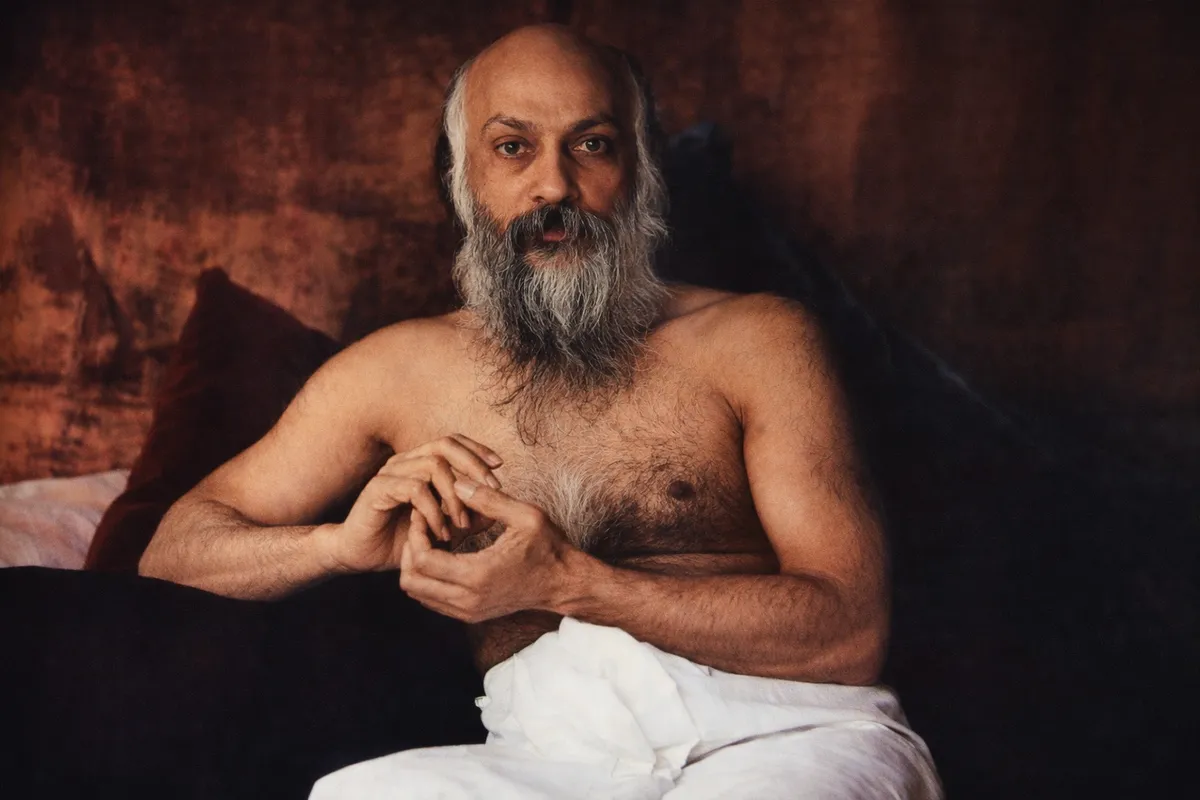
According to Osho, he does not spread immorality—immorality is already ubiquitous because imposed moral codes have failed for millennia. His teaching exposes hypocrisy and shifts the focus from external commandments to inner transformation. Morality cannot be enforced; it must evolve from awareness. By changing our outlook and cultivating consciousness, authentic virtue flowers naturally, replacing repression, fear, and pretend righteousness with lived integrity.
Osho isn’t making people bad; he says rules don’t create goodness—become aware inside, and real goodness grows by itself.
From the Discourses
Passages where Osho speaks to this question — each links to the complete discourse.
a friend has asked: Osho, the way you speak—won’t it spread immorality?
As though immorality weren’t already widespread, and now it will spread because of what I say. The situation is such that however much you try to spread it now, it would be very hard to make it go any further than it already has. They say, “Let immorality not spread.” Perhaps they think morality is what has spread. So they ask, “Won’t your words spread immorality?” This fear haunts us constantly. And it’s rather amusing—a funny kind of fear. Because it is immorality that has spread. If morality had spread, there would be no need for such fear. Even after ten thousand years of effort, morality hasn’t spread; it’s immorality that has. And now we’re afraid that immorality might spread! Our fear is like a beggar sitting nervously beside a police station worrying that he might be robbed. What is there of yours to be stolen? Roam freely! You don’t…
Morality is a phony lie, because the ideas are given by others and you are living them -- you are just an imitator. I am against all morality -- that does not mean that I am for immorality. In fact it is morality that creates immorality too. I am for transcendence, transcendence of the very idea of morality -- and of course, this implies immorality too. I am for consciousness, not for conscience. I don't want to give you any shoulds or should nots. I simply want you to become more aware, alert, watchful, clear, unclouded. When you are like a flame without smoke, whatsoever you do will be right. In a state of clarity the wrong is impossible, but then your character comes from your consciousness, not from your conscience, then it comes from yourself.
It is also asked: Osho, if faith and belief fall away, won’t degeneration and immorality spread?
Whoever wants to give birth to himself must endure the pangs of birth. You must pass through the pain. Strip off all your garments, all your cheap moralities, and look: what is within, and who? If you see an animal, don’t rush to put the garments back on. It is precisely because of those garments that the animal survives and is protected. Drop those garments. Agree to know yourself as you are, and perhaps the very fact will pain you so much that you will be compelled to change. No other path will remain. If a thief clearly knows, “I am a thief,” if a violent person clearly knows, “I am violent,” it is hard to live long with that theft and violence. You cannot live long with an illness once you know you are ill. Once the memory arises that disease has seized you, you begin to seek treatment.…
Question: Osho, about what you have been saying on the Jain perspective, it seems to me that two-thirds of it everyone could agree with, but there is one-third with which agreement is difficult. The first thing you say is about samyak-darshan (right vision). Anyone who has read even a little scripture knows that without right vision, character has no meaning; whatever happens without right vision cannot be called character at all. This view is very clear. And it is also clear that character has no meaning other than self-abidance: to be established in the soul is precisely what character means. On these two points I find myself in agreement with you. But between having right vision and being fully established in the self, in that interval your view seems to me different from the traditional view.
Question: OSHO, HOW CAN WE TEACH CHILDREN TO BE MORAL AND RELIGIOUS? The Protestant booklet that I was just talking about also mentions one fact: that one thing has to be learned from Rajneesh and his sannyasins -- that why they feel so committed. why they feel so involved, so deeply in love. No Christian seems to be so deeply in love with Christ. Why are they so in love with their own Master? There must be some reason behind it that has to be explored. The reason is clear-cut: sannyas is not imposed upon you, you have chosen it. The same was the case with the disciples of Jesus, with the disciples of Buddha. But it happens only when the Master is alive; when the Master is gone... In fact, children should be allowed to choose their own Masters. Parents should not enforce their own ideology on their children.