
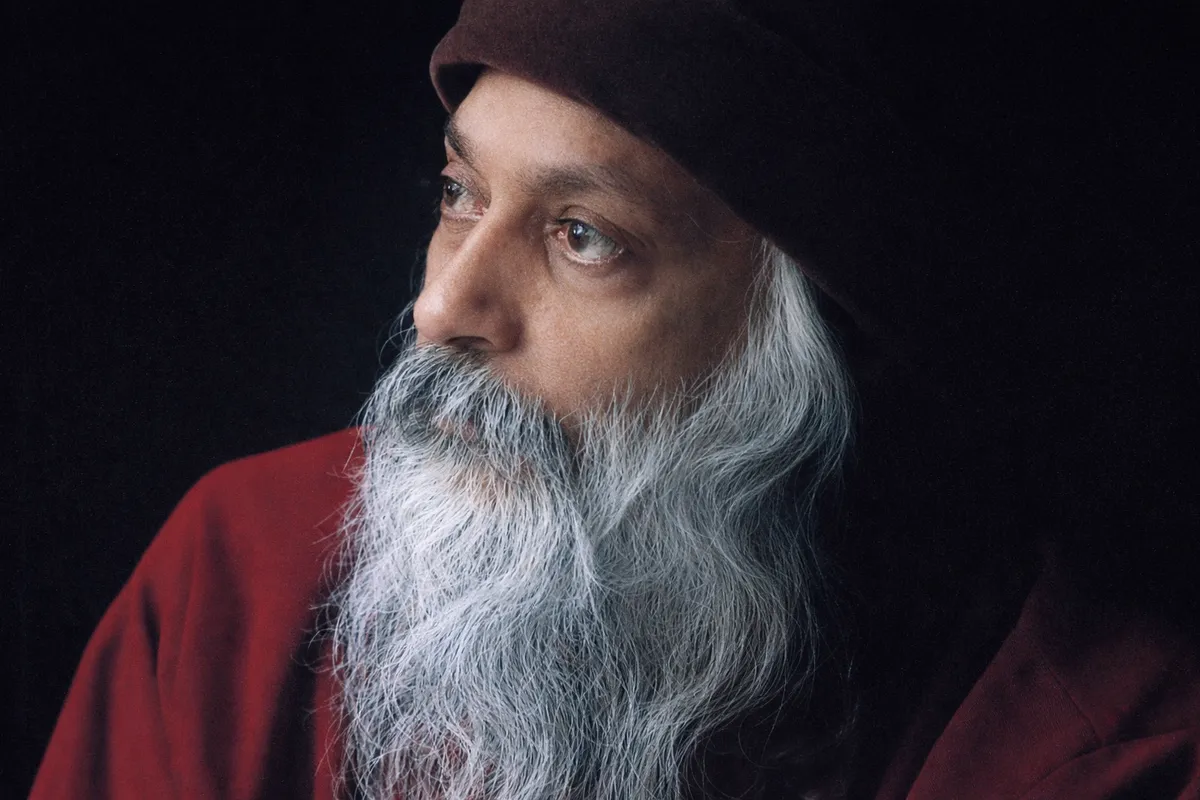
There’s no distance between you and your true self—it’s already you; just notice it by being quietly aware.
From the Discourses
Passages where Osho speaks to this question — each links to the complete discourse.
Beloved Osho, are you self-realized? And how do you explain your relationships with existence and with people?
So whatsoever is being said, be sympathetic with it. Do not try to understand it, let it go deep in you. Be vulnerable, open to it. Let it go deep into the heart. Do not create intellectual barriers to it. Then with your full being in participation, you will know. You may not understand, but you will know. And understanding is not enough, knowing is needed. Sometimes you understand or think that you have understood, thus you create a barrier to the knowing. The intellect understands; the being knows. The intellect is just a part, it is your being that is the real. When you know, you know with your blood, you know with your bones, you know with your heartbeats. But if you understand, you understand only with the mechanism of the mind, which is not so deep. It is only a device, a utilitarian device which is needed…
Question: First question: Osho, Searching for you I have wandered who knows where. Neither heaven says a word, nor does hell open its gate. I look into every eye, feeling for your picture, and I have wandered who knows where. Are these just the gaps between breaths, or only distances upon distances? You too say nothing—your lips never open. How long must I keep walking, groping about in everyone’s heart? Where are you and where am I? Searching for you I have wandered who knows where. I could not meet you on the earth, nor could I fix your address in the sky. I searched everywhere for you and yet did not find you. Now, in searching, I set out after myself—who knows where I strayed. Ah, what is this? Your address is found: your image in my eyes, like musk that dwells within the deer.
इससे बड़ी मुश्किल है। अपने को ही देखने निकल पड़े हो। कौन देखेगा? दूसरे को देखा जा सकता है। देखने के लिए फासला चाहिए। अपने को कैसे देखोगे? वहां देखने वाला और दृश्य अलग नहीं। वहां द्रष्टा और दृश्य एक है। इस मौलिक सत्य को जब तक न समझ लो तब तक भटकाव ही भटकाव है। इसीलिए तो आदमी खोजता फिरता है। और तुम ठीक कहते हो: ‘ढूंढता हुआ तुम्हें पहुंच गया कहां-कहां!’ आदमी कहां-कहां नहीं पहुंच गया! चांद पर पहुंच गया। जल्दी ही और तारों पर पहुंच जाएगा। और तलाश एक है, खोज एक है--वही शाश्वत खोज; मैं कौन हूं, आदमी जानना चाहता है। …
That which brings us together sets us apart
For them there is no short-cut. And all that is great belongs to that category. Only small things can be attained quickly. Coffee can be instant -- -- love cannot be. Instant love cannot be love. Instant simply means you are not even ready to pay the little patience for it. One should learn to be patient -- to be ready to wait with open doors, with a welcoming heart, but not in a hurry, not demanding, not forcing things. And the miracle, the paradox, is that the less you force things, the more quickly they happen. The more you force them, the longer it takes. Because meditation has to be learned -- and meditation only means stilling of the mind, the silencing of the mind -- you cannot be in a hurry. If you are in a hurry your mind will remain in a turmoil. You will be jumping…
Osho, there is a question in the Shatapatha Brahmana: Ko veda manushyasya? Who knows the human being? Osho, is man so complex and mysterious that no one can know him?
Purushottam Mahanti, man is not complex; he is certainly mysterious. If he were complex, knowing him would not be so difficult. However complex a thing is, complexity can be unraveled. Complexity is a puzzle that lies within the scope of the intellect, not beyond it. Whatever was complex, man has solved, or if not yet, he will. What was unknown yesterday is known today; what is unknown today will be known tomorrow. Science recognizes only two categories: the known and the unknown. There is no qualitative difference between them—only a difference of time. The unknown is that which is capable of becoming known: a little more effort, a little more search, a little more research, a little more reasoning, a little more science. But mystery is qualitatively different, not merely quantitatively. Mystery does not mean the unknown; mystery means the unknowable—what cannot be known at all, what lies beyond the…
पहला प्रश्न: ओशो, शतपथ ब्राह्मण में एक प्रश्न है: को वेद मनुष्यस्य? मनुष्य को कौन जानता है? ओशो, क्या मनुष्य इतना जटिल और रहस्यपूर्ण है कि उसे कोई नहीं जान सकता है?
पुरुषोत्तम महंती, मनुष्य जटिल नहीं है, रहस्यपूर्ण जरूर है। जटिल होता तो जानना कठिन न होता। कितना ही जटिल हो, जटिलता सुलझाई जा सकती है। जटिलता एक पहेली है, जो बुद्धि की सीमा के पार नहीं, बुद्धि की सीमा के भीतर है। जो जटिल था उसे मनुष्य ने सुलझा लिया है, या नहीं सुलझाया है तो सुलझा लेगा। जो कल अज्ञात था, आज ज्ञात है। जो आज अज्ञात है, कल ज्ञात हो जाएगा। विज्ञान ये दो कोटियां ही मानता है--ज्ञात और अज्ञात। इन दोनों के बीच कोई गुणात्मक भेद नहीं है; थोड़ा समय का अंतराल है। अज्ञात वह है जो ज्ञात होने में समर्थ है। सिर्फ थोड़ी और चेष्टा, थोड़ी और खोज, थोड़ी और शोध, थोड़ा और तर्क, थोड़ा और विज्ञान। लेकिन रहस्य गुणात्मक रूप से भिन्न है, परिमाणात्मक रूप से ही नहीं। रहस्य का अर्थ अज्ञात नहीं है; रहस्य का अर्थ है अज्ञेय, जो जाना ही न जा सके; जो बुद्धि की सीमा के पार है; जिसे जीया तो जा सकता है, लेकिन जाना नहीं जा सकता। जानने का अर्थ होता है--शब्द में ढाला जा सके, तर्क में तौला जा सके, बुद्धि माप सके। …
Osho, only one question is arising in the heart, and that too for the first time: Who are you, what are you, where are you? May there be a complete recognition of myself so that we become one. Let “you” no longer be you, let “I” no longer be I. Let us lose ourselves in each other. And until recognition happens, how can we become one? And it seems proper that only then should I come to your court. Only then will there be joy in coming.
Do not deceive your mind like this. Man continually discovers new tricks to avoid. If you plan to go to the gate of the Divine only after you have known yourself—then what need will remain to go to that gate at all? And drop this arrogance that you will arrive only after knowing yourself, with some worthiness, with some qualification. It is precisely your obsession with merit and worthiness that has led you astray. “I will become something first, then go.” How can I go naked, just as I am? I will go equipped. Will you not go to God’s court as you are? Will you stage a production there too? Once there were thrones of one kind; now you have invented a new throne—“I will go only as a self-realized one.” “Only then will it be fun.” Will you not be able to stand before God helpless, destitute? Will…
पहला प्रश्न: ओशो, एक ही प्रश्न उठ रहा है हृदय में और वह भी पहली बार कि कौन है तू, क्या है, कहां पर है? अपने से पूरी-पूरी पहचान हो जाये ताकि एक जान हो जायें। तू तू न रहे, मैं मैं न रहूं। एक दूजे में खो जायें। और जब तक पहचान नहीं होती तब तक एक कैसे हो जायें? और उचित भी यही है कि तभी मैं आपके दरबार में आऊं। आने का मजा भी तभी रहेगा।
ऐसे अपने मन को धोखे मत देना। निरंतर आदमी बचने की नई-नई तरकीबें खोज लेता है। परमात्मा के द्वार में भी तुम तब जाओगे जब अपने को जान लोगे तो परमात्मा के द्वार में जाने की जरूरत क्या रह जायेगी? और यह अकड़ छोड़ो कि अपने को जानकर पहुंचेंगे, कुछ पात्रता लेकर पहुंचेंगे, कुछ योग्य बनकर पहुंचेंगे। यह तुम्हारी योग्यता और तुम्हारी पात्रता का रोग ही तो तुम्हें भटका रहा है। कुछ होकर पहुंचेंगे। ऐसे कैसे चले जायें नंग-धड़ंग? कुछ साज-सामान से पहुंचेंगे। परमात्मा के दरबार में भी तुम जैसे हो वैसे ही नहीं जाओगे? आयोजन करोगे? पहले और तरह के आयोजन थे सिंहासनों के, अब यह नया सिंहासन खोजा--आत्मज्ञानी होकर पहुंचेंगे।