
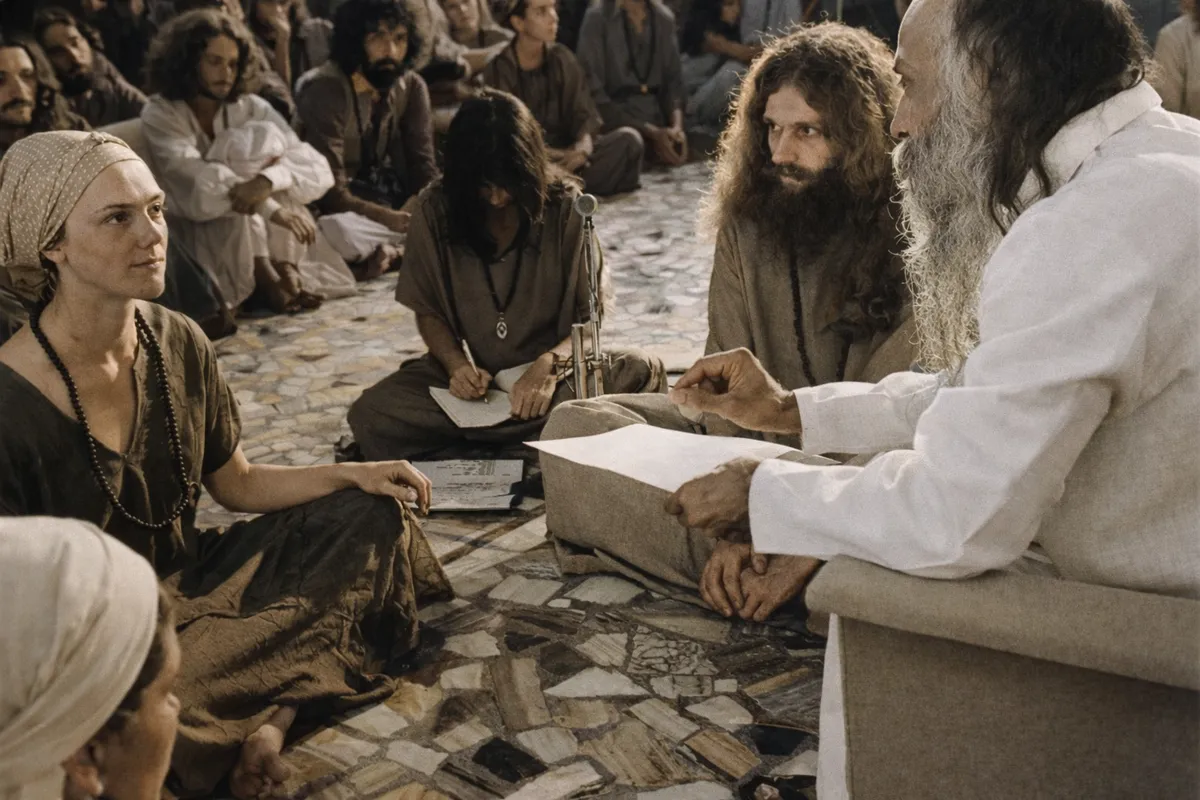
You’re part of nature like a drop in the ocean; if you imagine a fight you only hurt yourself, but if you relax and go with the flow you’ll be happier—and if you fully let go, you’ll find bliss.
From the Discourses
Passages where Osho speaks to this question — each links to the complete discourse.
Osho, you yourself have said there is no way to go against nature in any direction. Then whether, in the ocean of nature, we float or swim—whether we live in friendship with it or in enmity—where does any violation of nature occur? Yet you also explain: move in harmony with nature; in its river don’t swim, float. Osho, in this context, what is the alchemy of “nahin Ram bin thav”—there is no resting place without Ram? Please help us understand.
There is no way to be against nature, because there is nothing that is not nature. Whatever is, is nature. There is no path to fight with nature—who would fight? There is none other than nature. But the feeling, the idea, the vision that “I am fighting nature” can be adopted, it can be cultivated. When you swim in the river, you still are not going against nature, because swimming too is natural. Even when you “fight” the river, the river is not fighting you. So there is no way to be an enemy of nature. But in your mind the notion can arise that you are fighting, that you must win, must not lose—and you can fall into the madness of winning and losing. You will suffer from that. Nature suffers nothing. Nor will nature obstruct you or demand you change. Nature will go on as it is, endlessly.…
प्रश्न: ओशो, आपका ही वचन है, किसी भी दिशा में प्रकृति के प्रतिकूल होने का कोई उपाय नहीं है। फिर प्रकृति के सागर में हम बहें या तैरें, उसके साथ मैत्री में जीएं या शत्रुता में, प्रकृति का उल्लंघन कहां होता है! लेकिन आप यह भी समझाते हैं कि प्रकृति के अनुकूल चलो, उसकी नदी में तैरो मत, बहो। ओशो, इस संदर्भ में, नहिं राम बिन ठांव की कीमिया क्या होगी, कृपया हमें समझाएं।
… जो भी है प्रकृति है। प्रकृति से लड़ने का कोई मार्ग नहीं, क्योंकि लड़ेगा कौन? प्रकृति से अन्य कोई भी नहीं है। लेकिन प्रकृति से लड़ रहा हूं, ऐसा भाव, ऐसा विचार, ऐसी दृष्टि बना ली, बनाई जा सकती है। जब तुम तैरते हो नदी में, तब भी तुम प्रकृति के प्रतिकूल नहीं हो, क्योंकि तैरना भी प्राकृतिक है। नदी से जब तुम लड़ते हो, तब भी नदी तुमसे नहीं लड़ रही है। इसलिए प्रकृति से दुश्मनी का कोई उपाय नहीं है। लेकिन तुम्हारे मन में यह धारणा बन सकती है कि मैं लड़ रहा हूं और तुम हारने और जीतने के पागलपन में पड़ सकते हो। उससे तुम कष्ट पाओगे। उससे भी प्रकृति कोई कष्ट नहीं पा रही है। और प्रकृति कोई बाधा भी नहीं डालेगी कि तुम बदलो। प्रकृति अनंत तक ऐसी ही चलती रहेगी। …
Beloved Osho, you have said that when the self surrenders, the whole existence then protects. Then why was the fakir who could see the formless everywhere, or who could feel the presence of godliness everywhere, murdered by the english soldiers?
It appears like murder to you, but not to him. You see it as murder because you are under illusion. He saw only the divine in that spear; he saw that the death was a meeting with the divine. Existence protected him in the sense that even death did not seem like death to him. Death became the door of the ultimate bliss. To you it seems that he died, he was finished. When the Ganges flows into the sea, to you it seems that it is finished. But ask the Ganges: it will say, "I have disappeared and thus become the sea." The Ganges will say, "The fear of annihilation was there before but now it has disappeared. Before this I was very narrow, bounded by the two banks. I could have been finished. I was limited so I could have died. But now I have become unlimited, now…
A friend has asked: Osho, whether I move in deepest attunement with nature, in the outermost attunement, or even against it—in all three situations nature is equally pleased; I am completely free to choose any one of them. Then why should my happiness differ among the three choices?
There will be a difference, because each leads to a different experience. Consider: the earth has gravity. You walk along the road; if you walk upright, you don’t fall. You are free—you can also walk crookedly and fall. Gravity will not say, “Don’t walk crookedly.” Walk askew, fall, your leg breaks—there is pain and trouble. When you fall sideways on the ground, the same gravity is at work; it was at work when you were walking, too. No difference. The same law functions—impartially. If you err in walking, or choose wrongly, you will be hurt. Choose rightly, and you will not be hurt. What does happiness mean? Happiness means: in accord with the law. Unhappiness means: against the law. The law is neutral. You drink poison—nature will kill you. You are ill; you take a dose of poison—the illness dies and you become healthy. Even water, if you drink too…
एक मित्र ने पूछा है कि ओशो, मैं प्रकृति के साथ अंतरतम तादात्म्य के साथ चलूं, बाह्यतम तादात्म्य के साथ चलूं या प्रतिकूल चलूं, तीनों परिस्थितियों में प्रकृति समान रूप से प्रसन्न है; कोई भी एक परिस्थिति का चुनाव करने को मैं संपूर्ण रूप से स्वतंत्र हूं; फिर तीनों चुनाव में मेरी प्रसन्नता में फर्क क्यों पड़ेगा?
फर्क पड़ेगा, क्योंकि तीनों के अलग-अलग अनुभव हैं। ऐसा समझें, जमीन में गुरुत्वाकर्षण है; आप रास्ते पर चलते हैं; आप सीधे चलते हैं, नहीं गिरते हैं। स्वतंत्र हैं आप; आप चाहें आड़े-तिरछे चलें और गिर जाएं। गुरुत्वाकर्षण नहीं कहेगा कि आड़े-तिरछे मत चलो। आड़े-तिरछे चलें, गिर जाएं, टांग टूट जाए, दर्द हो, तकलीफ हो। जब आप आड़े होकर गिरते हैं जमीन पर, तब भी वही गुरुत्वाकर्षण काम करता है, जब आप खड़े चल रहे थे, तब काम करता था। कोई फर्क नहीं है। वही नियम काम कर रहा है। नियम निरपेक्ष भाव से काम कर रहा है। आपने गलती की चलने में, या गलत का चुनाव किया, चोट खाएंगे। ठीक का चुनाव किया, चोट नहीं खाएंगे। सुख का अर्थ ही क्या है? सुख का अर्थ है: नियम के अनुकूल। दुख का अर्थ है: नियम के प्रतिकूल। नियम निष्पक्ष है। आपने जहर पी लिया; प्रकृति आपको मार डालेगी। आप बीमार हैं; जहर की एक मात्रा ली; बीमारी मर जाएगी, आप स्वस्थ हो जाएंगे। पानी भी आप ज्यादा पी लें तो जहर हो जाएगा। …
Osho, is sadhana a natural development, or is it a leap beyond nature’s evolutionary process and its transcendence? If sadhana is not an overstepping leap beyond natural growth, then will the whole of humanity, within the cosmic process, arrive on its own at spiritual heights? And if evolution always moves forward, why did the great ancient spiritual cultures recede from the evolutionary current?
There are many strands here. First: the moment we separate man from existence and look at him as apart, these questions begin to arise. For example, heat water to one hundred degrees and, at that point, it “leaps” and becomes steam. Water becoming steam is a natural event. Its heating is also natural, not unnatural. Heating is natural; the leap into steam is natural. If nature did not contain the law that at one hundred degrees water can jump into steam, water would have no way to become steam. If nature did not contain the potential to heat to one hundred degrees, water would have no power to reach that heat. Even so, if water had consciousness, it could save itself from fire—or it could put itself on the fire. That too would be a natural happening: to save itself or to offer itself—both. My point is: in this universe…
ओशो, साधना प्राकृतिक विकास है अथवा प्रकृति के विकास-क्रम से बाहर छलांग व उसका अतिक्रमण है? यदि साधना सहज विकास का अतिक्रमण व छलांग नहीं है, तो क्या सृष्टि के विकास-क्रम में सारी मनुष्य-जाति आप ही आप आध्यात्मिक ऊंचाइयों को पहुंच सकती है? यदि विकास-क्रम आगे ही आगे बढ़ता है, तो प्राचीन श्रेष्ठतम आध्यात्मिक संस्कृतियां क्यों विकास-क्रम से पीछे हट गईं?
इसमें बहुत-सी बातें हैं। पहली बात तो यह कि जैसे ही हम मनुष्य को जगत से तोड़कर देखते हैं अलग, वैसे ही ये सवाल उठने शुरू हो जाते हैं। उदाहरण के लिए, हम पानी को सौ डिग्री तक गरम करें, तो सौ डिग्री पर पानी छलांग लगाकर भाप बन जाता है। पानी का भाप बनना एक प्राकृतिक घटना है। पानी का गरम होना भी एक प्राकृतिक घटना है, अप्राकृतिक घटना नहीं है। पानी का गरम होना भी प्राकृतिक घटना है, पानी का छलांग लगाकर भाप बनना भी प्राकृतिक घटना है। अगर प्रकृति में यह नियम न होता कि सौ डिग्री पर पानी छलांग लगाकर भाप बन सकता है, तो पानी के पास कोई उपाय न था कि वह भाप बन जाए। अगर प्रकृति में यह उपाय न होता कि सौ डिग्री तक गरम हो सके, तो भी पानी की कोई सामर्थ्य न थी कि वह सौ डिग्री तक गरम हो जाए। फिर भी पानी के पास अगर चेतना है, तो पानी अपने को आग से बचा सकता है। और पानी के पास अगर चेतना है, तो वह अपने को आग पर चढ़ा सकता है। और यह भी प्राकृतिक घटना है कि वह अपने को बचाना चाहे या चढ़ाना चाहे--दोनों। …
Question: OF HEAVEN OR HELL WE HAVE NO RECOLLECTION, NO KNOWLEDGE; WE MUST BECOME WHAT WE WERE BEFORE WE WERE BORN. RAIN, HAIL, SNOW AND ICE ARE DIVIDED FROM ONE ANOTHER; BUT AFTER THEY FALL, THEY ARE THE SAME WATER OF THE STREAM IN THE VALLEY. SHOULD YOU SEEK THE WAY OF THE BUDDHA ALL NIGHT LONG, SEARCHING, YOU WILL ENTER INTO YOUR OWN MI11D. WHEN THEY ASK YOU, "WHERE IS YOUR COUNTRY? WHAT IS YOUR NATIVE PLACE?" ANSWER, "I AM A MAN OF ORIGINAL INACTIVITY." THE FIGURE OF THE REAL MAN STANDING THERE -- JUST A GLIMPSE OF HIM, AND WE ARE IN LOVE. MAN CAN LIVE IN TWO WAYS: THE NATURAL AND THE UNNATURAL. The unnatural has great attraction in it -- because it is new, unfamiliar, adventurous. Hence, every child has to leave his nature and go into un-nature. No child can resist that temptation.