
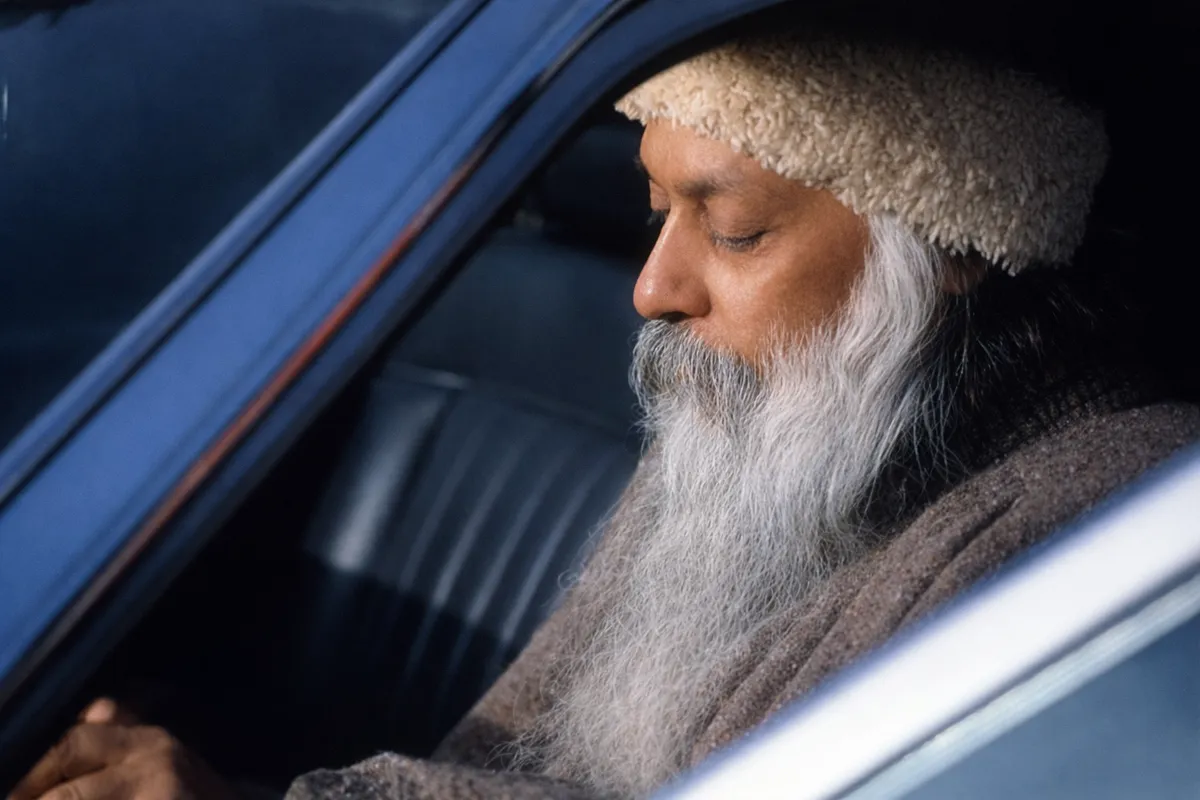
Say no to bosses, but say yes to guiding yourself—freedom works only with your own steady self-discipline.
From the Discourses
Passages where Osho speaks to this question — each links to the complete discourse.
Beloved master, anarchy simply means absence of authority -- which is beautiful. But in common language it has the meaning of absence of discipline. Why that confusion? Could you speak about discipline, especially its relation to rebellion?
The reality is that in India, Punjabis are the only people.... They use turbans; that is part of their religion. The Sikh has to use it, otherwise he is not a Sikh. And they are the most unintelligent people in the whole country. The Bengalis are the people who don't use any hats, any caps, and they are the most intelligent people in the country. Not a single Punjabi has risen to world eminence for his intelligence. They have not achieved Nobel Prizes. But Bengalis have become world famous. They have achieved the Nobel Prize for science, the Nobel Prize for literature, and all other kinds of awards. I told the principal, "What this proves is that the turbans are preventing the intelligence of the poor Sikhs. The Bengalis, without any caps, any turbans, any hats, seem to have fresher minds, are more intelligent. They have created the best literature…
Osho, does Kropotkin’s anarchism contain some element of communism?
No. Kropotkin and the others have nothing to do with communism; in fact, they are its enemies. Because, in their view, communism cannot come without state power. To bring communism you need the apparatus of the state, a dictatorship—only then can you impose it. And they do not accept that any apparatus is needed. Hence there was opposition between them and communism. Anarchists and communists have been enemies; there is no common ground between them. Communism says that one day the state, developing further and further, will wither away. But anarchists say: the more the state develops, the stronger it becomes—how is it going to wither away? My position is very different. For me it is not very important whether there is a state or not, whether there is an external order or not. Man should become such that he can remain orderly even within disorder. Man should be like…
ओशो, क्रोपाटकिन के अनार्किज्म में कम्युनिज्म का कुछ तत्व है?
न, क्रोपाटकिन वगैरह को कम्युनिज्म से कोई मतलब नहीं है, बल्कि वे दुश्मन हैं। क्योंकि कम्युनिज्म मूलतः बिना राज्य-सत्ता के आ ही नहीं सकता, उनके खयाल से। क्योंकि कम्युनिज्म लाना पड़ेगा तो राज्य की व्यवस्था चाहिए, तानाशाही चाहिए, तब ला सकोगे। और वे तो मानते नहीं कि कोई व्यवस्था चाहिए। इसलिए वह तो कम्युनिज्म और उनके बीच विरोध था। अनार्किस्ट और कम्युनिस्ट तो दुश्मन रहे आपस में और उनके बीच कोई तालमेल नहीं है। क्योंकि कम्युनिज्म आएगा राज्य से और वे हैं राज्य के दुश्मन। कम्युनिज्म मानता है कि एक दिन ऐसा आएगा कि राज्य विकसित-विकसित होते हुए विलीन हो जाएगा। लेकिन अनार्किस्ट मानते हैं कि राज्य जितना विकसित होगा उतना ही मजबूत हो जाएगा, विलीन कैसे हो जाएगा? मेरी स्थिति बहुत और है। मेरे लिए यह सवाल बहुत महत्वपूर्ण नहीं है कि राज्य है या नहीं है, व्यवस्था है या नहीं है। आदमी ऐसा होना चाहिए जो अव्यवस्था में भी व्यवस्थित रह सके। आदमी ऐसा होना चाहिए! …
Osho, could you say something about what is going on in Delhi?
I’ll tell a little story. When Lanka’s former ruler Ravana was on his deathbed, Rama sent Lakshman to learn statecraft from him—saying, “Son, we may have won, but we have no experience of running the administration here; go and ask him how to run things.” Lakshman went there and said to Ravana, “You are dying now—tell us how to govern here.” Ravana said, “Half the politics I handled, half Kumbhakarna did. Had you gotten in touch with Kumbhakarna as well?” Lakshman said, “Yes—he said: eat to your heart’s content and then sprawl on the sofa with your eyes closed. This is the best method.” “Tell me,” Ravana asked, “are you going to unleash dictatorship, or will you run things by democracy? Which method will be suitable?” “What will go down well with the people?” “Nothing,” said Ravana. “When you impose dictatorship, the people will yearn for democracy; and when you…
अंतिम प्रश्न: ओशो, दिल्ली में जो चल रहा है, उसके संबंध में कुछ कहें?
एक छोटी कहानी कहूंगा। लंका का पिछला शासक रावण जब मरने लगा, तो राम ने लक्ष्मण को उसके पास राजनीति की शिक्षा लेने के लिए भेजा--यह कह कर कि तात, अपन जीत तो गये हैं, मगर अपने को यहां शासन चलाने का कोई अनुभव नहीं है; इससे पूछ कर आओ कि कैसे क्या चलाना है। लक्ष्मण वहां गया, रावण से कहा कि अब तू तो मर ही रहा है, यहां शासन कैसे चलाएं, यह बताता जा? रावण ने कहा कि आधी राजनीति मैं करता था, आधी कुंभकर्ण; तुमने कुंभकर्ण से भी संपर्क साधा था क्या? लक्ष्मण ने कहा: हां, वह कह गया है कि आनंद से जमकर खाना पेलो और सोफे पर आराम से आंखें मूंदकर डले रहो। यह पद्धति सर्वश्रेष्ठ है। यह बताओ, रावण ने पूछा: तुम लोग तानाशाही मचाओगे कि प्रजातंत्र से चलोगे? कौन-सी पद्धति उपयुक्त होगी? ‘जनता को क्या जमेगा?’ कुछ नहीं, रावण ने कहा, जब तानाशाही मचाओगे तो जनता प्रजातंत्र के लिए छटपटायेगी और जब प्रजातंत्र लागू करोगे तो तानाशाही के गुण गाने लगेगी। ‘फिर?’ ‘फिर क्या, ऐसे चलना कि लोग समझ ही न पायें कि तानाशाही है या प्रजातंत्र। …
Osho, in many ashrams around the country I have seen that the residents are assigned some mandatory practice they must do regularly. But it is surprising that here there seems to be no such practice or discipline. Kindly shed some light on this distinctiveness!
I am here; I am your discipline. When I am not, then you will need rules, order, discipline. When the Master is, governance is unnecessary. When the Master is not, governance is a substitute. You must have seen this in dead ashrams. This ashram is alive. For now it is alive. It will die someday—and then be sure: there will be rules and discipline. The moment I go, there will be rules and discipline, because you cannot live without them—you are such slaves! Even though I try in every way, again and again you start asking: some rules, some discipline! My whole effort is to make you understand that nothing is in your hands. What discipline? What rules? If you get up at five in the morning, will you attain knowing? What foolishness are you clinging to? Whether you get up at five or at four or at three, you…
तीसरा प्रश्न: ओशो, मैंने देश के अनेक आश्रमों में देखा है कि वहां के अंतेवासियों के लिए कुछ न कुछ अनिवार्य साधना निश्चित है, जिसका अभ्यास उन्हें नियमित करना पड़ता है। परंतु आश्चर्य है कि यहां ऐसा कोई साधन, अनुशासन नहीं दिखता। कृपया इस विशिष्टता पर कुछ प्रकाश डालने की अनुकंपा करें!
मैं यहां मौजूद हूं, मैं तुम्हारा अनुशासन हूं। जब मैं न रहूं, तब तुम्हें नियम, व्यवस्था, अनुशासन की जरूरत पड़ेगी। शास्ता हो, तो शासन की कोई जरूरत नहीं। जब शास्ता न हो तो शासन परिपूरक है। मुर्दा आश्रमों में तुमने जरूर यह देखा होगा। यह एक जिंदा आश्रम है। अभी यह जिंदा है। मरेगा कभी--और तब तुम निश्चित मानो: नियम भी होंगे, अनुशासन भी होगा। मेरे जाते ही नियम होंगे, अनुशासन होंगे; क्योंकि तुम बिना नियम- अनुशासन के रह नहीं सकते--तुम ऐसे गुलाम हो! मैं भी लाख उपाय करता हूं तब भी तुम बार-बार पूछने लगते हो: कुछ नियम, कुछ अनुशासन! मेरी सारी चेष्टा तुम्हें समझाने की यह है कि तुम्हारे हाथ में कुछ भी नहीं है। क्या अनुशासन? क्या नियम? तुम पांच बजे सुबह उठ आओगे तो ज्ञान को उपलब्ध हो जाओगे? किस मूढ़ता में पड़े हो? पांच बजे उठो कि चार बजे उठो कि तीन बजे उठो, तुम मूढ़ के मूढ़ ही रहोगे। मूढ़ पांच बजे उठे कि तीन बजे, कोई फर्क नहीं पड़ता। घड़ी से तुम्हारे आत्मज्ञान का कोई संबंध नहीं है। मगर मूढ़ों को रस मिलता है। …
Question: BELOVED OSHO, IS THERE ANY RELATIONSHIP BETWEEN GNOSTICISM AND ANARCHY? The word `anarchism' has tremendous implications. It means that the people are so inwardly disciplined that they don't need any government. They are so deeply in order within themselves that no order outside is needed. Anarchism is basically the transformation of the individual in such a way that the government becomes superfluous. He lives in the light of his consciousness, fully aware of what he is doing, fully aware of its consequences, aware that it is not his right to interfere with any individual's life, or to trespass -- even in very subtle matters like conversion. Making an effort to convert somebody to your ideology is a trespass of that individual's consciousness. Unless he invites you, it is aggression.