
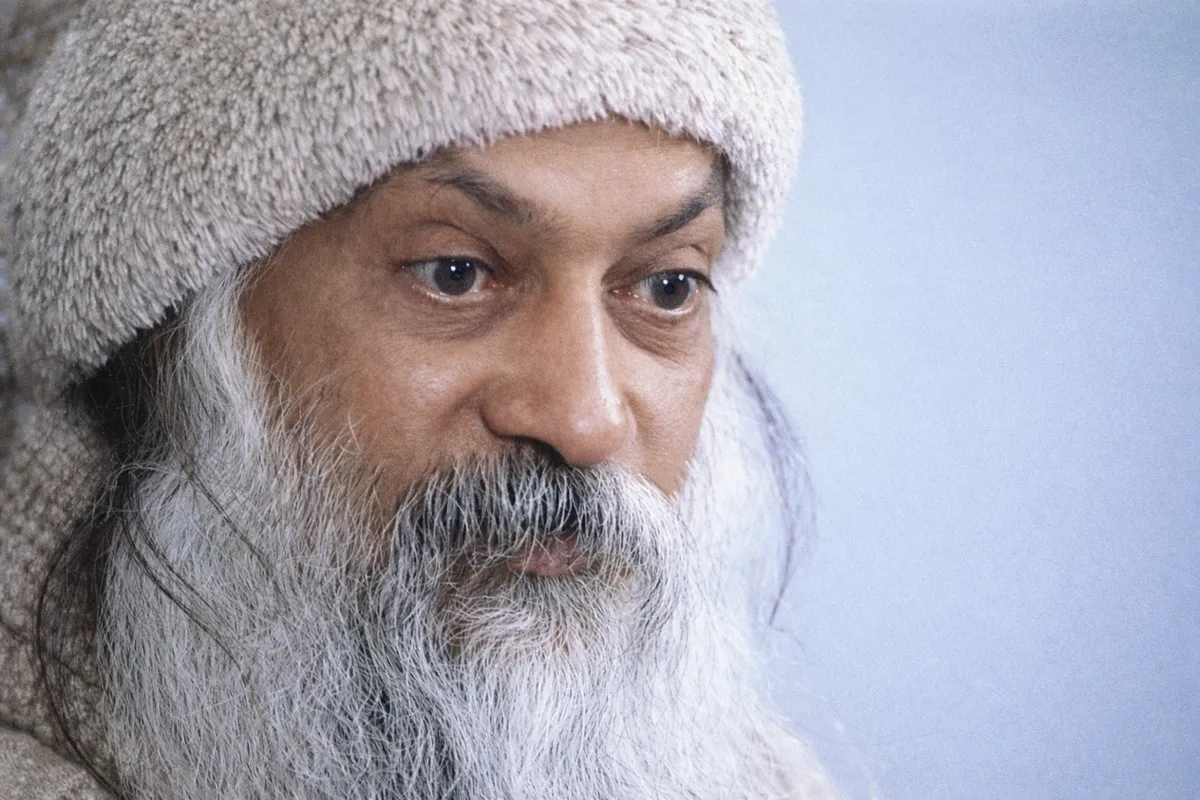
It’s like a gardener picking seeds that can sprout now—until you’re awake, the teacher decides when to help and may let you think it was your choice.
From the Discourses
Passages where Osho speaks to this question — each links to the complete discourse.
Beloved Osho, is the master-disciple relationship accidental, or is it a conscious choice?
"But it is still not too late. I was worried that if I died, my word, my promise would not be fulfilled -- `That idiot is bound to come sooner or later, but if I am not here then my description, my indication to him, will not be valid, will prove false.' Just to be authentic, I am sitting under this tree for thirty years! You could have chosen me that very day. But you could not help it, you did not have the eyes. You heard my words, but you could not understand the meaning. I was in front of you, describing myself, and you were thinking to find me somewhere else." The disciple finds the master only accidentally; he just goes on moving, stumbling, falling, getting up again, being cheated by one, exploited by another, befooled by someone else. Slowly slowly, a little alertness comes to him. And…
Beloved Osho, in the mad game of master and disciple, I remember hearing you say in poona that the master chooses the disciple first -- before the disciple feels that he has chosen the master. Osho, does the master leave the disciple before the disciple can betray the master?
That's true. The unconscious disciple has no choice, either in choosing the master or leaving the master. It is only the conscious master who chooses the disciple, and if he feels that it is not the right time for the disciple, he drops him. But he drops him with such grace that the disciple always thinks that he has dropped the master. While choosing also, the disciple thinks he has chosen the master. In your sleep you cannot choose who is going to awaken you. In your sleep you can only dream You cannot have any glimpse of reality on either end -- choosing a master or leaving a master. The master chooses a disciple seeing some potential, some possibility of flowering. But there are disciples whose pace of growth is so slow that it may take lives for them; then it is better to leave them. Some other gardener…
Beloved Osho, your relationship with your disciples seems to be unique among the religions. Would you say something about this?
The person who made it possible for you to have those few moments, the woman, the man -- be grateful, immensely grateful to the person. Yes, those moments are no more there. Nothing can be done about it. They cannot be pulled back, and even if there was some way to pull them back, they would not be the same. It would be a repetition. It wouldn't bring you the same joy, the same ecstasy. It is good that they cannot be pulled back, otherwise even the memory of those cherished moments would be spoiled. Respect the person, be grateful to the person that, for no reason at all -- she is a stranger, you are a stranger -- for no reason at all, for no bargain, there was no business... mysteriously the universe managed; something transpired between you. And it was nourishing to both of you. It has made…
Beloved master, to many people in the west, the master/disciple relationship is outside their experience. What does it involve?
Chris Lister, Allen Jewhurst, Lesley Rogers, the East has contributed a few tremendously significant things to human consciousness. One of those beautiful things is the phenomenon of the master/disciple relationship. It is an Eastern contribution; just as science is a Western phenomenon, mysticism is Eastern. Science is extrovert, mysticism is introvert. Science is trying to know the objective reality, and mysticism is an exploration of the subjective reality, of the interiority of your own being. In the world of science the teacher/student relationship exists, because science can be taught -- hence the teacher/ student relationship. But religion, mysticism, cannot be taught, it can only be caught. Hence in mysticism there is no relationship like the teacher/student relationship. A totally different kind of relationship exists: the master/disciple. The differences are tremendous, the differences are great. Between a student and a teacher, doubt is the method. The teacher is there to help…
What is the guru/disciple relationship?
Wittgenstein has said somewhere that what cannot be said can be shown. Saying needs no patience, but showing needs much patience. If I want to say something to you, I can say it this very moment. Your patience, your preparation is not needed. I can say it, and you will hear it. But if I want to show you something then you will have to make great preparations in order to see it. I cannot show it to you unless you have the capacity to see. The guru is basically not saying anything but trying to show something; and if the disciple is aware, then things become clear by not intervening. Things are always clear, but the mind is confused -- and a confused mind confuses things. As far as worldly things are concerned your mind cannot distort them too much because they are so objective that they do not…