
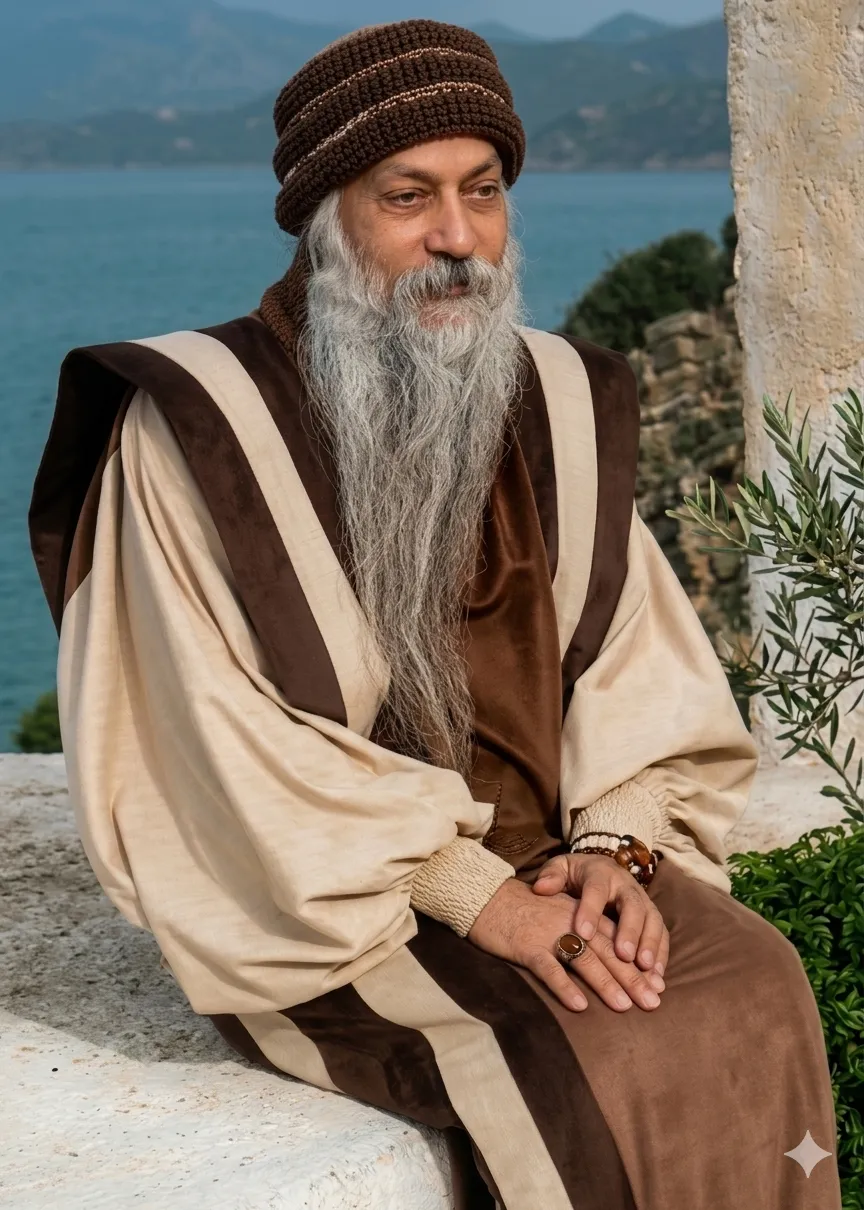
Wise people playfully tease each other so students get curious and suddenly notice a deeper truth beyond words.
From the Discourses
Passages where Osho speaks to this question — each links to the complete discourse.
Your third question is: "Osho, some zen anecdotes are about interchanges between two masters, two enlightened beings. I have heard that this was called doing dharma battle. What was the point of those exchanges, or were they just for the joy of the game?"
Maneesha, Dharma Battle has a certain subtle purpose. If you see two enlightened persons engaged in a playful dialogue one never knows: the seer within you may become suddenly aware of something more that is not available to our ordinary eyes. These Dharma Battles are for the growth of insight in disciples. There is nothing to say and there is nothing to be heard, but those who cannot understand silence... something has to be done for them. Something -- however farfetched -- but something has to be done. That something is Dharma Battle. Two enlightened masters meet, poke and pinch each other, raise questions which they know are absurd, give answers which they know have no validity... But in their Dharma Battle the disciples who are the watchers may become aware of something subtle that is not clear in the words. For example, one Zen master is making a circle…
Osho, forgive me; I want to ask something that has been on my mind for a long time. Why is it that all the great masters who are alive—including you—never come together?
Kabir’s disciples asked, “Why were you silent? Your speech has such power—give a little taste of it to Farid too! You shower it on us every day.” Kabir said, “Farid has already received it. What I shower on you, Farid has already received. Where I am, there is Farid. We both stand in the same place. Seeing each other, we were amazed. We are not two; we are one. So what is there to say? To whom to say it? If a man sits alone and talks, would you not call him mad? Someone sitting alone, talking to himself—raising the questions and giving the answers—that is what you call madness. So,” said Kabir, “did you want to make me mad? We were not two.” Therefore there is no need for saints to meet. Saints are not separate that they should have to meet. A Janata Party is formed by non-saints,…
अंतिम प्रश्न: ओशो, क्षमा करें, एक बात पूछना चाहता हूं जो बहुत दिनों से मेरे मन में है। आप सहित सभी महापुरुष जो जिंदा हैं, कभी इकट्ठे क्यों नहीं होते?
कबीर के शिष्यों ने पूछा, आप चुप क्यों रहे? आपकी वाणी में तो ऐसा ओज, फरीद को भी तो थोड़ा रस देते! हम पर तो आप रोज लुटाते हैं। पर कबीर ने कहा कि फरीद को तो मिल ही गया है। जो मैं तुम पर लुटाता हूं, वह फरीद को मिल गया है। जहां मैं हूं वहां फरीद है। हम दोनों एक जगह खड़े हैं। देख कर हम भौचक रह गए। हम दो ही नहीं हैं, हम एक ही हैं। इसलिए क्या कहना? किससे कहना? अब अकेला आदमी बैठ कर बात करे, कबीर ने कहा, तो पागल नहीं कहोगे उसको? कोई अकेला बैठा अपने से ही बातें कर रहा है--जवाब भी खुद ही दे, प्रश्न भी खुद ही उठाए, उसी को तो पागल कहते हैं। तो कबीर ने कहा, क्या तुम मुझे पागल बनवाना चाहते थे? हम दो थे नहीं।
Osho, you have titled this series of talks “Sahaj Yoga.” Do “sahaj” and “yoga” not seem mutually opposed?
Anand Maitreya! They don’t just seem opposed, they are opposed. But no ultimate truth of life can manifest without contradiction. Life is made of opposites—darkness and light, day and night, woman and man, negative electricity and positive electricity, birth and death. The very structure of life is woven of opposites. Hence the opposites are not only opposed; they are complementary to each other. If you have labored hard all day, you will be able to sleep deeply. Labor and rest are opposites, yet only the one who has worked can rest deeply—and the one who has not worked cannot. So the opposites are not only opposed, they complete each other. And only the one who has rested deeply at night can rise in the morning and engage in work again. One who has not rested through the night will not be able to work in the morning. Look closely at…
पहला प्रश्न: ओशो, आपने इस प्रवचनमाला का शीर्षक दिया है--सहज-योग। क्या सहज और योग परस्पर-विरोधी नहीं लगते?
आनंद मैत्रेय! विरोधी लगते ही नहीं, विरोधी हैं। लेकिन जीवन का कोई भी परम सत्य बिना विरोधाभास के प्रगट हो ही नहीं सकता। जीवन बना है विरोधों से--अंधेरा और प्रकाश, दिन और रात, स्त्री और पुरुष, ऋण विद्युत-धन विद्युत, जन्म-मृत्यु। जीवन की संरचना विरोधों से है। इसलिए विरोधी विरोधी ही नहीं हैं, एक-दूसरे के परिपूरक भी हैं। दिन भर श्रम किया खूब तो गहरी नींद सो सकोगे। श्रम और विश्राम विरोधी हैं, पर जिसने श्रम किया है वही गहरा विश्राम कर सकेगा। और जिसने श्रम नहीं किया वह गहरा विश्राम भी न कर सकेगा। तो विरोधी विरोधी ही नहीं हैं, एक-दूसरे के परिपूरक भी हैं। और जिसने रात्रि गहरा विश्राम किया है वही सुबह जागकर फिर श्रम में संलग्न हो सकेगा। जो रात-भर विश्राम नहीं कर सका वह सुबह श्रम में भी न लग सकेगा।
Question: BELOVED OSHO, ENLIGHTENMENT AND DELUSION "BUDDHA" IS THE MEDICINE FOR SENTIENT BEINGS; ONCE THE DISEASE OF SENTIENT BEINGS IS REMOVED, THE MEDICINE HAS NO FURTHER USE. IF YOU WANT TO ATTAIN ONENESS, JUST GIVE UP BOTH BUDDHAS AND SENTIENT BEINGS AT ONCE! AN ANCIENT WORTHY SAID, "JUST PERCEIVE NOTHINGNESS IN THE MIDST OF THINGS." "I FORMED THE REPOSITORY OF THUSNESS WITH SUBTLE ILLUMINATION THAT IS NEITHER DESTROYED NOR BORN; AND THE REPOSITORY OF THUSNESS IS ONLY THE ILLUMINATION OF SUBLIME ENLIGHTENMENT SHINING THROUGHOUT THE WHOLE COSMOS." NEVERTHELESS, BOTH ARE ULTIMATELY EMPTY FALSEHOODS. IF ONE ABANDONS THE POWER OF ACTIONS TO GRASP THE POWER OF THE PATH, THEN I WOULD SAY THAT THIS PERSON DOES NOT UNDERSTAND THE SKILL IN MEANS OF ALL THE BUDDHAS IN EXPOUNDING THE TRUTH AS IS APPROPRIATE TO THE OCCASION. WHY?
Osho, when someone abused Lord Buddha he said, “I do not accept this gift; take it back.” Ramana Maharshi ran after a stubborn debater with a stick. And when someone threw a shoe at you, you picked it up in one hand and asked for the other shoe of the pair. This difference that appears in the behavior of self-realized men—would you kindly shed some light on it?
A difference only seems to be there; it is not. It only appears so because the circumstances are different. The one who abused Buddha is not the same man who threw a shoe at me. I am standing exactly where I am. The man who insulted Ramana is not the same man who threw a shoe at me. So the difference that shows up is not in the buddhas; it arises from the one who throws the shoe, who hurls the abuse, who commits the insult. Understand this distinction clearly. If the man who threw a shoe at me had been the very one who abused Buddha, I too would have said, “I do not accept this gift.” And if it had been the same man who insulted Ramana, I too would have run after him with a stick. This is the very meaning of awakened consciousness: that whatever is…
पांचवां प्रश्न: ओशो, भगवान बुद्ध को किसी ने गाली दी तो उन्होंने कहा, मैं यह भेंट नहीं लेता, इसे वापिस ले जाओ। रमण महर्षि हठी-विवादी के पीछे लाठी ले कर भागे। और आप पर जब किसी ने जूता फेंका तो आपने उसे एक हाथ में ले कर उसके जोड़े जूते की मांग की। आत्मोपलब्ध पुरुषों के व्यवहार में यह जो भिन्नता दिखती है, क्या उस पर कुछ प्रकाश डालने की अनुकंपा करेंगे?
भिन्नता दिखती ही है, है नहीं। भिन्नता दिखती ही है, क्योंकि परिस्थितियां भिन्न-भिन्न हैं। बुद्ध को जिसने गाली दी, वही आदमी मुझ पर जूता नहीं फेंका। मैं तो ठीक वहीं हूं। रमण को जिस आदमी ने अपमानित किया, वही आदमी मेरे ऊपर जूता नहीं फेंका। तो जो फर्क पड़ रहा है, वह बुद्धों में नहीं पड़ रहा है। जो फर्क पड़ रहा है वह जूता फेंकने वाले, गाली देने वाले, अपमानित करने वाले से पड़ रहा है। इस भेद को ठीक से समझना। अगर मुझ पर जूता फेंकने वाला भी वही आदमी होता जिसने बुद्ध को गाली दी थी तो मैं भी उससे कहता कि मैं यह भेंट नहीं लेता। …