
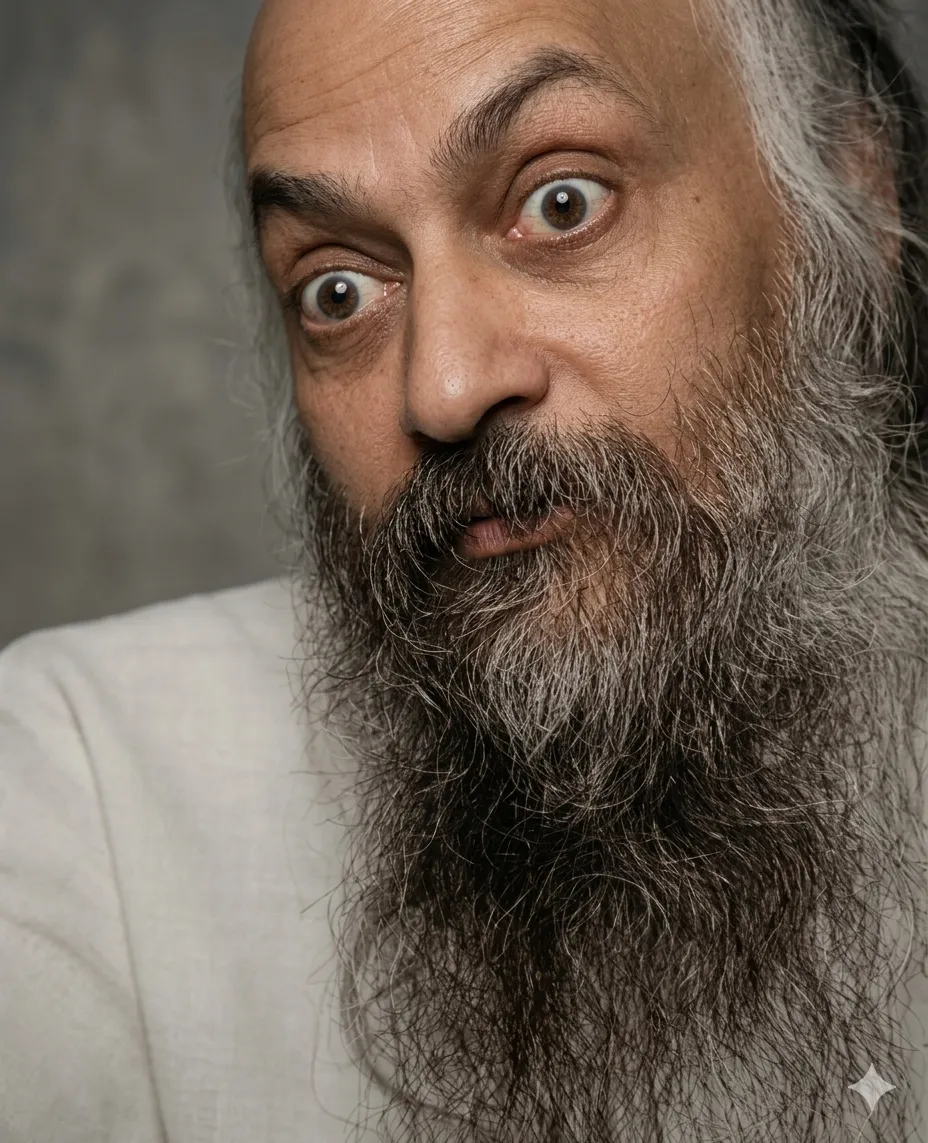
Don’t kill your body—let your ego and cravings die through meditation and a new way of living, and real meaning will appear.
From the Discourses
Passages where Osho speaks to this question — each links to the complete discourse.
Osho, life seems meaningless. I want to take sannyas too, but I’m afraid of society—and I hold back. Then, seeing life’s meaninglessness, the thought of suicide comes again and again. What do you say about suicide?
The “meaning” of this life—earning your bread, running a shop, the same routine day after day. Morning you’re up again, round and round like an ox on the mill; evening you return and fall into bed; morning again. The same quarrels, the same chatter, the same ideologies. Sooner or later anyone with a little intelligence will feel: what is going on? What’s the point? I did this forty years; I’ll do it another twenty-five or thirty; then I’ll die. To what end? Only fools never have this thought. It is auspicious that you feel life is meaningless. But it is not right to decide on suicide on that basis. First search further. Another way of living may be possible. I tell you, another way of living exists. I speak from knowing: another way exists. One life heads outward; it is futile. Another turns inward; it is meaningful. Everyone is seeking…
चौथा प्रश्न: ओशो, जीवन निरर्थक मालूम होता है। मैं संन्यास भी लेना चाहता हूं। लेकिन समाज का भय लगता है--और रुक जाता हूं। फिर जीवन की अर्थहीनता को देखकर आत्मघात का विचार भी बार-बार आता है। आत्मघात के संबंध में आप क्या कहते हैं?
इस जीवन का अर्थ--रोटी-रोजी कमाना; दुकान चलाना; रोज वही...। सुबह फिर उठे; फिर वही कोल्हू के बैल जैसे चल पड़े। फिर सांझ हो गयी; फिर आकर सो गए! फिर सुबह चले। वही लड़ाई-झगड़ा! वही बकवास। वही मतवाद। और धीरे-धीरे किसी को भी लगेगा, जिसमें थोड़ी बुद्धि है उसको लगेगा: यह हो क्या रहा है? इससे सार क्या है? ऐसे ही चालीस साल करता रहा; और पच्चीस साल तीस साल करूंगा; फिर मर जाऊंगा। इससे प्रयोजन क्या है? सिर्फ बुद्धुओं को यह विचार नहीं उठता। यह शुभ है कि तुम्हें विचार उठा कि जीवन निरर्थक है। मगर इससे ही यह निर्णय लेना उचित नहीं है कि आत्मघात कर लें। पहले और भी तो तलाश कर लो। …
Osho, why do I feel that if life is meaningless and empty? It seems that I am deathly afraid of being alone. How can I go totally into my aloneness with joy instead of fear?
I am not in favor of all these five "existentialists" -- in quotes -- because I am not even ready to call them existentialists. Kierkegaard never really lived, or if you call his life, life, then it was worse than death. He came out of his house only once a month, and the house was not much, just a small room. His father, seeing that his son seemed to be a little crazy -- continuously reading and writing -- tried to read his books, and threw them away because he could not manage to figure out what Kierkegaard wanted to say. And he goes on and on about nothing, much ado about nothing. Kierkegaard never got married. One foolish woman was in love with him... must have been foolish, because he was an ugly man in the first place, and a strange type, eccentric, who lived in the darkness of…
Question: Second question: Osho, life seems meaningless. What should I do? ... The great Western thinker Camus has written that, in his view, the biggest problem in human life is only one: Why should a man live at all? Suicide is the central philosophical problem. And Camus is right. If you do not bring meaning into life, then suicide is indeed the biggest problem—why not simply erase oneself? Other Western thinkers move in the same direction. A hero in Dostoevsky’s The Brothers Karamazov says to God: “Where are you? I want to meet you—not to worship you, not to pray for anything. I want to ask why you gave me life without asking me. What kind of harshness is this? What cruelty? You should have asked whether I even wanted to be. I want to meet you face to face so I can say: what injustice is this?
पश्चिम के बहुत बड़े विचारक कामू ने लिखा है कि मेरे देखे, मेरे लेखे, मनुष्य के जीवन की सबसे बड़ी समस्या एक ही है कि आदमी जीए ही क्यों? आत्महत्या सबसे बड़ी तात्विक समस्या है। और कामू ठीक कह रहा है। अगर तुमने जीवन में अर्थ को पैदा नहीं किया तो आत्महत्या ही सबसे बड़ी समस्या है, कि मैं अपने को मिटा क्यों न लूं? पश्चिम के और विचारक भी इसी दिशा में सोचते हैं। दोस्तोवस्की का एक नायक, उसकी प्रसिद्ध कृति ब्रदर्स कर्माजोव में परमात्मा से कहता है कि तू कहां है? मैं तुझसे मिलना चाहता हूं। इसलिए नहीं कि मुझे तेरी कोई पूजा करनी है, कि मुझे तुझसे कुछ प्रार्थना करनी है। मैं तुझसे यह पूछना चाहता हूं कि मेरे बिना पूछे तूने मुझे जीवन क्यों दिया? यह कैसी कठोरता है? यह कैसी क्रूरता है? मुझसे पूछा तो होता कि मैं होना भी चाहता हूं या नहीं! मैं तुझसे मिलना चाहता हूं, ताकि रूबरू यह बात हो सके कि यह कैसा अन्याय है! और मैं तेरी टिकट वापस करना चाहता हूं कि मुझे कृपा कर बाहर जाने दे! मुझे जीवन में नहीं रहना। मुझे जीवित नहीं रहना।
Osho, Indian sages do not talk as much about meaninglessness and boredom as they do about love, meditation, and bliss. Is speaking directly of love, meditation, and bliss useful for understanding life’s meaninglessness and boredom? Kindly tell us.
In the West there is much talk that life is boredom, meaningless, futile, without essence—insubstantial. The very result of that talk has been that people have gradually accepted that life is futile and insubstantial. People have become sad. They have lost their roots in life. They are merely going through the motions—almost as if they are just waiting to die. The exuberance of life has disappeared. And although there is a little truth in what Western thinkers say, it is only a half-truth. Only half. Life is boring, life is futile, life is insubstantial. Our sages have also said that life is futile and insubstantial. But they did not stop there. That is only half a statement. This life is insubstantial because there is another life that is essential. This life is insubstantial, but life as such is not only insubstantial. This life is futile, but there is another dimension…
तीसरा प्रश्न: ओशो, भारतीय मनीषी अर्थहीनता और ऊब की उतनी चर्चा नहीं करते जितनी प्रेम की, ध्यान की और आनंद की करते हैं। क्या प्रेम, ध्यान और आनंद की सीधी चर्चा जीवन की अर्थहीनता और ऊब को जानने में उपयोगी है? कृपा करके कहें।
पश्चिम में बहुत चर्चा होती है कि जीवन ऊब है, अर्थहीन है, व्यर्थ है, कोई सार नहीं, असार है। उस चर्चा का परिणाम ही यह हुआ है कि लोगों ने धीरे-धीरे यह स्वीकार कर लिया कि जीवन व्यर्थ है, असार है। लोग उदास हो गए हैं। लोगों ने जीवन में अपनी जड़ें खो दी हैं। लोग यूं ही जी रहे हैं। बस मरने की राह जैसे देख रहे हों। जीवन की उत्फुल्लता चली गई है। और यद्यपि पश्चिम के विचारक जो कहते हैं उसमें थोड़ी सच्चाई है, पर आधी सच्चाई है। केवल आधी। जीवन ऊब है, जीवन व्यर्थ है और जीवन असार है। हमारे मनीषियों ने भी कहा है कि जीवन व्यर्थ है और असार है। लेकिन उतना ही कह कर चुप नहीं रह गए। वह आधा वचन है। …
Osho, what is the meaning of life? Life has no meaning by itself; we have to pour meaning into it. Life is an opportunity; if you infuse it, it becomes meaningful.
Life is like a blank canvas; paint upon it and meaning will appear. The meaning will depend on your skill. If a Picasso paints, it will be worth millions; if you paint, perhaps it won’t fetch millions. There is as much meaning in life as we put into it. Life in itself is empty; life is a bare opportunity. Possibility is all; actuality is nothing. That’s why people so often think: life is futile! What meaning? People come to me asking, “What is the meaning of life?” They are imagining that meaning is some ready‑made thing—lying around somewhere to be handed to you, like predigested food. No; meaning is born of creativity. Compose a few songs; make a sculpture; dance a little. Love a little; meditate a little. Explore; dive into inquiry. And you will find that meaning begins to arrive. And the more multidimensional your being, the more unending…