
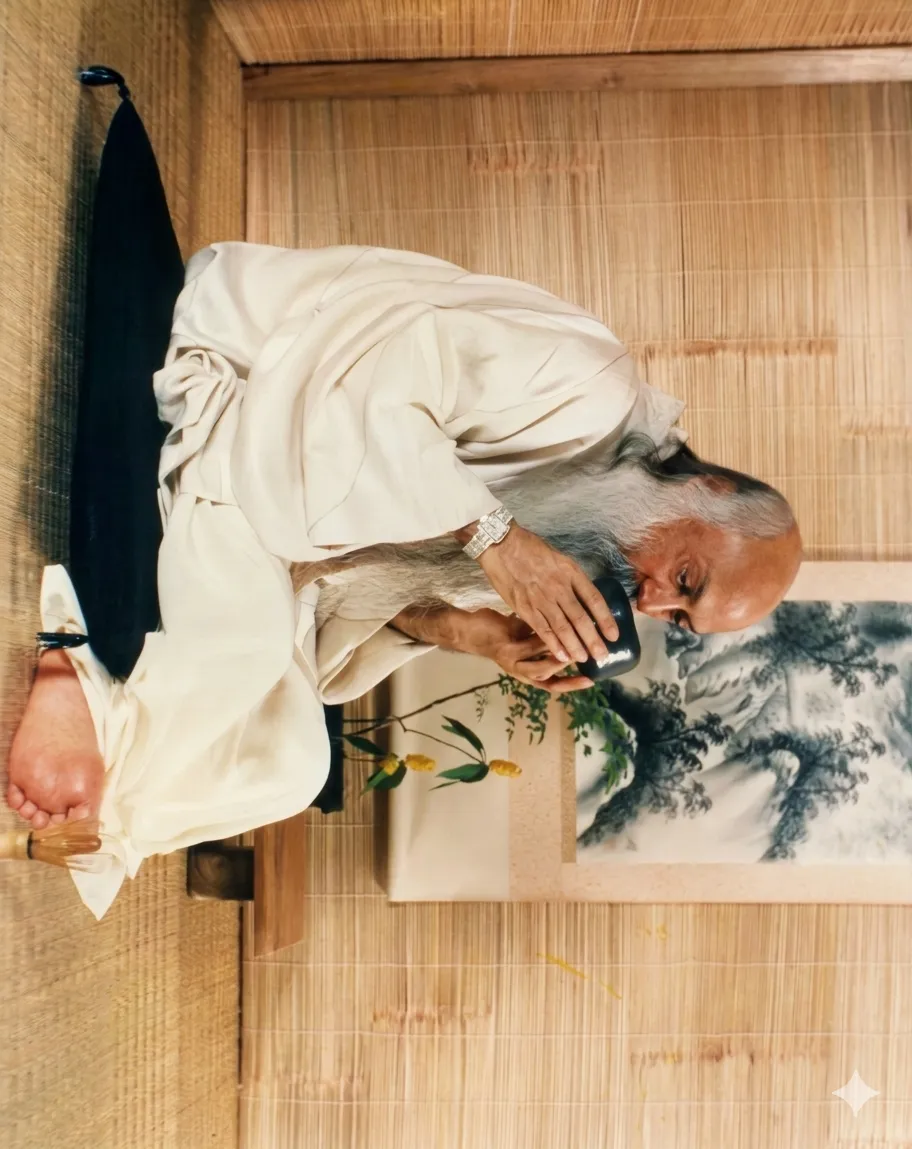
Your mind gets used to worrying; unless you grow peace inside while organizing life outside, you’ll stay restless no matter what you gain.
From the Discourses
Passages where Osho speaks to this question — each links to the complete discourse.
About worrying? About worrying, about being restless. All the ruts have become those of worry. Like when a bullock cart moves, a track gets formed. Now the cart’s wheels have to run caught in that track. They may wander here and there for a little while, but they will slip back into it. A groove has formed.
For twenty years a man worries and frets; he doesn’t sleep—money, money, how to earn, how to earn—and slowly, slowly, slowly his mind becomes a mechanism of worry; the nerves, the brain, all become habituated to worrying. Now he has managed to earn money. For this he worried for twenty years! And having earned it he finds there is neither happiness nor peace. It is not that money cannot give you any peace—money can give you order, arrangement—but in those twenty years your brain has been thrown out of balance. So the man begins to say, “Ah, money—there is no happiness or peace in it! I’ve earned it and I’ve become even more restless and miserable! So there is no substance in money. It should be dropped.” Here the man is making a mistake. He is not able to understand that money is only a convenience, a means. If you…
प्रश्न: चिंता करने की? चिंता करने की, बेचैन होने की। सब रूट्स बन गईं चिंता की। जैसे, बैलगाड़ी चलती है, तो एक रास्ता बन गया। अब बैलगाड़ी के चकों को उसी में फंस कर चलना पड़ेगा। अब इधर-उधर थोड़ी-बहुत देर चलेगी, फिर उसी में आ जाएगी। रट बन गई।
तो बीस साल आदमी चिंता, फिकर; सोया नहीं, पैसा, पैसा, कैसे कमाऊं, कैसे कमाऊं, तो धीरे-धीरे, धीरे-धीरे, धीरे-धीरे उसका दिमाग एक चिंता--स्नायु मस्तिष्क के सब चिंता करने के लिए आदी हो गए हैं। अब वह रुपया कमा पाया। अब। और इसके लिए उसने इतनी चिंता की थी बीस साल! और रुपया कमा कर वह पाता है कि न कोई सुख है, न कोई शांति है। सुख और शांति इसलिए नहीं है कि रुपया आपको कोई शांति नहीं दे सकता, रुपया व्यवस्था दे सकता है, लेकिन बीस साल में आपका मस्तिष्क गड़बड़ हो गया। तो वह आदमी फिर यह कहने लगा कि अरे, रुपये, इसमें कोई सुख-शांति नहीं है! क्योंकि मैंने कमा भी लिया और मैं और अशांत और दुखी हो गया हूं! तो रुपये में कोई सार नहीं है। इसको छोड़ना चाहिए।
First, I have asked one question. And I have also asked one or two related questions. It is asked: Osho, the mind is restless. Without effort and without renunciation, how can it become steady?
No. I will say to you: it is not an effort. If I am clenching my fist and ask you, “How do I open this fist?” what will you say? You will say: “To open it, you need do nothing. Please stop doing what you are doing to clench it; the fist will open by itself.” Opening is not an effort; the moment you cease the effort that clenches, opening happens. Or if I pull down a branch and hold it, and ask how to return it to its place—what will you say? “Do nothing to return it. Just stop doing what holds it down; it will return by itself.” What are we doing continuously with the mind? We are doing something. If we stop that, the mind will quiet by itself. It will quiet by itself. As I said this morning, we are constantly engaged in resistance—twenty-four hours resisting.…
सबसे पहले एक प्रश्न पूछा है। और उससे संबंधित एक-दो प्रश्न और भी पूछे हैं। पूछा है: ओशो, मन चंचल है और बिना अयास और वैराग्य के वह कैसे थिर होगा?
नहीं, मैं आपसे निवेदन करूंगा, यह अयास नहीं है। जैसे अगर मैं यह मुट्ठी बांधे हूं और कोई मेरे पास आए और मैं उससे पूछूं कि इस मुट्ठी को मैं कैसे खोलूं? तो वह मुझसे क्या कहेगा? वह कहेगा: खोलने के लिए कुछ भी करने की जरूरत नहीं है, बांधने के लिए जो कुछ कर रहे हैं, कृपा कर उतना ही न करें, मुट्ठी तो खुल जाएगी। मुट्ठी का खुलना तो अपने आप हो जाएगा, हम उसे बांधने के लिए जो कर रहे हैं, वह भर न करें। तो मुट्ठी का खुलना अयास नहीं है, बांधने के लिए हम जो अयास कर रहे हैं, उसके छोड़ते ही मुट्ठी खुल जाएगी। जैसे एक वृक्ष की शाखा को हम खींच कर पकड़ लें और किसी से पूछें कि अब इसे इसकी जगह वापस लौटाने के लिए क्या करें? तो वह क्या कहेगा? वह कहेगा: आप कुछ भी न करें वापस लौटाने के लिए, कृपया इसे रोक रखने के लिए जो कर रहे हैं, वह भर न करें, शाखा अपने आप वापस लौट जाएगी। हम मन के साथ जो कर रहे हैं निरंतर, क्या कर रहे हैं हम मन के साथ? हम कुछ काम कर रहे हैं मन के साथ। अगर हम वह न करें, मन अपने आप शांत हो जाएगा। …
A friend has asked, Osho, I am very restless, and so much energy gets used up in this restlessness. How can I make use of it, and what is its cause?
But the anger remains there; it will not change by your turning away. It will change by your standing your ground and seeing it. If you turn your back, anger will make deeper wounds within and lay down roots. Fix both your eyes on anger. This is the moment to consciously see anger. When lust seizes the mind, do not run. Do not panic. Do not chant Ram-Ram. Look lust straight in the face. A direct encounter with the passions is necessary. But man has been taught to run. He has been told, wherever something bad appears—run away. But where will you run? The bad is within you; it will go with you. There is no way to run away from yourself. If evil were outside somewhere, we could run. It stands within—we will have to change it. We will have to use this manure. And using it is not…
एक मित्र ने पूछा है, ओशो, मैं बहुत बेचैन हूं और मेरे पास इतनी बेचैनी है कि सारी शक्ति इस बेचैनी में ही समाप्त हो जाती है। तो मैं इस बेचैनी का क्या उपयोग कर सकता हूं और इस बेचैनी का कारण क्या है?
लेकिन क्रोध वहां पड़ा है, वह बदलेगा नहीं। आपके हटने से नहीं बदलेगा; आपके जम जाने से और देखने से बदलेगा। आप पीठ कर लेंगे, तो क्रोध और घाव बना देगा भीतर, और जड़ें जमा लेगा। आप अपनी दोनों आंखें क्रोध पर गड़ा दें। और यह क्षण है कि आप होशपूर्वक क्रोध को देख लें। कामवासना मन को पकड़े, तो भागें मत। घबड़ाएं मत। राम-राम मत जपें। कामवासना को सीधा देखें। सीधा साक्षात्कार जरूरी है वासनाओं का। लेकिन आदमी को भागना सिखाया गया है। उसको कहा गया है, जहां भी कुछ बुरा दिखाई पड़े, भाग खड़े होओ। लेकिन भागोगे कहां? बुरा तुम्हारे भीतर है, वह तुम्हारे साथ चला जाएगा। अपने से भागने का कोई भी रास्ता नहीं है। अगर बुराई कहीं बाहर होती, तो हम भाग भी जाते। वह हमारे भीतर खड़ी है, उसको बदलना पड़ेगा। इस खाद का उपयोग करना पड़ेगा। और इसका उपयोग करना बहुत कठिन नहीं है।
Understand the mechanism of mind. The mind is restless; you say it should be quiet. The mind was restless; you have added a new restlessness—that now it should be quiet. Understand the restlessness of mind. You have ten thousand rupees; you wanted a million; therefore the mind is restless. You were not content with what is. You demanded what is not. Restlessness arises from the demand for the ‘no’. Restlessness comes from lack. From what is, restlessness never arises; from asking for what is not, it arises. The wife you have—you want one more beautiful. The husband you have—you want one more renowned. The son you have—you want one more intelligent. The house you have—you want one bigger. The prestige you have—you want it deeper. The position you hold—you want one higher. Restlessness comes from wanting what you do not have.
इस मन की व्यवस्था को समझें। मन अशांत है, तुम कहते हो शांत होना चाहिए। मन तो अशांत था, एक और नई अशांति तुमने जोड़ी कि अब शांत होना चाहिए। मन की अशांति को समझो। तुम्हारे पास दस हजार रुपये हैं, तुम दस लाख चाहते थे, इसलिए मन अशांत है। जितना है उससे तुम तृप्त न थे। जो नहीं है वह तुम मांग रहे थे। ‘नहीं’ की मांग से अशांति आई। अशांति आती है अभाव से। जो है, उससे अशांति कभी नहीं आती है; जो नहीं है, उसकी मांग से आती है। जो पत्नी तुम्हारी है, उससे सुंदर चाहिए। जो पति तुम्हारा है, उससे ज्यादा यशस्वी चाहिए। जो बेटा तुम्हारा है, उससे ज्यादा बुद्धिमान चाहिए। जैसा मकान है, उससे बड़ा चाहिए। जितनी तुम्हारी प्रतिष्ठा है, उससे गहरी चाहिए। जो पद तुम्हारे पास है, उससे आगे का पद चाहिए। अशांति आती है उसकी मांग से जो तुम्हारे पास नहीं है। फिर, जब तुम अशांत हो गए तो अब तुम एक और नई बात मांगना शुरू करते हो--पुराना जाल तो कायम है और उसी जाल का गणित और फैलता है--अब तुम कहते हो, मुझे शांति चाहिए। …
Another friend has asked, Osho, if the soul leaves the body, can it also enter another dead body?
It can. But there is no meaning or purpose in entering another dead body. Because that body died precisely because the soul living in it had become incapable of remaining there. That body had become useless; that’s why it was left. There is no purpose in entering such a body. Still, the possibility of entering another body does exist. But it is not a valuable question to ask how to enter someone else’s body when we don’t even know how we are sitting in our own. What benefit can we gain by pondering the futile idea of entering another’s body? We do not know how we ourselves entered this very body. We don’t know how we live in our own body. We have no experience of separating from our own body and seeing ourselves. There is no purpose in entering another’s body. Yet, scientifically one can say it is possible…
एक और मित्र ने पूछा है, ओशो, आत्मा शरीर के बाहर चली जाए, तो क्या दूसरे मृत शरीर में भी प्रवेश कर सकती है?
कर सकती है। लेकिन दूसरे मृत शरीर में प्रवेश करने का कोई अर्थ और प्रयोजन नहीं रह जाता। क्योंकि दूसरा शरीर इसीलिए मृत हुआ है कि उस शरीर में रहने वाली आत्मा अब उस शरीर में रहने में असमर्थ हो गई थी। वह शरीर व्यर्थ हो गया था, इसीलिए छोड़ा गया है। कोई प्रयोजन नहीं है उस शरीर में प्रवेश का। लेकिन इस बात की संभावना है कि दूसरे शरीर में प्रवेश किया जा सके। लेकिन यह प्रश्न पूछना मूल्यवान नहीं है कि हम दूसरे के शरीर में कैसे प्रवेश करें, अपने ही शरीर में हम कैसे बैठे हुए हैं, इसका भी हमें कोई पता नहीं। हम दूसरे के शरीर में प्रवेश करने की व्यर्थ की बातों पर विचार करने से क्या फायदा उठा सकते हैं? हम अपने ही शरीर में कैसे प्रविष्ट हो गए हैं, इसका भी हमें कोई पता नहीं। हम अपने ही शरीर में कैसे जी रहे हैं, इसका भी कोई पता नहीं। हम अपने ही शरीर से पृथक होकर अपने को देख सकें, इसका भी कोई अनुभव नहीं। दूसरे के शरीर में प्रवेश का प्रयोजन भी नहीं है। …