
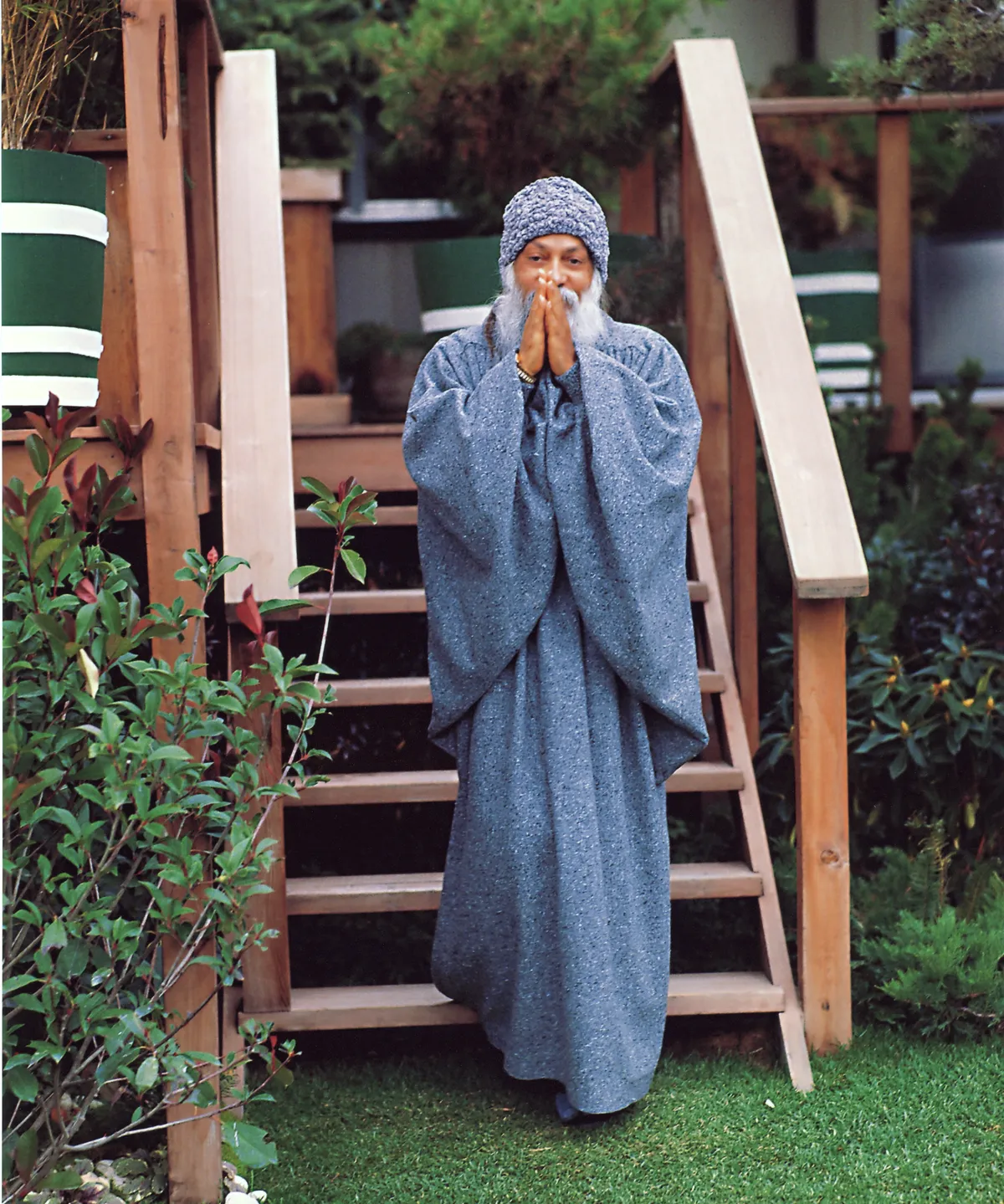
Don’t try to stop worries; just watch them come and go like cars, and they fade by themselves.
From the Discourses
Passages where Osho speaks to this question — each links to the complete discourse.
How is one to stop worrying?
This is from "Pathik the Pathetic." He unnecessarily goes on becoming pathetic. Now, "how to stop worrying?" What is the need to stop worrying? If you start trying to stop worrying, you create a new worry: how to stop worry. Then you start worrying about the worries; then you double them. There is no way. And if somebody says, as there are people.... Dale Carnegie has written a book HOW TO STOP WORRYING AND START LIVING. These people create more worries because they give you a desire that worries can be stopped. They cannot be stopped, but they disappear -- that I know. They cannot be stopped, but they disappear! You cannot do anything about them. If you simply allow them and don't bother a bit, they disappear. Worries disappear, they cannot be stopped -- because when you try to stop them, who are you? The mind which is creating…
Osho said that there was no need to try to still the mind, to stop the thoughts. He said that just as the traffic goes by and one remains on the sidewalk, unaffected, just a watcher, so one should simply witness the thoughts as they went by. We are not our thoughts, and recognising that we are the witness is enough. The very acceptance of the thoughts makes one more relaxed. The relaxation helps to create a distance, to separate oneself. To evaluate a thought as good or bad means that you are attached to your thoughts -- so one should not put labels on them.] ... put yourself aside, sit under a tree, and just watch the traffic. Soon, one day, the traffic disappears and the road is empty. Suddenly there is an interval and in that interval is meditation. But that interval cannot be created or cultivated.
I have been thinking all day of a way to ask the question: how to stop thinking?
Mind is making almost no noise; goes on working silently. And such a servant! -- for seventy, eighty years. And then, too, when you are dying your body may be old but your mind remains young. Its capacity remains yet the same. Sometimes, if you have used it rightly, it even increases with your age! -- because the more you know, the more you understand, the more you have experienced and lived, the more capable your mind becomes. When you die, everything in your body is ready to die -- except the mind. That's why in the East we say mind leaves the body and enters another womb, because it is not yet ready to die. The rebirth is of the mind. Once you have attained the state of samadhi, no-mind, then there will be no rebirth. Then you will simply die. And with your dying, everything will be dissolved…
A friend has asked: Osho, you said about a wayward son that one should let him pass through his experiences, and he will learn on his own. But even after experiencing, he still prefers the same thing—someone is asking about his wayward son—no matter how much suffering he has to endure, even if death itself should come, still he does the same. After stumbling again and again, he repeats it. What can be done? How to reform him?
You will not be able to reform him. If life cannot reform him, if even death cannot reform him, what will you be able to do? If what you say is true—that again and again, even after suffering, he does the same thing; even if death comes, he will still do the same thing, and he does not change—then take your hands off. You will not be able to reform him. You cannot be stronger than death. And one who does not learn from suffering—what will he learn from you? Do not call him a wayward son. You have found yourself a Jadabharata. Because those whom suffering does not reform, whom even death does not reform—these are great, arrived masters; they are in the ultimate state. Do not even try to reform such a one. And why are you so eager to reform another? It is enough to reform yourself.…
एक मित्र ने पूछा है कि ओशो, आपने कुपुत्र के बारे में बताया कि उसको अनुभवों में से गुजरने देना चाहिए, तो वह खुद सीख जाएगा। लेकिन अनुभव लेने के बाद भी वह वही पसंद करता है--कोई अपने कुपुत्र के संबंध में पूछ रहे हैं--चाहे कितना ही दुख झेलना पड़े, चाहे मौत भी क्यों न आ जाए, फिर भी वह वही करता है। बार-बार ठोकर खाकर भी वही दोहराता है। उसका क्या उपाय किया जाए? उसको सुधारने का क्या तरीका है?
आप न सुधार पाएंगे। जिसको जिंदगी नहीं सुधार पा रही, मौत नहीं सुधार पा रही, उसको आप क्या सुधार पाएंगे? अगर आपकी बात सच है कि बार-बार दुख पाकर भी वह वही करता है, मौत भी आ जाए तो भी वही करता है, और सुधरता नहीं, तो आप हाथ अलग कर लें। आपसे नहीं सुधर पाएगा। आप मौत से ज्यादा मजबूत नहीं हो सकते। और जो दुख से नहीं सीख पा रहा है, वह आपसे क्या सीख पाएगा? कुपुत्र मत कहिए उसको। आपको कोई जड़भरत मिल गया है। क्योंकि जिसको दुख नहीं सुधारते, मौत नहीं सुधारती, वे तो बड़े पहुंचे हुए महात्मा हैं, वे तो परम अवस्था में हैं। उनको आप सुधारने की कोशिश ही मत करिए।
The song continues:
IF ONE SEES NOUGHT WHEN STARING INTO SPACE; IF WITH THE MIND ONE THEN OBSERVES THE MIND, ONE DESTROYS DISTINCTIONS AND REACHES BUDDHAHOOD. THE CLOUDS THAT WANDER THROUGH THE SKY HAVE NO ROOTS, NO HOME; NOR DO THE DISTINCTIVE THOUGHTS FLOATING THROUGH THE MIND. ONCE THE SELF-MIND IS SEEN, DISCRIMINATION STOPS. IN SPACE SHAPES AND COLORS FORM, BUT NEITHER BY BLACK NOR WHITE IS SPACE TINGED. FROM THE SELF-MIND ALL THINGS EMERGE, THE MIND BY VIRTUES AND BY VICES IS NOT STAINED. ... A buddha is a person who lives without the mind; then he's not responsible. That's why in the East we say that he never accumulates karma; he never accumulates any entanglements for the future. He lives, he walks, he moves, he eats, he talks, he is doing many things, so he must accumulate karma, because karma means activity. But in the East it is said even if a