
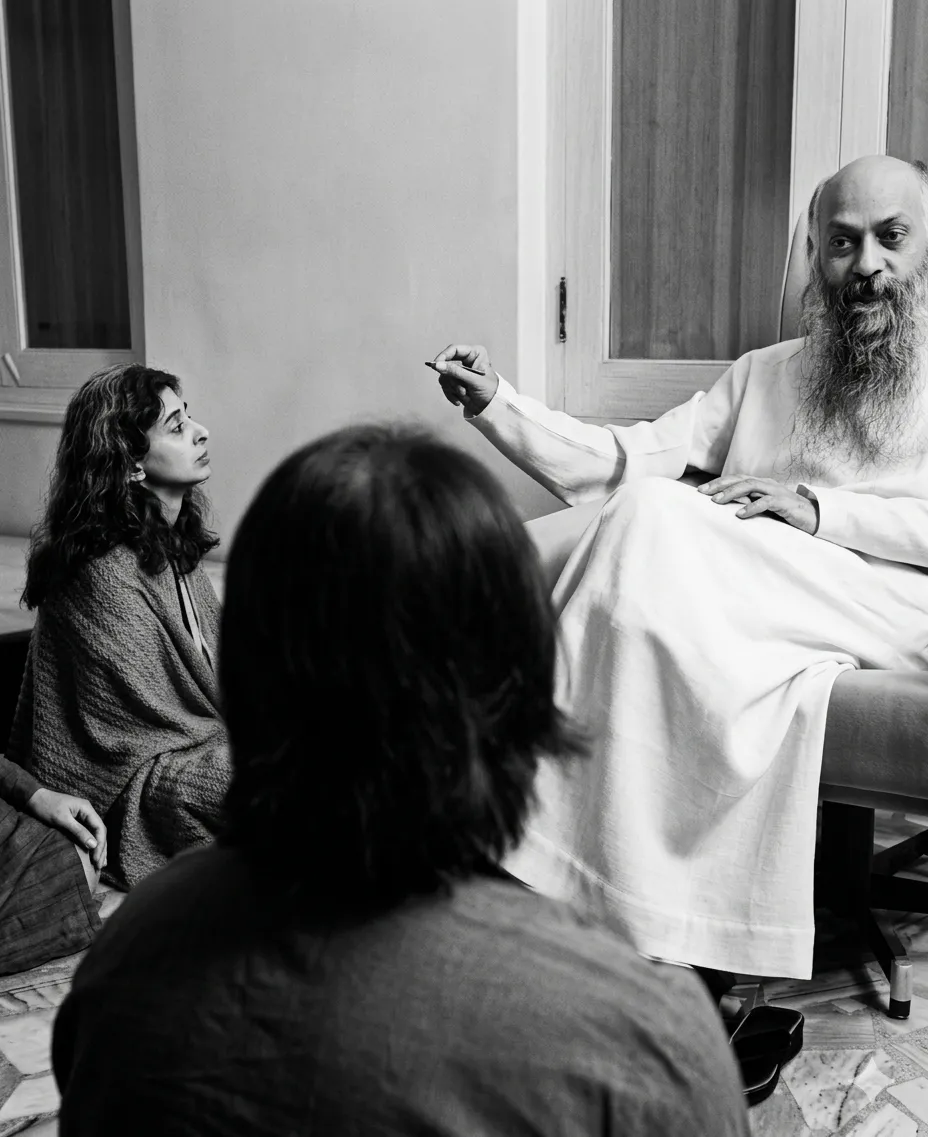
Often, what seems like arrogance is just our misunderstanding when someone states a simple truth.
From the Discourses
Passages where Osho speaks to this question — each links to the complete discourse.
Why do your statements seem to me to be arrogant?
IT HAS ALWAYS BEEN SO. It will always be so. When Jesus said, "I and my father are one," do you think people thought he was a very humble man? When Jesus said, "I am the truth, the way, the door," do you think the rabbis came rushing and fell at his feet and said, "Such a humble man! Never seen before." They said, "This man is arrogant. This man is egoistic." And logically, they look right -- this looks like arrogance! When Krishna said to Arjuna, "SARVA DHARMA PARITYAJYA MAMEKAM SHARANAM VRAJA -- leave all the religions aside and come and fall unto my feet," do you think people thought this a humble statement? "Leave all religions aside and fall unto my feet!" This is pure arrogance. And you will be surprised. It is said that the first words of Gautam the Buddha were... the legend has it that…
Osho, what is the difference between surrender and blind imitation?
So be careful: the freedom you allow yourself, allow the other too. You have no right to judge another as blindly credulous or as a surrendered being. Drop that concern. You cannot judge anyway—how will you enter another’s heart? How will you know? Think only about yourself. See within whether, up to now, you have lived by blind belief or by surrender. Decide only there; leave worrying about others. Otherwise, all your judgments will be wrong. Jesus said: Judge not; do not set yourself up as a judge in relation to another. To the friend who has asked: if you are asking for yourself, good. Drop worrying about others. Look within and see: whatever I have been clinging to till now—have I ever staked my life to hold it? Have I meditated for it? Have I loved for it? Or am I just clutching what culture, society, civilization handed me?…
चौथा प्रश्न: ओशो, समर्पण और अंधानुकरण में क्या अंतर है?
इसलिए खयाल रखना, जो तुम अपने लिए मौका देते हो, वह दूसरे को भी देना। तुम्हें कोई हक नहीं है किसी दूसरे के बाबत निर्णय करने का कि वह अंधविश्वासी है, या समर्पित हुआ व्यक्तित्व है। तुम इसकी चिंता छोड़ो। तुम कर भी नहीं सकते निर्णय। तुम दूसरे के हृदय में उतरोगे कैसे? जानोगे कैसे? तुम तो अपनी ही सोच लो। इतना ही देखो अपने भीतर कि अब तक तुम अंधविश्वास से जी रहे हो, या समर्पण से जी रहे हो। बस, वहीं निर्णय कर लो, दूसरों की फिकिर छोड़ दो। अन्यथा तुम्हारे सभी निर्णय गलत होंगे। जीसस ने कहा है, निर्णय करो ही मत; दूसरे के संबंध में न्यायाधीश बनो ही मत। तो जिन मित्र ने पूछा है, अगर अपने लिए पूछते हों, तो ठीक। दूसरों की चिंता छोड़ दें। अपने भीतर ही देख लेना है कि अब तक जो मैं पकड़े हुए हूं, उसको पकड़ने के लिए मैंने कोई जीवन दांव पर लगाया है? कोई ध्यान किया है? कोई प्रेम किया है? या सिर्फ संस्कृति ने, समाज ने, सभ्यता ने जो दिया है, उसे पकड़े हुए हूं! दूसरों ने दिया है। …
Osho, in every dimension of life it is difficult to bow before truth and easy to bow before lies. Why this topsy‑turvy?
Mukesh, that’s why friendship with untruth is easy: untruth never asks to transform you. Untruth says you already are what you should be—indeed, you are even better. It builds bridges of praise for you. It gives you great consolation. And how many lies we have fabricated! So many that if you start searching, you will be shaken. Truth is one; lies are endless. Just as health is one and diseases are many, so truth is one. And truth will not flatter you; it will not cajole you. Truth will seem bitter, because you have become addicted to the sweetness of lies. Lies come sugar‑coated. Truth is as it is—naked. Those addicted to lies will avert their eyes from truth; truth will not go down on their tongues. Truth will taste very astringent, very bitter. Remember, we live by habit. I have heard: on a road at high noon a man…
दूसरा प्रश्न: ओशो, जीवन के हर आयाम में सत्य के सामने झुकना मुश्किल है और झूठ के सामने झुकना सरल। ऐसी उलटबांसी क्यों है?
मुकेश, इसलिए झूठ के साथ दोस्ती आसान, क्योंकि झूठ तुम्हें रूपांतरित करने की बात ही नहीं करता। झूठ तो कहता है कि तुम हो ही, जो होना चाहिए वही हो, उससे भी श्रेष्ठ तुम हो। झूठ तुम्हारी प्रशंसा के पुल बांधता है। झूठ तुम्हें बड़ी सांत्वना देता है। और कितने-कितने झूठ हमने गढ़े हैं! इतने झूठ कि अगर तुम खोजने चलो तो घबड़ा जाओ! सत्य तो एक है, झूठ अनंत हैं। झूठ अनेक हैं। जैसे स्वास्थ्य एक है और बीमारियां अनेक हैं, ऐसे ही सत्य एक है। और सत्य तुम्हें फुसलाएगा नहीं, तुम्हारी खुशामद नहीं करेगा। सत्य तो कड़वा मालूम पड़ेगा, क्योंकि तुम झूठ की मिठास के आदी हो गए हो। झूठ तो अपने ऊपर शक्कर चढ़ा कर आएगा। सत्य तो जैसा है वैसा है--नग्न! जो लोग झूठ के आदी हो गए हैं, वे सत्य से तो आंखें चुराएंगे; सत्य उनकी जीभ को जमेगा ही नहीं। सत्य तो उन्हें बहुत तिक्त मालूम होगा, कड़वा मालूम होगा।
Ego is the ego’s affirmative proclamation. Humility is the ego’s negative, denying proclamation. Egolessness has no proclamation at all—not even of humility. That is why no one can really call Mahavira humble. It is very difficult to say so. You cannot call Mahavira humble, because only one who still has ego can be humble. Yes, he may suppress it, bend it, melt it, dissolve it. He may say, “I am dust beneath your feet.” But still, he is. That makes no real difference: there is not even a hair’s breadth of difference in the being of it. He will say, “I am not even the dust at your feet—I am lower than dust.” But the “I am” remains. The announcement of being continues. So we can understand the arrogant, who says, “I am everything.
इसलिए कोई महावीर को विनम्र नहीं कह सकता। यह बड़ा मुश्किल होगा कहना। महावीर को विनम्र नहीं कहा जा सकता, क्योंकि विनम्र होता ही वही है, जिसके भीतर अहंकार होता है। हां, अहंकार को दबाता है, झुकाता है, मिटाता है, गलाता है। वह कहता है, मैं तो धूल से भी पैरों में हूं। लेकिन होता है। इससे फर्क नहीं पड़ता। उसके होने में रत्ती भर फर्क नहीं है। वह कहेगा, मैं धूल से भी--तेरे चरणों की धूल भी नहीं हूं--धूल से भी नीचे हूं, लेकिन हूं। होने की घोषणा जारी रहती है!
The prime minister, kuo tzu I, of the tang dynasty, was an outstanding statesman, a distinguished general, and the most admired national hero of his day. But fame, power, wealth and success could not distract him from his keen interest and devotion to buddhism. Regarding himself as a plain and humble devoted buddhist, he often visited his favorite zen master to study under him.
HE AND THE ZEN MASTER SEEMED TO GET ALONG VERY WELL. THE FACT THAT HE WAS THE PRIME MINISTER SEEMED TO HAVE NO INFLUENCE ON THEIR ASSOCIATION. THERE WAS NO NOTICEABLE TRACE OF POLITENESS ON THE ZEN MASTER'S PART, OR OF VAIN LOFTINESS ON THE PART OF THE MINISTER; THE ASSOCIATION SEEMED TO BE THE PURELY RELIGIOUS ONE OF A REVERED MASTER AND AN OBEDIENT DISCIPLE. ONE DAY, HOWEVER, WHEN HE WAS PAYING HIS USUAL VISIT TO THE ZEN MASTER, HE ASKED THE FOLLOWING QUESTION: YOUR REVERENCE, HOW DOES BUDDHISM EXPLAIN EGOTISM? THE ZEN MASTER'S FACE SUDDENLY TURNED BLUE, AND IN AN EXTREMELY HAUGHTY AND CONTEMPTUOUS MANNER HE SAID TO THE PREMIER: WHAT ARE YOU SAYING YOU NUMSKULL? THIS UNREASONABLE AND UNEXPECTED DEFIANCE SO HURT THE FEELINGS OF THE PRIME MINISTER THAT A SLIGHT SULLEN EXPRESSION OF ANGER BEGAN TO SHOW ON HIS FACE. THE ZEN MASTER THEN SMILED AND…