
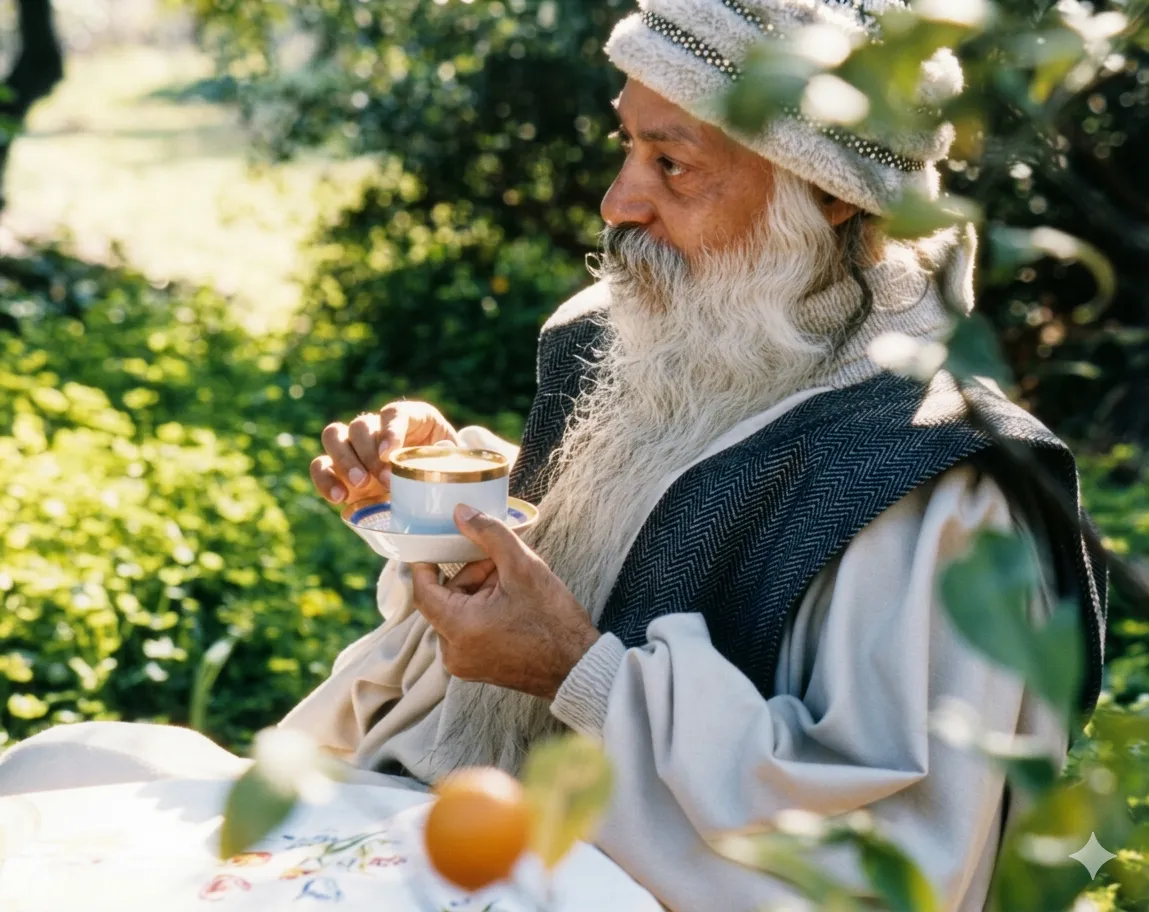
Get ready: we’re coming to Kutch to replace old superstition and control with a fresh, free, spiritual way of living together.
From the Discourses
Passages where Osho speaks to this question — each links to the complete discourse.
Osho, any message for kutch?
I AM coming! And I am coming with my whole world of orange people. We are going to change the whole color of Kutch -- we are going to make it orange! First ten thousand sannyasins will arrive, then more will be coming. Within five years fifty thousand sannyasins will be there and within ten years one hundred thousand sannyasins will be there. So, Navin Mehta, tell the people of Kutch: Get ready! We are certainly going to destroy many things -- many things which need to be destroyed, which should have been destroyed long ago. The whole of India is suffering from many stupidities, many superstitions. We are not going to leave a single stone unturned! We are going to destroy every nonsense, howsoever ancient and old it may be. We are going to bring a totally new vision to Kutch. I have chosen Kutch for the simple reason…
Osho, in Jainism the principles of ahimsa, aparigraha, anekantavada, co-existence, etc., have a special place. But today in a newspaper I read a statement about you by a Jain muni, Shri Bhadragupta Vijayji, and was surprised. This monk is calling people to sacrifice everything and organizing them in protest against your entry into Kutch. For those who profess aparigraha, why this attachment to the Kutch region? And within their anekantavada, why opposition to your vision of life? Does it befit a muni to incite people in this way?
What of a Jain muni’s claim on Kutch! But it makes no difference; if “my India” is possible, why not “my Kutch”? Then “my district, my tehsil, my village.” Then what trouble with “my house”? It’s the same thing. Then why such difficulty with “my wife” and “my children”? If “mine” must remain, what fault is the wife’s and the children’s that you ran away, leaving them? It’s not that the wife wasn’t from Kutch—she must have been a Kutch woman. The children too were Kutchis—they were born of two Kutchis. You left your wife—no shame at leaving a Kutch woman! You left your children—the little Kutchis—no shame! And still: “My Kutch”? But I understand. It is a flock of the blind—led by the blind. The blind lead the blind, and both fall into the well. They keep falling—day after day. But if it is “my own well,” why not…
पहला प्रश्न: ओशो, जैन धर्म में अहिंसा, अपरिग्रह, अनेकांतवाद, सह-अस्तित्व आदि सिद्धांतों का विशेष स्थान है। लेकिन आज एक समाचार-पत्र में आपके संबंध में एक जैन मुनि, श्री भद्रगुप्त विजय जी का वक्तव्य पढ़ा तो आश्चर्य हुआ। ये मुनिश्री आपके कच्छ-प्रवेश के विरोध में लोगों को सब-कुछ बलिदान कर देने के लिए आह्वान कर रहे हैं, संगठित कर रहे हैं। अपरिग्रह मानने वालों को कच्छ प्रदेश पर परिग्रह क्यों? और उनके अनेकांतवाद में आपकी जीवन-दृष्टि का विरोध क्यों? क्या मुनिश्री का लोगों को इस तरह भड़काना शोभा देता है?
इसमें क्या, जैन मुनि का क्या कच्छ! मगर कोई फर्क तो नहीं पड़ता, अगर ‘मेरा भारत’ हो सकता है तो फिर ‘मेरा कच्छ’ भी हो सकता है। फिर मेरा जिला, मेरी तहसील, मेरा गांव...। फिर ‘मेरे घर’ में ही क्या तकलीफ है? बात तो वही है। फिर ‘मेरी स्त्री’ और ‘मेरे बच्चे’ में क्या इतनी अड़चन आ रही है! जब ‘मेरा’ बचना ही है तो स्त्री और बच्चों का ऐसा क्या कसूर है कि इनको छोड़ कर भाग गए? ऐसा तो नहीं था कि स्त्री कच्छी नहीं थी। स्त्री भी कच्छी रही होगी। और बच्चे भी कच्छी रहे होंगे। जब दोनों के मेल से ही पैदा हुए थे तो कच्छी ही रहे होंगे। स्त्री को छोड़ कर भाग गए--कच्छी को छोड़ते शर्म न आई! बच्चों को छोड़ कर भाग गए--छोटे-छोटे कच्छी, उनको छोड़ कर भाग गए, शर्म न आई! और अभी भी ‘कच्छ मेरा?‘
Osho, paan Kachchh halonta? (Shall we go to Kachchh?) Truly, the fortunes of Kachchh are strong! Blessed will the land be by your going there! Until now Kachchh has been the most neglected—even by Kachchhis themselves. But the moment talk began of the ashram going there, suddenly Kachchh’s well‑wishers have awakened to love of the land, security, who knows what all feelings! Most of those who are now running protests against the ashram’s entry into Kachchh were deeply moved by your discourses on Mahavira. But now…! Kindly bestow a message! (Aun Kachchhi aniya.—I am Kachchhi.)
Morarji tried to stop me and himself went away. I kept waiting; I said, fine. I took Saswad as a pretext—so it would seem I had dropped the idea of going to Kachchh. But I did not go to Saswad either. You went to do the inauguration; I did not set foot there. If I go, I will go to Kachchh—paan Kachchh halonta. Saswad is no distance—twenty‑twenty‑five miles—I did not even go to see it. You went and inaugurated it, you went and held the ceremony. But I knew that Morarji and company were not going to last long. It was like a pot breaking by a cat’s luck, the rafters giving way—pure accident that Morarji sat on the country’s chest. Otherwise there was neither merit nor purpose nor any benefit to the nation from him. How long could he sit on our chest? His going was certain. A year…
तीसरा प्रश्न: ओशो, पांण कच्छ हलोंता? (हम कच्छ चलेंगे?) सचमुच कच्छ प्रदेश के भाग्य बलशाली हैं! धन्य होगी भूमि आप के वहां पधारने से! अब तक कच्छ सबसे--कच्छियों से भी--उपेक्षित रहा है। पर आश्रम के वहां जाने की बात से अचानक कच्छ के हितेच्छुओं को भूमिप्रेम, सुरक्षा, पता नहीं और क्या-क्या भाव जाग जाते हैं! जो लोग अभी आश्रम के कच्छ-प्रवेश की बात पर विरोध-आंदोलन चलाते हैं, वे अधिकांश लोग आपकी महावीर-वाणी के प्रवचन से बहुत प्रभावित थे। पर अब...! आप कुछ संदेश देने की अनुकंपा करें! (आंउ कच्छी अंइया।--मैं कच्छी हूं।)
मोरार जी मुझे रोकने की कोशिश में खुद चले गए। मैं प्रतीक्षा करता रहा, मैंने कहा: ठीक। सासवड़ का तो मैंने बहाना ले लिया था कि चलो, नजर बचेगी, यह लगेगा कि मैंने कच्छ जाने का खयाल ही छोड़ दिया। मगर सासवड़ मैं गया भी नहीं। तुम जरूर उदघाटन करने गए, मैंने कदम नहीं रखा। मैं जाऊंगा तो कच्छ--पांण कच्छ हलोंता। सासवड़ कोई दूर नहीं है, कुल बीस-पच्चीस मील, मैं देखने भी नहीं गया। तुम जाकर उदघाटन भी कर आए, तुम जाकर समारोह भी मना आए। लेकिन मैं जानता था कि मोरार जी एंड कंपनी कोई ज्यादा देर टिकने वाली तो है नहीं। यह तो बिलकुल बिल्ली के भाग्य से हंडी टूट गई थी, छींका टूट गया था, संयोग की बात थी कि मोरार जी छाती पर बैठ गए। अन्यथा न तो योग्यता थी, न कोई प्रयोजन था, न कुछ उनसे देश का हित था। तो कितनी देर छाती पर बैठे रह सकते थे। उनका उतरना निश्चित था। साल-दो साल मैंने कहा प्रतीक्षा कर लो, कोई हर्जा नहीं। अब कच्छ जाने का समय करीब आया जा रहा है। उनके विरोध वगैरह से कुछ होने वाला नहीं है। उन्हीं का हाथ है पीछे। …
Question: Chaitanya Kirti has asked: In Bombay’s Janshakti newspaper a statement by “Kachchh-Kesari Achal Gacchadhipati” Jainacharya Acharya Gunasagar Suri-ji was published, saying that the establishment of Rajneeshdham on the sacred soil of Kutch will push Kutch onto the path of immorality. How can the children of Kutch and its policymakers watch this with a cool heart? The Jainacharya also alleged that, behind the name of God, an obscene drama is being enacted in which the modesty of women—mothers and sisters included—is being looted. Will not our thirty million hairs stand on end on seeing this naked scene? We do not want Rajneeshdham, not only in Kutch but in the whole of Gujarat. Therefore the Acharya has called upon all the youth of Kutch and Gujarat to be alert. What is the answer to these fabricated, baseless accusations? And what should be done about those who are misleading the youth?
अब वे कह रहे हैं कि भगवान के नाम के पीछे अश्लीलता का नाटक चल रहा है, जिसमें मां-बहन समेत नारियों की लाज लूटी जा रही है! बड़े मजे की बात है। वात्स्यायन के काम-सूत्र मैंने नहीं लिखे। महर्षि वात्स्यायन ने लिखे! और पंडित कोक का कोकशास्त्र भी मैंने नहीं लिखा। पंडित कोक ने लिखा! महापंडित था, ब्राह्मण था, कश्मीरी ब्राह्मण। और खजुराहो और कोणार्क और पुरी के मंदिर पर नग्न प्रतिमाएं मैंने नहीं खोदी। …
Osho, someone once told me Poona is the Oxford of India—a city of culture and a representative of the country’s elite. But here, almost every night, well-dressed people ride scooters or cars around Koregaon Park and mercilessly beat sannyasins—especially sannyasinis—with sticks. And now, as if sticks were not enough, they’ve started using iron chains. Osho, what kind of people are these?
In the West you can bathe naked at the seashore—no problem. No man will pounce on you. Here the situation is the reverse. If your arm is showing, it means you lack character; you are attackable. If you were wrapped in a sari, you would be certified as a lady of a “good family.” Here people are weighed by their clothes. So Western visitors naturally face difficulties. They continue to behave as they learned from childhood. There is nothing wrong in that behavior. Among decent people, bathing naked at river or sea should be no issue. Nakedness is natural. Yes, wear clothes in office and market—but there should be some place where one can move free. Here there is none. Mulla Nasruddin went to his doctor. The doctor had hired a newly trained Western girl as an assistant. Mulla kept staring. Inside he said, “You’ve hired such a beautiful girl…
पहला प्रश्न: ओशो, एक बार किसी ने मुझे बतलाया था कि पूना भारत का ऑक्सफोर्ड है--संस्कृति का नगर और देश के विशिष्ट वर्ग का प्रतिनिधि। लेकिन यहां प्रायः हर रात अच्छी पोशाकें पहने लोग स्कूटर पर या कार पर चढ़ कर कोरेगांव पार्क के इर्द-गिर्द घूमते हैं और संन्यासियों को, खासकर संन्यासिनियों को डंडे से बेरहमी से पीटते हैं। और अब तो मानो डंडे पर्याप्त नहीं रहे, इसलिए उन्होंने लोहे की चेनों का उपयोग करना शुरू किया है। ओशो, ये कैसे लोग हैं?
जैसे पश्चिम में तुम समुद्र के तट पर नग्न भी स्नान करो तो कोई चिंता नहीं है। कोई पुरुष तुम पर आकर एकदम हमला नहीं कर देगा। यहां हालत बिलकुल उलटी है। यहां अगर तुम्हारी बांह भी उघड़ी है तो उसका मतलब यह है कि तुम कोई सच्चरित्र स्त्री नहीं हो, तुम पर हमला किया जा सकता है। साड़ी में छिपी होतीं तो सबूत होता कि कोई कुलीन घर की महिला है। यहां कपड़ों से आदमी तोले जाते हैं! पश्चिम से जो लोग आएंगे उनके लिए स्वाभाविक अड़चन होने वाली है। वे अपने उसी व्यवहार को जारी रखेंगे जो उन्होंने बचपन से सीखा है। और उस व्यवहार में कहीं भी कोई भूल नहीं है। अच्छे लोग हों तो नदी-तट पर, समुद्र-तट पर नग्न नहाने में कोई अड़चन नहीं होनी चाहिए। आखिर नग्नता स्वाभाविक है। ठीक है दफ्तर में, दुकान में, बाजार में कपड़े पहनो, लेकिन कभी तो कोई स्थान तो हो जहां आदमी मुक्त विचरण कर सके। मगर यहां कोई मुक्त विचरण का उपाय नहीं है। मुल्ला नसरुद्दीन अपने डॉक्टर के घर गया। …