
It means meditating so deeply that all labels and your sense of ‘me’ burn away, leaving clear awareness that naturally inspires others.
From the Discourses
Passages where Osho speaks to this question — each links to the complete discourse.
And you have asked: what is the meaning of total revolution? In my vision, total revolution means that a person is left with no fixed notions and no prejudices. The person’s consciousness becomes like a pure mirror. Total revolution means samadhi.
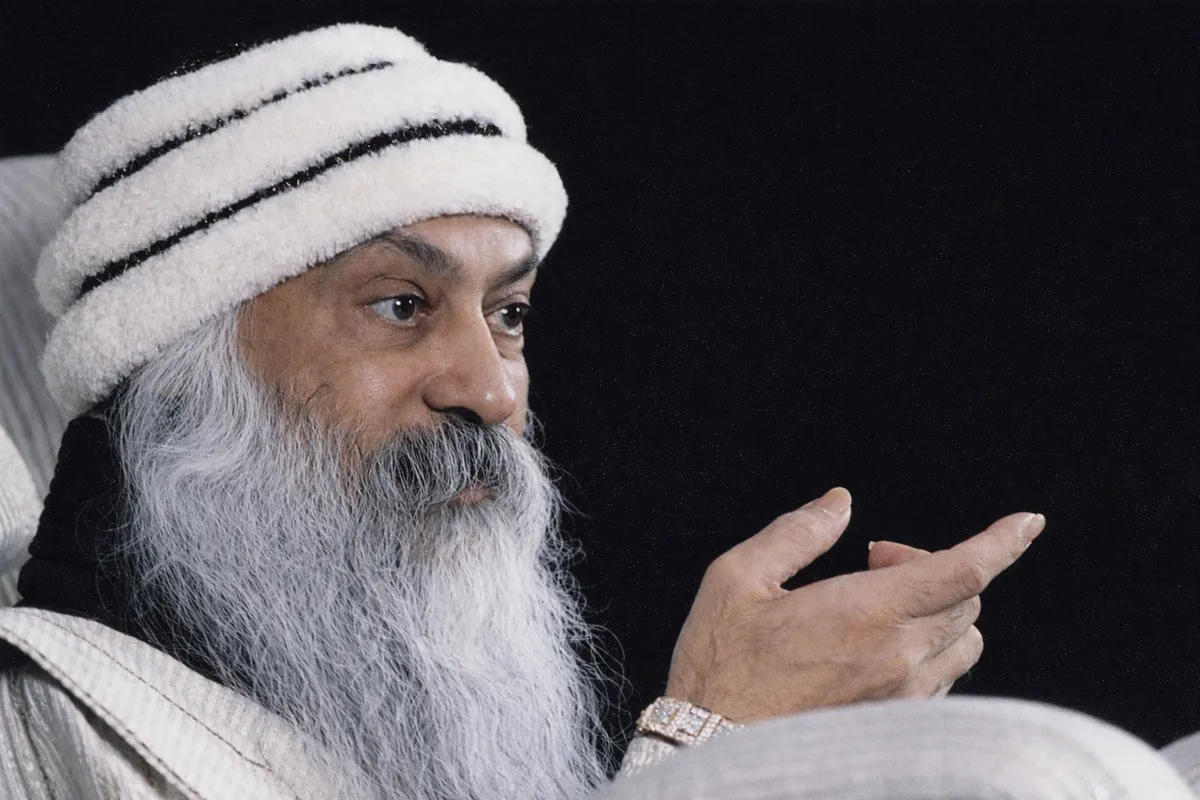
Whatever a person established in samadhi does is a benediction, it is auspicious. Whatever a meditative person does will bring the auspicious, not the inauspicious. Because the energy of meditation makes you full of awareness. Your awareness saturates your actions. A person without meditation, whatever he does, will do it wrongly. So I know only one revolution: how meditation can be joined to your life. If you receive the wealth of meditation, you have attained the supreme wealth. And if meditation happens to you, the possibility arises that you can also kindle the light in your neighbors. Let one flame kindle another. And if from one to one the flame keeps spreading, I can fill the whole world with fire. That is why these ochre robes have been chosen. This is the color of fire; they are symbols of the flame. In them you are to be consumed. In them…
और तुमने पूछा है कि पूर्ण क्रांति का क्या अर्थ है? पूर्ण क्रांति का मेरी दृष्टि में अर्थ है: व्यक्ति के पास किसी तरह की धारणाएं, और पक्षपात न रह जाएं। व्यक्ति की चेतना शुद्ध दर्पण की तरह हो। पूर्ण क्रांति यानी समाधि।
समाधिस्थ व्यक्ति जो भी करेगा, वह कल्याण है, मंगल है। ध्यानस्थ व्यक्ति जो भी करेगा, उससे शुभ ही होगा, अशुभ नहीं होगा। क्योंकि ध्यान की ऊर्जा तुम्हें बोधपूर्ण बनाती है। तुम्हारे कृत्य में तुम्हारा बोध समा जाता है। ध्यानहीन व्यक्ति जो भी करेगा, गलत करेगा। तो मैं तो एक ही क्रांति जानता हूं कि किस तरह तुम्हारे जीवन में ध्यान जुड़ जाए। ध्यान का धन तुम्हें मिल जाए, तो परम धन तुमने पा लिया। और तुम्हें ध्यान मिल जाए, तो संभावना बनती है कि तुम्हारे पास-पड़ोसियों की ज्योति को भी तुम जगा सको। ज्योति से ज्योति जले। और एक-एक से ऐसी ज्योति फैलती जाए, तो मैं सारे संसार को आग से भर दे सकता हूं। इसलिए यह गैरिक वस्त्र चुने हैं। यह आग का रंग है, ये अग्नि के प्रतीक हैं। इनमें तुम्हें भस्म हो जाना है। इनमें तुम्हें अपने अतीत को बिलकुल राख कर देना है। इनमें सिर्फ शुद्ध चेतना बचे--न हिंदू बचे, न मुसलमान बचे, न ईसाई, न जैन। …
So be a noble ruler, but the only way to be a noble ruler is to go in. Possess yourself, be absolutely rooted, centred, integrated, so that you can move according to your light, so no unconscious instinct forces you to move in a certain direction, so you need not go into something into which you never wanted to go. But this is really the situation. That's why in all the languages phrases like 'in spite of myself' exist. It simply means you are not the master. You become angry and then later on you apologize and you say 'I never wanted to be, but I became angry in spite of myself.' What does it mean? What are you confessing? You are confessing that there are forces inside you over which you don't have any mastery. They can do things which you don't want to do.
Question: Second question: Osho, are you against social revolution? ... And this inner change does not happen through changing ideas. It happens by leaping from thought to meditation. There is only one revolution in the world: to go from thought to no-thought; from a mind full of choices to a choiceless consciousness. The day the thinking mind dissolves into the emptiness of no-mind, that day doors open within you— the doors of the seven heavens open. That day indeed your chains become anklets. That day no prison can contain you, because for the first time you taste freedom—you experience moksha within. You know, “Even if handcuffs are put on the body, I am free—because I am not the body. If such an event happens to innumerable people on this earth, perhaps there will be a radiance spread from horizon to horizon. It has not happened yet.
और यह अंतस की बदलाहट विचार की बदलाहट से नहीं होती। यह अंतस की बदलाहट विचार से ध्यान की तरफ छलांग लगाने से होती है। एक ही क्रांति है दुनिया में--विचार से निर्विचार में उतर जाना। सविकल्प चित्त से निर्विकल्प चित्त में चले जाना--एक ही क्रांति है। जिस दिन विचार करने वाला चित्त निर्विचार के शून्य में लीन हो जाता है उस दिन तुम्हारे भीतर द्वार खुलते हैं; सातों आसमानों के द्वार खुलते हैं। उस दिन निश्चित ही तुम्हारी बेड़ियां पैरों के घूंघर बन जाती हैं। उस दिन निश्चित ही कोई कारागृह तुम्हें नहीं रोक सकता। क्योंकि उस दिन तुम्हें पहली बार मुक्ति का स्वाद लगता है, तुम्हें भीतर मोक्ष का अनुभव होता है। उस दिन तुम जानते हो कि देह पर हथकड़ियां भी पड़ जाएं तो भी मैं मुक्त हूं क्योंकि मैं देह नहीं हूं। और ऐसी घटना अनंत-अनंत लोगों को घट जाए इस पृथ्वी पर तो शायद एक रौनक, क्षितिज से क्षितिज तक एक लाली फैले।
The flower of consciousness opens up only when all the garbage that one has accumulated over many many lives is thrown out, otherwise there is no space for the one-thousand petalled lotus to open. It needs a space and we are so full of junk, useless junk, full of memories which are of no use any more. We go on piling up files and files of memories, not only of this life, of many many lives. They are all there, now absolutely useless, but the functioning of our mind is like the functioning of any bureaucracy. I have heard that in the White House the president was very worried because so many files had accumulated. He told his secretary to destroy all those files which were useless and to only keep those which had any use. The secretary immediately started working.
Question: Osho, to me the present state of world affairs appears illusory. Eminent scholars from different walks of life offer various themes for the transformation of life. For instance, religious leaders affirm that God or religion alone is omnipotent and can transform life and provide heaven. Sociologists, politicians, educationists and moralists believe that only better forms can create a better society. Naturalists say that understanding nature will bring transformation. Whereas psychologists and psychopathologists believe that psychoanalysis, tranquilizers, sedatives or brainwashing agents can transform life, etc., etc. But to me, sir, all this appears to be merely a partial transformation. Would you suggest what total and spontaneous transformation is? ... As you say: clothes are fine, houses are fine, roads are fine; all kinds of instruments have been developed by which man’s senses have become a hundred million times more mobile.
वह जो आपने कहा, कपड़े ठीक हो गए हैं, मकान ठीक हो गए हैं, सड़कें ठीक हो गई हैं, सब तरह के साधन विकसित हो गए हैं जिससे मनुष्य की सब इंद्रियां करोड़ गुना गतिमान हो गई हैं। आखिर पैर ही है जो स्पुतनिक में गतिमान हो गया है। और हाथ ही हैं जो तारों तक पहुंच गए हैं। और कान ही हैं, जो रेडियो बन गया है। और वाणी ही है, जो आज सारे जगत में सुनी जा सकती है। सारी व्यवस्था कर ली है आदमी के सुख की। लेकिन आदमी कहीं खोया हुआ मालूम पड़ता है, जिसके सुख का इंतजाम किया है उसका पता नहीं चल रहा है कि वह कहां है! इंतजाम पूरा हो गया है और इंतजाम में हम इतने व्यस्त थे कि हम भूल ही गए थे कि जिसके लिए इंतजाम किया है, जिस मेहमान के लिए घर सजाया है, सोफे लगाए हैं, चित्र लटकाएं हैं, संगीत बजाया है, फूल लगाए हैं, सुगंध छिड़की है, हमेशा आयोजन में इतने व्यस्त थे कि हम भूल ही गए हैं कि वह मेहमान कहां है। अब जब आयोजन पूरा हो गया है तो खोज शुरू हुई है कि वह मेहमान कहां है, वह अतिथि कहां है? उसका कोई पता नहीं चलता। …