
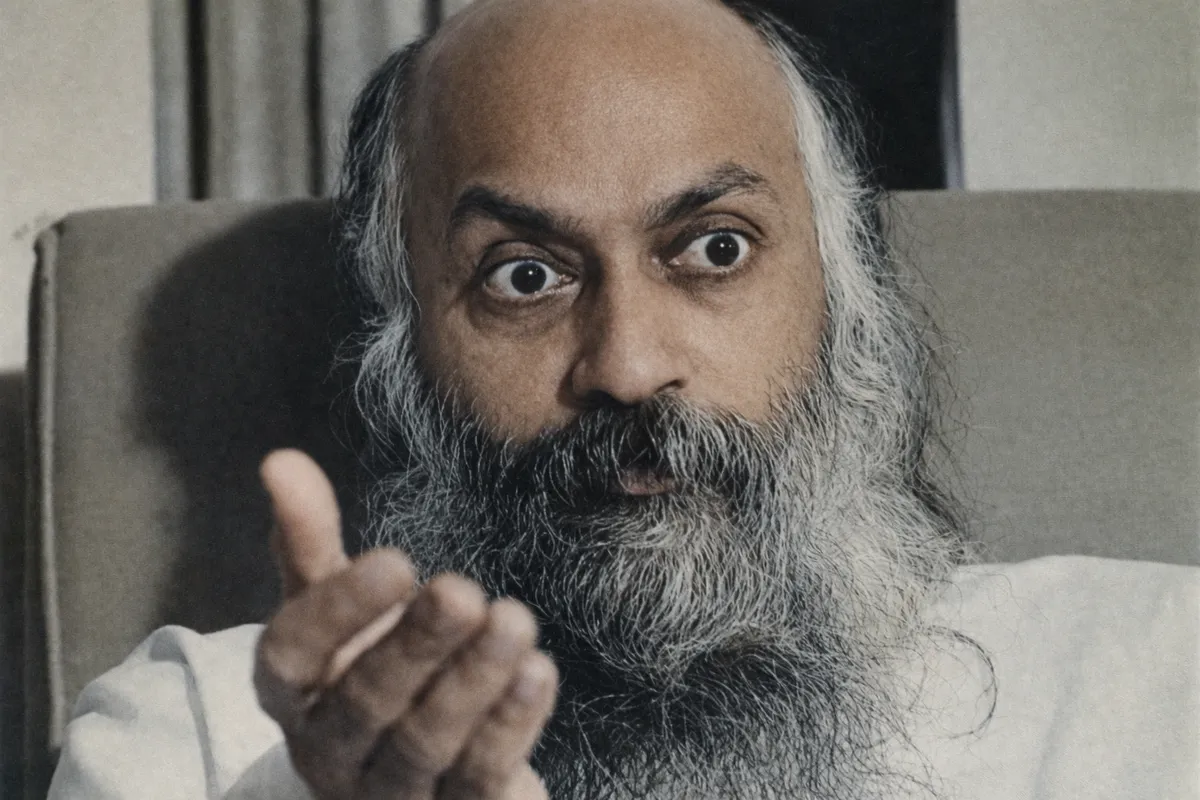
If you treat the smartest voices well, things stay calm; if you insult them, they can spark a revolt.
From the Discourses
Passages where Osho speaks to this question — each links to the complete discourse.
At this time? As things stand, revolution cannot succeed. Because the seeds of revolution are sown by the intelligent. And when the intelligent are honored, why would they sow the seeds of revolution! The secret is—the secret is... who will make a revolution? Some fool? Some businessman? It is the discontented intellectuals—who have plenty of intelligence but have become dissatisfied—who set the fires. To make an intelligent man angry is very dangerous, because he will spread the blaze. He is the master of words.
That was the only fold left to enter. They could not become Shudras; so there was no way left except to become Banias. The Brahmins did not let them in; they did not accept Mahavira and Buddha as capable of being knowers. And by talking of knowledge they moved outside the Kshatriya fold—they laid down the sword for matters of knowledge. They had no way left but to become Banias. And the Vaishyas could not stop them, because the Vaishya has no power; poor fellow, he remains preoccupied with his own protection. He does not get into any hassle—whoever comes, let him come. Therefore no one has a conflict with the Vaishya. Whether a Brahmin opens a shop or a Kshatriya does, he says, “Fine, brother—whoever can, do it.” There is no occasion for all this hassle there. But the Brahmin will not let you in; nor will the Kshatriya…
प्रश्न: इस समय? जिधर हो, वह सफल नहीं हो सकती क्रांति। क्योंकि क्रांति के जो बीज बोते हैं वे बुद्धिमान लोग होते हैं। और जब बुद्धिमान को आदर मिलता है, वे काहे के लिए क्रांति के बीज बोएं! सीक्रेट जो है, सीक्रेट जो है...वह क्रांति करेगा कौन? कोई बुद्धिहीन करता है? कोई व्यवसायी करता है? ये तो जो डिसकंटेंटेड इंटलेक्चुअल्स होते हैं, जिनके पास बुद्धि तो बहुत है और असंतुष्ट हो गए, वे आग लगा देते हैं। एक बुद्धिमान आदमी को क्रोध में कर देना बहुत खतरनाक है। क्योंकि वह आग फैला देगा। वह शब्दों का मालिक है।
वही एक फोल्ड बचा जिसमें वे घुस जाएं। शूद्र हो नहीं सकते वे। तो बनिया होने के सिवाय कोई रास्ता ही नहीं बचा। ब्राह्मणों ने घुसने नहीं दिया उनको, माना नहीं महावीर-बुद्ध को कि ये कोई ज्ञानी हो सकते हैं। और ये ज्ञान की बातें करके वे क्षत्रिय के फोल्ड से बाहर हो गए। तलवार छोड़ दी उन्होंने ज्ञान की बातों में। उनको बनिया होने के सिवाय कोई रास्ता नहीं रह गया। और वैश्य उनको रोक नहीं सके, क्योंकि वैश्य के पास कोई ताकत नहीं है। …
Osho! I feel that in your ideas, in your vision, there is the power to liberate this country from its ancient stagnation and orthodoxy and set it upon the path of progress. But the difficulty is that the intellectuals and journalists here treat you as untouchable and dismiss your ideas as useless raving. It is deeply disheartening. Kindly guide me.
Shvetaketu came back stiff with pride. He was young and returned with a mountain of scriptures on his head. He had earned gold medals in every subject, came home laden with honors. His father, Uddalaka, saw him from afar at the gate—saw his swagger and pride. The father felt great pain, because this was not why he had sent him to the gurukul. He had sent him to become wise. Instead he was returning utterly ignorant—stuffed with information. He was bringing back mountains of information. But no one becomes wise through information! Information is counterfeit coin—borrowed, stale, not one’s own, someone else’s. The father grew anxious; tears rolled from his eyes. Shvetaketu bowed at his feet, but only his body bowed; the father could see that his life had not bowed, because in his mind he knew he was now more knowledgeable than his father. Uddalaka asked, “Son, why this…
पहला प्रश्न: ओशो! मेरा खयाल है कि आपके विचारों में, आपके दर्शन में वह सामर्थ्य है, जो इस देश को उसकी प्राचीन जड़ता और रूढ़ि से मुक्त करा कर उसे प्रगति के पथ पर आरूढ़ करा सकती है। लेकिन कठिनाई यह है कि यहां के बुद्धिवादी और पत्रकार आपको अछूत मानते हैं और आपके विचारों को व्यर्थ प्रलाप बताते हैं। इससे बड़ी निराशा होती है। कृपा कर मार्गदर्शन करें।
… सब परीक्षाओं में स्वर्ण-पदक लेकर आया था। बड़ा सम्मान लेकर लौटा था। उसके पिता उद्दालक ने द्वार से देखा दूर से श्वेतकेतु को आते हुए--उसकी अकड़ और अहंकार। पिता को तो बहुत पीड़ा हुई, क्योंकि इसलिए तो उसे गुरुकुल नहीं भेजा था। गुरुकुल भेजा था कि ज्ञानी होकर लौटेगा। और वह तो अज्ञानी का अज्ञानी वापस आ रहा है! जानकारी से भर गया है। जानकारी के पहाड़ लेकर आ रहा है। लेकिन जानकारी से कोई ज्ञानी थोड़े ही होता है! जानकारी झूठा सिक्का है, उधार है, बासी है, अपनी नहीं है, परायी है। पिता तो चिंतित हुआ। उसकी आंख से दो आंसू टपक गए। …
Why do revolutions fail?
Buddha is still meaningful and will remain meaningful, forever and forever, because enlightenment will always be a need. Politicians don't make the real history of humanity; they only create noise. The real history is something else that runs like an undercurrent. The real history has not yet been written, because we become too engrossed in the temporal things. We become too obsessed with the newspaper which is only relevant today and tomorrow will be meaningless. If you have eyes to see, see the point: become interested in the eternal. Old, ancient societies were not interested in the day-to-day too much. Their interest was deeper. They were not brought up on the newspaper, radio and television. They recited the Koran, they meditated on the Gita, they chanted the Vedas, they contemplated the statues of Buddha and Mahavir. These are eternal phenomena. That's why I say the events that happen every day…
Osho, Lao Tzu says that understanding is enough; with understanding, revolution happens. It seems to us that something does seem to be fully understood, yet no revolution happens from it. What is the reason? Please explain!
Understanding means a thing reaches your innermost layer. But reason will never let it reach. And we insist on understanding through reason. Reason is the mischief-maker—the guard. It says, “Explain to me first. If you convince me, I’ll take you to the master. If you can’t convince me, how can I take you in?” And the trouble is: when it is convinced, it thinks it is the master and that it has understood. Then it finds nothing changes—because the intellect has no power to act. The force to act lies hidden behind it on another plane. Hence the obstruction. If you want to reach that plane and it doesn’t happen directly—if it does for someone, fine—then first you must find ways to break the guard of the intellect. You must do certain meditations that make you non-intellectual, irrational. For example, the meditation I use is utterly beyond the intellect. A…
प्रश्न: ओशो, लाओत्से कहते हैं कि समझ, अंडरस्टैंडिंग, काफी है; समझ के साथ ही क्रांति घटित हो जाती है। हमें ऐसा लगता है कि कोई बात पूरी समझ में आती तो है, लेकिन कोई क्रांति उससे घटित नहीं होती। इसका कारण क्या है, कृपया समझाइए!
समझ का अर्थ है, आपके भीतरी तल तक पहुंच जाए कोई बात। लेकिन तर्क कभी न पहुंचने देगा। और हम तर्क से ही समझना चाहते हैं। और तर्क ही उपद्रव है; वही पहरेदार है। वह कहता है, पहले मुझे समझाओ। अगर मुझे समझाओ, तो मैं मालिक से मिला दूं। और अगर मुझे ही नहीं समझा पाते हो, तो मैं मालिक से क्या मिलाऊं? और फिर कठिनाई यह है कि जब वह समझ जाता है, तो वह समझता है, समझ गए, मालिक हो गए। फिर वह देखता है, समझ तो हो गई, लेकिन कुछ हल नहीं होता। क्योंकि कोई, जिसको हम बुद्धि कहते हैं, उसके पास कोई भी शक्ति नहीं है। जिसको हम कहें कोई भी फोर्स टु एक्ट, बुद्धि के पास नहीं है। और फोर्स टु एक्ट जो है, शक्ति काम करने की, वह बुद्धि के पीछे किसी और छिपे तल में है। इसलिए यह व्यवधान पड़ता है। तो अगर उस तक पहुंचना है, तो फिर अगर नहीं पहुंचता सीधा--किसी को पहुंच जाता हो, तब तो कोई सवाल नहीं--अगर नहीं पहुंचता सीधा, तो पहले इस बुद्धि के पहरे को तोड़ने के लिए उपाय करने पड़ते हैं। कुछ ध्यान करना पड़े; इस बुद्धि के पहरे को तोड़ना पड़े। …
Osho, you say the rajneeshees need to be unorthodox, untraditional, unconventional. It is clear what this means in a world full of traditions and conventions, but in your commune I find it more difficult to understand. Would you speak about the flavor of rebellion in your commune?
You were going to distribute wealth, not kill people. And now the czar is no longer the czar, you are in power: he is nobody, just a prisoner. What was the point of killing these people -- women, old women, children -- who have nothing left? You have taken everything from them -- now life also has to be distributed? I remember one time in Jabalpur.... Jabalpur w as one of the most vulnerable cities for Hindu -- mohammedan riots because both communities were almost equally balanced. And strangely, the division of the city was such that the Mohammedan community lived in almost half of the town and the Hindu community in the other half So riots were very simple and easy. It was almost every two, three years that there would be a riot. Anybody can create one, it is so simple. Somebody can just go and play on…