
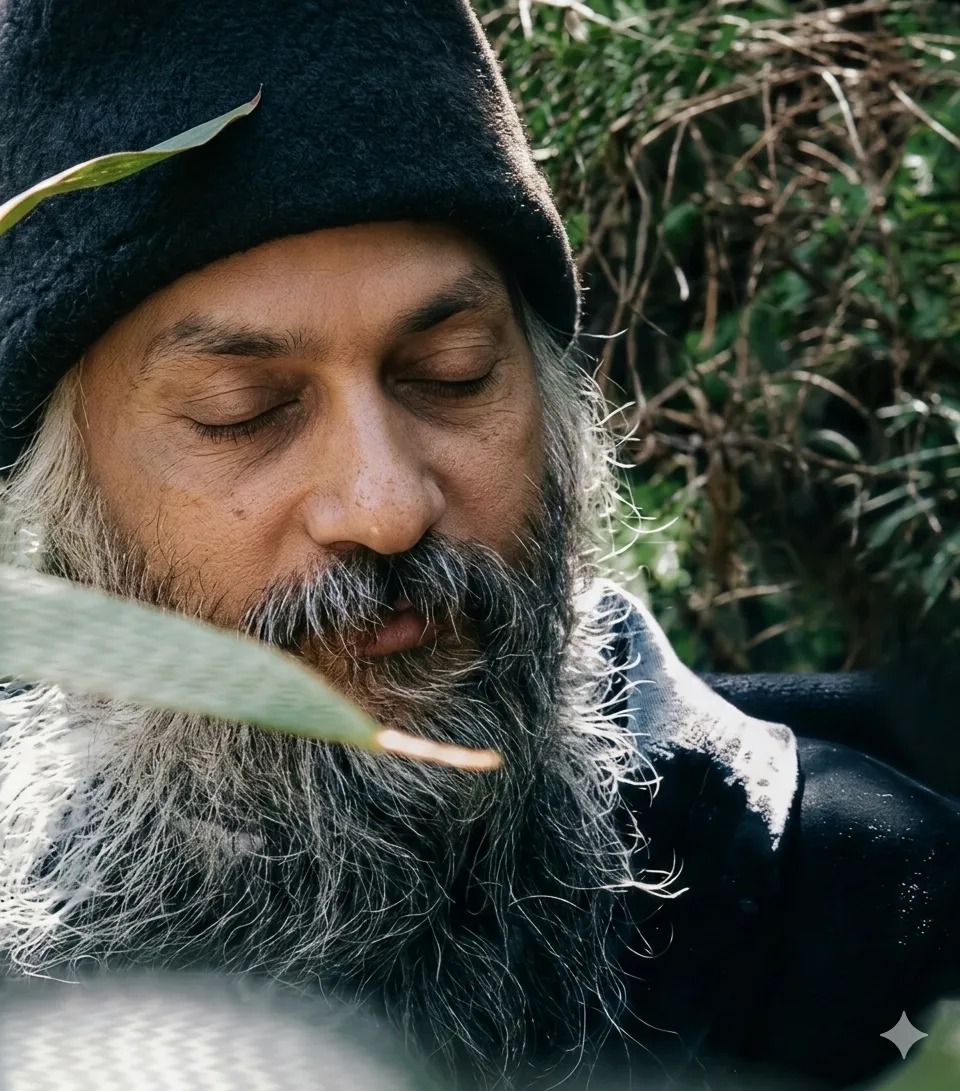
A seeker looks inside, not outside, and uses gentle awareness to change desires instead of indulging or fighting them.
From the Discourses
Passages where Osho speaks to this question — each links to the complete discourse.
Question: BELOVED OSHO, WHAT DOES IT MEAN TO BE A SPIRITUAL SEEKER? It means two things, primarily. One, that life as it is known outwardly is not fulfilling, life as it is known outwardly is meaningless. The moment one becomes aware of this fact, that this whole life is just a meaningless thing, then the seeking begins. This is the negative part, but unless this negative part is there, the positive cannot follow. Spiritual seeking means primarily a negative feeling, a feeling that life as it is, is meaningless, this whole process just ends in death: "Dust unto dust." Nothing remains conclusively in one's hands. You pass through life with such agony, with such hell, and nothing is achieved conclusively. This is the negative part of spiritual seeking, and the whole life helps you toward this.
Osho, what is the difference between surrender and blind imitation?
So be careful: the freedom you allow yourself, allow the other too. You have no right to judge another as blindly credulous or as a surrendered being. Drop that concern. You cannot judge anyway—how will you enter another’s heart? How will you know? Think only about yourself. See within whether, up to now, you have lived by blind belief or by surrender. Decide only there; leave worrying about others. Otherwise, all your judgments will be wrong. Jesus said: Judge not; do not set yourself up as a judge in relation to another. To the friend who has asked: if you are asking for yourself, good. Drop worrying about others. Look within and see: whatever I have been clinging to till now—have I ever staked my life to hold it? Have I meditated for it? Have I loved for it? Or am I just clutching what culture, society, civilization handed me?…
चौथा प्रश्न: ओशो, समर्पण और अंधानुकरण में क्या अंतर है?
… तुम दूसरे के हृदय में उतरोगे कैसे? जानोगे कैसे? तुम तो अपनी ही सोच लो। इतना ही देखो अपने भीतर कि अब तक तुम अंधविश्वास से जी रहे हो, या समर्पण से जी रहे हो। बस, वहीं निर्णय कर लो, दूसरों की फिकिर छोड़ दो। अन्यथा तुम्हारे सभी निर्णय गलत होंगे। जीसस ने कहा है, निर्णय करो ही मत; दूसरे के संबंध में न्यायाधीश बनो ही मत। तो जिन मित्र ने पूछा है, अगर अपने लिए पूछते हों, तो ठीक। दूसरों की चिंता छोड़ दें। अपने भीतर ही देख लेना है कि अब तक जो मैं पकड़े हुए हूं, उसको पकड़ने के लिए मैंने कोई जीवन दांव पर लगाया है? कोई ध्यान किया है? कोई प्रेम किया है? या सिर्फ संस्कृति ने, समाज ने, सभ्यता ने जो दिया है, उसे पकड़े हुए हूं! दूसरों ने दिया है। उनको भी किन्हीं औरों ने दिया था, उनको भी किन्हीं औरों ने दिया था। सुनी हुई बात है। …
Questioner: what is the difference between a seer and a sannyasin? Can't one be a seeker without being a sannyasin?
One cannot be a seeker without being a sannyasin, because to be a seeker is the beginning of sannyas. A seeker is one who is seeking sannyas. What else can a seeker do except seek sannyas, except practice and perfect sannyas? He has to gradually transcend the pains and pleasures of the world and attain to bliss. He has to transcend the doer and attain to witnessing. He has to go beyond his ego and attain to emptiness. He has to transcend matter and be one with God. All these things are collectively known as sannyas. Being a seeker means he is starting on a journey to sannyas. A seeker is a beginner on the path of sannyas, and a siddha, an adept, is one who has fulfilled his sannyas. The whole of seeking is directed towards sannyas. A seeker is one who is in search of sannyas. But always…
Osho, in yesterday’s talk you said that a seeker should first be concerned with becoming a vessel, and should not go about begging from place to place. But the very meaning of a seeker is that he has obstacles in practice. He doesn’t know how to become a vessel, how to prepare. So if he does not go asking, what should he do? How difficult it is to meet the right guide!
But searching and begging are two different things. In fact, the one who does not want to search is the one who begs. Searching and begging are not the same; they are opposites. He who wants to avoid searching begs; a seeker never begs. And the processes of searching and begging are entirely different. In begging you have to keep your attention on the other—the one who will give. In searching you have to keep your attention on yourself—the one who is to receive. It is true that there are obstacles on the path of the seeker. But if we understand rightly, saying there are obstacles on the path of the seeker means the obstacles are within the seeker; the path too is within. And to understand one’s obstacles is not very difficult. So we will have to speak a little more extensively on what the obstacles are and how…
प्रश्न: ओशो, कल की चर्चा में आपने कहा कि साधक को पात्र बनने की पहले फिकर करनी चाहिए, जगह-जगह मांगने नहीं जाना चाहिए। लेकिन साधक अर्थात खोजी का अर्थ ही है कि उसे साधना में बाधाएं हैं। उसे पता नहीं है कि कैसे पात्र बने, कैसे तैयारी करे। तो वह मांगने न जाए तो क्या करे? सही मार्गदर्शक से मिलना कितना मुश्किल से हो पाता है!
लेकिन खोजना और मांगना दो अलग बातें हैं। असल में, जो खोजना नहीं चाहता वही मांगता है। खोजना और मांगना एक तो हैं ही नहीं, विपरीत बातें हैं। खोजने से जो बचना चाहता है वह मांगता है, खोजी कभी नहीं मांगता। और खोज और मांगने की प्रक्रिया बिलकुल अलग है। मांगने में दूसरे पर ध्यान रखना पड़ेगा--जिससे मिलेगा। और खोजने में अपने पर ध्यान रखना पड़ेगा--जिसको मिलेगा। यह तो ठीक है कि साधक के मार्ग पर बाधाएं हैं। लेकिन साधक के मार्ग पर बाधाएं हैं, अगर हम ठीक से समझें तो इसका मतलब होता है कि साधक के भीतर बाधाएं हैं; मार्ग भी भीतर है। और अपनी बाधाओं को समझ लेना बहुत कठिन नहीं है। तो इस संबंध में थोड़ी सी विस्तीर्ण बात करनी पड़ेगी कि बाधाएं क्या हैं और साधक उन्हें कैसे दूर कर सकेगा।
In yesterday's talk you said that the seeker should first worry about his own receptivity and should not go begging from door to door. But the very meaning of a sadhak is that there are obstacles on his path of spiritual growth. He does not know how to be receptive. Is it so difficult to meet the right guide?
So the Brahman is the ultimate obstacle -- the last barrier in the ultimate quest of the seeker. Now only the being remains, but nonbeing has yet to be realized. The being, the is-ness, is known, but the nonbeing has yet to be realized -- that which is not still remains to be known. Therefore, the seventh plane is the nirvana kaya, nirvanic body, and its chakra is the sahasrar. Nothing can be said in connection with this chakra. We can only continue talking at the most up to the sixth -- and that too with great difficulty. Most of it will turn out to be wrong. Until the fifth body the search progresses within a very scientific method; everything can be explained. On the sixth plane the horizon begins to fade; everything seems meaningless. Hints can still be given but ultimately the pointing finger breaks and the hints too…