
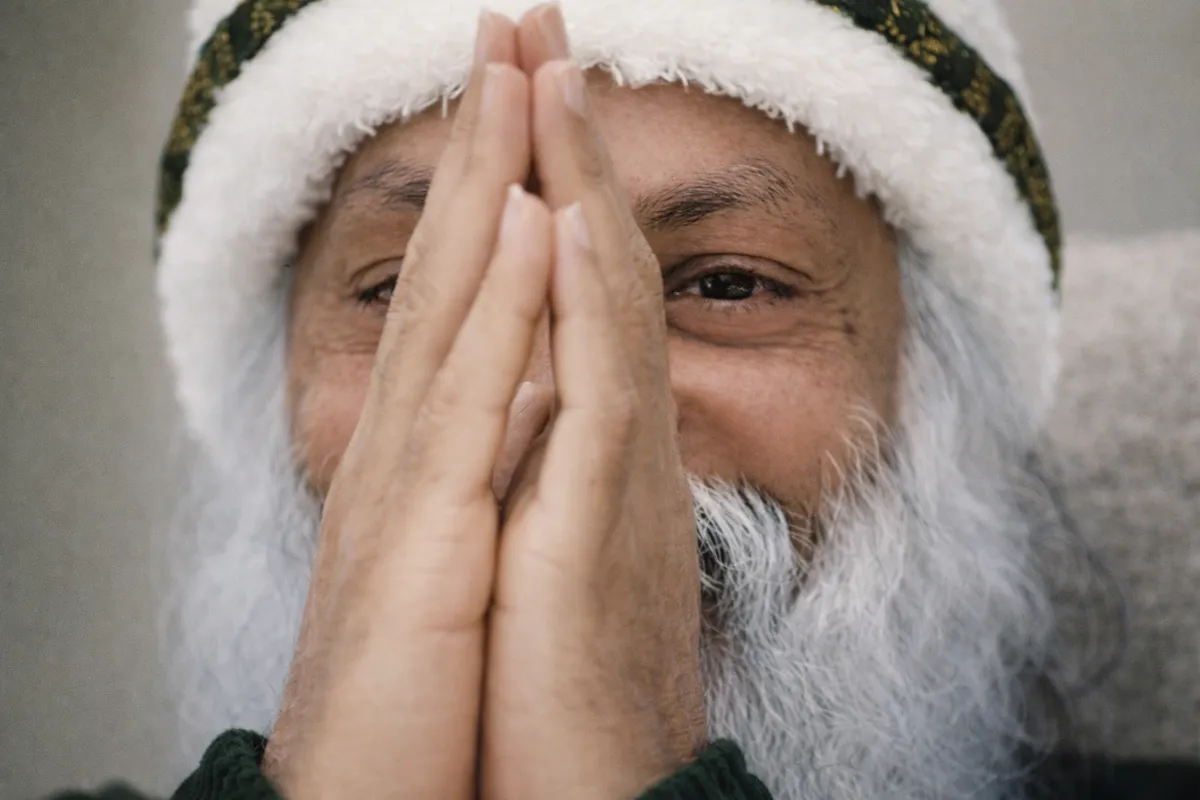
Notice what makes you peaceful right now and what makes you restless right now, and let that guide you.
From the Discourses
Passages where Osho speaks to this question — each links to the complete discourse.
Osho, then what is good and what is bad—should a person judge it for himself?
There is no other way. And judging is not very difficult. First, look at what you cannot come to rest upon. You are often more childish than a child. The body has an age; spiritual age is another matter entirely—and often it hasn’t grown at all. Then people go on doing childish things. An old man hoarding money—take him for a child, because the act is childish. What is he doing? Death stands before him, and the man is putting more locks on his safe. Pure child’s play. Little children play with dolls; a grown man carries a whole wedding procession of Lord Ram—with all the dolls arranged—parading and making a racket. He is still a child. He has made different kinds of dolls, given them big, respectable names. But his mental age has not grown. Within us there are many ages, many layers of age. My quest, my appeal,…
But what is good, what is bad? What is good, what is bad—will a person judge for himself?
Because that is not the real question. The question is not “how many?” It is that many compulsions force you to stay and suffer. I am saying: wherever the mind says, “Run, run—further, further,” and wherever you reach it gives you pain—that is bad. And wherever the mind says, “Here, not there; even if it takes time, here—here is bliss—where I am,” that is good. Where you are not, deception is possible; where you are, there is no deception. There, when you arrive, you will know. If this begins to get clear—even though the distinction is subtle—if you keep experimenting a little, keeping a small inner checking going twenty-four hours a day: “This act I just did—did it give me joy or pain? In the place I arrived at—did I want to stay or to leave?”—keep such a small test running. In two to four months it will become so…
प्रश्न: मगर क्या अच्छा, क्या बुरा? क्या अच्छा, क्या बुरा, क्या इनसान खुद ही जज करेगा?
क्योंकि यह सवाल है। सवाल यह नहीं है। सवाल यह नहीं कि कितना? मजबूरियां हैं बहुत तरह की जो, जिनकी वजह से आप रुकते हैं और दुख झेलते हैं। मैं यह कहता हूं, मन जहां से कहता है— भागो, भागो, और आगे, और आगे। और जहां-जहां पहुंचते हैं, वहीं-वहीं दुख देता है—वहां बुरा है। और जहां मन कहता है: यहां, वहां नहीं, और देर तो ठीक है। यहां, यहां आनंद है—जहां मैं हूं। अब धोखे की क्या बात है? वहां धोखा हो सकता है, क्योंकि वहां मैं नहीं हूं। जब मैं पहुंचुंगा, तब पता चलेगा। यहां, इस वक्त। अगर यह हमें साफ होने लगे, डिस्ंिटकशन तो इतना बारीक है लेकिन अगर थोड़ा हम प्रयोग करते रहें और दिन के चौबीस घंटे में जांच-पड़ताल थोड़ी सी भीतर जारी रखें, कि यह जो मैंने एक्ट किया है, यह मुझे सुख दिया या दुख दिया। मैंने...यह जो पहुंचा जिस जगह मन की मैं, यहां मैं रुकना चाहता था, कि हट जाना चाहता था, ऐसी एक छोटी परख चलती रहे। …
Osho, what is the definition of God?
Words are very small. If you say God is light, then what of darkness? The scriptures have said that God is light. Suppose we accept this as a definition—then what about darkness? Where will darkness go? Darkness is too; in fact it is far more than light. Light sometimes is and sometimes is not; darkness is always, eternal. Where will you place darkness? If you say God is light, darkness is left out. If you say God is darkness, then light is left out. If you say God is both darkness and light, a contradiction arises: they cannot be together. Try to have both darkness and light in the same room. If you bring in light, darkness disappears; if you preserve darkness, you cannot have light. Then how can both be together? That becomes an impossibility. So you cannot say “both” either. Then the fourth device is to say: it…
पहला प्रश्न: ओशो, परमात्मा की परिभाषा क्या है?
शब्द तो बड़े छोटे-छोटे हैं। अगर कहो परमात्मा प्रकाश है, तो फिर अंधेरे का क्या होगा? ऐसा कहा है शास्त्रों में कि परमात्मा प्रकाश है। चलो मान लें इसे परिभाषा, फिर अंधेरे का क्या होगा? फिर अंधेरा कहां जायेगा? अंधेरा भी है, प्रकाश से कहीं ज्यादा है। प्रकाश तो कभी होता है कभी नहीं भी होता; अंधेरा सदा है, शाश्वत है। अंधेरे को कहां रखोगे? अगर कहा परमात्मा प्रकाश है, तो अंधेरा बाहर पड़ गया। अगर कहा परमात्मा अंधेरा है, तो प्रकाश बाहर पड़ गया। अगर कहो परमात्मा अंधेरा प्रकाश दोनों है, तो विरोधाभास होता है। दोनों एक साथ हो नहीं सकता। एक ही कमरे में अंधेरा और प्रकाश करके दिखाओ। प्रकाश करोगे, अंधेरा खो जायेगा; अंधेरा बचाओगे, प्रकाश न कर सकोगे। तो दोनों साथ कैसे होंगे? तब एक असंभव बात हो गई। तो यह भी नहीं कह सकते कि दोनों है।
Beloved Osho, when we drop the attitude of judging people negatively, it follows that acknowledging the positive in people has to be dropped too -- the whole package has to go, does it not?
You never think that Rama obeying his father -- a dying man, under the influence of a young wife.... In the first place, to have four wives was wrong. Then, even at the point of death the man has not the courage to say no to his young wife. Such a henpecked husband! For no reason at all he orders Rama to go to the forest for fourteen years. And this was a value in those days, obedience. Rama is respected for centuries because he obeyed his father without even asking, "Why? What have I done? For what is this punishment being given to me?" Fourteen years he passes, on foot, in the forest. Today, nobody who has any intelligence can say that obedience can be of such a high value. He should have disobeyed. And this is my feeling, that if Rama had disobeyed Dasharatha, his father, this country…
Utter confusion is my part. Good and bad have ceased to exist. I am neither proud nor ashamed and yet I am both. Whatever I have achieved seems lost in a fog, resolved together with my failures. Like smoke I feel, but through the smoke a tremendous sadness arises like a sharp rock with a velvet covering. Osho, I can't perceive the end of it -- or is there no end? Is it ecstasy carrying the weight of impurity? Please, Osho, give me sannyas.
This opportunity can turn into a curse too, if you fall victim to some Adolf Hitler; but this curse can become a great opening into the unknown if you are fortunate enough to be in the vicinity of a buddha. If you are fortunate enough to be in love with a buddha, your life can be transformed. People who are still rooted in tradition, and who think they know what is right and what is wrong, will never come to a buddha. They will continue to live their life -- the routine life, the dull, the dead life. They will go on fulfilling their duties as their forefathers used to do. For centuries they have been following a track and they will go on following that trodden track. Of course, when you follow a trodden track, you feel certain -- so many people have walked on it. But when you…