
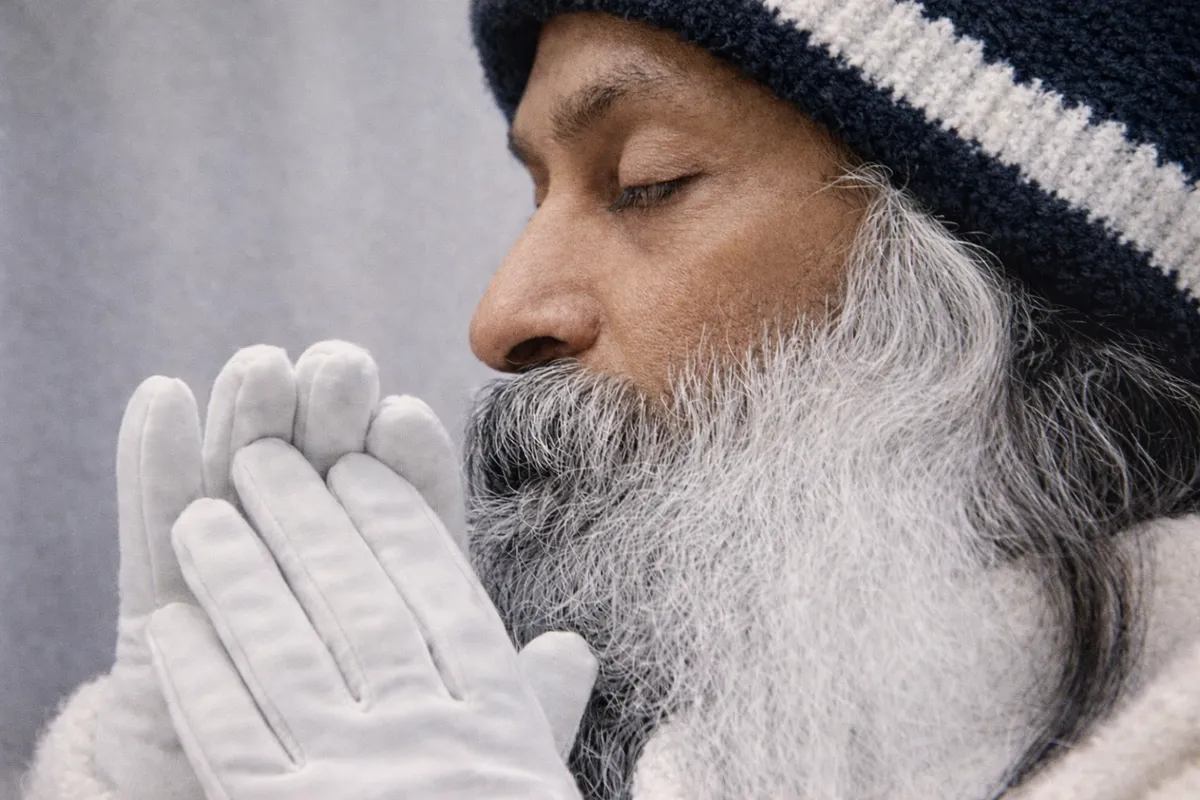
A thought is one tree; the mind is the whole forest—take away the trees and the forest disappears.
From the Discourses
Passages where Osho speaks to this question — each links to the complete discourse.
Osho, what is the fundamental anguish of human life?
There is only one anguish: that a human being cannot become what he was born to be. There is only one anguish: that the seed remains a seed and does not bloom like a flower; that it cannot scatter its fragrance to the infinite winds; cannot converse with the moon and stars; cannot offer its colors to the sky; cannot be expressed. If the poem within the poet cannot be revealed—anguish. If the painter cannot paint—anguish. If the dancer cannot dance—if chains lie on his feet—anguish. Anguish means only this: that what we are meant to be—our innate nature and destiny—does not come to fruition, and we are forced to be something else. Then anguish is born. Then melancholy gathers over life. And all those countless people you see burdened with sorrow, living in a kind of hell—the reason is only this: each has come carrying the seed of becoming…
चौथा प्रश्न: ओशो, मनुष्य जीवन का मूल संताप क्या है?
एक ही संताप है कि मनुष्य वह न हो पाए जो होने को पैदा हुआ है। एक ही संताप है, कि बीज बीज रह जाए, फूल की तरह खिल न पाए। बिखेर न सके अपनी सुवास को अनंत-अनंत हवाओं में; कर न सके गुफ्तगू चांद-तारों से; निवेदन न कर पाए अपने रंगों का आकाश के प्रति; अभिव्यक्त न हो पाए--एक ही संताप है। कवि के भीतर की कविता प्रकट न हो सके--तो संताप। चित्रकार चित्र न बना सके--तो संताप। नर्तक नाच न सके, पैरों में जंजीरें पड़ी हों--तो संताप। संताप का एक ही अर्थ होता है: जो हम होने को हैं, जो हमारी सहज प्रकृति और नियति है, वह न हो पाए और हमें अन्यथा होने को मजबूर होना पड़े, तो संताप पैदा होता है। तो जीवन में विषाद घिरता है।
I don't understand—what is the difference?
Yes, there is a difference. You can be without thoughts; that is not the same as thoughtlessness. Being without thoughts can happen once in a while. The whole reason for that kind of thought-free state is simply this: a kind of numbness sets in—of the brain. Understand this difference. You are sitting, not walking; another person is also sitting, not walking. But he is paralyzed—he too is not walking. Both are seated. Yet I would say he is not really “sitting”; he is being made to sit. You are sitting. He is only paralyzed. Though both people’s legs look the same—he is sitting, you are sitting—no one could tell by looking who is truly sitting. You are sitting because you could also get up and walk. He cannot walk at all; so what is the point of calling it “sitting”? Do you get what I mean? I wouldn’t even say…
प्रश्न: आइ डोंट अंडरस्टैंड वॉट इ़ज दि डिफरेंस?
हां, दोनों में फर्क है। विचाररहित हो सकता है; विचारशून्य नहीं। विचाररहित हो सकता है कभी-कभी। वह विचाररहित होने का कुल कारण इतना है कि अगर... एक तरह की नंबनेस भी है माइंड की। यह फर्क समझो। तुम बैठे हुए हो, चल नहीं रहे हो--तुम भी नहीं चल रहे हो; और एक दूसरा व्यक्ति बैठा है, वह भी नहीं चल रहा है; लेकिन वह पैरालाइज्ड है--वह भी नहीं चल रहा है। और दोनों तुम बैठे हुए हो। लेकिन मैं कहूंगा, वह बैठा हुआ नहीं है, उसको बैठना पड़ रहा है। तुम बैठे हुए हो। वह पैरालाइज्ड है सिर्फ। हालांकि दोनों के पैर एक से मालूम पड़ रहे हैं, वह भी बैठा है, तुम भी बैठे हो। कोई नहीं देख कर कह सकता कि कौन बैठा है। तुम बैठे हो, क्योंकि तुम चल सकते हो। वह चल ही नहीं सकता, इसलिए बैठने का भी क्या मतलब है कहने का। मेरा मतलब समझ रहे हो न? उसको मैं बैठा हुआ भी नहीं कहूंगा। …
Osho, what is mind?
As I see it, mind is not an object—it is only a function. This fan is running. There is the fan’s moving state and there is its still state. When the fan stops, we do not ask where the “movement” went, because movement was not an object. Movement was simply an activity of the fan. The fan that was moving has become still. The being within us—its moving state is the mind, and its still state is the soul.
प्रश्न: ओशो, मन क्या है?
मेरी तरफ से देखने पर मन कोई वस्तु नहीं है--केवल फंक्शन है। यह पंखा चल रहा है। एक तो पंखे की चलती हुई स्थिति है और इस पंखे की ठहरी हुई स्थिति है। जब पंखा ठहर गया, तब हम यह नहीं पूछेंगे कि वह चलना कहां गया। क्योंकि चलना कोई वस्तु नहीं थी। चलना पंखे की ही एक क्रिया थी। जो पंखा चल रहा था, वह पंखा ठहर गया। हमारे भीतर जो सत्ता है, उसकी चलित स्थिति मन है और उसकी थिर स्थिति आत्मा है।
The song continues:
IF ONE SEES NOUGHT WHEN STARING INTO SPACE; IF WITH THE MIND ONE THEN OBSERVES THE MIND, ONE DESTROYS DISTINCTIONS AND REACHES BUDDHAHOOD. THE CLOUDS THAT WANDER THROUGH THE SKY HAVE NO ROOTS, NO HOME; NOR DO THE DISTINCTIVE THOUGHTS FLOATING THROUGH THE MIND. ONCE THE SELF-MIND IS SEEN, DISCRIMINATION STOPS. IN SPACE SHAPES AND COLORS FORM, BUT NEITHER BY BLACK NOR WHITE IS SPACE TINGED. FROM THE SELF-MIND ALL THINGS EMERGE, THE MIND BY VIRTUES AND BY VICES IS NOT STAINED. ... A buddha is a person who lives without the mind; then he's not responsible. That's why in the East we say that he never accumulates karma; he never accumulates any entanglements for the future. He lives, he walks, he moves, he eats, he talks, he is doing many things, so he must accumulate karma, because karma means activity. But in the East it is said even if a
A friend has asked: Osho, you said about a wayward son that one should let him pass through his experiences, and he will learn on his own. But even after experiencing, he still prefers the same thing—someone is asking about his wayward son—no matter how much suffering he has to endure, even if death itself should come, still he does the same. After stumbling again and again, he repeats it. What can be done? How to reform him?
You will not be able to reform him. If life cannot reform him, if even death cannot reform him, what will you be able to do? If what you say is true—that again and again, even after suffering, he does the same thing; even if death comes, he will still do the same thing, and he does not change—then take your hands off. You will not be able to reform him. You cannot be stronger than death. And one who does not learn from suffering—what will he learn from you? Do not call him a wayward son. You have found yourself a Jadabharata. Because those whom suffering does not reform, whom even death does not reform—these are great, arrived masters; they are in the ultimate state. Do not even try to reform such a one. And why are you so eager to reform another? It is enough to reform yourself.…
एक मित्र ने पूछा है कि ओशो, आपने कुपुत्र के बारे में बताया कि उसको अनुभवों में से गुजरने देना चाहिए, तो वह खुद सीख जाएगा। लेकिन अनुभव लेने के बाद भी वह वही पसंद करता है--कोई अपने कुपुत्र के संबंध में पूछ रहे हैं--चाहे कितना ही दुख झेलना पड़े, चाहे मौत भी क्यों न आ जाए, फिर भी वह वही करता है। बार-बार ठोकर खाकर भी वही दोहराता है। उसका क्या उपाय किया जाए? उसको सुधारने का क्या तरीका है?
आप न सुधार पाएंगे। जिसको जिंदगी नहीं सुधार पा रही, मौत नहीं सुधार पा रही, उसको आप क्या सुधार पाएंगे? अगर आपकी बात सच है कि बार-बार दुख पाकर भी वह वही करता है, मौत भी आ जाए तो भी वही करता है, और सुधरता नहीं, तो आप हाथ अलग कर लें। आपसे नहीं सुधर पाएगा। आप मौत से ज्यादा मजबूत नहीं हो सकते। और जो दुख से नहीं सीख पा रहा है, वह आपसे क्या सीख पाएगा? कुपुत्र मत कहिए उसको। आपको कोई जड़भरत मिल गया है। क्योंकि जिसको दुख नहीं सुधारते, मौत नहीं सुधारती, वे तो बड़े पहुंचे हुए महात्मा हैं, वे तो परम अवस्था में हैं। उनको आप सुधारने की कोशिश ही मत करिए।