
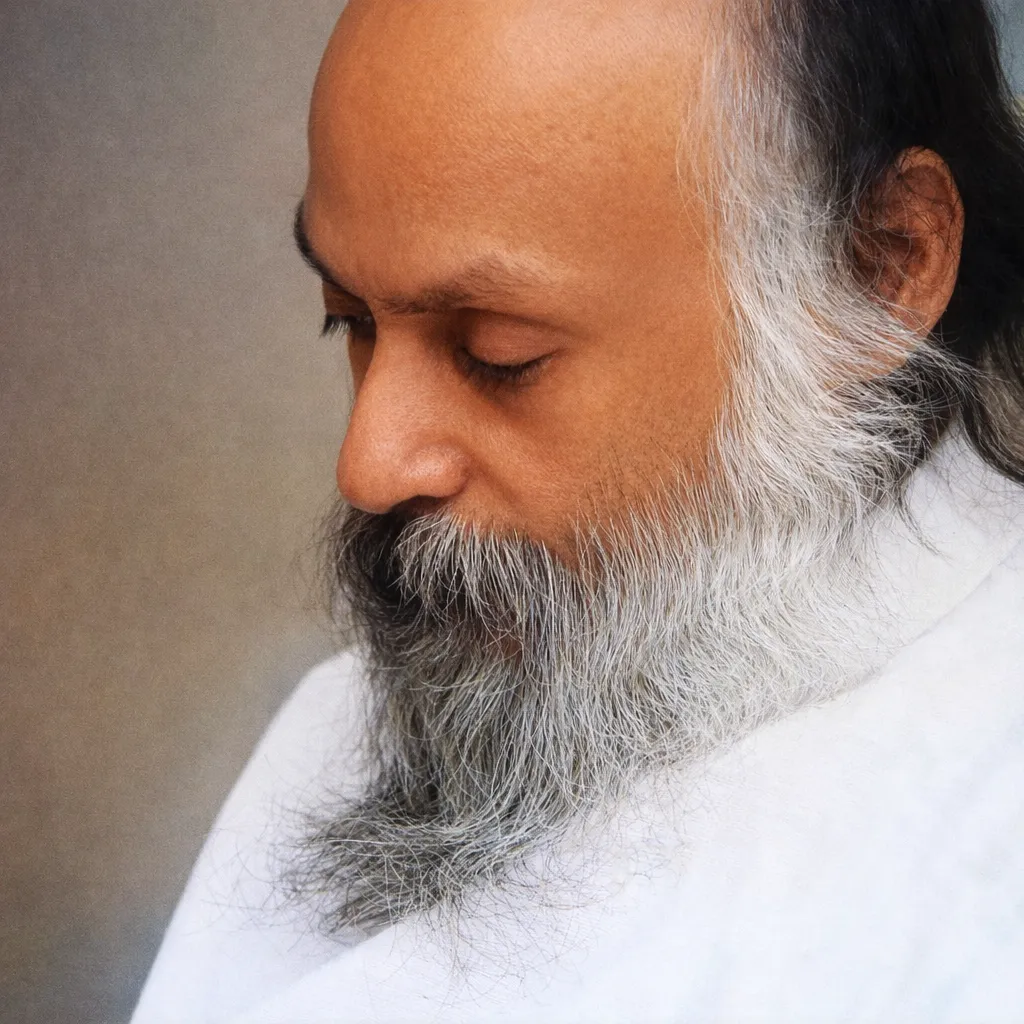
Desire is like a river: let it flow and it stays clear; block it with fear and guilt and it turns into a dirty swamp.
From the Discourses
Passages where Osho speaks to this question — each links to the complete discourse.
Osho, looking within I have felt that many of my desires are sick, diseased—especially the negative desires. So are there healthy and unhealthy desires? And would you kindly tell us what the difference is between healthy and sick desires?
Desire is natural. It is nature’s gift. It is a donation from the divine. In itself desire is perfectly healthy. Without desire you could not live—not even for a single moment. In fact, the ancient scriptures say one thing: God was alone. A desire arose in him to become two—and the world was born. A desire arose in God to be two, to be many, to expand, to spread—and the world came into being. We are parts of that very desire of the divine; we are rays of that desire. So the first thing: desire is natural. It is of nature; it is innate. Desire is not bad; it is not sin. Those who told you desire is sin—avoid desire, escape from it, repress it, cut it down, kill it—they are the ones who made desire sick. Repressed desire becomes diseased. Whatever is pushed down turns poisonous. It does not…Read the full discourse →
Osho, why does every desire come carrying its opposite? Is its dividedness inevitable? And is no whole and undivided desire possible? What is desire?
One day, by mistake, he wandered into the camp of a Muslim chieftain. He was going along in ecstasy, dancing; the camp happened to be in the way—that was all. The women, frightened, screamed. A naked man, dancing in ecstasy, had walked in—they thought he was mad. Seeing a naked sadhu intrude, the chieftain, too, grew angry. He drew his sword and struck. One of Sadashiva’s hands was cut off and fell to the ground. But Sadashiva’s joy suffered no interruption. The hand fell, blood began to flow, yet the dance continued. Just as he had been dancing, he turned and kept dancing as he walked away. The chieftain was astonished, and also pained—he had never seen such ecstasy. And that a hand could be cut off and he would not even notice—such ecstasy! The man was in some other realm. Looking into his eyes, it was as if he…Read the full discourse →
Osho, it is said that at the root of desire lies natural sex. Is flowing with nature not supportive of awakening? Please explain.
When you flare up in rage you become animal. It is easy to be angry—but how long can you remain that way? No one can stay in anger continuously. To slip into sex is easy; but the oblivion that sex brings for a moment—how long does it last? Ephemeral. It comes like a bubble—appears, bursts, is gone. Then you stand where you stood before—more worn, more broken, more depressed. Is there anyone who does not feel remorse after sexual indulgence? Is there anyone who, having been angry, does not regret, “What have I done!” Is there anyone who, after angering, does not try to explain, “I wasn’t really angry”? Why this attempt to explain? Because anger means you became animal. The ego is hurt by the idea, “I behaved like an animal?” So we whitewash, we rationalize: “I wasn’t angry—just put on a show; I did it playfully; I did…Read the full discourse →
Beloved Osho, recently you spoke about the will to power. You explained the importance of having this will, this longing, to become a master over one's self. You also often declare that every desire is the basic reason for man's frustration. Can you please explain the difference between will and desire?
Gyan Saahaba, the difference between will and desire is great, although they appear almost similar. Desire is always for things. More money, more prestige, more respectability, more knowledge, more virtue, a better place in the afterlife -- these are all desires. Desires can be millions, because there are millions of things in the world which can become objects of desire. A desire always needs an object. Will is not objective; it does not want something else to be added to it. Will is simply your very life force, which wants to assert itself in its totality, in its wholeness, to bring all the flowers that are hidden in you, to be yourself. The will knows only one thing and that is you and your golden future. You, right now, are only seeds. But you can become great trees, reaching to the stars. Vincent van Gogh, one of the most significant…Read the full discourse →
Are all desires the same? What is my desire for love?
IN THE ULTIMATE SENSE, all desires are the same -- because desire means you are not contented with yourself as you are. Desire is a discontent. Essentially, desire is a longing for that which is not. Essentially, desire is a complaint against existence. You say: "This is not the way I want to be. This is not the house I want to live in, and this is not the woman I want to love and be loved by. This is not the world, this is not the society, this is not the body, this is not the mind, that I can be content with." Desire means discontent, and desire means a hope in the.future -- that somewhere there must be a place where everything will fall in tune with you. Desire means that "I am not in tune with the world as it is, so I hope for another world…Read the full discourse →