
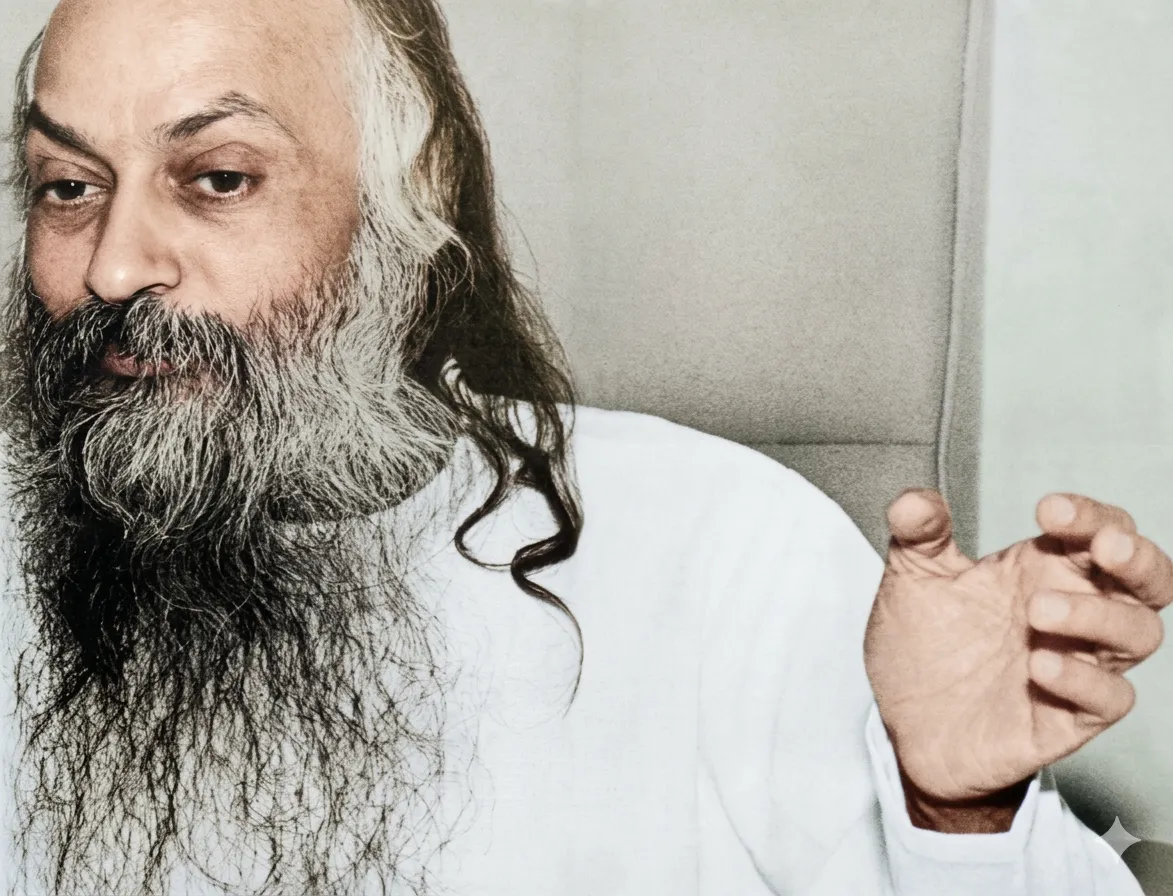
It’s the powerful inner switch that helps your awareness climb higher, not just another number on a list.
From the Discourses
Passages where Osho speaks to this question — each links to the complete discourse.
Ajna is the sixth, isn't it?
It's not really a matter of numbers. I mean, you can call them seven, nine, ten... In truth, there are at least a thousand centers. But only the very powerful ones are counted. Many count five, some count seven, some six—this is not the issue. Beyond that comes the center from which the journey proceeds further. This is about undertaking a vertical journey.
प्रश्न: आज्ञा तो छठवां में आएगा न?
यह गिनती का सवाल नहीं है बड़ा। यानी उसको तुम सात, नौ, दस। वह तो...सच बात तो यह है कि कम से कम हजार सेंटर हैं। लेकिन उसमें जो बहुत पॉवरफुल हैं, उनकी गिनती कर ली जाती है। बहुत पांच गिन लेते हैं, कोई सात गिन लेता है, कोई छह, इससे कोई सवाल नहीं। लेकिन उसके बाद वह सेंटर आ जाएगा, जहां से यह यात्रा आगे शुरू हो जाती है। यह वर्टिकल यात्रा करने की बात है।
When your whole heart is moved by love, Tejo leshya is born in your life. But remember: Mahavira still calls it a leshya. He says, that too is a bondage—righteous, true, beautiful, yet do not forget it binds. Then comes Padma leshya and Shukla leshya. Life grows ever more beautiful. Shukla leshya—the yogic third eye, the tantric Shiva eye—this is Mahavira’s Shukla leshya. Between these six within you is the difference of new moon and full moon. When your life energy comes to rest at the ajna chakra, your entire inner sky is crowned with a radiance. A light spreads. For the first time you are awake. For the first time you attain to meditation. Hence Patanjali called it the ajna chakra. Ajna means: in this moment, what you command is fulfilled. Your command is naturally accepted by your personality.
जब तुम्हारा पूरा हृदय आंदोलित हो उठता है प्रेम से तो तुम्हारे जीवन में तेजो लेश्या का जन्म हुआ। लेकिन महावीर उसको भी लेश्या ही कहते हैं, यह खयाल रखना। महावीर कहते हैं, वह भी बंधन ही है--धर्म का सही, सुंदर है सही, शुभ है सही, लेकिन भूल मत जाना कि बंधन है। फिर उसके बाद पद्म लेश्या और शुक्ल लेश्या। क्रमशः और सुंदरतर होता जाता जीवन। शुक्ल लेश्या--योग की तृतीय आंख, या तंत्र का शिवनेत्र, महावीर की शुक्ल लेश्या है। जैसे तुम्हारे भीतर इन छह के बीच अमावस और पूर्णिमा का अंतर है। जब तुम्हारे जीवन की ऊर्जा आज्ञाचक्र पर आकर ठहरती है तो तुम्हारा सारा अंतर्लोक एक प्रभा से मंडित हो जाता है। एक प्रकाश फैल जाता है। तुम पहली दफा जागरूक होते हो। तुम पहली दफा ध्यान को उपलब्ध होते हो। इसलिए पतंजलि ने उसे आज्ञाचक्र कहा। आज्ञाचक्र का अर्थ है कि इस घड़ी में तुम जो कहोगे, कहते ही हो जाएगा। तुम्हारी आज्ञा तुम्हारे व्यक्तित्व के लिए सहज स्वीकृत हो जाएगी। …
A guru is a person whose individuality is lost. Only then can he look deeply into your individuality. If he himself is an individual, he can interpret you, but he will never be able to know you. For example, if I am here and I say something about you, it is I who am talking about you. It is not about you; rather, it is about me. I cannot help you because I cannot really know you at all. Whenever I know you, it is in a roundabout way, by knowing myself. This point of my being here must disappear. I must be just an absence. Only then can I go deep inside you without any interpretation; only then can I know you as you are, not according to me. And only then can I help. Hence, the secrecy. So it is good not to talk about kundalini and chakras.
Beloved Osho, full with the sweetness of your fragrance as I walk this path with you, I feel that to trust and wait is all that is needed of me.a wondering comes up in me as to whether some knowledge about esoteric subjects -- for example, chakras, collective unconsciousness, energy fields -- could be helpful along the way or not. Osho, is such knowledge useful? Or will whatever is needed come to me throughexperience, in its own time?
And each individual has differences, and differences come in such small things that you cannot conceive. For example, in the East people sit on the floor. In cold countries people cannot sit on the floor; the chair is absolutely necessary. Naturally, their backbones, their spines will have a different shape than those of the people who sit on the floor, and the experiences of their kundalini will be different. There are people who eat only one time a day. For thousands of years they have never eaten more often than that. In South Africa there are tribes which eat only one time in twenty-four hours. When they came across American missionaries, there was such laughter... "These idiots are eating five times! Breakfast -- and there is no fast at all, and they are having `break-fast.' And the whole day, something or other, and then coffee break and tea break, and…
Jesus said, if your inner lake obeys you, the outer may also obey. But there is no trust in the inner lake—so what will you say to the outer? The story is sweet. Jesus went to the lake and said, be quiet! be still! And the story says, the lake became still; the storm vanished. Whether the outer lake did or not is not the question. Regarding the inner lake, I assure you—if once the power to command arises, and someone within turns and says, Enough!—silence descends inside. As if there is no storm, as if there never was. But we keep crying and pleading, chanting, praying, reciting—nothing happens. Nor will it. It can happen only by the activation of one chakra—the will, the resolve. That is missing. Missing, and then all we do proves hollow. Whatever we want cannot enter within except through this chakra.
बाहर की झील हुई हो या न हुई हो, यह सवाल नहीं है। लेकिन भीतर की झील के बाबत मैं भी आपको यह आश्वासन दिलाता हूं कि अगर एक बार कहने का बल आ जाए और भीतर कोई मुड़ कर कह दे कि बस! तो भीतर सन्नाटा छा जाता है। जैसे कोई तूफान नहीं है, कभी था ही नहीं। लेकिन हम रोते-धोते, चिल्लाते हैं बहुत; सामायिक करते हैं, प्रार्थना करते हैं, नमोकार पढ़ते हैं, न मालूम क्या-क्या करते हैं, कुछ होता नहीं। होगा भी नहीं। क्योंकि हो सकता है, एक चक्र के सक्रिय होने से--विल, संकल्प के सक्रिय होने से। वह तो नहीं है। वह नहीं है, फिर हम कहते हैं, वह सब थोथा पड़ जाता है, वह कहीं जाता ही नहीं। जो भी हम चाहते हैं, वह सिवाय इस चक्र के और कहीं से भीतर प्रवेश नहीं कर सकता है।