
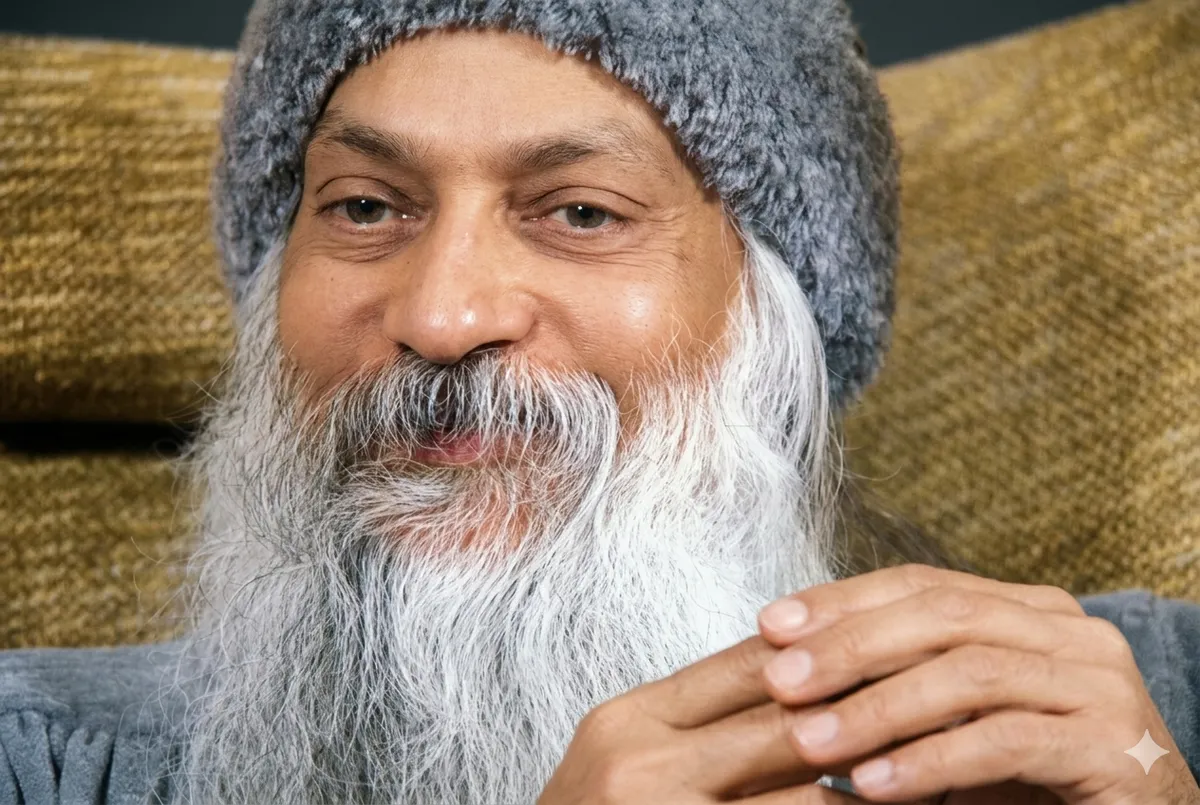
It’s mostly borrowed rules and showy promises; without meditation in your own heart, nothing really changes.
From the Discourses
Passages where Osho speaks to this question — each links to the complete discourse.
The meaning of both words? Yes, I’ll tell you. Mahavrata means, for example, total ahimsa—living in absolute nonviolence; total aparigraha, total non-attachment. Anuvrata means: to the extent of one’s capacity. One person says, “I will keep possessions up to five rupees”—that is an anuvrata. Another says, “I will remain naked; I will keep no possessions at all”—that is a mahavrata.
Another story may help. An emperor was deeply impressed by a renunciate who lay naked under a neem tree. The emperor’s reverence grew and one day he said, “Not here—come to my palace; why lie here below? Come to the palace.” He had thought the renunciate would refuse: “I cannot go to a palace; I am non-possessive.” The renunciate said, “As you wish.” He stood up, staff in hand. The emperor felt uneasy. He had expected a refusal. “As you wish—let’s go to the palace!” A doubt arose in the emperor’s mind: “I have made a mistake. The man looks like he was waiting for the palace; perhaps he was under the neem only in the hope someone would take him to a palace. He did not refuse even once! What kind of non-possessive man is this? A non-possessive one should have said, ‘Never—I cannot enter a palace. A palace…
प्रश्न: दोनों शब्दों का अर्थ? हां, मैं बताता हूं। महाव्रत का अर्थ है, जैसे पूर्ण अहिंसा। पूरे अहिंसक ढंग से जीने का अर्थ हुआ महाव्रत--पूर्ण अपरिग्रह, पूर्ण अनासक्ति। अणुव्रत का मतलब है, जितनी सामर्थ्य हो। एक आदमी कहता है कि मैं पांच रुपये का परिग्रह रखूंगा, यह अणुव्रत है। एक आदमी कहता है, मैं नग्न रहूंगा, मैं कोई परिग्रह नहीं रखूंगा, यह महाव्रत है।
एक और तुम्हें कहानी कहूं, उससे शायद समझ में आ जाए। एक सम्राट एक संन्यासी से बहुत प्रभावित था। वह नग्न पड़ा रहता संन्यासी एक नीम के वृक्ष के नीचे। उस सम्राट का आदर बढ़ता गया और एक दिन उसने कहा कि यहां नहीं, मेरे पास इतने बड़े महल हैं, आप यहां क्यों नीचे पड़े हैं? आप महल में चलें। सोचा था उसने, संन्यासी इनकार करेगा कि मैं महल में नहीं जा सकता, मैं अपरिग्रही! संन्यासी ने कहा, जैसी मर्जी! वह उठा कर डंडा खड़ा हो गया। सम्राट के मन में बड़ी मुश्किल हुई, सोचा था कि अपरिग्रही है, इनकार करेगा। वह एकदम डंडा उठा कर खड़ा हो गया! …
And if you go to a temple or mosque and swear: O Master, bless me, from now on I will always add two and two as four — it is clear you are deranged. And whoever blesses you is further gone than you. Your mind is broken. You suspect you will add two and two as five. To fight that suspicion you are making prior arrangements. You know your inner state that when I add, two and two will become five. 'No-no, swear, arrange in advance!' Then within you, you know two and two will become five, therefore take a vow and create a block so two and two will be four. But this is not knowledge; this is greed. The greedy man becomes vowed; the man of understanding is avratī. This does not mean there is no revolution in his life — only in his life does revolution happen!
अगर समझ में ही आ गया, तो तुम ऐसी तो कभी कसम नहीं खाते कि मैं कसम खाता हूं कि सदा दो और दो चार ही जोडूंगा। तुम जानते हो कि दो और दो चार होते हैं, इसमें जोड़ना क्या है, कसम क्या खानी है? और अगर तुम जा कर किसी मंदिर-मस्जिद में कसम खाओ कि हे सदगुरु, मुझे आशीर्वाद दें, अब से मैं दो और दो चार ही जोडूंगा, तो साफ है कि तुम विक्षिप्त हो। और जो तुम्हें आशीर्वाद दे, वह तुमसे भी आगे है विक्षिप्तता में। तुम्हारा दिमाग खराब है। तुम्हें शक है कि तुम दो औरदो पांच जोड़ोगे। उस शक से लड़ने के लिए तुम इंतजाम कर रहे हो पहले से। तुम्हें अपनी भीतरी अवस्था का पता है कि जब मैं जोडूंगा तो दो और दो पांच होंगे। ‘नहीं-नहीं, कसम खा लो, पहले से इंतजाम कर लो!’ वह भीतर तो तुम जानते ही हो कि दो और दो पांच होने वाले हैं, इसलिए कसम खा कर इंतजाम कर लो, रुकावट डाल दो कि दो और दो चार हों। लेकिन यह ज्ञान नहीं है, यह बोध नहीं है--यह लोभ है।
Osho, you said that when awakening comes one should be aware of unconsciousness; there is no need to fight the various branches. Avrat alone is not enough; along with it, awakening is also necessary. So my point is: if awakening comes, then avrat will come on its own, won’t it?
No, no. Avrat is what we already are. That is, a vrati is one who lives by binding himself in rules; an avrati is one who does not live by binding himself in rules. We are already avrati, understand? There is no question of bringing it. We are already avrati. Some among us are vrati—temple-goers, mosque-goers, those who perform worship and rituals, who live by rules and religion—they are vrati; the rest are avrati. The vrati should become aware with regard to their vows; the avrati with regard to their non-vow. One has to become aware of exactly what one is doing. Then, with awakening, that which the vrati is trying to bring through vows will come. It will come—on its own.
प्रश्न: ओशो, आप बोले कि जागृति आती है तो मूर्च्छा के प्रति जागरूक होना चाहिए, अलग-अलग शाखा से लड़ने की कोई जरूरत नहीं है। अव्रत अकेला ही जरूरी नहीं है, साथ में जागृति भी जरूरी है। तो मेरा यह कहना है कि जागृति आ जाएगी तो अव्रत आ ही जाएगा न?
न, न। अव्रत है ही हमारा। यानी व्रती का मतलब यह है कि जो नियम बांध कर जी रहा है। अव्रती का मतलब है, जो नियम बांध कर नहीं जी रहा है। अव्रती हम हैं ही, समझे न? उसे लाने का सवाल नहीं है। अव्रती हम हैं ही। कुछ हममें व्रती हैं--मंदिर जाने वाले, मस्जिद जाने वाले, पूजा-पाठ करने वाले, नियम-धर्म से जीने वाले--वे व्रती हैं, बाकी लोग अव्रती हैं। व्रती को व्रत के प्रति जाग जाना चाहिए, अव्रती को अव्रत के प्रति। जो हम कर रहे हैं, उसी के प्रति जाग जाना चाहिए। तो जागने से वह आ ही जाएगा, जो व्रती चेष्टा कर रहा है व्रत से लाने की। वह आ जाएगा, अपने आप आ जाएगा।
Osho, I am worn out from practicing religion—vows, fasts, yama and niyama—I’ve tried them all and found nothing. What should I do now? I have come to your refuge to ask this.
So sometimes fasting is useful. But fasting is not a way of life. Otherwise you are choosing slow suicide; you begin enjoying torturing yourself; you turn perverse and violent toward yourself. Such fasting is abuse—self-abuse—and no one can protect you from it. And your mute body already suffers so much at your hands. Do not imagine this abuse will bring you religion. Yes, the body will dry and wither—but do not fall into the delusion that the lotus of the soul blooms because the body withers. There is no necessary connection. So all that you did—yamas and niyamas, vows and fasts—each has its own value in its own place. But when you take them as synonyms for religion, Dayanand, you go astray. They are not synonyms. Religion has only one synonym—meditation. Mahavira used an exact word for it: samayik. The Jains call the soul “samay”—the timeless time. Samayik means: abiding…
पहला प्रश्न: ओशो, मैं धर्म करते-करते थक गया हूं; व्रत-उपवास, यम-नियम सब कर देखे, पर पाया कुछ भी नहीं। अब क्या करूं, यह पूछने आपकी शरण आया हूं।
तो कभी-कभी उपवास उपयोगी है। लेकिन उपवास कोई जीवन की शैली नहीं है। तब तो तुम भूखे मरने लगे। तब तो तुमने एक तरह का आत्मघात चुन लिया। तब तो तुम अपने को सताने में मजा लेने लगे। तब तो तुम दुष्ट प्रकृति के हो, हिंसक हो। तुम्हारा उपवास तब अनाचार है--अपने ऊपर ही अनाचार है। इसलिए कोई रक्षा भी नहीं कर सकता। और मूक देह पर तुम वैसे ही बहुत अनाचार करते हो। इस अनाचार से कोई तुम धर्म को उपलब्ध हो जाओगे, ऐसा मत समझ लेना। हां, शरीर सूख जाएगा, कुम्हला जाएगा। शरीर के कुम्हला जाने से कोई आत्मा का कमल खिल जाता है, इस भ्रांति में मत पड़ना। इन दोनों का कोई अनिवार्य संबंध नहीं है। तो तुमने जो भी किया, यम-नियम, व्रत-उपवास, सब अपना मूल्य रखते हैं--अपनी जगह। लेकिन जब तुम इनको धर्म का पर्यायवाची मान लेते हो दयानंद, तब भूल हो जाती है। ये धर्म के पर्यायवाची नहीं हैं। धर्म का तो सिर्फ एक ही पर्यायवाची है--वह ध्यान है। महावीर ने उसके लिए ठीक शब्द उपयोग किया--‘सामायिक।’ महावीर आत्मा को समय कहते हैं। …
Osho, from the very beginning of life everyone is taught: speak the truth, do good deeds, do not be violent, do not sin. But we sannyasins are trying to walk exactly on this path; then why are we opposed? Please kindly explain this contradiction.
So Mahavira would not turn at night lest a bug be crushed. And naked Mahavira must have been tormented by bugs and mosquitoes—no doubt. Mahavira told his disciples: mosquitoes will disturb meditation—don’t worry; it’s a test. Mosquitoes have always been enemies of meditators! I once heard a mosquito telling his kids, “If you behave today, in the morning I will take you to Buddha Hall for discourse! But only if you behave!” Mosquitoes are old enemies. Mahavira said: mosquitoes will torture you; they will create obstacles in meditation. The ascetic pays them no attention; he remains in his meditation—let them bite; he won’t move a muscle. And Mahavira must have been all the more tormented—Jains say that when a snake bit him, milk flowed instead of blood! Will mosquitoes leave milk? So cheap—without going to a dairy—just suck Mahavira and drink milk! They must have swelled with joy! So Mahavira…
पहला प्रश्न: ओशो, जीवन की शुरुआत से सभी को यही शिक्षा मिलती रहती है कि सच बोलो। अच्छे काम करो। हिंसा न करो। पाप न करो। लेकिन हम संन्यासी तो इसी रास्ते पर जाने की कोशिश करते हैं, फिर हमारा विरोध क्यों? इस विरोधाभास को समझाने की कृपा करें।
तो महावीर बेचारे करवट नहीं बदलते रात में, कि कहीं करवट बदलने में कोई खटमल दब जाए; कि कोई मच्छड़ दब जाए! और नंग-धड़ंग महावीर को खटमल और मच्छड़ सताते तो बहुत होंगे, इसमें कोई शक नहीं। महावीर ने कहा भी है अपने शिष्यों को कि ध्यान में मच्छड़ बाधा डालेंगे। फिकर न करना। यह परीक्षा है। मच्छड़ सदा से दुश्मन हैं ध्यानियों के! मैंने तो एक मच्छड़ को अपने बच्चों से कहते सुना है कि बेटा, अगर आज ठीक से व्यवहार किया, तो सुबह ही बुद्धाहॉल में ले चलेंगे प्रवचन सुनवाने! मगर अगर ठीक से व्यवहार किया तो! अगर गड़बड़झाला किए, फिर नहीं ले जाएंगे! मच्छड़ पुराने दुश्मन हैं। महावीर ने कहा है कि मच्छड़ सताएंगे, ये व्यवधान खड़ा करेंगे ध्यान में। तपस्वी इन पर ध्यान नहीं देता। तपस्वी तो अपने ध्यान में ही लगा रहता है। काटे जाओ--कोई फिकर नहीं। हिलता ही नहीं; डुलता ही नहीं। और महावीर को तो और भी मच्छड़ सताते रहे होंगे, क्योंकि जैनी कहते हैं कि जब सांप ने उनको काटा, तो खून नहीं--दूध निकला! अब मच्छड़ छोड़ेंगे दूध पीना! …