
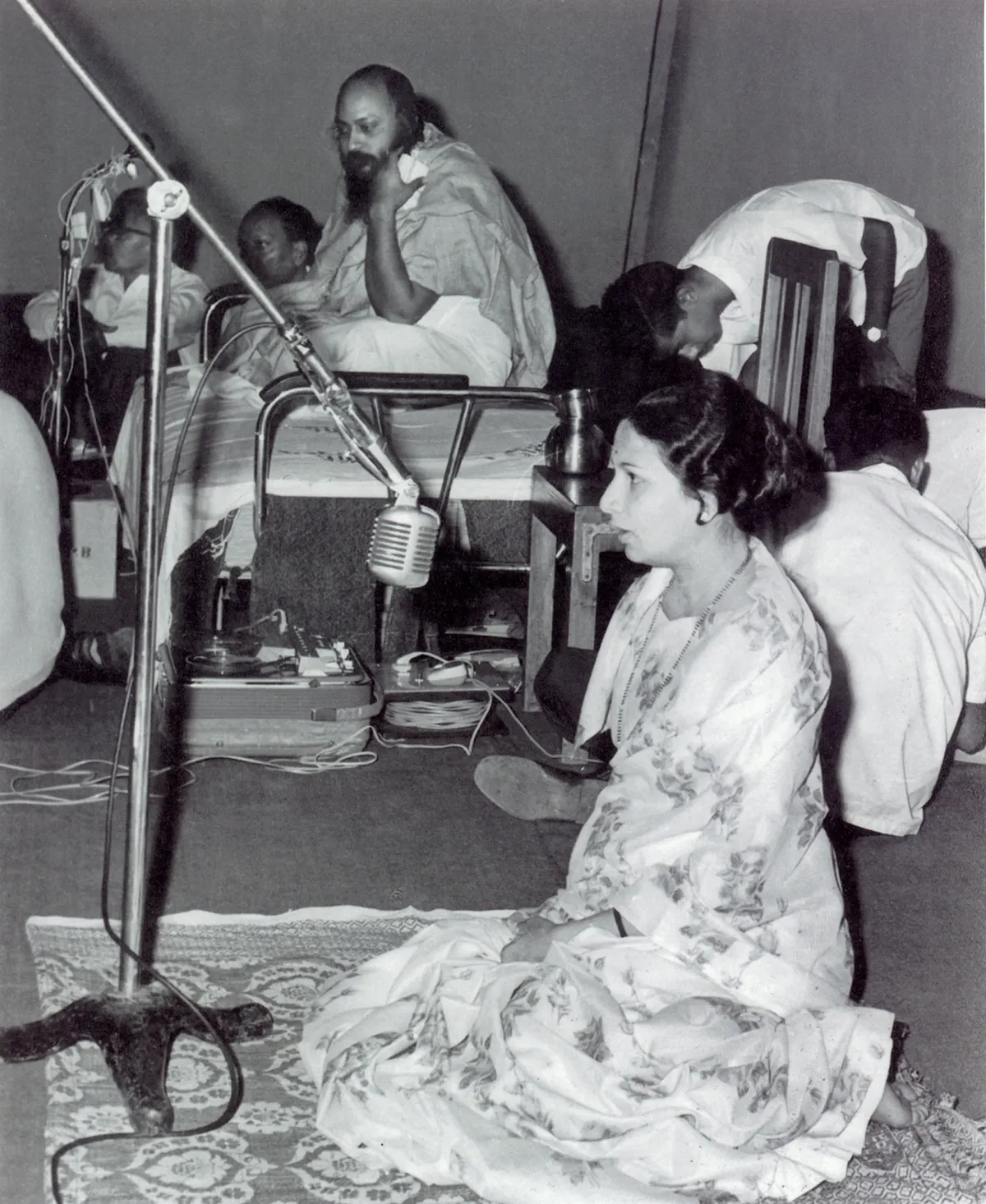
According to Osho, a good meditation duration is about half an hour per session. Night is ideal—when everything is quiet—so sit for thirty minutes and experiment. If you’re too tired at night, do the same half hour upon waking in the morning, or choose any time that genuinely suits you and allows steady, unhurried practice.
Aim for 30 minutes, preferably at night when it’s quiet, or in the morning if night is hard—pick a time that truly works for you.
From the Discourses
Passages where Osho speaks to this question — each links to the complete discourse.
To start, doing it for half an hour—what time is good?
Night is very good. When everything becomes quiet, sit for half an hour and do the experiment. And if that is not possible, morning is good, especially if you feel too tired at night. After the whole day’s work, if sitting longer or getting up and doing the half-hour experiment isn’t possible, then in the morning, as soon as you wake up, just sit on the bed. Do half an hour then—or whenever suits you.
My own statement is this: sin is that which takes a person away from himself; virtue is that which brings him nearer to himself. There is no other meaning to sin and virtue. Keep this in mind. And keep another thing in mind: the awareness of your chitta will gradually increase. Whatever you do, you will do more consciously. You did it yesterday too, the day before as well, but not so consciously. If you eat, you will eat consciously. If you speak, you will speak consciously. If you walk on the road, you will walk consciously. An awareness, a wakefulness, will go on increasing. And thus the first difference will appear: the more awareness grows, the harder it becomes to err. How can a man full of awareness get angry? How can a man full of awareness quarrel? How can a man full of awareness steal?
Within three, four minutes you will feel that the body has relaxed; the breathing has come into a rhythm. Then with each outgoing breath, simply say, 'Osho' inside; not very loudly -- just a whisper, but inside so that you can hear it. When the breath comes in, just wait. When the breath goes out, you call, and when the breath comes out, allow me to come in. Don't do anything -- simply wait; so your work is only when the breath goes out. When the breath goes out, go into the universe. The outgoing breath is almost like dropping a bucket into a well. And when the breath comes in, it is like the bucket being pulled out of the well. This is only for twenty minutes. So four, five minutes to get into it, and then twenty minutes to remain in it.
And look upwards so that the eyes turn upwards. In fact that point is not important -- the whole point is that the eyes should look upwards. When the eyes are looking upwards the body falls into a tranquility. That's how it happens while you go into deep sleep. When a person is dreaming his eyes are moving. You can see a man sleeping; if his eyes are moving, then he is dreaming. If his eyes are not moving and you can open the eyes and see that his eyes are turned upwards, then he is in deep sleep. That is the eye posture in deep sleep -- the same eye posture helps in meditation. So this is just a device to help the eyes to turn upwards. Turn the eyes upwards, and this way [in a chair] will be easier than sitting that way [on the floor].
Whenever you can find time -- and at least once a day you have to find time.... Any time will do, but it is good to do it when the stomach is empty; the more energy is available when the stomach is empty. Not that one should be hungry -- just that the stomach should not be too full; if you have eaten then after two, three hours. Just a cup of tea is good... a cup of tea is very helpful. Buddhists have used tea for a long time. They have made almost a meditation of drinking tea. And it is helpful: it makes you a little alert, and good! So you can take a cup of tea but not anything else. Whenever you do it, early in the morning or in the night, the stomach should be empty.