
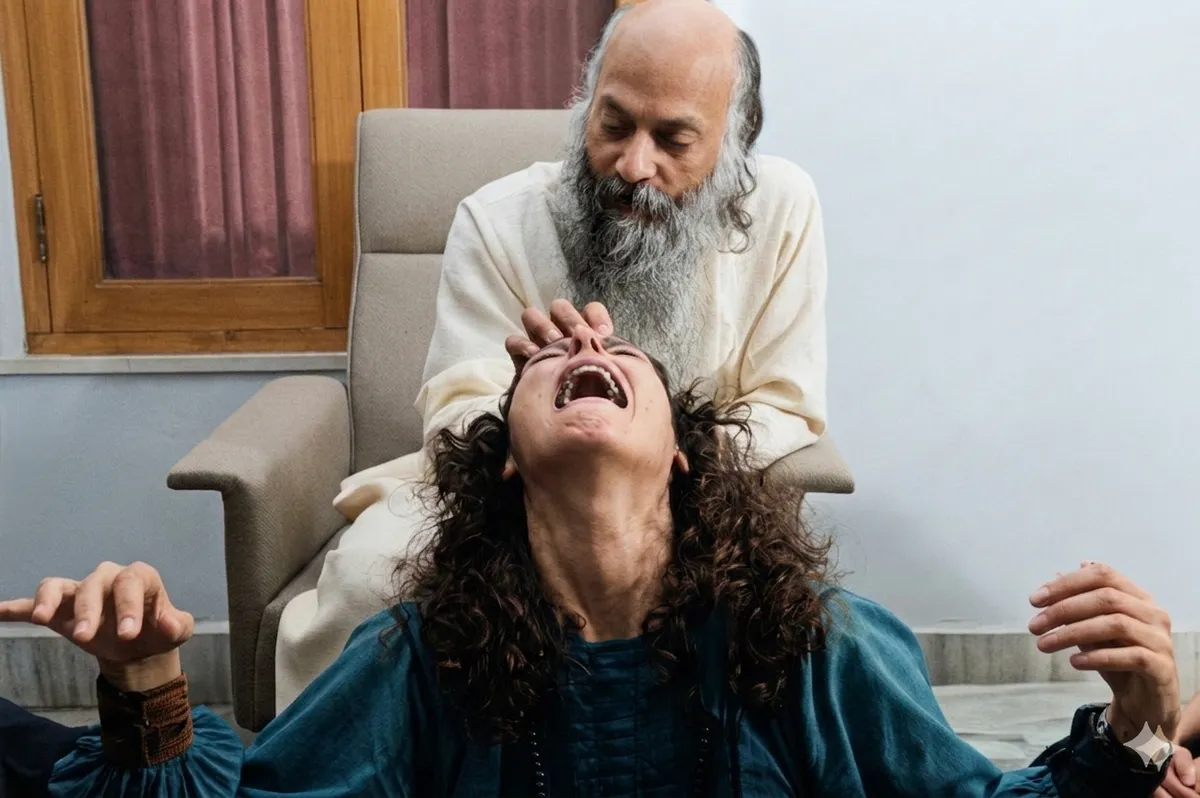
Meditation first makes you feel everything more strongly so the old stuff can clear, and then you become quietly steady.
From the Discourses
Passages where Osho speaks to this question — each links to the complete discourse.
Osho, meditation increases sensitivity. But as sensitivity grows, living seems to become more difficult—because the mind’s reactions become sharp and intense, and it feels as if one’s whole life is at stake at every small turn. In such a state, how can one find and hold the point of balance?
Certainly: as meditation deepens, sensitivity will also deepen. And with heightened sensitivity, problems grow too. Sensitivity means you will experience everything—every event—in its full velocity, with full intensity. If someone insults you, the way that hurt reverberates inside a meditator will not be the same for a non-meditator. If a thorn pricks, the meditator’s awareness of that sting will be much clearer than that of the non-meditator—because the non-meditator lives in a kind of stupor, a haze of unawareness. The duller the awareness, the less the pain is consciously felt. Perhaps that is exactly why we reduce our awareness—so we can feel less pain. Ask a psychologist and he will say: every child learns early how to numb their awareness. All children are born sensitive. Then they begin to kill their sensitivity—because living with raw sensitivity is very difficult. A certain blunting of feeling becomes “necessary.” That is why, at…
प्रश्न: ओशो, ध्यान से संवेदनशीलता बढ़ती है। लेकिन संवेदनशीलता बढ़ने पर जीना और मुश्किल हो जाता है। क्योंकि मन की प्रतिक्रियाएं तीव्र तथा उत्कट होती हैं। और बात-बात में जैसे पूरे प्राण दांव पर लग जाते हैं। तो ऐसी स्थिति में संतुलन का मध्यबिंदु कैसे साधा जाए?
निश्चय ही, जैसे-जैसे ध्यान बढ़ेगा, संवेदनशीलता भी बढ़ेगी। संवेदनशीलता बढ़ने से समस्याएं भी बढ़ेंगी। क्योंकि संवेदनशीलता का अर्थ है, हर चीज, हर घटना उसकी पूरी त्वरा में, तीव्रता में अनुभव होगी। अगर कोई गाली देगा, तो उसकी चोट ध्यानी के भीतर जिस भांति गूंजेगी, वैसी गैर-ध्यानी के बीच नहीं गूंजेगी। अगर कांटा चुभेगा, तो उसकी चुभन का जैसा स्पष्ट बोध ध्यानी को होगा, वैसा गैर-ध्यानी को नहीं होगा। क्योंकि गैर-ध्यानी जीता है मूर्च्छा में, उसका होश धुंधला-धुंधला है। जितना होश धुंधला है, उतनी ही पीड़ा भी कम अनुभव होती है।
Beloved Osho, with meditation sensitivity increases, making life more difficult because one's reactions are so sharp and intense, and at every step it feels as though one's very life is at stake. How to attain the golden mean, the balance point, in this situation?
A very rich industrialist in Japan has erected a statue of himself outside his office. A very clever man! His psychologists counselled him to keep a statue of himself opposite his office. In his factory there are some ten thousand employees, and it has been announced to them that they should all feel free to maltreat the statue any way they choose! And it is an easy matter for anyone -- especially an employee -- to get angry. He does not need a reason. To have to serve someone else, to be someone's paid slave, is enough in itself to provoke anger. The workers, and even sometimes the managers, habitually abuse and mistreat the statue before they enter the factory, and this has had important results. What it has done is to create a psychological equality between the owner and his employees. We all behave like this. Even today we…
As your meditation deepens all these things are going to happen: somebody will condemn you, somebody will think you are mad, somebody who has some understanding will ask you, "What has happened to you and how can it happen to me?" You remain centered, rooted, grounded in your being -- whatsoever happens around does not matter. You have to become the center of the cyclone. And you will know when you have become the center of the cyclone. There is no need to ask, "How will we know?" How do you know when you have a headache? You simply know. One of my teachers in school was a very strange man. The first day in his class he said to us, "Remember one thing: headache I don't believe, stomachache I don't believe, I believe only things which I can see.
Osho, I feel that as awareness grows, sensitivity grows too—and I simply cannot bear it. Please guide me. Guide this blind one, Osho; I keep stumbling as I walk!
Certainly, as awareness grows, sensitivity will grow. Ordinarily we live in a kind of fog—unconscious, stupefied. Like a man drunk, lying in a gutter—he doesn’t smell the stench. You think, “Poor fellow, lying in a drain.” But he’s enjoying himself. He may be dreaming he’s resting in a palace, that he’s become president and is holding court! You see mud, filth, the gutter running past his nose. You imagine a terrible stink must be assailing him. But he’s unconscious. For stench to be felt, a little awareness is needed. In the morning when he wakes up and comes to, he’ll dust himself off and run home, bathe, put on sandalwood paste, do his prayers, dress up and sit in the living room. Then if you tell him, “Just go and lie down in that gutter again,” it will be impossible—now all the senses are alert. Just so it happens. As…
चौथा प्रश्न: ओशो, मुझे लगता है कि जैसे-जैसे सजगता बढ़ती है वैसे-वैसे संवेदनशीलता भी बढ़ती है, जिसे मैं बिलकुल भी सह नहीं पाती हूं। कृपाकर मार्गदर्शन करें। नयनहीन को राह दिखा ओशो, चलत-चलत गिर जाऊं मैं!
निश्चित ही जैसे-जैसे सजगता बढ़ेगी, संवेदनशीलता भी बढ़ेगी। साधारणतः तो हम एक तरह की धुंध में रहते हैं--बेहोश, मूर्च्छित। जैसे एक आदमी शराब पीए पड़ा है नाली में, तो उसे नाली की बदबू थोड़े ही आती है। तुम्हें लगता है कि नाली में पड़ा है बेचारा। मगर वे तो बड़े मजे से पड़े हैं। हो सकता है कि सपना देख रहे हों, महल में विश्राम कर रहे हैं। कि राष्ट्रपति हो गए हैं, दरबार लगाए बैठे हों! तुम्हें लगता है कि कीचड़ में, बदबू में पड़ा है। मुंह में कीचड़ चली जा रही है। नाक के पास नाली बह रही है। बड़ी दुर्गंध इसे आती होगी। लेकिन वह बेहोश पड़ा है। दुर्गंध वगैरह आने के लिए थोड़ा होश चाहिए। …
With deepening meditation, one becomes more and more sensitive to objects, events and persons. But due to this heightened sensitivity one feels a sort of deep intimacy with everything, and this usually becomes a cause of subtle attachments. How to be sensitive and yet detached?
Let me tell you a story. Buddha was staying in a village. A woman came to him, weeping and crying and screaming. Her child, her only child, had suddenly died. Because Buddha was in the village, people said, "Don't weep. Go to this man. People say he is infinite compassion. If he wills it, the child can revive. So don't weep. Go to this Buddha." The woman came with the dead child, crying, weeping, and the whole village followed her -- the whole village was affected. Buddha's disciples were also affected; they started praying in their minds that Buddha would have compassion. He must bless the child so that he will be revived, resurrected. Many disciples of Buddha started weeping. The scene was so touching, deeply moving. Everybody was still. Buddha remained silent. He looked at the dead child, then he looked at the weeping, crying mother and he said…