
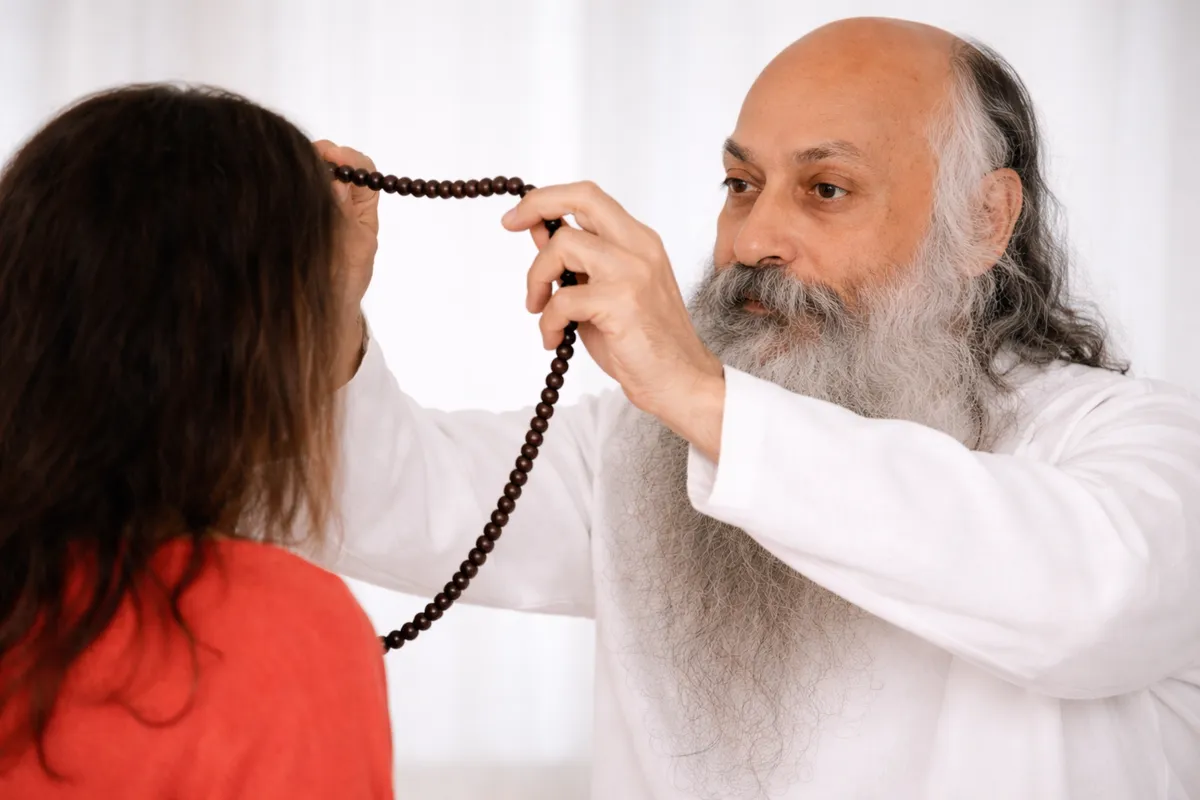
Thinking a lot about your bad past keeps you stuck—let it spark a wish to wake up, then drop it and be fully here now.
From the Discourses
Passages where Osho speaks to this question — each links to the complete discourse.
Osho, I keep turning back to look at the past. It’s futile, yet the habit doesn’t drop. What could be the reason?
Even to a dry tree the vine clings. Support! No other support seems visible. Ahead, only darkness; within, only darkness. The one bright thing seems to be the line of the past along which you have come—this path that is over, that will never be again, that has already happened. You sit arranging these preserved blossoms, these dried flowers. You cling to them. The creeper has twined round a lifeless tree— how much the past coddles the unborn It’s all dead, a corpse. Sometimes it happens: a she-monkey goes on carrying her baby pressed to her chest. Even when the baby dies, she keeps carrying it. It takes days—only when it rots and starts to stink does she drop it in a fright. Otherwise she goes on clutching the corpse—old habit. The past is a corpse—gone, done. Dust. Ash; the ember is out. Don’t keep lying on this ash, don’t…
तीसरा प्रश्न: ओशो, मैं लौट-लौट कर अतीत की ओर देखता रहता हूं। यह व्यर्थ है, फिर भी आदत छूटती नहीं। इसका क्या कारण हो सकता है?
सूखे वृक्ष से भी लता लिपटी रहती है। सहारा! अब और कोई सहारा तो दिखायी नहीं पड़ता। आगे तो सिर्फ अंधकार है। भीतर अंधकार है। अब तो एक ही रोशन बात मालूम पड़ती है, यह अतीत की लकीर जिस पर तुम गुजर आए, यह रास्ता जो बीत चुका, जो अब कभी होगा नहीं, जो हो चुका। अब इन्हीं संजोयी स्मृतियों के फूलों को, सूखे फूलों को सजाकर बैठे हो। इन्हीं को पकड़े हो।
Osho, what insights allow us to drop the past and not repress it?
And that happens to individuals, that happens to countries, to societies, to nations too. For example, a young country like America thinks of the future; its golden age is yet to come. A country like India, very ancient, old, thinks of the past; its golden age has passed. In the days of Rama it has been; it is already a gone thing. It is simply an indication that the country is very very old and cannot conceive any future. In the future is death. But to be a child is to miss; and to be old is to miss. The meditator is exactly in the middle: he has something of eternal youth in him. You will be surprised to know that in the East we have never depicted any enlightened person old; we have always depicted them young. You have not seen any picture of Buddha as old, or Mahavira,…
Osho, why can I not forget my past? Even though in my past there is nothing but suffering.
Perhaps for precisely that reason. Man keeps scratching at his sorrows to remember them—because there is a certain pleasure in suffering. You will be surprised. You will say, “Pleasure in suffering? What kind of pleasure?” There is a pleasure in suffering: suffering is the food of the ego. In a state of bliss the ego dissolves; in a state of suffering the ego becomes very dense. People have not chosen suffering for nothing; they have chosen it cleverly, knowingly. People are not miserable by accident; they are miserable because only in suffering does the ego survive. “I am somebody!”—this remains only in pain. The moment a wave of bliss comes, you are swept away; the ego cannot remain. So people talk about bliss, but they do not want to be blissful; they are afraid. If they become blissful, this sense of “I” will not survive. That is why all the…
दूसरा प्रश्न: ओशो, मैं अपने अतीत को क्यों नहीं भूल पाता हूं? यद्यपि मेरे अतीत में दुखों के अतिरिक्त और कुछ भी नहीं है।
शायद इसीलिए। आदमी दुखों को कुरेद-कुरेद कर याद करता है। क्योंकि दुख में एक मजा है। तुम चौंकोगे। तुम कहोगे: दुख में और मजा! दुख में कैसा मजा? दुख में एक मजा है। दुख अहंकार का भोजन है। आनंद की अवस्था में अहंकार विलीन हो जाता है। दुख की अवस्था में अहंकार खूब सघन हो जाता है। लोगों ने दुख ऐसे ही थोड़े ही चुन लिया है! …
Osho, you have earlier said, “Live moment to moment, live in the present.” Now you are saying, “Return to the past.” What should we do?
So it is with the mind—there are ruts. The past means endless grooves. However much you understand, your intellect agrees, you make decisions, you resolve—at the moment of resolve you feel something is going to change. But not even an hour passes before your decision breaks. Then only self-condemnation is produced, nothing else. Your saints, your fakirs, your priests and pundits—most of the time they only succeed in producing self-condemnation in you, nothing else. Their words are logically correct. You cannot even say they are wrong; you have to admit they are right. In that admission you take a decision. But against what are you deciding? Inside are grooves carved since who knows when, deep tracks. Walking in them has become a habit. It is easy to walk in them. They will pull you again and again. The meaning of returning into the past is: these grooves must be erased.…
दूसरा प्रश्न: ओशो, आपने पहले कहा है, क्षण-क्षण जीयो, वर्तमान में जीओ। अब आप कह रहे हैं, अतीत में लौटो। हम क्या करें?
ठीक मन पर लीकें हैं। अतीत का अर्थ है, अनंत लीकें। तो आप कितनी ही बातें समझ लेते हैं; बुद्धि सहमत हो जाती है; निर्णय ले लेते हैं; संकल्प कर लेते हैं। और जब संकल्प करते हैं, तब सोचते हैं कि कुछ होने-जाने वाला है। घड़ी भी नहीं बीत पाती कि जो आपने निर्णय लिया था, वह टूट जाता है। और तब सिर्फ आत्मग्लानि पैदा होती है, और कुछ भी नहीं। आपके संत, आपके फकीर, आपके पंडित-पुरोहित, आप में सिर्फ आत्मग्लानि पैदा करवा पाते हैं और कुछ भी नहीं। क्योंकि उनकी बातें तो तर्कयुक्त हैं। आप भी कह नहीं सकते कि वे गलत कह रहे हैं। स्वीकार करना पड़ता है कि ठीक कह रहे हैं। उस स्वीकृति में आप निर्णय लेते हैं। लेकिन निर्णय किसके खिलाफ ले रहे हैं! न मालूम कितनी लंबी लकीरें भीतर हैं, गहरे खांचे हैं। उनमें चलने की आदत हो गई है। उनमें चलना सुगम है। …
Veet Atito -- beyond the past.... The only problem that a seeker of truth has to encounter is the past. It is the past that stands between you and the reality; it is the past that functions as a barrier. It does not allow you to see that which is. It goes on interfering, distorting, interpreting. It goes on coloring everything. It does not allow anything to enter in its purity and reach to your being. The past consists of all the conditionings: social, religious, political, educational. And the past also consists of all your experiences, good and bad. The past means all that has happened up to now. One has to learn how to put it aside. That is the whole art of meditation: how to put it aside... because it is no more.