
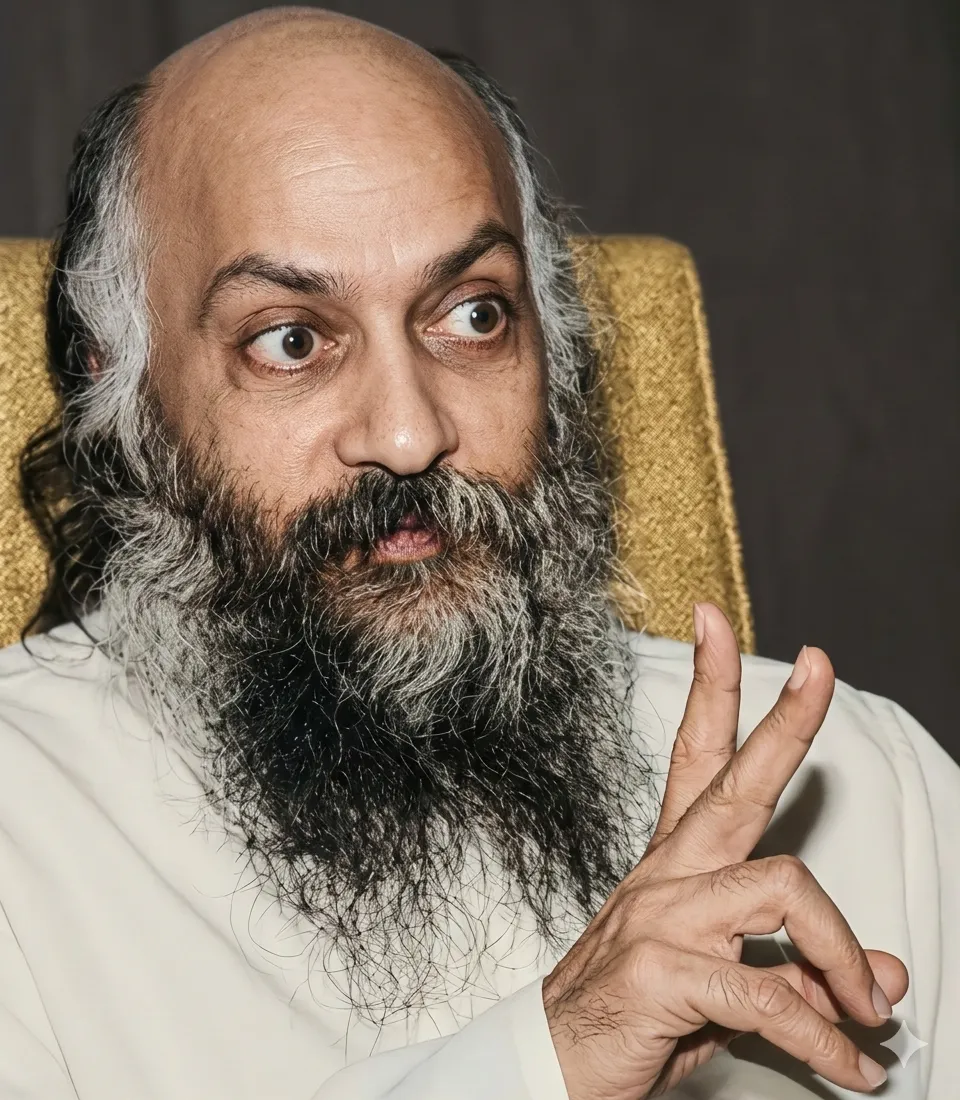
Feeling satisfied is like telling yourself you’re full while your belly still grumbles; only touching the Divine truly ends the hunger.
From the Discourses
Passages where Osho speaks to this question — each links to the complete discourse.
If he becomes satisfied right there, why—why should he need to go any higher?
Fulfillment cannot happen. Short of the Divine, fulfillment is impossible. Contentment can happen. By contentment I mean a placated, managed contentment—one talks oneself into believing that everything is fine, that now where is there to go... That will remain. Until you have gone beyond the last center, there will only be contentment.
प्रश्न: अगर उसको उसी में ही संतुष्टि हो जाती है। उसको, उसको ऊपर जाने की जरूरत ही क्या है?
संतुष्टि तो हो ही नहीं सकती। संतुष्टि तो परमात्मा के पहले हो ही नहीं सकती। वह तो असंभव है। संतोष हो सकता है। संतोष का मतलब है कि मनाया हुआ संतोष होगा, कि कोशिश करके समझा लेगा कि सब ठीक है, कि अब कहां जाकर...। वह तो रहेगा ही। वह तो जब तक आप आखिरी सेंटर के पार नहीं हो जाते हैं, तब तक संतोष ही रहेगा।
Osho, the very sky you tirelessly describe again and again—why is there still no fulfillment even after repeatedly dissolving into and becoming one with that same sky? In the outer world there seems to be every kind of fulfillment, satisfaction for everything; but within, there is a constant dissatisfaction, a feeling every moment that something is missing, that there is something more that has not yet been known. A little further… ever further—the thirst keeps growing. The more of your grace I receive, the more the thirst increases.
At the moment of life’s transition, when you turn from the outer to the inner, this is what happens. The dissatisfaction that was outside gets attached within. Before, there was money—and you wanted more. There was position—and you wanted it higher. There was a house—and you wanted to build a palace. Your dissatisfaction was fastened outside. Now you have turned your mind away from the outer, so outside there is a sense of satisfaction. Consider this: earlier there was no dissatisfaction within; within there was contentment, outside dissatisfaction. Now you have changed the arrangement. You turned the mind inward. You said, “Know what is within. Recognize the Divine, seek the self, have the vision of truth, attain liberation.” You redirected the dissatisfaction toward the inner, and the satisfaction shifted to the outer. They are two sides of the same coin. It is as if you were holding a coin in…
चौथा प्रश्न: ओशो, जिस आकाश का अथक वर्णन आप बार-बार करते हैं उसी आकाश के साथ बार-बार घुल-मिलकर एक होने के बाद भी तृप्ति क्यों नहीं मिलती? बाह्य जगत में तो हर तरह की तृप्ति है, हर बात की तृप्ति, लेकिन अंतस में एक अतृप्ति हर क्षण है कि कुछ छूटा-छूटा है, कुछ और है जो अभी जाना न जा सका। कुछ और आगे...कुछ और आगे की प्यास बढ़ती ही जाती है। जितना ही आपका प्रसाद पाता हूं उतनी ही प्यास बढ़ती जाती है।
जीवन के संक्रांति-क्षण में, जब तुम बाहर से भीतर की तरफ मुड़ते हो तो ऐसी घटना घटती है। वह जो बाहर की अतृप्ति थी वह भीतर संलग्न हो जाती है। पहले धन था, और चाहिए था। पद था, और बड़ा चाहिए था। मकान था, महल बनाना था। तुम्हारी अतृप्ति बाहर लगी थी। अब तुमने बाहर से मन मोड़ा तो बाहर तो तृप्ति हो गई। खयाल करो, पहले भीतर कोई अतृप्ति न थी, भीतर तृप्ति थी, बाहर अतृप्ति थी। अब तुमने संयोजन बदल दिया। तुमने भीतर की तरफ मन मोड़ा। तुमने कहा, भीतर जो है उसे जानना। प्रभु को पहचानना, आत्मा को खोजना, सत्य के दर्शन करने हैं, मोक्ष पाना। तुमने अतृप्ति भीतर की तरफ मोड़ ली तो तृप्ति बाहर चली गई। वे एक ही सिक्के के दो पहलू हैं।
Satisfaction is a poor man's effort to keep his face smiling, somehow. Contentment is the joy of inner richness. It is the aura that surrounds a meditative person. It is the fragrance that naturally comes to those who go beyond mind. Satisfaction is of the mind, contentment is of no-mind. And that's what meditation is all about: a shift of your consciousness from thought to no-thought, from constant chattering to an inner silence. And unless one knows contentment one is not really alive. One is somehow dragging, somehow keeping oneself together. But the moment you experience contentment you need not keep yourself from falling apart. You become integrated, you become crystallized. You are not only a union, you become a unity; you are one. And that oneness is the goal of sannyas. Knowledge can be acquired in two ways. Either you acquire knowledge from others... Then it is superficial.
Osho, what is the relationship between meditation and patience?
If you sit to meditate to remove mental restlessness, you will keep looking back again and again: “Has it gone yet?” And the irony is that when you begin to meditate, restlessness will increase. Because what has been repressed will start surfacing; catharsis will begin. The rubbish you have kept hidden within and never allowed to express—meditation will break open those doors too. It will clean the house. Dust piled up for years, for births, will rise again; there will be gusts and storms. For a while even the little peace you had will be lost. Then you will panic: “I came for peace, and even what I had is gone.” Without patience, you could even become unhinged, because meditation brings such a great storm. The disease is not from a day or two; it’s from lifetimes. Meditation will break through all the layers to reach your innermost core. In…
दूसरा प्रश्न: ओशो, ध्यान और धैर्य में क्या संबंध है?
अगर मन की अशांति को मिटाने के लिए तुम ध्यान करने बैठे हो, तो तुम बार-बार लौटकर देखोगे, अब तक मिटी नहीं! और मजा तो यह है कि जब ध्यान शुरू करोगे, तो अशांति बढ़ेगी। क्योंकि जो दबी पड़ी है, वह भी प्रकट होगी। जो सदा-सदा से दबाई है, उसका भी रेचन शुरू होगा, कैथार्सिस होगी। जो कूड़ा-करकट भीतर छिपाकर बैठे रहे हो, प्रकट नहीं किया है, ध्यान उन द्वारों को भी तोड़ेगा। घर की सफाई करेगा। वर्षों की जमी धूल, जन्मों की जमी धूल उठेगी फिर से, अंधड़-तूफान होंगे। कुछ देर तो थोड़ी-बहुत जो शांति तुम्हारे पास थी, वह भी खो जाएगी। …
A friend has asked: Osho, if a person feels he is adequately meeting his needs, does he also need to be discontent?
In this regard, two or three things must be understood. First, a person who thinks his needs are being met stops the process of growth—his own and others’. One who believes that what he has is sufficient stops moving forward. It may be that he himself does not suffer much from this, but the society of which he is a part certainly does. And he himself will also be harmed. Ordinarily we have been taught to arrest our needs at some point and to assume they are fulfilled. We have gone on defining the religious person as one who reduces his needs and becomes content. The truth is quite the opposite. In my view, the religious person is of a different kind altogether. I call religious the person whose needs begin to touch the sky beyond the earth. I call religious the one whose needs rise above the body and…
एक मित्र ने पूछा है कि ओशो, जो व्यक्ति समझता है कि उसकी आवश्यकताएं जितनी हैं, वह उनको ठीक तरह से पूरी कर रहा है, तो क्या उसे भी असंतुष्ट होने की आवश्यकता है?
इस संबंध में दो-तीन बातें समझ लेनी जरूरी हैं। पहली बात तो यह कि जो व्यक्ति ऐसा समझता है कि उसकी आवश्यकताएं पूरी हो रही हैं, वह व्यक्ति स्वयं के या अन्य के विकास के क्रम से रुक जाता है। ऐसा व्यक्ति जो समझता है कि जो उसे मिल गया वह पर्याप्त है, वह आगे बढ़ने से रुक जाता है। और हो सकता है कि उसे स्वयं को तो इससे बहुत ज्यादा नुकसान न पहुंचे, लेकिन जिस समाज का वह हिस्सा है उस समाज को जरूर नुकसान पहुंचता है। उसे स्वयं भी बहुत नुकसान पहुंचेगा। लेकिन साधारणतः हमें ऐसा ही समझाया गया है कि अपनी आवश्यकताओं को एक जगह रोक कर हमें समझना चाहिए कि वे पूरी हो गई हैं। धार्मिक आदमी की हम ऐसी ही परिभाषा करते रहे हैं कि वह अपनी आवश्यकताओं को कम कर लेता है और संतुष्ट हो जाता है। सच्चाई बहुत उलटी है। मेरी दृष्टि में धार्मिक आदमी और ही प्रकार का आदमी है। मैं उस आदमी को धार्मिक कहता हूं, जिसकी आवश्यकताएं इस पृथ्वी को छोड़ कर आकाश को भी छूने लगती हैं। …