
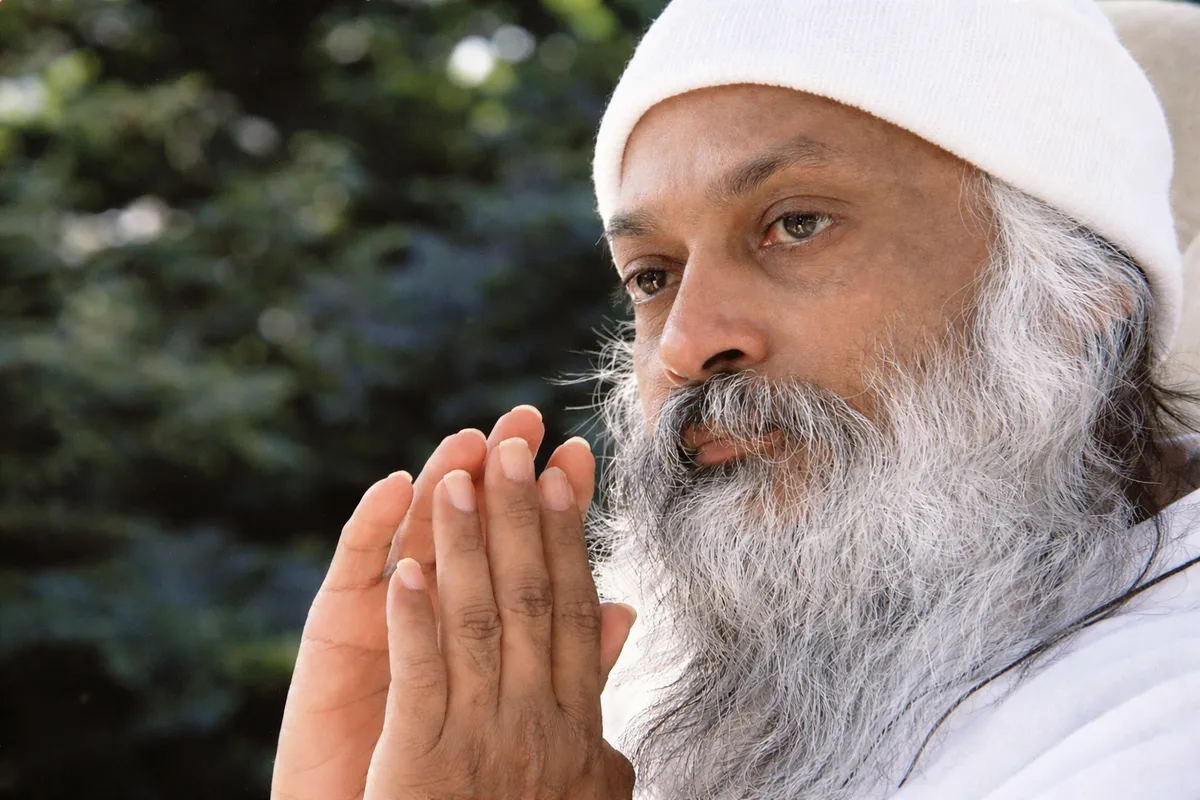
Listen with your heart first so joy flows; then your mind understands naturally—forcing it with the head turns living truth into dry words.
From the Discourses
Passages where Osho speaks to this question — each links to the complete discourse.
Beloved Osho, I used to listen to you without understanding and feel perfectly blissful -- and I've heard you say that this is right listening. Lately I've had an intense desire to understand what you say. At first I was sad; it seemed I had taken a wrong turn. But it feels good: my head tingles and feels intensely alive. Is there anything I can do other than enjoy it?
So it is good to start the journey from the heart. The intelligent man's way is the way of the heart, because the heart is not interested in words; it is interested only in the juice that comes in the containers of the words. It does not collect containers; it simply drinks the juice and throws away the container. The mind does just the opposite: it throws away the juice and collects the containers. Containers look beautiful, and a great collection of containers makes a man a great intellectual giant. If you start the journey from the head you will go on round and round and round inside the head. Your head will become swollen; you will become more egoistic. Hasya was asking me, "Why don't we invite intellectuals, authors, writers, professors to understand you?" This is the problem: they cannot understand. It is good if they read my books;…
Osho, you say the same thing in countless ways. But when I listen to you, it feels as if I am hearing it for the first time. And I feel so much joy that I don’t feel like going back home. What should I do—what can I do—so that I can just keep listening to you!
You will feel as if you have been made to rise out of season, before time—as if you were not yet to go and yet had to go. And if you go in that way, your home will become even more desolate than before. I do not want to make your home desolate; I want to make your home a temple. I want that when you go home, your home’s new form is revealed. I do not want to tear you away from home, from the world, from family life. That is the newness of my sannyas: I do not want to sever you from the world; I want to join you to the world in such a way that your connection with the world becomes a connection with the Divine. Let the world no longer be a barrier between you and the Divine; let it become a means. If…
पहला प्रश्न: ओशो, आप एक ही बात कहते हैं अनेक-अनेक ढंगों से। पर जब आपको सुनता हूं तो उस समय यही लगता है कि पहली बार सुन रहा हूं। और इतना आनंद मिलता है कि वापस घर लौटकर जाने का जी नहीं करता। क्या करूं, मैं क्या करूं कि आपको सुनता ही रहूं!
… ऐसा लगेगा जैसे अभी जाना न था और जाना पड़ा। और अगर ऐसे तुम गये, तो घर और भी उदास हो जाएगा। जितना पहले था, उससे भी ज्यादा। मैं तुम्हारे घर को उदास नहीं करना चाहता। मैं तुम्हारे घर को मंदिर बनाना चाहता हूं। मैं चाहता हूं कि तुम जब घर जाओ, तो तुम्हारे घर का अभिनवरूप प्रकट हो। मैं तुम्हें घर से, संसार से, गृहस्थी से तोड़ नहीं लेना चाहता। वही मेरे संन्यास का अभिनवपन है कि मैं तुम्हें संसार सेे तोड़ नहीं लेना चाहता। …
Osho, in you the impossible has become possible—the unheard-of has happened. And understanding you too seems almost impossible. Why is it so?
If you want to understand, it will become impossible. The very desire to understand creates distance. Listen with love; drop the worry about understanding and the rest. Just listen with love and you will understand. If you set out to understand, you will miss. Why? Because when you sit down to understand, you bring the intellect in between. All the while you are alertly examining: which point is right, which is not; which agrees with logic, which is against logic; which accords with my scriptures, which goes against them. You get caught in this whole tangle. The dust of scripture rises within you like a sandstorm. You forget me altogether. In that storm you catch only fragments; sometimes you hear something as something else. Then you interpret. Then with your own hands you create confusion. These things are not for understanding. These things are for descending into love. Just listen.…
आखिरी प्रश्न: ओशो, आपमें असंभव संभव हुआ है, अघट घटित हुआ है। और आपको समझना भी असंभव सा ही लगता है। ऐसा क्यों?
… समझने की चाह में ही दूरी पैदा हो जाती है। तुम प्रेम से सुनो, समझने इत्यादि की फिकर छोड़ो। तुम सिर्फ प्रेम से सुनो और समझ जाओगे। समझने चले तो चूक जाओगे। क्यों? क्योंकि जब तुम समझने बैठते हो तब तुम बुद्धि को बीच में ले आते हो। तुम पूरे वक्त सजग होकर देख रहे हो कि कौन सी बात ठीक, कौन सी बात ठीक नहीं। कौन सी बात ठीक नहीं। कौन सी बात तर्क के अनुकूल, कौन सी बात तर्क के प्रतिकूल। कौन सी बात मेरे शास्त्र के अनुकूल, कौन सी बात मेरे शास्त्र के प्रतिकूल। तुम इस सब उधेड़बुन में पड़ जाते हो। वह शास्त्र की धूल तुम्हारे भीतर अंधड़ होकर उठने लगती है। तुम मुझे तो भूल ही जाते हो। उस अंधड़ में तुम्हें कभी-कभी कुछ-कुछ सुनाई पड़ता है। कुछ का कुछ भी सुनाई पड़ता है। …
Beloved Osho, when I sit in front of you and listen to you speak, I feel as if a process of osmosis is happening. I find I don't intellectually listen. Is this the right way or am I missing something?
This is the right way. If you listen to me intellectually you miss, not something, but all. Intellectual listening is a kind of deafness. When I say something, you can listen to the word. You have a mind, a library in the mind of all your prejudices, philosophies, ideologies. The word has to go through all those preconceived patterns, and by the time it reaches to you it is no longer the same. It has changed so many times, passing through the whole process of intellectual listening, that when it comes out it is absolutely something else. And yet it appears to be rationally the right thing; it fits with your mind. The process of listening has managed to cut it here and there, change it here and there; to color it here and there, to make it what you want it to be, not what it is. And you…
Question: Second question: Osho, I don’t understand what you say. What should I do? ... Both are unwise. Both were in a hurry. There’s no hurry to be for or against. Patience is needed. The art of listening comes only to the patient. Listen in stillness, in silence. Listen just to listen—“for now, let me simply hear. Listen as you would to the roar of the ocean, the rumble of thunder. At such a time you don’t think, Is it right or wrong? Does it conform to the Vedas? Are the verses of the Quran for or against this mountain stream? You must have heard the story. Three pundits finished their studies in Kashi and set out for home. They halted in a forest at night. In the morning, hungry, they decided to cook. One was a botanist. “You go buy the vegetables; who better than you to choose?
दोनों नासमझ हैं। दोनों ने जल्दी की। न पक्ष में होने की कोई जल्दी है, न विपक्ष में होने की कोई जल्दी है। धैर्य चाहिए! श्रवण की कला केवल उनको ही उपलब्ध हो सकती है जो धैर्यवान हैं। सन्नाटे में सुनो। मौन में सुनो। सिर्फ सुनने के लिए सुनो, कि अभी सुन लें। ऐसे सुनो जैसे कोई सागर के तुमुलनाद को सुनता है, कि बादलों की गड़गड़ाहट को सुनता है। उस वक्त तुम यह थोड़े ही सोचते हो कि ठीक कि गलत, कि वेद से मेल खाती है कि नहीं खाती, कि कुरान की आयतें इस पहाड़ी झरने के पक्ष में हैं कि विपक्ष में! तुमने कहानी सुनी होगी। तीन पंडित काशी से अपनी शिक्षा पूरी करके वापस चले। रात जंगल में रुके, सुबह भूख लगी तो उन्होंने सोचा कि भोजन बनाएं। उनमें एक वनस्पति-शास्त्री था। तो उन्होंने कहा कि तुम वनस्पति-शास्त्री हो, तुम्हीं जाकर सब्जी खरीदो। तुमसे बेहतर और कौन सब्जी खरीद सकेगा? दूसरा दार्शनिक था। …