
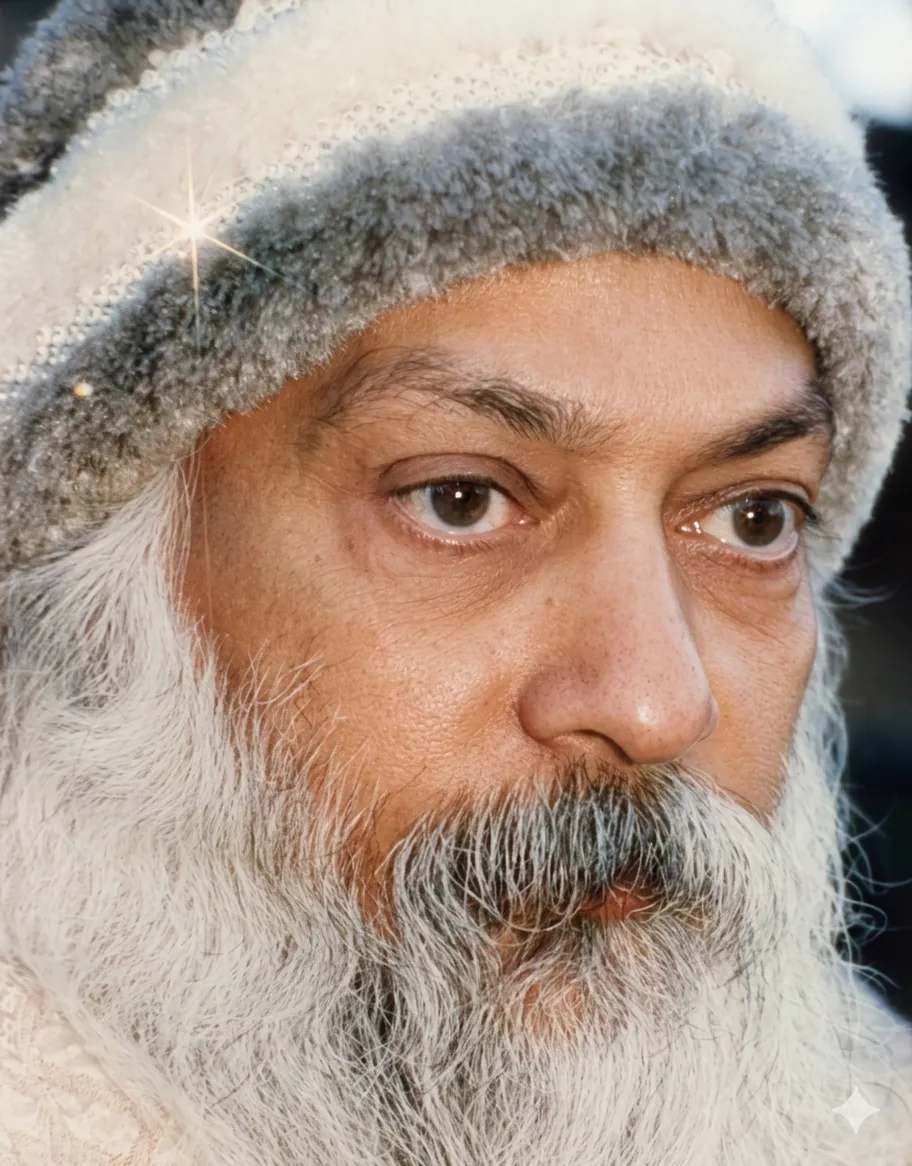
Meeting the Divine is when your little self melts into a vast, joyful wholeness that words can’t explain.
From the Discourses
Passages where Osho speaks to this question — each links to the complete discourse.
Osho, what actually happens in union with the Divine? I fear to ask, yet curiosity will not be satisfied without asking. Forgive me if I am mistaken!
Ramdulare! There is not the slightest mistake. Curiosity is natural. When you set out to seek, what will happen when you find? When you meet the One you are searching for, what will happen? This is the spontaneous feeling that arises in the mind. When the lotus blooms, what fragrance will there be? What color? What form? When nectar showers, the lotuses blossom! When ambrosia rains and you bathe in it again and again, what will the experience be? What ecstasy will arise? This curiosity is completely natural. There is no mistake. And yet there is no way to quiet this curiosity without experience. Without it, it will not rest. However much I say, it is like a mute tasting jaggery—only the one to whom it happens knows. Yes, I can torment you sweetly. I can make you very thirsty. But I cannot tell you what the satiation is like…
अंतिम प्रश्न: ओशो, प्रभु-मिलन में वस्तुतः क्या होता है? पूछते डरता हूं, पर जिज्ञासा बिना पूछे मानती भी नहीं। भूल हो तो क्षमा करें!
रामदुलारे! भूल जरा भी नहीं है। जिज्ञासा स्वाभाविक है। जिसे खोजने चले हैं, उसे खोज कर क्या होगा? जिसकी तलाश पर निकले हैं, उसे मिलने से क्या होगा? यह सहज भाव है मन में उठने वाला। जब कमल खिलेंगे तो कैसी सुवास होगी? कैसा रंग होगा? कैसा रूप होगा? अमी झरत, बिगसत कंवल! जब अमृत बरसेगा, नहा-नहा जाएंगे, तो कैसी अनुभूति होगी? कैसी गदगद अवस्था होगी? यह जिज्ञासा बिलकुल स्वाभाविक है। नहीं कोई भूल है। फिर भी इस जिज्ञासा को शांत करने का कोई उपाय नहीं है। बिना अनुभव के यह शांत नहीं होगी। मैं कितना ही कुछ कहूं, वह तो गूंगे का गुड़ है--जिसे होता है, बस वही जानता है। हां, तुम्हें खूब तड़पा सकता हूं। तुम्हें खूब प्यासा कर सकता हूं। मगर यह नहीं कह सकता कि जब तुम सरोवर पर पहुंच जाओगे और अंजुलि भर-भर कर पीओगे, तो जो तृप्ति होगी वह कैसी होती है!
Osho, when I listen to you, every word sinks to the depths of my heart and stirs me. But when I read you, it remains a mental game. Please tell me why this happens.
It’s plain. The arithmetic is simple. When you read, only you are there; I am not. What you read is nothing but you. It becomes a game of the mind. When you listen to me, then sometimes—knowingly or unknowingly—I also slip into you. You seldom give such a chance, but now and then a lapse happens on your side. Unaware, you leave the door a little open—and I come in. So when you are hearing me, it’s a different matter. That is why truth has always been spoken, not written. It cannot be written. Even speaking it is very difficult, yet it can still be said—at least a little can be said, a little news can be given. Because in speaking, many elements are involved that are lost in writing. When you read a book, the book is dead. A book cannot create an atmosphere around you. A book has…
आखिरी प्रश्न: ओशो, जब आपको सुनता हूं तो आपका प्रत्येक शब्द दिल की गहराई तक उतर जाता है और हलचल पैदा करता है। लेकिन जब आपको पढ़ता हूं तो वह दिमागी खेल बनकर रह जाता है। कृपया बताएं कि ऐसा क्यों होता है?
साफ-साफ है। गणित बिलकुल सीधा है। जब तुम पढ़ते हो तब तुम्हीं होते हो, तब मैं नहीं होता। जो तुम पढ़ते हो, वह तुम ही तुम हो। दिमागी खेल बनकर रह जाता है। जब तुम मुझे सुनते हो तो कभी-कभी तुम्हारे जाने-अनजाने मैं भी तुम में प्रवेश कर जाता हूं। कम ही तुम ऐसा मौका देते हो। लेकिन कभी-कभी चूक तुमसे हो जाती है। कभी-कभी बे-भान, तुम जरा दरवाजा खुला छोड़ देते हो, मैं भीतर आ जाता हूं। इसलिए तुम जब मुझे सुन रहे हो तो बात और है। इसलिए सत्य सदा कहा गया है, लिखा नहीं गया। लिखा जा नहीं सकता। कहना भी बहुत मुश्किल है, लेकिन फिर भी कहा जा सकता है, थोड़ा-सा कहा जा सकता है। ऐसी थोड़ी-सी खबर दी जा सकती है। क्योंकि कहने में कई बातें सम्मिलित हैं, जो लिखने में खो जाती हैं।
I am not saying that the mind has to be destroyed; it has only to be put aside so when you need to you can use it. It is like your car parked in the garage: when you want to use it you can take it out of the garage, then you are the master. But ordinarily the situation has become just the reverse: the car insists on not going into the garage. The car says "I am not going to stop," the car says "You have to run with me," and it goes on running twenty-four hours a day. Even while you are asleep the mind goes on and on. Ordinarily once it starts in childhood it never stops before death, unless somebody starts moving into meditation. Those are the very fortunate few people who enter into meditation.
Osho, what is the relationship between meditation and patience?
If you sit to meditate to remove mental restlessness, you will keep looking back again and again: “Has it gone yet?” And the irony is that when you begin to meditate, restlessness will increase. Because what has been repressed will start surfacing; catharsis will begin. The rubbish you have kept hidden within and never allowed to express—meditation will break open those doors too. It will clean the house. Dust piled up for years, for births, will rise again; there will be gusts and storms. For a while even the little peace you had will be lost. Then you will panic: “I came for peace, and even what I had is gone.” Without patience, you could even become unhinged, because meditation brings such a great storm. The disease is not from a day or two; it’s from lifetimes. Meditation will break through all the layers to reach your innermost core. In…
दूसरा प्रश्न: ओशो, ध्यान और धैर्य में क्या संबंध है?
अगर मन की अशांति को मिटाने के लिए तुम ध्यान करने बैठे हो, तो तुम बार-बार लौटकर देखोगे, अब तक मिटी नहीं! और मजा तो यह है कि जब ध्यान शुरू करोगे, तो अशांति बढ़ेगी। क्योंकि जो दबी पड़ी है, वह भी प्रकट होगी। जो सदा-सदा से दबाई है, उसका भी रेचन शुरू होगा, कैथार्सिस होगी। जो कूड़ा-करकट भीतर छिपाकर बैठे रहे हो, प्रकट नहीं किया है, ध्यान उन द्वारों को भी तोड़ेगा। घर की सफाई करेगा। वर्षों की जमी धूल, जन्मों की जमी धूल उठेगी फिर से, अंधड़-तूफान होंगे। कुछ देर तो थोड़ी-बहुत जो शांति तुम्हारे पास थी, वह भी खो जाएगी। …
Osho, is the experience of the Divine different for each person?
Think of it like this: you go home from this garden, and your children say, “Tell us—what was the garden like?” A painter might tell you by making a painting: “It was like this.” A poet will write a poem—of the trees, of the winds passing through them, of the sun filtering between their leaves. Now a poem and a painting differ greatly. Or perhaps someone is a musician; he will not even write a poem—he will lift his vina. Why write? The winds passed through the trees and there was sound and resonance—he will reproduce that resonance on the vina. The colors in the trees he will translate into tones. The sun and shade he will pour into music. He will play the garden on his vina. Another will write a poem; another will render it on paper. The three expressions will differ. And if you look only at…
तीसरा प्रश्न: ओशो, क्या परमात्मा का अनुभव भी प्रत्येक का अलग-अलग होता है?
ऐसा ही समझो कि इस बगीचे से तुम गए घर, और किसी ने तुमसे कहा--तुम्हारे बच्चों ने कहा कि हमें भी तो कुछ बताओ कि बगीचा कैसा था? जो चित्रकार होगा, वह शायद चित्र बना कर बता देगा कि ऐसा था। जो कवि होगा, वह एक कविता लिखेगा--वृक्षों की, वृक्षों के बीच से गुजरती हवाओं की, वृक्षों के बीच-बीच से छनती सूरज की किरणों की, वह कविता लिखेगा। अब एक कविता में और एक चित्र में बड़ा फर्क है। या हो सकता है कोई संगीतज्ञ हो, वह कविता भी नहीं लिखेगा, वह अपनी वीणा उठा लेगा। क्यों लिखे कविता? हवाएं गुजरती थीं वृक्षों से और आवाज होती थी और नाद पैदा होता था, वह वीणा पर वही नाद पैदा कर देगा। रंग थे वृक्षों में, रंगों को वह ध्वनियों में बदल देगा। धूप-छांव थी, वह धूप-छांव को संगीत में उतार देगा। वह अपनी वीणा पर बजाएगा बगीचे को। कोई कविता में लिखेगा, कोई कागज पर उतारेगा।