
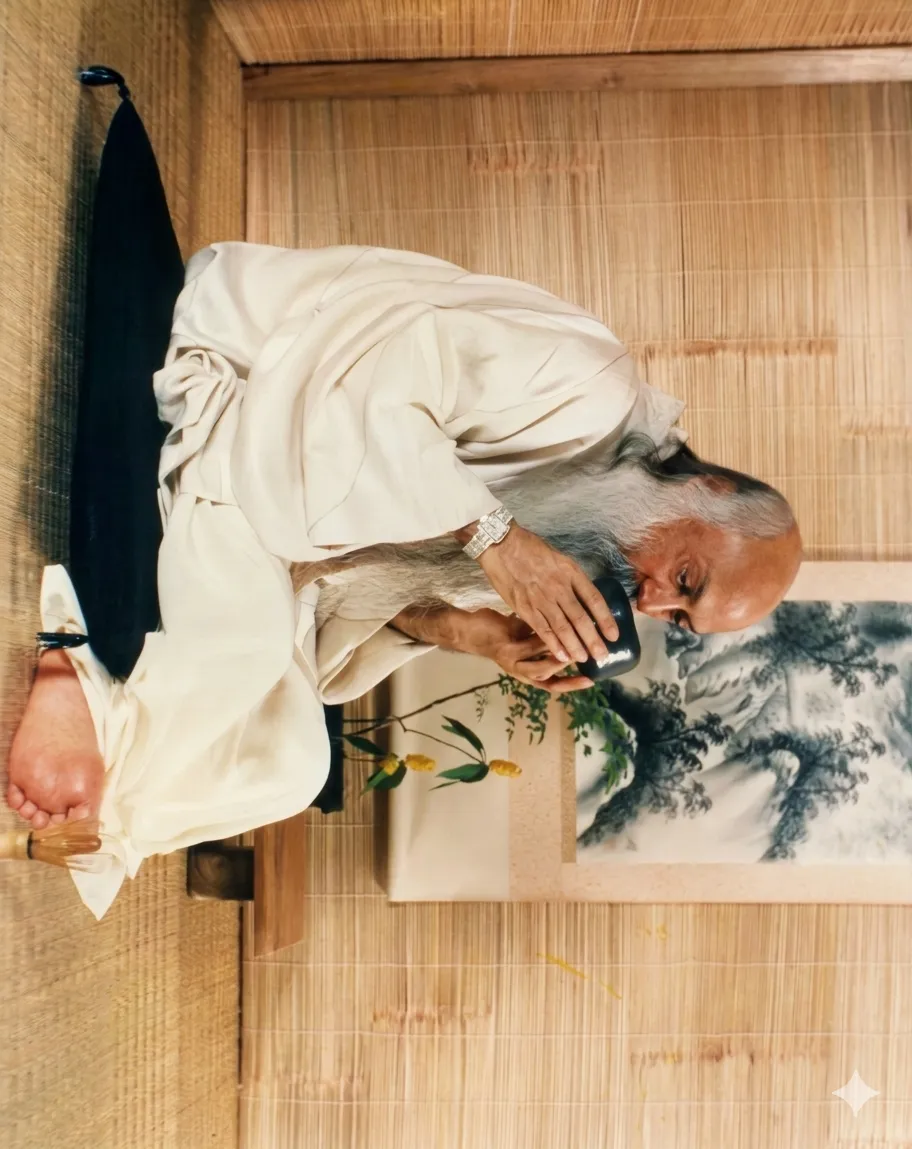
Don’t try to fix yourself first; fully accept what you are now, and what doesn’t belong will drop away by itself.
From the Discourses
Passages where Osho speaks to this question — each links to the complete discourse.
Yes: does “removing the condition” mean that the life which has been running under conditions up to now is not meant to remove the condition?
No, it is not a matter of removing. That is why I am telling you: a natural life is a life of acceptance, not of removal. If desire is in you, then it is—accept it; what is the point of talking about removing it? And the moment there is total acceptance, naturalness bears fruit. There is anger within me. One approach is: let me remove it, then a natural life will blossom. But a so‑called natural life that blossoms on the condition that anger has first been removed cannot be natural. If there is anger in me, I agree to it—because there is no other way. I have found anger just as I have found my eyes, just as I have found my hands—I have found anger like that too. There is anger. I neither suppress it nor try to remove it. It is there; I accept it. And the…
प्रश्न: हां, शर्त को हटाना कि मानी यह होती है कि आज जो चला है शर्त से जीवन, वह शर्त को हटाने के लिए नहीं होता है।
न, हटाने की बात नहीं है। इसलिए मैं कह रहा हूं आपसे कि सहज जीवन स्वीकार का जीवन है, हटाने का जीवन नहीं है। अगर आपमें इच्छा है तो है, इसे स्वीकार करें, हटाने की क्या बात है। और जैसे ही पूर्ण स्वीकृति होगी, सहजता फलित होगी। मेरे भीतर क्रोध है, तो एक उपाय तो यह है कि इसको मैं हटाऊं, तब सहज जीवन फलित होगा। लेकिन क्रोध के हटाने की शर्त पर जो सहज जीवन फलित होगा, वह सहज नहीं हो सकता। मुझमें क्रोध है इसके लिए मैं राजी हूं, क्योंकि कोई उपाय नहीं है। क्रोध है, इसे मैंने पाया--जैसे मैंने आंख पाईं, जैसे मैंने हाथ पाया--ऐसा क्रोध भी पाया। क्रोध है। इसे मैं न दबाता, न इसे मैं हटाता, यह है, इसे मैं स्वीकार करता हूं। और जैसे ही मैं इसे स्वीकार करता हूं--यह हटता है, हटाया नहीं जाता--तब बेशक सहजता फलित होती है। हटाए जाने में तो शर्त है, हट जाना और बात है।
Osho, you have earlier said, “Live moment to moment, live in the present.” Now you are saying, “Return to the past.” What should we do?
So it is with the mind—there are ruts. The past means endless grooves. However much you understand, your intellect agrees, you make decisions, you resolve—at the moment of resolve you feel something is going to change. But not even an hour passes before your decision breaks. Then only self-condemnation is produced, nothing else. Your saints, your fakirs, your priests and pundits—most of the time they only succeed in producing self-condemnation in you, nothing else. Their words are logically correct. You cannot even say they are wrong; you have to admit they are right. In that admission you take a decision. But against what are you deciding? Inside are grooves carved since who knows when, deep tracks. Walking in them has become a habit. It is easy to walk in them. They will pull you again and again. The meaning of returning into the past is: these grooves must be erased.…
दूसरा प्रश्न: ओशो, आपने पहले कहा है, क्षण-क्षण जीयो, वर्तमान में जीओ। अब आप कह रहे हैं, अतीत में लौटो। हम क्या करें?
ठीक मन पर लीकें हैं। अतीत का अर्थ है, अनंत लीकें। तो आप कितनी ही बातें समझ लेते हैं; बुद्धि सहमत हो जाती है; निर्णय ले लेते हैं; संकल्प कर लेते हैं। और जब संकल्प करते हैं, तब सोचते हैं कि कुछ होने-जाने वाला है। घड़ी भी नहीं बीत पाती कि जो आपने निर्णय लिया था, वह टूट जाता है। और तब सिर्फ आत्मग्लानि पैदा होती है, और कुछ भी नहीं। आपके संत, आपके फकीर, आपके पंडित-पुरोहित, आप में सिर्फ आत्मग्लानि पैदा करवा पाते हैं और कुछ भी नहीं। क्योंकि उनकी बातें तो तर्कयुक्त हैं। आप भी कह नहीं सकते कि वे गलत कह रहे हैं। स्वीकार करना पड़ता है कि ठीक कह रहे हैं। उस स्वीकृति में आप निर्णय लेते हैं। लेकिन निर्णय किसके खिलाफ ले रहे हैं! न मालूम कितनी लंबी लकीरें भीतर हैं, गहरे खांचे हैं। उनमें चलने की आदत हो गई है। उनमें चलना सुगम है। …
Osho, what is the definition of God?
Words are very small. If you say God is light, then what of darkness? The scriptures have said that God is light. Suppose we accept this as a definition—then what about darkness? Where will darkness go? Darkness is too; in fact it is far more than light. Light sometimes is and sometimes is not; darkness is always, eternal. Where will you place darkness? If you say God is light, darkness is left out. If you say God is darkness, then light is left out. If you say God is both darkness and light, a contradiction arises: they cannot be together. Try to have both darkness and light in the same room. If you bring in light, darkness disappears; if you preserve darkness, you cannot have light. Then how can both be together? That becomes an impossibility. So you cannot say “both” either. Then the fourth device is to say: it…
पहला प्रश्न: ओशो, परमात्मा की परिभाषा क्या है?
शब्द तो बड़े छोटे-छोटे हैं। अगर कहो परमात्मा प्रकाश है, तो फिर अंधेरे का क्या होगा? ऐसा कहा है शास्त्रों में कि परमात्मा प्रकाश है। चलो मान लें इसे परिभाषा, फिर अंधेरे का क्या होगा? फिर अंधेरा कहां जायेगा? अंधेरा भी है, प्रकाश से कहीं ज्यादा है। प्रकाश तो कभी होता है कभी नहीं भी होता; अंधेरा सदा है, शाश्वत है। अंधेरे को कहां रखोगे? अगर कहा परमात्मा प्रकाश है, तो अंधेरा बाहर पड़ गया। अगर कहा परमात्मा अंधेरा है, तो प्रकाश बाहर पड़ गया। अगर कहो परमात्मा अंधेरा प्रकाश दोनों है, तो विरोधाभास होता है। दोनों एक साथ हो नहीं सकता। एक ही कमरे में अंधेरा और प्रकाश करके दिखाओ। प्रकाश करोगे, अंधेरा खो जायेगा; अंधेरा बचाओगे, प्रकाश न कर सकोगे। तो दोनों साथ कैसे होंगे? तब एक असंभव बात हो गई। तो यह भी नहीं कह सकते कि दोनों है।
You say, Osho, don’t try to be something, to become, to attempt “becoming”—just be, just being. Please explain in detail how this is to be attained.
The very moment you ask how to practice it, you miss the understanding. Because “to practice” already means the effort to become something has begun. When I say, remain as you are, just as you are, the question of practice does not arise. Practice means you have started trying to be what you are not. So you have not understood. Any practice implies discontent; there is no fulfillment in being as you are. The mind says, let something more happen. A little money—let’s gather more. A little knowledge—accumulate more. A little renunciation—become a great renunciate. A slight taste of meditation—let’s manufacture the taste of samadhi. It is all the same; there is no difference. The issue is neither money nor meditation; the issue is the demand for “more.” So whether you ask for wealth you remain worldly, and even if you ask for meditation you remain worldly. Wherever there is…
पहला प्रश्न: आप कहते हैं कि ओशो, कुछ होने, बनने या बिकमिंग की चेष्टा मत करो, बस जो हो वही हो रहो--जस्ट बीइंग। विस्तार से बताएं कि यह कैसे साधा जाए?
साधने की बात ही पूछी कि समझने से चूक गए। क्योंकि साधने का अर्थ ही यह होता है कि कुछ होने की चेष्टा शुरू हो गई। जब मैं कहता हूं, जो हैं, जैसे हैं, वैसे ही रहें, तो साधने का सवाल नहीं उठता। साधने का तो मतलब ही यह है कि जो हम नहीं हैं वह होने की कोशिश शुरू हो गई। तो समझे नहीं। कुछ भी साधने का अर्थ है कि असंतोष है; जैसे हैं वैसे होने में तृप्ति नहीं है। मन कह रहा है, कुछ और हो जाएं। थोड़ा धन है, ज्यादा धन इकट्ठा कर लें। थोड़ा ज्ञान है, ज्यादा ज्ञान इकट्ठा कर लें। थोड़ा त्याग है, और बड़े त्यागी हो जाएं। ध्यान का थोड़ा-थोड़ा रस आ रहा है, समाधि का रस बना लें। सभी एक सा है; कुछ फर्क नहीं। क्योंकि सवाल न धन का है और न ध्यान का, सवाल तो और ज्यादा की मांग का है।
He said, “You are right.” And I said, “For the same ego you now say you want to be free of anger, because anger hurts your ego. So behind anger is ego, and behind becoming non-angry too is ego. Whenever you are angry, your image falls; your ego does not like that. You want people to worship you as a saint, to touch your feet. Because of your anger all that gets disturbed. Who will touch your feet? Who will bow to you? So now you want to be free of anger. But the root remains the same. The ego because of which you were angry—that very ego now wants to become a saint. Understand this—and drop choosing. I say to you, you are angry: agree—fine, I am angry. And the consequences of anger will be—let them be. No one will respect you—fine; why should they? Someone will insult you—fine.
उसने कहा, आप ठीक कहते हैं। और मैंने कहा, उसी अहंकार के कारण तू कहता है कि मुझे क्रोध से बाहर होना है, क्योंकि क्रोध के कारण अहंकार को चोट लगती है। तो क्रोध के पीछे भी अहंकार है और अक्रोधी बनने के पीछे भी अहंकार है। जब भी तू क्रोध करता है तो तेरी प्रतिमा नीचे गिरती है, तेरे अहंकार को भाता नहीं है। तू चाहता है कि लोग तुझे संत की तरह पूजें, चरण छुएं तेरे। तेरे क्रोध के कारण वह सब गड़बड़ हो जाता है। तेरे कोई चरण नहीं छूता। चरण कौन तेरे छुए? नमस्कार कौन करे तुझे? तो अब तू चाहता है कि क्रोध से कैसे छूटें। लेकिन मूल जड़ तो वही की वही है। जिसके कारण तू क्रोध करता था--जिस अहंकार के कारण--वही अहंकार अब संत- महात्मा बन जाना चाहता है। इसे समझ और अब तू चुनाव छोड़ दे। मैं तुझसे कहता हूं, तू क्रोधी है, तू राजी हो जा: ठीक है, मैं क्रोधी हूं। और क्रोध के जो परिणाम हैं, वे होंगे। कोई तुझे सम्मान नहीं देगा, ठीक है, बिलकुल ठीक है। सम्मान देना ही क्यों चाहिए। कोई तेरा अपमान करेगा, ठीक है। …