
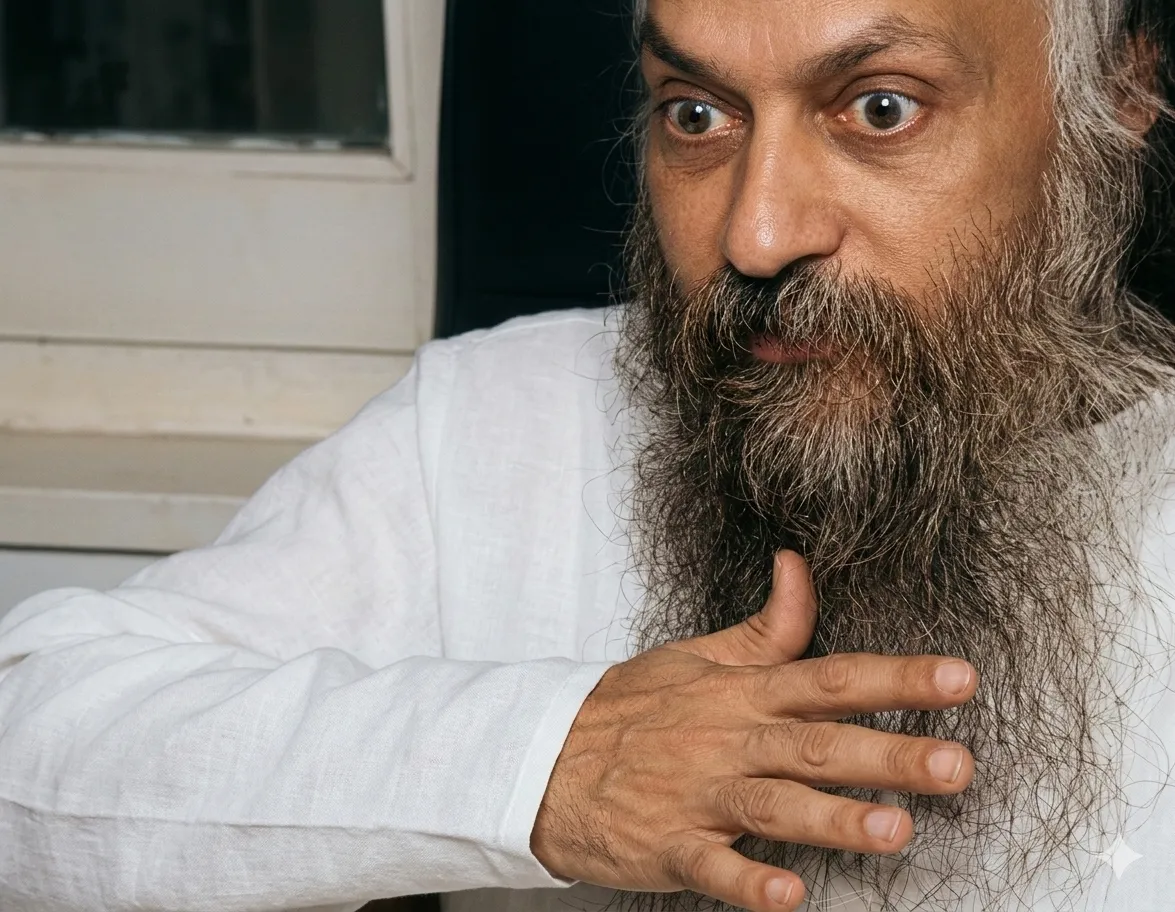
Being total means welcoming all of you—smart and silly, knowing and not knowing—without picking sides.
From the Discourses
Passages where Osho speaks to this question — each links to the complete discourse.
You say that lao tzu is for the rarest of seekers. Then how do you call him total?
This is a wise and foolish man -- he looks foolish but he is very wise in his foolishness; he looks very wise but he is behaving like a fool. If you understand life, the deeper you go the deeper you will understand that the whole is worth choosing. That means there is no need to choose. Choice will dissect the whole and whatsoever you get will be fragmentary and dead. Wisdom and foolishness are together in life; if you dissect them then wisdom will be separate and foolishness will be separate, but both will be dead. The greatest art of life is to let them grow together in such a balance that your wisdom carries a certain quality of foolishness, and your foolishness carries a certain quality of wisdom. Then you are total. That's why: rarest are the seekers who will go to Lao Tzu. He will seem to…
Question: ON THE ABSOLUTE TAO THE TAO THAT CAN BE TOLD OF IS NOT THE ABSOLUTE TAO ON THE RISE OF RELATIVE OPPOSITES WHEN THE PEOPLE OF THE EARTH ALL KNOW BEAUTY AS BEAUTY, THERE ARISES (THE RECOGNITION OF) UGLINESS. WHEN THE PEOPLE OF THE EARTH ALL KNOW GOOD AS GOOD, THERE ARISES (THE RECOGNITION OF) EVIL. THEREFORE: BEING AND NON-BEING INTERDEPEND IN GROWTH; DIFFICULT AND EASY INTERDEPEND IN COMPLETION; LONG AND SHORT INTERDEPEND IN CONTRAST; HIGH AND LOW INTERDEPEND IN POSITION; TONES AND VOICE INTERDEPEND IN HARMONY; FRONT AND BEHIND INTERDEPEND IN COMPANY. THEREFORE THE SAGE: MANAGES AFFAIRS WITHOUT ACTION; PREACHES THE DOCTRINE WITHOUT WORDS; ALL THINGS TAKE THEIR RISE, BUT HE DOES NOT TURN AWAY FROM THEM; HE GIVES THEM LIFE, BUT DOES NOT TAKE POSSESSION OF THEM; HE ACTS, BUT DOES NOT APPROPRIATE; ACCOMPLISHES, BUT CLAIMS NO CREDIT.
This energy comes from the ego’s struggle. That is why you see a certain glow on the faces of fighting sannyasins—not from tapascharya. They are engaged in such a battle where the ego finds great nourishment. Your battles are petty; whenever you go to them, they say, ‘What are you doing? What are you gathering—perishable wealth? What is there in this life? Come to us. We are seeking the eternal life; the treasure that never perishes.’ He is fighting a big battle. In that big battle there is a glow, a freshness; he remains steady. But that battle is constructing the ego. And remember, the ego’s glow is diseased, and the ego’s glow is poisonous. Lao Tzu says: Tao is the flow of all things; like a flood, Tao is streaming in every direction. Everything is to be accepted; there is nothing here to be rejected.
यह शक्ति आती है अहंकार के संघर्ष से। इसलिए आप देखते हैं कि संन्यासी के चेहरे पर जो रौनक दिखाई पड़ती है--लड़ने वाले संन्यासी के चेहरे पर--वह रौनक कुछ तपश्चर्या का कारण नहीं है। वह एक ऐसी लड़ाई में लगा हुआ है जहां अहंकार की तृप्ति की बड़ी सुविधा है। आपकी लड़ाई दो कौड़ी की है। इसलिए जब भी आप उसके पास जाएंगे, वे कहेंगे: क्या कर रहे हो! क्या इकट्ठा कर रहे हो क्षणभंगुर संपदा! इस जीवन में क्या रखा है! हमारी तरफ आओ। हम उस जीवन को खोज रहे हैं जो शाश्वत है; हम उस संपदा की तलाश में है जो कभी नष्ट नहीं होती। वह एक बड़ी लड़ाई लड़ रहा है। उस बड़ी लड़ाई में उसमें रौनक है, ताजगी है; वह टिका हुआ है। लेकिन वह लड़ाई अहंकार को निर्मित कर रही है। और ध्यान रहे, अहंकार की रौनक रुग्ण है, और अहंकार की रौनक विषाक्त है।
Do they simply have to be endured? They do have to be endured. So his freedom is not license. There is a deep check upon it. He is free in that he can act contrary to nature. But whatever consequences arise from acting contrary—painful ones—he will have to endure them.
This kind of man is not what we ordinarily call a “seeker.” The seeker we speak of is usually a reaction to the householder. If the householder runs a shop, the seeker does not; if the householder earns wealth, the seeker renounces it; if the householder marries, the seeker does not. But his rules are derived from the householder—he is only a reaction. Lao Tzu says, “I am no one’s reaction. It does not matter what others do. I neither follow anyone to do as he does, nor go against anyone to do the opposite. I let happen what arises from within.” Allowing nature to happen means not imitating anyone, not copying anyone, not building one’s personality in opposition to anyone. Whatever can happen from within, whatever wants to happen—we allow it. No obstruction, no condemnation, no opposition, no struggle, no conflict. Let what happens, happen. This means dropping notions…
प्रश्न: झेलने ही पड़ते हैं? वे झेलने ही पड़ते हैं। तो उसकी स्वतंत्रता स्वच्छंदता नहीं है। उस पर एक गहरी रुकावट है। स्वतंत्र है वह कि वह प्रकृति से प्रतिकूल काम करे। लेकिन प्रतिकूल काम करने से जो भी परिणाम होंगे दुखद, वे उसे झेलने ही पड़ेंगे।
… हम जिसे साधक कहते हैं वह आमतौर से, हम जिसे साधारण आदमी कहते हैं, उससे विपरीत होता है। अगर यह आदमी दुकान करता है तो वह आदमी दुकान नहीं करता। अगर यह आदमी धन कमाता है तो वह आदमी धन छोड़ देता है। अगर यह आदमी विवाह करता है तो वह आदमी विवाह नहीं करता। लेकिन उसके करने का जितना भी नियम है वह इसी गृहस्थ से मिलता है। वह सिर्फ इसका रिएक्शन होता है। लाओत्से कहता है कि हम किसी के रिएक्शन नहीं हैं, हम किसी की प्रतिक्रिया नहीं हैं। कौन क्या करता है, इससे प्रयोजन नहीं है। न हम किसी के पीछे जाते कि वैसा करें जैसा वह करता है, न हम किसी के प्रतिकूल जाते हैं कि वैसा करें जैसा वह नहीं करता है। हम तो वही होने देते हैं जो हमारे भीतर से होता है। स्वभाव को होने देने का मतलब यह है कि हम किसी का अनुकरण न करें, किसी की नकल न करें, किसी के विरोध में आयोजन न करें अपने व्यक्तित्व का। …
Osho, from the exposition of Lao Tzu’s nondual philosophy it is clear that he had attained supreme knowing. Then why is it that only a handful in the world have taken his vision of life as their guiding light? Is this very lack of acceptance not a harsh criticism of his standpoint? And does the wide adoption of Aristotle not prove the excellence of his science? Please throw light on this!
These statements of Lao Tzu are among the finest ever uttered by man. He stands on the last frontier where nothing more can be said—beyond is silence. On that ultimate boundary he says a few things. Only when someone reaches there can he understand; if he does not, he cannot. In that, there is no fault of Lao Tzu. And there are some things you will not know until they become part of your own experience. A small child—if you tell him things that are not part of his experience—will hear like a deaf person; he will forget. They will not even be imprinted on his memory, because only that is imprinted which matches experience. Our experience must resonate somewhere. What Lao Tzu says does not match our experience anywhere. That his book survives at all—is that not something! His words do not meet our experience anywhere. Lao Tzu says:…
प्रश्न: ओशो, लाओत्से के अद्वैत मूलक दर्शन की व्याख्या से पता चलता है कि वह परम ज्ञान को उपलब्ध हो चुका था। फिर क्या कारण है कि संसार के इने-गिने लोगों ने ही उसके जीवन-दर्शन को अपना मार्ग-दर्शक बनाया? क्या उसकी यह विफलता ही उसके दृष्टिकोण की कटु आलोचना नहीं है? और क्या अरस्तू का अपनाया जाना उसके विज्ञान की उत्कृष्टता का प्रमाण नहीं है? कृपया इस पर प्रकाश डालें!
ये जो लाओत्से के वक्तव्य हैं, ये श्रेष्ठतम वक्तव्यों में से कुछ हैं, जो मनुष्य ने कभी भी दिए हैं। बहुत आखिरी जो कहा जा सकता है, जिसके आगे कहने का कोई उपाय ही नहीं बचता, उस बाउंड्री लैंड पर, उस सीमांत पर लड़खड़ाता हुआ आदमी है लाओत्से, जिसके पार निःशब्द है। बस आखिरी सीमा पर वह कुछ कह रहा है। तो वहां तक जब कोई पहुंचता है, तो समझ में आता है; नहीं पहुंचता, तो नहीं समझ में आता है। उसमें लाओत्से का कसूर नहीं है। फिर कुछ बातें हैं, जो तब तक आपको पता नहीं चलेंगी, जब तक आपके अनुभव का हिस्सा न बन जाएं। एक छोटा बच्चा है। उससे हम कुछ ऐसी बातें करें, जो उसके अनुभव का हिस्सा नहीं हैं। सुन लेगा, बहरे की तरह; भूल जाएगा। वे उसकी स्मृति में भी टंकेंगी नहीं। क्योंकि स्मृति में वही टंक सकता है, जो अनुभव से मेल खा जाए। भूल जाएगा। हमारा अनुभव भी तो कहीं मेल खाना चाहिए! अब लाओत्से जो भी कहता है, हमारा अनुभव कहीं भी मेल नहीं खाता। बस लाओत्से की किताब बची है, यही क्या कम है! …