
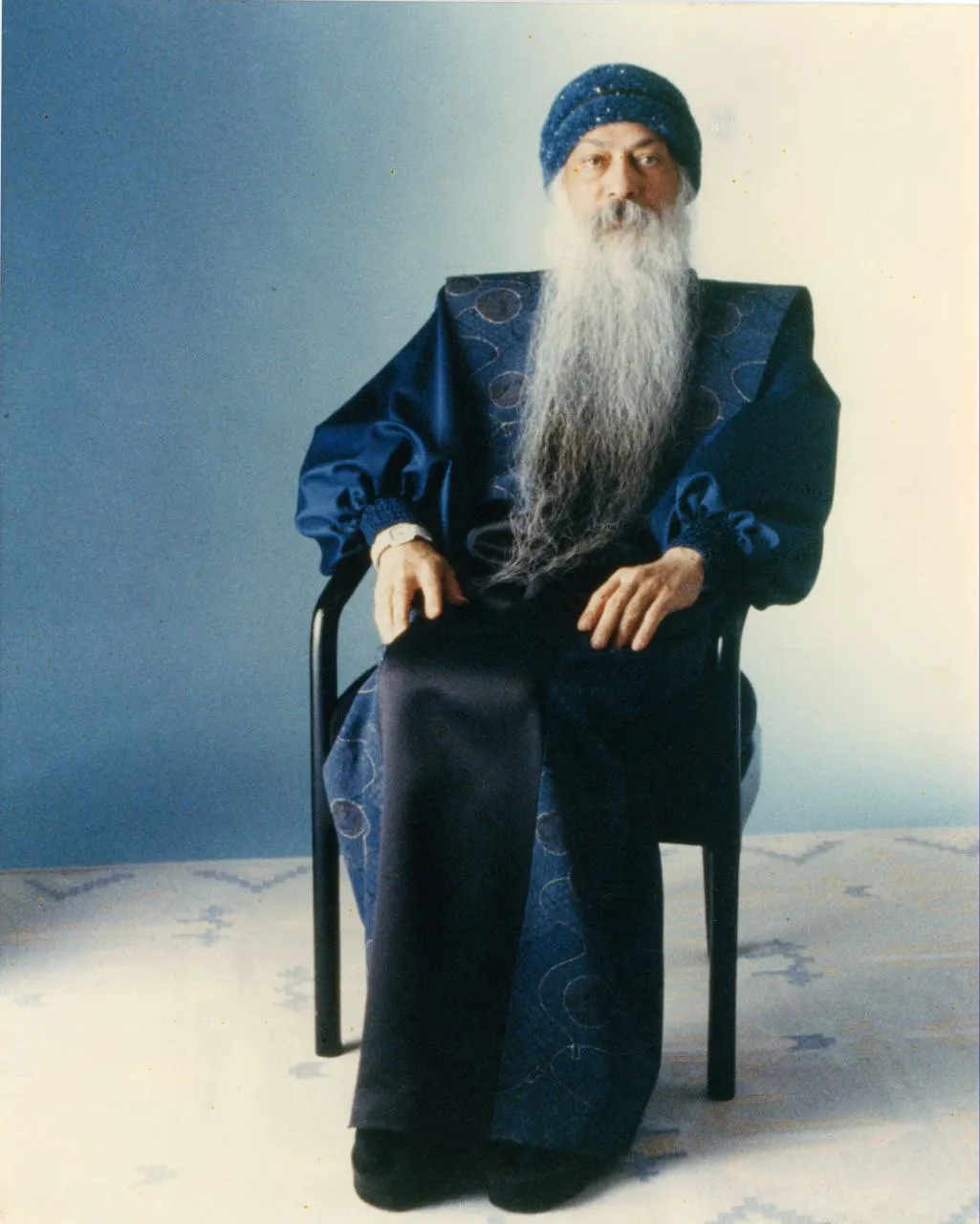
Money and status aren’t bad—stay mindful, don’t make them your identity, and use them kindly, leaving them at work.
From the Discourses
Passages where Osho speaks to this question — each links to the complete discourse.
Osho, what are your views on wealth and position?
Let position not make you mad. Let it not unhinge you. Use the office; don’t identify with it. After all, some people will have to do certain jobs—someone will have to be a collector, someone a commissioner, someone a governor, someone a station master, someone a headmaster, a principal, a vice-chancellor… These functions will continue. But the meditator does not identify with them. He does not become stiff because of them. He knows the cobbler who makes shoes is doing work just as useful as the president. Therefore he does not regard himself as superior, because the one who makes shoes is as indispensable as anyone else. No hierarchy, no caste order arises of “I am above, you are below”; no ladders get built. Everyone is engaged in what is necessary for society. Each does what he can, what gives him joy. The day position no longer dominates you, there…
Osho, why am I afraid of your neo-sannyas? I do not feel even a little afraid of the old-style sannyas.
Does any Jain read the Gita? Could a Jain really understand it? Impossible. He would find himself opposed at every turn; anger would arise at every step. He would find arguments against Krishna immediately. For Krishna tells Arjuna, “Do whatsoever God wills.” The Jain will say, “And if God is making him renounce, why are you making him fight? How can you decide what God wants?” If Arjuna were truly a Jain, he would have thrown down the Gandiva bow and said, “All right. Now I shall do only what God makes me do. God says, ‘Take the peacock-feather whisk and the begging bowl; sit under a tree; do tapas.’ It is the voice of my inner self!” You know this “voice of conscience.” Delhi politicians have popularized—or polluted—the phrase. Whenever they need to come or go, suddenly their “inner voice” is heard! Krishna deluded him—that is how Jains will…
Osho, I want to be rich, I want a high position, and I want a beautiful woman too. What should I do?
A man once placed an advertisement—meant for people like you: “Send two rupees and learn the formula to become a millionaire overnight.” Now who wouldn’t want to become a millionaire for two rupees! Almost a hundred thousand people sent their money. A week later, everyone who had sent the two rupees received the reply: “Do exactly what I did.” He had indeed become a millionaire overnight! One lakh people sent two rupees each—two lakhs landed in his lap. This is how you’re being duped—through gambling, matka. And it’s not only people who run these scams; governments do it too. Governments that claim to be Gandhian run lotteries! A lottery is gambling—a cheat dressed up nicely. But the greedy get hooked: “Just one rupee for a chance at lakhs. If it comes once, that’s enough…!” But what will you do after getting lakhs? There’s a famous story by Tolstoy: A tailor…
Osho, I have everything, but not peace. I have capital, position, prestige, but no happiness. What should I do?
Those who had never borne a load in their lives were trudging under heavy bundles: gold, silver, coins, ornaments, diamonds and jewels, a thousand precious objects. And still they wept, for so much had to be left behind. One cannot carry one’s entire house. They wept for what was left; and they were crushed by what they carried. Death in both: sorrow for what was abandoned, suffering from what was borne. In the entire caravan there was only one man who had nothing to carry. Empty-handed, head held high, chest straight, he walked in great serenity. Not only that—amidst the weeping crowd he alone was humming a song. This was the philosopher Bias. A woman said compassionately, “Oh! Poor fellow, how destitute he is—he has not even anything to take with him!” Even beggars were carrying bundles. No beggar is so beggarly that he has nothing to carry; it may…
Osho, until now there have been two kinds of seekers. Those who went on the inner journey minimized their relationship with the outer world. Those who set out on conquests in the outer world had no awareness of the inner. You have given us a new dimension of living—that we must complete our journey in both directions. But the sprouts of silence and peace that arise from meditation and satsang get crushed in the external hustle and bustle. And the morbidity and politics we become habituated to in the struggles outside turn into chains on the inner journey. Master, please bless us with the compa
Psychology says: become like Narcissus and you become deranged, ill. And your prevalent approach to the inner journey has been Narcissus-like—close yourself in; you are everything; nothing exists outside you. Close all doors and windows—let no sun, no breeze enter, no moonlight, no starlight; let no sound be heard outside—close the ears, shut the eyes! There are stories of saints gouging out their eyes lest they be attracted by forms, piercing their ears lest music affect them. These are symptoms of derangement. The natural result was that very few people became interested in such a religion—only those slightly unbalanced found a rationale for their imbalance, because madness began to look spiritual. This may surprise you, but remember: in Western countries, where religion’s influence has waned, more people become insane. This gives Indian egotists an opening: “See, although we are poor, lacking science, technology, money, food, jobs, clothes, roofs; diseases, famines,…