
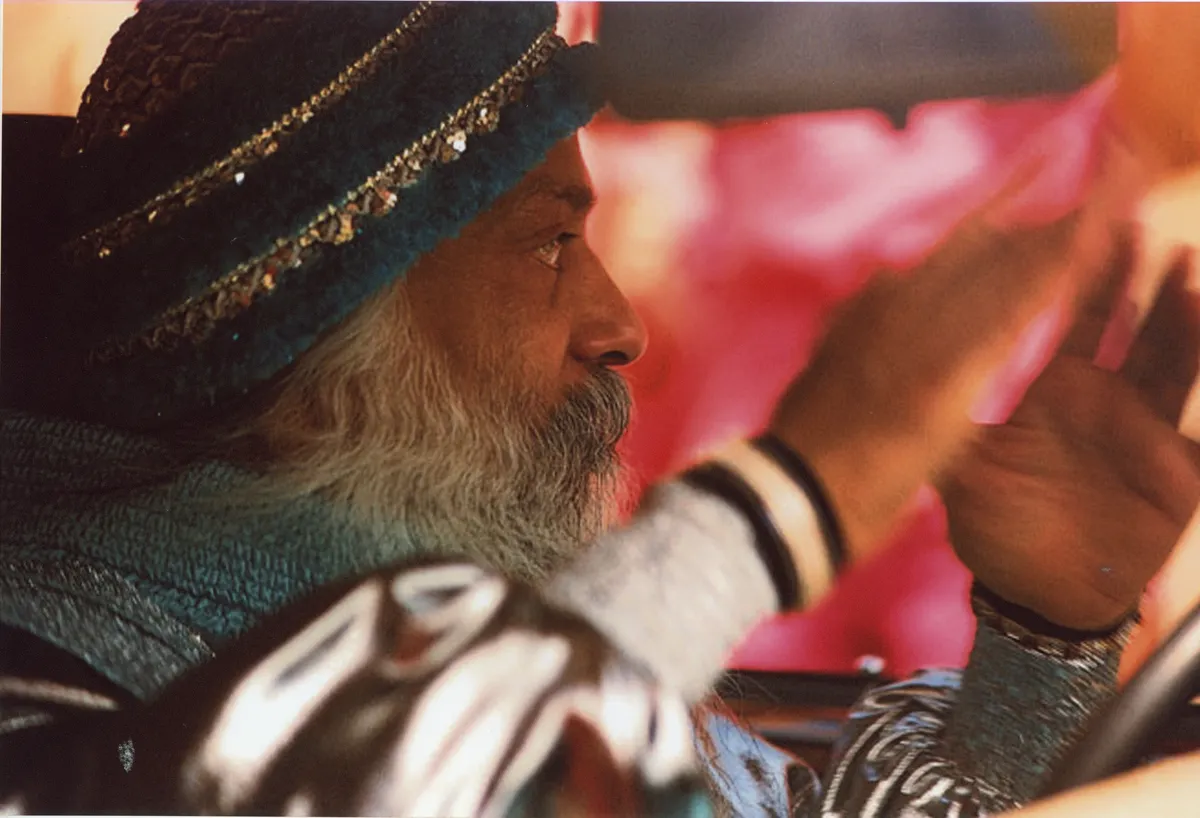
There’s nothing special about this time; peace comes when you stop fighting life and just go with it.
From the Discourses
Passages where Osho speaks to this question — each links to the complete discourse.
Beloved Osho, as with all clouds, white clouds are directed by the wind. What is the present direction of the wind? Are there special potentialities in this age?
One who understands stops fighting. He is not even trying to swim, he simply goes with the flood. This very current he uses as a vehicle; he becomes one with it and moves with it. This is what I call surrender, and this is what the old scriptures called the attitude of the devotee. Surrendered, YOU are not. Then wherever the wind leads you, you will go. You don't have any will of your own. This has been always so. In the past there were buddhas, floating white clouds; in the present there are buddhas, floating white clouds. In the past there were mad black clouds filled with will, desire, future. They are there today also.With will and desire you are a black cloud -- heavy. With no will, no desire, you are a white cloud -- weightless. And the possibility for both these is always open. It is up…
Osho, what are the reasons that very few persons in the world are interested in transforming their inner heat into spiritual light? Do you feel that the present generation is capable of creating enlightened ones like krishna, lao tzu and christ?
That also did not do because you cannot force yourself to be a Buddha, you cannot imitate. But Devadatta is forgotten and Buddha remains. The whole age is forgotten; only Buddha remains. Everything has disappeared; only Buddha remains. And then we compare Buddha with our own age. Because of that, this problem arises over whether a Buddha or a Jesus can be born today. It looks impossible. How is it possible in "this age of darkness, corruption, immorality"? How is this possible! Another factor also enters: whenever a person is dead for twenty centuries, we forget how we behaved with him when he was alive. Jesus was crucified not because he was a great Teacher or a great Enlightened One, but only because he was "immoral, undisciplined -- against the code and against the tradition". This behaviour was not that of a respectable man. And when he was killed, it…
Osho, the witness, the seer, consciousness is always separate—virginal and unbound. And the whole play of life is nothing but the movement of the gunas within themselves. In such a situation, if a person’s qualities of sattva, rajas, and tamas are calmed in a scientific or chemical way, or if a person is made sattvic, will he then attain that ever-free witness? If the witness is forever free and present, then by chemically altering the three gunas will it not be revealed? Would the person not then become religious? What is the fundamental difference between solving the problem arising from the
Sadhana means we are dissolving the current itself, not breaking the bulb. There is no point in breaking the bulb. In fact, the bulb is useful; it tells you whether the current is flowing or not, whether there is current or not. Your anger within tells you you are still sunk in ignorance. Lust tells you your life energies have not yet become aware. If we remove these elements, anger will stop manifesting and you will also stop knowing that you are in deep ignorance. It is as if a man is sick and we snatch away the symptoms of his disease so that he doesn’t even come to know he is ill. And keep in mind, anger is an opportunity. Only the unwise say anger is simply bad; I do not say so. Anger is an opportunity; you can use it badly or well. Anger is a chance. In…
पहला प्रश्न: ओशो, साक्षी, द्रष्टा, चैतन्य सदा ही अलग कुंवारा और अनबंधा है। और सारी जीवन-लीला गुणों का ही स्वयं में वर्तन है। ऐसी स्थिति में व्यक्ति से सत्व, रज, तम के गुणों को वैज्ञानिक या रासायनिक ढंग से शांत कर दिया जाए या व्यक्ति को सात्विक बना दिया जाए, तो क्या वह उस हमेशा से मुक्त साक्षी को उपलब्ध हो जाएगा? यदि साक्षी सदा ही मुक्त एवं उपस्थित है, तो त्रिगुणों को रासायनिक ढंग से बदल देने पर वह क्या प्रकट न हो जाएगा? क्या व्यक्ति तब धार्मिक नहीं हो जाएगा? त्रिगुणों से उत्पन्न समस्या को रासायनिक ढंग से हल करने में या साधना के माध्यम से हल करने में क्या मौलिक भिन्नता है?
साधना का अर्थ है कि हम बिजली की धारा को ही विलीन कर रहे हैं, बल्ब को नहीं तोड़ रहे हैं। बल्ब को तोड़ने का कोई अर्थ ही नहीं है। बल्कि बल्ब तो उपयोगी है। क्योंकि वह बताता है, धारा बह रही है या नहीं; धारा है या नहीं। आपके भीतर क्रोध यह बताता है कि अभी आप अज्ञान में डूबे हैं। वासना बताती है कि अभी आपके प्राण जागरूक नहीं हुए हैं। अगर ये तत्व हमने अलग कर लिए, तो क्रोध प्रकट होना बंद हो जाएगा और आपको यह पता चलना भी बंद हो जाएगा कि आप गहन अज्ञान में पड़े हैं। यह तो ऐसा हुआ, जैसे कोई आदमी बीमार हो और हम उसके बीमारी के लक्षण छीन लें, तो उसे यह भी पता न चले कि वह बीमार है। और यह भी खयाल में रहे कि क्रोध एक अवसर है। क्रोध सिर्फ बुरा है, ऐसा नासमझ कहते हैं; मैं नहीं कहता। …
Osho, Jain philosophy says that in this ara (current time-cycle) liberation is not possible. Is that why my samkit (right vision) keeps either falling back (vaman) or becoming mere suppression (upsham)? Is clinging to the notion that moksha is here and now not a self-deception?
In the journey of human life too there come many moments when liberation becomes easier. Especially in those moments when a person like Buddha or Mahavira attains liberation, he stands there with the door open. At that time, those who have even a little courage, a little daring, set out on the journey of liberation. If even in the presence of a person like Mahavira the courage is not born in you, then it is hard to hope that it will be born when you do not find such a person. Then you drift with the current. Mahavira is like a great wave. The wind is blowing toward the other shore—hoist your sail and let go; you don’t even have to row. So there are favorable times and unfavorable times—that much is true. There are favorable lands and unfavorable lands. There is a favorable age and an unfavorable age. There…
दूसरा प्रश्न: ओशो, जैन दर्शन कहता है कि इस आरे में मोक्ष संभव नहीं है। बार-बार मेरी समकीत का वमन या उपशम होने का क्या यही कारण तो नहीं है? मोक्ष यहीं और अभी है इस धारणा को पकड़ लेना क्या एक आत्मवंचना नहीं है?
मनुष्य की जीवन-यात्रा में भी ऐसे बहुत-से पल आते हैं, जब मोक्ष आसान हो जाता है। खासकर उन क्षणों में, जब बुद्ध या महावीर जैसा व्यक्ति मोक्ष को उपलब्ध होता है, तो वह द्वार खोलकर खड़ा हो जाता है। उस वक्त जिनकी थोड़ी भी हिम्मत होती है, साहस होता है, वे मोक्ष की यात्रा पर गतिमान हो जाते हैं। अगर महावीर जैसे व्यक्ति की मौजूदगी में भी तुम्हारे भीतर साहस पैदा नहीं होता तो जब महावीर जैसा व्यक्ति तुम्हें न मिलेगा, तब तुममें साहस पैदा होगा इसकी आशा करना कठिन है। तब तुम धारे के साथ बह सकते हो। महावीर एक लहर की तरह हैं। हवा जा रही है दूसरे किनारे की तरफ, तुम नाव में पाल बांध दो और छोड़ दो; पतवार भी नहीं चलानी पड़ती।
Osho, I have heard that a seeker has to pass through four stages of sadhana: tariqat, shari’at, marifat, and haqiqat. The last is haqiqat, where the seeker meets his beloved and comes face to face with Truth. Osho, please explain the first three states.
These words are from the Sufis—very significant, and very straightforward. The first is tariqat. Tariqat means: the way, the method, the discipline, the means, the yoga. Tariqat means: something has to be done; only then will you attain—without doing, you will not receive. One has to walk a path; find the way; make a footpath. One has to bring some discipline into life, give it an order. Tariqat means learning the way to become worthy of it. When you go to have an audience with an emperor, you learn the etiquette of his court. You don’t just walk in. If you do, you will not be accepted. You learn how to sit there, how to stand there, how to bow there. If you are going to meet an emperor, you must taste something of the flavor of the emperor’s way of life. If you are going to meet the Divine,…
दूसरा प्रश्न: ओशो, मैंने सुना है कि साधक को साधना के चार चरणों से गुजरना पड़ता है: तरीकत, शरीअत, मारिफत और हकीकत। अंतिम है हकीकत, जहां साधक अपने सनम से मिलता है और सत्य के साथ उसका साक्षात्कार हो जाता है। ओशो, कृपया पहली तीन स्थितियों को समझायें।
… बहुत सीधे-साफ भी हैं। पहला है तरीकत। तरीकत का अर्थ होता है: तौर-तरीका, विधि-विधान, उपाय, योग। तरीकत का अर्थ होता है: कुछ करना है, तो उसे पा सकेंगे; बिना किये तो न मिलेगा। कुछ रास्ता चलना है; मार्ग खोजना है; पगडंडी बनानी है। कुछ जीवन में अनुशासन लाना है, व्यवस्था देनी है। तरीकत का अर्थ होता है, उसके योग्य हो सकें, इसका तौर-तरीका सीखना है। तुम किसी सम्राट के दर्शन करने जाते हो, तो तुम उसके दरबार का तौर-तरीका सीखते हो। ऐसे ही तो नहीं चले जाते। ऐसे ही तो स्वीकार न हो सकोगे। तुम सीखोगे कि कैसे वहां बैठेंगे, कैसे वहां उठेंगे, कैसे वहां झुकेंगे। सम्राट से मिलने जा रहे हो तो सम्राट के जीवन का जो ढंग है उस ढंग का कुछ स्वाद तुम्हें लेना होगा।