
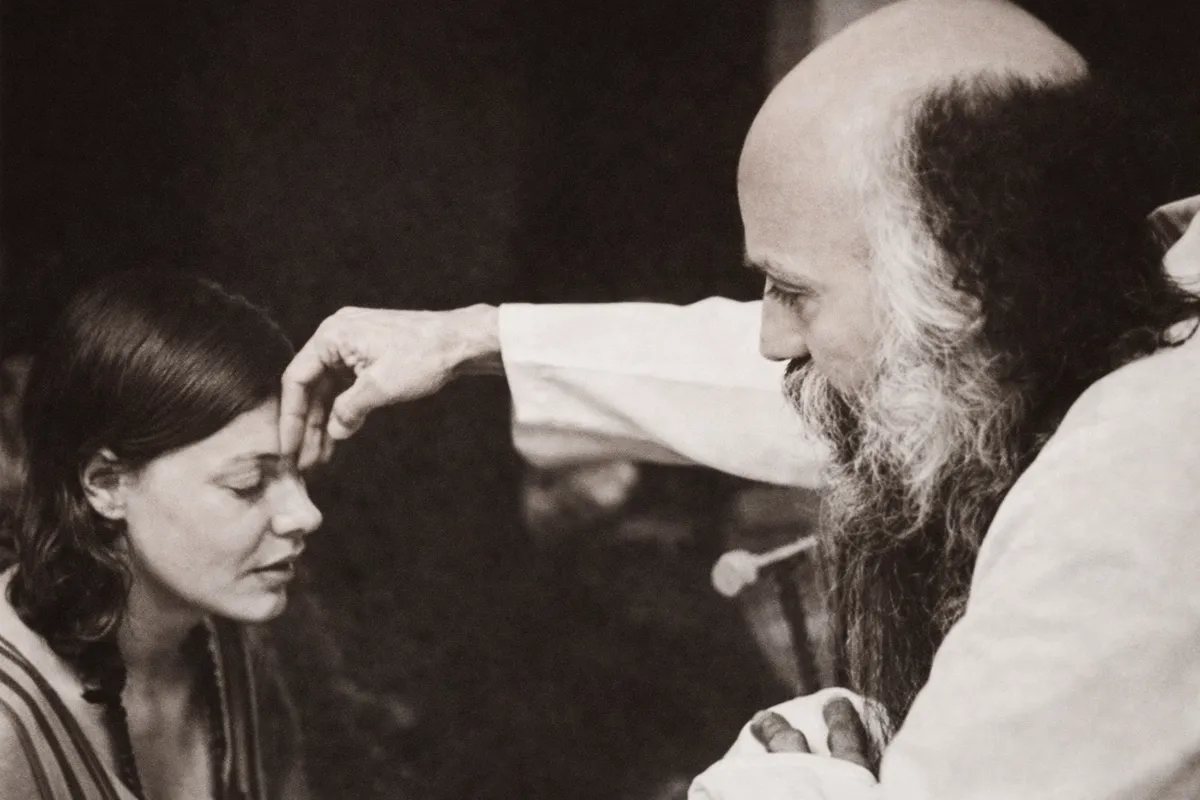
According to Osho, a rebel trusts only lived experience, not prophets, scriptures, or traditions; he holds no belief system, remains an open inquirer. Unlike the egoist, his aloneness is innocent and humble, not arrogant. He refuses imitation and belonging to organizations to stay unprejudiced and pure, ready to witness truth firsthand. He honors freedom, his and others', never interfering, allowing each to act from inner clarity rather than borrowed conclusions.
A rebel learns from their own experience with a humble, open heart, doesn’t copy beliefs or groups, and lets everyone be free.
From the Discourses
Passages where Osho speaks to this question — each links to the complete discourse.
Question: BELOVED MASTER, WHAT ARE THE QUALITIES OF A REBEL? A rebel simply lives his life in the moment, with awareness, with no desire to dominate, either while he is living or when he is dead. He does not have any lust for power. He is a scientist of the soul -- that is the fourth dimension. Just as science uses doubt, skepticism, inquiry, he uses the same methods for his inner search. Science uses them for objective reality, he uses them for his subjectivity. But he does not condemn doubt, he does not condemn skepticism, he does not condemn disobedience, he does not condemn a nonbelieving approach to reality. He enters within his own being with a scientific mind. His religion is not superstitious -- it is scientific.
Question: BELOVED OSHO, WHAT IS YOUR NOTION OF REBELLION AND OF A REBEL? Giulia, my notion about the rebel and rebellion is very simple: a man who does not live like a robot conditioned by the past. Religion, society, culture... anything that is of yesterday does not in any way interfere in his way of life, in his style of life. He lives individually -- not as a cog in the wheel, but as an organic unity. His life is not decided by anybody else, but by his own intelligence. The very fragrance of his life is that of freedom -- not only that he lives in freedom, he allows everybody else also to live in freedom. He does not allow anybody to interfere in his life; neither does he interfere in anybody else's life.
Beloved master, what is the difference between the old sage and the new rebel?
If the world is a school, then the poor should be given all the pleasures so they can get a little bit ready; otherwise even in heaven they will feel too guilty to enjoy anything. They will bring their conditioning with them. But the society was happy that the poor were told that they would inherit the kingdom of God. Then there is no need of any revolution here, there is no need to revolt against the structures which are making them poor. The old sage was anti-revolutionary. He was for those who were oppressing and sucking the blood of the people. The new rebel will not be an agent of the bloodsuckers, of the parasites. He will not say, "Blessed are the poor." He will not say, "Suffer your misery patiently, because after death you are going to inherit the kingdom of God." There is no kingdom of God…
Osho, yesterday you said that a religious person is always a rebel. Then can a rebel be at ease, be spontaneous?
I certainly said that a religious person is always a rebel, but I did not say that all rebels are religious. One may be rebellious without being religious, but no one can be religious without being rebellious. So what is the difference between a religious rebel and a rebel? The ordinary rebel—who is political or social, without religion—can never be at ease. There will be great tension there—twenty-four hours of worry and restlessness. A religious rebel means: natural ease. Not rebellion for the sake of rebellion; not rebellion against someone—the religious person’s rebellion is the longing to remain in his own naturalness. He wants to live in himself. Whatever obstructs this living-in-himself, he does not accept. He has no urge to break for the sake of breaking. He does not want to be against anyone. He only wants that nothing become an obstacle to his freedom. Nor does he want…
Beloved master, what is rebellion? And what is the difference between reaction and the action of the rebellious man?
Joseph Stalin became the leader of the revolutionaries. Stalin was not his real name, "Stalin" was given to him by the people. It means "man of steel." And certainly he proved to be a man of steel, with no heart. He killed almost one million people after the revolution. Just suspicion was enough; there was no need for any trial, for any investigation. The communist party suspects that somebody is against the revolution -- there is no proof, but the man has to be immediately destroyed. The Russian revolution has proved one thing absolutely: that czars were never so violent; they had never killed one million people. And the society was not so deeply enslaved -- that's why the communist revolution was possible. Now in Russia no revolution is possible, people are completely enslaved. Even to think against the status quo today is betraying the religion of communism. People are…