
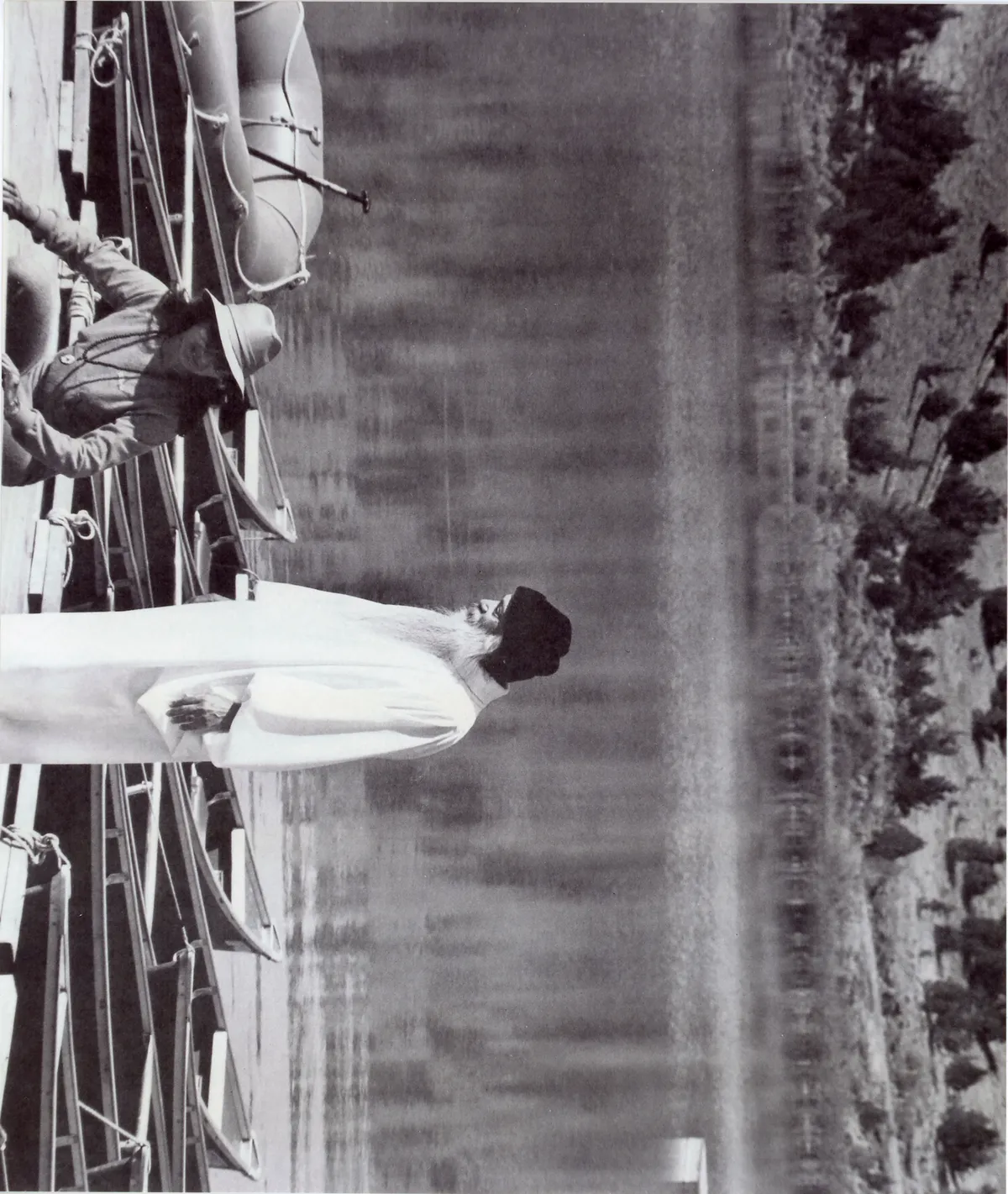
Dreams come from different layers of you: some are your body complaining, others are your subtle energy wandering and seeing striking visions.
From the Discourses
Passages where Osho speaks to this question — each links to the complete discourse.
Can you explain what you mean by dreams?
Now the only distinction is whether the dream is positive. If it is positive it is illusory, it is a dream, because in an ultimate sense only the negative is. When everything has become part of the formless, when everything has come back to the original source, then everything is and at the same time is not. The positive is the only factor remaining. It must be jumped over. So if, in the sixth body, the positive is lost, you penetrate into the seventh. The real of the sixth is the door of the seventh. If there is nothing positive -- no myth, no image -- then the dream has ceased. Then there is only what is: suchness. Now nothing exists but existence. Things are not, but the source is. The tree is not, but the seed is. Those who have known have called this type of mind samadhi with…
Osho, in yesterday’s talk you said that a seeker should first be concerned with becoming a vessel, and should not go about begging from place to place. But the very meaning of a seeker is that he has obstacles in practice. He doesn’t know how to become a vessel, how to prepare. So if he does not go asking, what should he do? How difficult it is to meet the right guide!
But searching and begging are two different things. In fact, the one who does not want to search is the one who begs. Searching and begging are not the same; they are opposites. He who wants to avoid searching begs; a seeker never begs. And the processes of searching and begging are entirely different. In begging you have to keep your attention on the other—the one who will give. In searching you have to keep your attention on yourself—the one who is to receive. It is true that there are obstacles on the path of the seeker. But if we understand rightly, saying there are obstacles on the path of the seeker means the obstacles are within the seeker; the path too is within. And to understand one’s obstacles is not very difficult. So we will have to speak a little more extensively on what the obstacles are and how…
Osho, in yesterday’s talk you said that a seeker should first be concerned with becoming a vessel, and should not go about begging from place to place. But the very meaning of a seeker is that he has obstacles in practice. He doesn’t know how to become a vessel, how to prepare. So if he does not go asking, what should he do? How difficult it is to meet the right guide!
But searching and begging are two different things. In fact, the one who does not want to search is the one who begs. Searching and begging are not the same; they are opposites. He who wants to avoid searching begs; a seeker never begs. And the processes of searching and begging are entirely different. In begging you have to keep your attention on the other—the one who will give. In searching you have to keep your attention on yourself—the one who is to receive. It is true that there are obstacles on the path of the seeker. But if we understand rightly, saying there are obstacles on the path of the seeker means the obstacles are within the seeker; the path too is within. And to understand one’s obstacles is not very difficult. So we will have to speak a little more extensively on what the obstacles are and how…
Beloved Osho, some of the deepest, most significant and overwhelming meetings with you have been happening through dreams in the night in the last couple of years. Everytime this happens, I am left with the most unexplainable and overwhelming waves of bliss and silence that are happening in spite of myself. Could you explain how you reach us in dreams, and how it comes that I seem to be more available and receptive to your presence in that state?
Turiya, I am reminded of an Egyptian king who sent an order throughout the kingdom that nobody should dare to enter into his dreams, and that if somebody should try to enter into his dreams, he would be beheaded. His counselors could not believe it -- how to convince him that nobody enters your dream, that it is your dream, you project it? And they were very much afraid because they were with the king constantly; naturally, people who he had never seen could not enter into his dreams -- only these people... His queens, his ministers, his counselors all gathered together. They said, "This is very dangerous. This man is going to kill a few of us any day, and we will be absolutely innocent. We won't even know that he has dreamed about us, it is his dream." And a few counselors were killed by him; he beheaded…
Osho, I have heard you say that knowledge is useless. Then what is needed to guide us to the ultimate goal?
Geetam, there is one good thing about your question that I appreciate: you say "I have heard you say." All the Buddhist scriptures begin in that way; that is a very sincere thing. The Christian, the Judaic, the Hindu, the Mohammedan scriptures don't begin that way, but all Buddhist scriptures begin "I have heard the Master say" because it is not a question whether the Master has said it or not, "I have heard it"; these are two different things. The Master may have said one thing, you may have heard something totally different, because between you and the Master there is a great barrier -- the barrier of the mind, prejudices, concepts, preconceived ideas. So what YOU hear is not necessarily the thing that is said. Geetam, this is good that you say "I have heard you say." You are not saying that "YOU have said it," you are…