
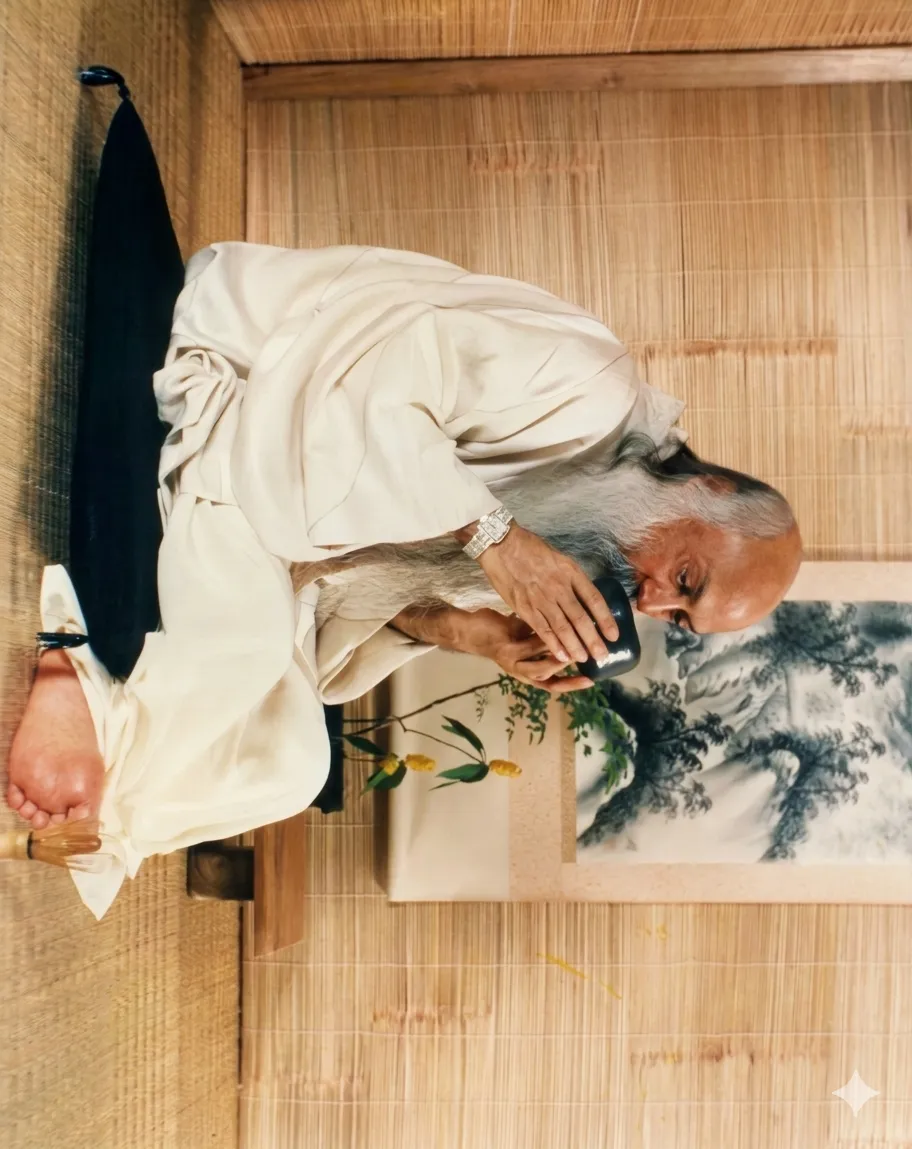
Don’t force your mind to focus; true quiet is clear and awake, not drowsy or blank.
From the Discourses
Passages where Osho speaks to this question — each links to the complete discourse.
Should we concentrate our minds in order to attain thoughtlessness?
I do not ask you to concentrate. Concentration is a kind of coercion, a kind of tension. If one concentrates on some idea, on some form or image or on some word, it will neither lead to thoughtlessness nor to the awakening of consciousness but to an unconscious state of mental stupor. It is like auto-hypnosis. Forced concentration leads to unconsciousness. And it is an error to mistake this unconsciousness for samadhi. Samadhi is neither a state of unconsciousness nor of stupor, samadhi is the realization of perfect consciousness. Samadhi is the combination of thoughtlessness and perfect consciousness.
Question: First question: Osho, how can I steal samadhi from you? Rajpal! If only it were possible—that would be auspicious and beautiful. If it could be done, I would give my full cooperation. But samadhi cannot be stolen. Samadhi has to be awakened. Samadhi does not come from the outside. Otherwise we would have found some way to steal it or buy it. Some path would have been made, some ritual devised. But samadhi simply does not arrive from without; it is not an external event. Samadhi is not a thing. It is not locked away in some vaults; otherwise the vaults could be broken. If it were in some cupboards, you could bore a hole. If it were a treasure buried in the earth, you could locate it. Samadhi is your inner state; it is you—it is the very name of your being.
Osho, …when I meditate a sound arises there; you said only yesterday to meditate right there. But because the vibrations become intense, I cannot keep my concentration…
So there should be no gross fighting, and there should also be no subtle condemnation or praise—no judging, “This is right, that is wrong.” If the mind does something, we should not give it an inner approval that, “Yes, this is very good—he is sculpting an image of Lord Krishna, very good,” and, “He is sculpting a nude woman, very bad.” Even such subtle condemnation and praise should not be there in meditation. That means: do not fight, and do not take any stance, any attitude, that “this is good” or “this is bad.” Do not make judgments about what is. What is—simply is. We are standing by a tree. There are thorns on it—so be it—and there are blossoms—so be it. We neither say that the flower is good nor that the thorns are bad. We only say that we can see: there are thorns, and there is a…
प्रश्न: ओशो, ...जहां पर ध्यान करने पर आवाज निकलती है, आपने बताया था कल ही कि वहां ध्यान करो। लेकिन कंपन ज्यादा होने से वहां पर एकाग्रता टिकती नहीं...
… कि कृष्ण भगवान की मूर्ति बना रहा है, यह बहुत ही बढ़िया हो रहा है। और एक नग्न स्त्री की मूर्ति बना रहा है, तो बहुत बुरा हो रहा है। यह सूक्ष्म निंदा और प्रशंसा भी नहीं होनी चाहिए ध्यान में। इसका मतलब यह हुआ कि लड़ना मत और किसी तरह का रुख मत लेना, एटिट्यूड मत लेना कि यह अच्छा है कि बुरा है। निर्णय मत लेना कि क्या है। जो है--है। हम एक वृक्ष के पास खड़े हैं। …
First: meditation. Second: by meditation I do not mean concentration. As you may have heard—concentration is a taut mind. If you force the mind, it will stretch, tense. After tension there will be a certain sadness, fatigue. Naturally—whenever you do a strained work—there will be backlash. From strain, the mind becomes disturbed. Those who do concentration become tight, taut people. They do not remain simple; they become more complex, more knotted. You must have seen—someone begins turning a mala, or chanting Rama-Rama—he becomes more irritable. Someone sits in a temple and concentrates before an idol—he becomes more angry, more violent, more harsh; his ego becomes denser. Naturally—these are the consequences of concentration. If concentration is taken too far, a man can even go mad. If the mind is stretched so far that the brain’s nerves begin to snap—he goes mad. Thousands of madmen... This is not divine ecstasy.
पहली बात: ध्यान। दूसरी बात: ध्यान से मेरा अर्थ एकाग्रता नहीं है। जैसे आपने सुना होगा...एकाग्र चित्त तो तना हुआ चित्त है। जबरदस्ती मन को लगाएंगे तो मन खिंच जाएगा, तन जाएगा। तनाव के बाद एक तरह की उदासी, थकान आएगी। स्वाभाविक, जब भी कोई आप तना हुआ काम करेंगे, तो पीछे से खिंचाव आएगा। खिंचाव आने से चित्त अशांत होगा। इसलिए जो लोग भी कनसनट्रेशन या एकाग्रता करते हैं, वे बहुत तने हुए और खिंचे हुए लोग हो जाते हैं। वे सरल लोग नहीं रह जाते, और कांप्लेक्स, और जटिल हो जाते हैं। देखा ही होगा आपने, कोई आदमी अगर माला फेरने लगे या राम-राम जपने लगे, तो ज्यादा क्रोधी हो जाता है। कोई आदमी मंदिर जाने लगे, भगवान की मूर्ति के पास बैठ कर एकाग्रता करने लगे, तो ज्यादा क्रोधी हो जाता है, ज्यादा वायलेंट हो जाता है, ज्यादा हिंसक, ज्यादा दंभी हो जाता है, अहंकार उसका और घना हो जाता है। स्वाभाविक है, यह होगा। ये सब कनसनट्रेशन के, एकाग्रता के परिणाम हैं। और अगर एकाग्रता बहुत बढ़ जाए, तो आदमी पागल भी हो सकता है। अगर चित्त को इतना खींचा जाए कि मस्तिष्क के स्नायु टूटने लगें तो आदमी पागल भी हो जाता है। हजारों पागलों...
The root of this division is mind. If there is no mind, there is no division. Therefore, concentrate your mind on the universal consciousness which is your interiority.
KNOWING THAT YOU ARE THE PERPETUALLY BLISSFUL SOUL, ALWAYS REJOICE IN THIS BLISS WITHIN AND WITHOUT YOUR VERY SOUL. THE FRUIT OF DETACHMENT IS KNOWLEDGE, THE FRUIT OF KNOWLEDGE IS RELAXEDNESS, AND THE PEACE THAT DESCENDS FROM EXPERIENCING THE SELF-BLISS IS THE VERY FRUIT OF RELAXEDNESS. IF EACH ONE OF THE AFORESAID DOES NOT HAPPEN IN SUCCESSION, KNOW THAT THE PREVIOUS ONE HAS GONE FRUITLESS. ABSTENTION FROM THE SENSE-OBJECTS IS IN ITSELF THE SUPREME CONTENTMENT AND INCOMPARABLE BLISS. ... THE ROOT OF THIS DIVISION IS MIND. IF THERE IS NO MIND, THERE IS NO DIVISION. THEREFORE, CONCENTRATE YOUR MIND ON THE UNIVERSAL CONSCIOUSNESS. ... And then came the monk who gave a hit on the head. The flow of thinking had stopped, the dozing had set in, the monk gave a hit on your head -- for a moment the dozing was broken. In that single moment a glimpse of meditation happens.