
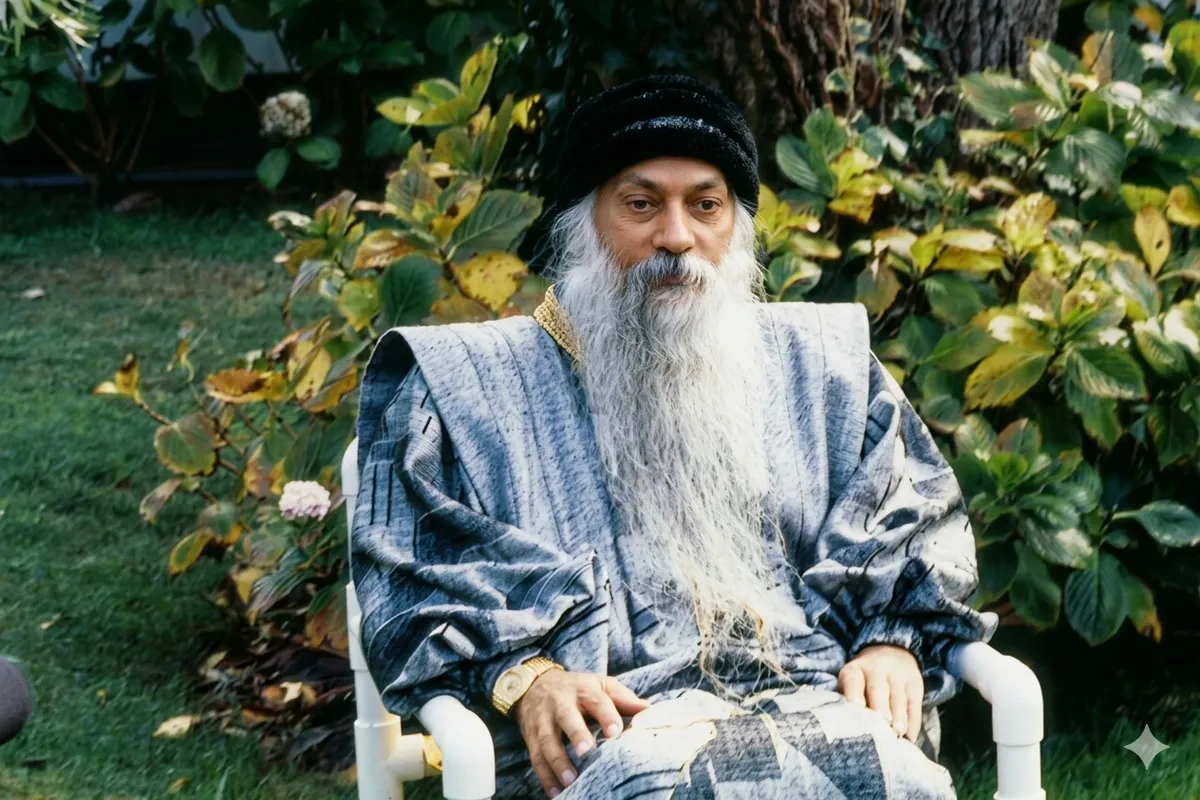
Hear what others think, but don’t treat it as final truth—keep your mind open.
From the Discourses
Passages where Osho speaks to this question — each links to the complete discourse.
So, right and wrong go on changing continuously. Then what to do? If somebody wants to decide absolutely, he will be paralysed, he will not be able to act. If you want that you act only when you have an absolute decision about what is right, you will be paralysed. You will not be able to act in life. One has to act and to act in a relative world. There is no absolute decision, so don't wait for it. Just watch, see, and whatsoever you feel is right, do. [Osho said that whenever one suggested a way to others, it should be with the understanding that this is only your standpoint and may not be right for others. One should not try to impose anything on anyone. This, Osho said, was what he regarded as the religious quality.
Why am I always afraid of others' opinion?
Because you are not, because you are not yet. You are nothing but a piled-up phenomenon of others' opinion. Who are you? Somebody says you are beautiful, so you are beautiful. And somebody says you are ugly, so you are ugly. And somebody says you are wonderful, so you are wonderful. And somebody says 'I have never seen such a nasty person', so you are a nasty person. And people go on saying, and you go on collecting all these things. And that is your image. That's why your image is very contradictory, ambiguous. One person says you are beautiful, another says you are ugly. You want to forget this person's idea that you are ugly, but you cannot forget it; it will be there. If you keep the opinion that you are beautiful you will have to keep the opinion that you are ugly too. Your image is very…
It may be.
Then opinion is not truth. Truth is not some political affair to be settled by votes—that you have taken votes, that so many people say it is true, twenty-five people say so. And then the great joke is, the great joke is that whenever someone goes to ask somebody... My whole point is: stop asking, start living. From the experience of living it will begin to be seen to you—and that will be the truth. By asking you will get only words. And you will collect words. And you will juggle and patch them together. And you will make a philosophy. That philosophy is utterly bogus, false. It has no value.
प्रश्न: हो सकता है।
तो ओपिनियन ट्रूथ नहीं है। यह कोई पोलिटिकल मामला नहीं है सत्य का कि तुमने वोट ले लिए कि इतने आदमी कहते हैं कि यह सत्य है, पच्चीस आदमी कहते हैं। और फिर बड़ा मजा यह है, बड़ा मजा यह है कि जब भी कोई आदमी पूछने चला जाता है किसी से... मेरा कहना ही यह है कि पूछना छोड़ो, जीना शुरू करो। जीने के अनुभव से तुम्हें दिखाई पड़ना शुरू होगा, जो सत्य होगा। और पूछने से तुम्हें सिर्फ शब्द मिलेंगे। और शब्द तुम इकट्ठे कर लोगे। और शब्दों के बीच जोड़-तोड़ कर लोगे। और एक फिलॉसफी बना लोगे। वह फिलॉसफी बिलकुल बोगस है, झूठी है। उसका कोई मूल्य नहीं है।
Osho, one should understand another’s experience, shouldn’t one?
Understanding and believing are different. I do not forbid understanding; the whole world is open to understanding. Do not believe. If you must believe, believe your own experience—because where I have walked and where my foot stands, beyond that only I can take the next step. How will you take a step beyond that? You can lift your foot only from where your foot is. If we are climbing a staircase and I am standing on the tenth step while you are on the fifth, and I say, “My experience is that after the tenth comes the eleventh; you too put your foot on the eleventh,” you will in fact place your foot on the sixth. Your foot cannot be on the eleventh yet. What comes after my experience will be mine. You cannot grow on the strength of my experience.
प्रश्न: ओशो, किसी के अनुभव को समझना चाहिए न?
समझने और मानने में फर्क हो गया। समझने को मना नहीं करता। समझने को दुनिया खुली है। मानें मत। मानें तो अपने अनुभव को, क्योंकि मैं जिस जगह तक चला हूं और जहां मेरा पैर है, उसके आगे मैं ही पैर उठा सकता हूं, आप कैसे उसके आगे पैर उठाएंगी? आप तो वहीं से पैर उठाएंगी जहां आपका पैर है। अगर हम इस सीढ़ी पर चढ़ रहे हैं और मैं दसवें स्टेप पर खड़ा हूं और आप पांचवें स्टेप पर खड़े हैं और मैं कहता हूं कि मेरा अनुभव है कि दसवें के बाद ग्यारहवां आता है, आप भी ग्यारहवें पर पैर रखो। आप तो छठवें पर पैर रखोगे, पैर आपका ग्यारहवें पर हो नहीं सकता कभी। मेरे अनुभव के बाद का जो अनुभव होगा वह मेरा होगा। मेरे अनुभव के आगे आप विकास नहीं कर सकती हैं।
Osho, should one not listen to and follow the wise advice of one's parents, teachers and well-wishers?
LISTEN, but don't follow. Listen well, but follow your own insight, don't follow others' advice. Listen certainly, very meditatively, try to understand what they are wanting to convey to you. They may REALLY be well-wishers, but if you start following blindly you will never attain to your own intelligence. You will remain dependent on crutches, you will always look up to others to tell you what to do, what not to do. You will always need leaders -- which is a very unhealthy state, to need leaders. Listen, because people have great experiences, and if they are sharing, willing to share, it will be foolish on your part not to listen. Sharing their experience may give you great insight -- it will help you to become more aware -- but don't follow. People follow literally and then they become just blind. When others are giving you all that you need,…